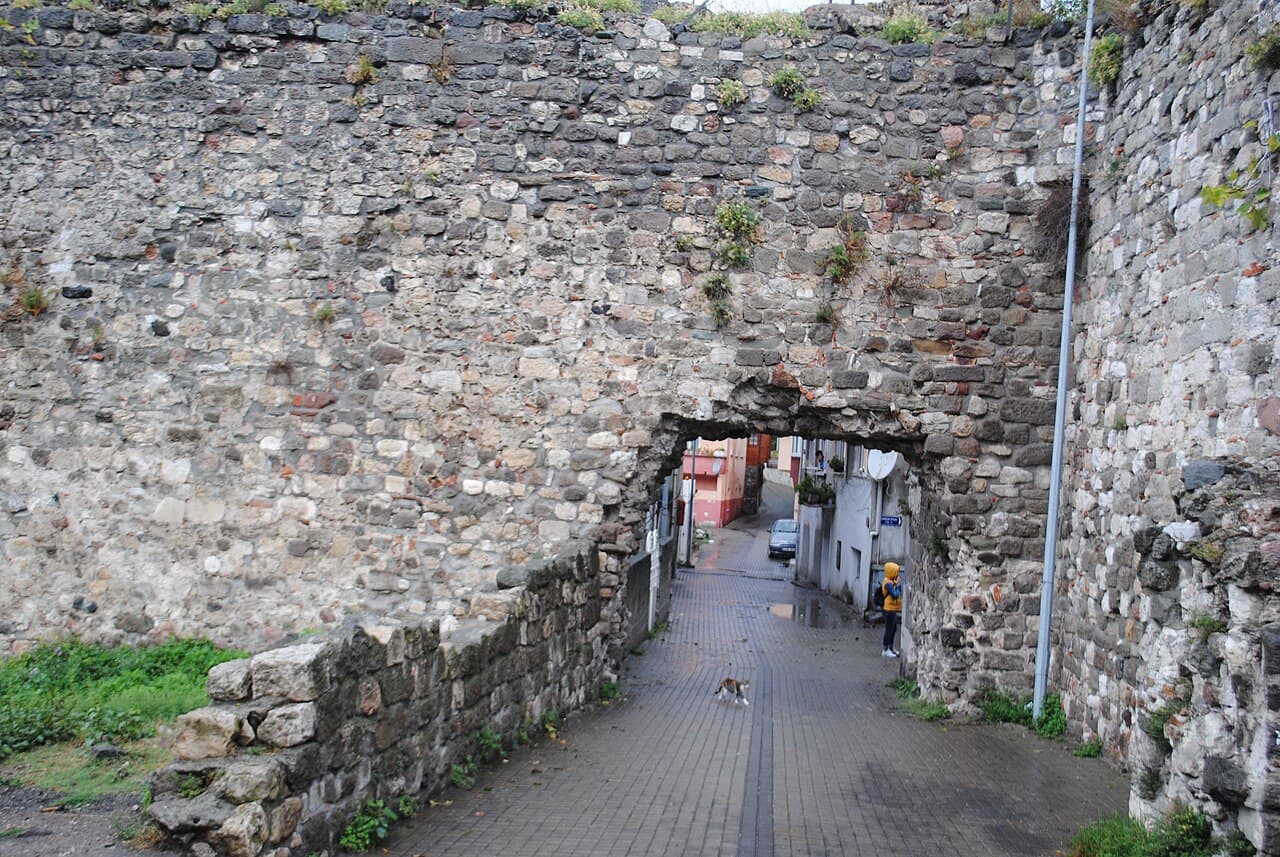
Amasra Castle
Amasra Castle, known locally as Amasra Kalesi, is a historic fortress complex located in the coastal town of Amasra, in the province of Bartın, Turkey. This hill castle stands prominently on the Black Sea coast, commanding views over the sea and the surrounding landscape. The castle is notable for its dual structure, comprising two main parts: Zindan Castle and Sormagir Castle, each with distinct historical and architectural significance.
The origins of Amasra Castle date back to antiquity, with the town itself mentioned by Homer as Sesamus. The site gained prominence in the 3rd century BC under the rule of Amastris, niece of the Persian King Darius III, who renamed the town after herself. The castle's earliest fortifications likely began during this period, though the existing structures predominantly reflect later Byzantine, Genoese, and Ottoman modifications.
Geographical setting and castle layout
Amasra Castle is uniquely situated on a narrow rocky peninsula extending east to west, connected to the mainland by a slender isthmus. This peninsula hosts the Zindan Castle, also known as Kaleiçi or Içkale. The isthmus, originally a sandy strip between two bays, is now built over, integrating the castle into the town's fabric.
Across a narrow strait, about 20 meters wide, lies Boztepe Island, the site of Sormagir Castle. The two parts are linked by the historic Kemere Bridge, also called the Boztepe Arch. The natural cliffs on the north and west sides of Boztepe Island provided formidable defenses, making walls unnecessary on those sides.
Historical development and strategic importance
Ancient and Byzantine periods
The site of Zindan Castle likely served as the acropolis of the ancient town of Sesamus. During the Early Medieval period, particularly under the Byzantine Empire, the fortress was rebuilt and strengthened to defend against Arab raids. The Byzantines also fortified Boztepe Island, enhancing the castle's defensive capabilities.
Medieval conflicts and Genoese control
Amasra's strategic location on the Black Sea made it a contested site during the turbulent 13th century. In 1204, it was captured by a Georgian army led by David Komnenos and incorporated into the Empire of Trebizond. Shortly after, it fell briefly to the Seljuks before returning to Byzantine control.
In 1263, the Genoese were granted trading rights along the Black Sea coast by the Byzantines, taking control of Amasra Castle. The Genoese undertook extensive rebuilding and fortification efforts throughout the 14th and 15th centuries, adapting the castle to the military technologies and needs of the time. Their work included the construction of robust walls, towers, and bastions, many of which survive today.
Ottoman era and later history
The castle fell to the Ottoman Empire in 1461 during the reign of Sultan Mehmed II the Conqueror. The Ottomans garrisoned the fortress with a hundred soldiers and stationed two ships to secure the harbor. They also settled Turkmen from the Eflani region in Amasra to consolidate control and integrate the town culturally.
Architectural features and preservation
Amasra Castle exhibits a complex architectural history with layers from various periods. The walls of the fortress stretch extensively: the eastern walls between the northeast and southeast measure about 65 meters; the southern walls, reinforced by eight bastions, extend approximately 300 meters; and the northern walls, mostly destroyed, once spanned around 200 meters from the Kemere Bridge.
The Zindan Castle peninsula features multiple towers, gates, and interior divisions. The Genoese coats of arms are prominently displayed on several walls, alongside sculptural reliefs including figures of Eros, Medusa, an eagle, and an ox head. These decorative elements highlight the Genoese influence and their attention to heraldic and symbolic detail.
The natural cliffs on the north and northwest sides of Sormagir Castle provided sufficient defense, so no walls were constructed there. However, much of the eastern, northeast, and western walls have been lost over time, with only a 50-meter section of the western walls near the gate remaining intact.
Today, the castle remains are integrated into the town center of Amasra and are accessible to visitors. The site is considered partly restored and well preserved, with ongoing efforts to maintain its historical fabric. The castle is also listed on the UNESCO Tentative List of World Heritage Sites, recognizing its cultural and historical significance.
Visiting Amasra Castle
Visitors to Amasra Castle can explore the extensive fortification walls, climb towers, and walk across the Kemere Bridge connecting the two castle parts. The castle's location offers panoramic views of the Black Sea and the surrounding town.
The nearby Amasra History Museum provides additional context about the region's past, including the castle's role through various empires. While the site is somewhat touristy, it offers a valuable glimpse into the medieval and early modern military architecture of the Black Sea region.
Amasra's combination of natural defenses, layered historical construction, and scenic setting make it a notable example of a hill castle that evolved over centuries to meet changing strategic needs.
Frequently asked questions (FAQ)
- How do I get to Amasra Castle?
- Amasra Castle is located in the picturesque town of Amasra, Turkey, easily accessible by car or public transportation from larger cities like Bartın and Zonguldak. Once in Amasra, you can follow local signs or ask locals for directions to the castle, which is situated on a hill overlooking the Black Sea.
- What is the historical significance of Amasra Castle?
- Amasra Castle has a rich history that dates back to ancient times, originally built by the Byzantines in the 4th century and later expanded by the Genoese. It has served various roles throughout history, including as a military fortress and a trade outpost, making it an important landmark in the region.
- When was Amasra Castle constructed?
- The earliest structures of Amasra Castle were built in the 4th century AD, with significant enhancements made during the Genoese occupation in the 13th century. The castle's architecture reflects various historical influences, showcasing the evolution of military construction throughout the ages.
- Can I enter Amasra Castle?
- Yes, visitors are welcome to explore Amasra Castle. The site offers a fascinating glimpse into the past, with well-preserved walls and stunning views of the surrounding landscape, making it a must-visit for history enthusiasts.
- Why is Amasra Castle a popular tourist attraction?
- Amasra Castle attracts visitors due to its stunning architecture, rich history, and breathtaking views of the Black Sea and the town below. The combination of cultural heritage and natural beauty makes it a perfect spot for photography and exploration.
- Is it possible to visit Amasra Castle year-round?
- Yes, Amasra Castle is open to visitors throughout the year. However, the best time to visit is during the spring and fall months when the weather is mild, and the tourist crowds are smaller, allowing for a more enjoyable experience.
- What are the opening hours for Amasra Castle?
- Amasra Castle is typically open from 8:00 AM to 7:00 PM during the summer months and from 8:00 AM to 5:00 PM in the winter. It is advisable to check for any seasonal changes or special closures before planning your visit.
- Are there any nearby attractions to visit after Amasra Castle?
- Yes, after exploring Amasra Castle, you can visit the nearby Amasra Museum, which showcases local artifacts and history. Additionally, the scenic beaches and charming streets of Amasra offer great opportunities for relaxation and exploration.
- What are the ticket prices for Amasra Castle?
- The entrance fee for Amasra Castle is quite affordable, typically around 25 Turkish Lira. Prices may vary slightly, so it’s a good idea to check for current rates before your visit.
Photo gallery

Information
Loading map...
Visitor reviews
No reviews yet. Been here? Write the first review and help other travelers!
Write the first reviewVisited this castle? Share your experience
Your review helps other travelers and adds first-hand knowledge to our encyclopedia.


