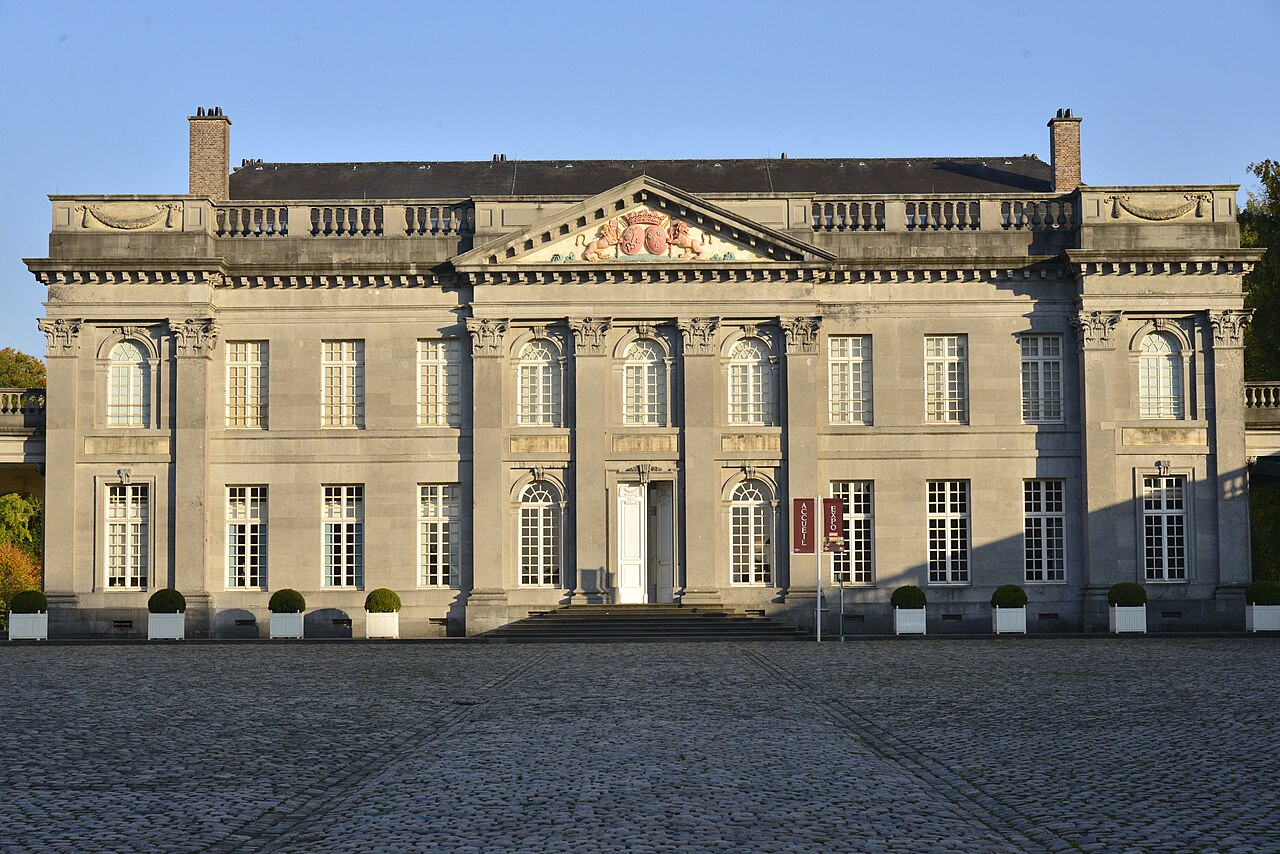
Feluy Castle
Feluy Castle, also known locally as Château-fort de Feluy, stands in the village of Feluy within the province of Hainaut in the Wallonia region of Belgium. This castle presents a fascinating architectural narrative that spans from the late medieval period through the Renaissance and into the 18th century, showcasing layers of history shaped by warfare, noble lineages, and reconstruction.
The origins of Feluy Castle trace back to the 1380s, when it was constructed on the orders of Eustache de Bousies. It is believed that the site hosted an earlier fortification before this stone castle was built. The initial structure was a moated polygonal medieval castle, typical of fortified residences designed for defense and noble habitation during the late medieval era. Only remnants of this original castle survive today, including the gate tower, part of a corner tower, and the curtain wall connecting them.
Medieval origins and early history
Feluy Castle's early history is marked by its strategic importance and noble ownership. In 1489, it was besieged and captured by forces loyal to Maximilian I, Holy Roman Emperor, led by Albert III, Duke of Saxony. Despite this, the castle remained under the control of the De Bousies family until 1548. Ownership then passed to the Rubempré family through marriage, and later to the De Renesse family by inheritance in 1576.
Renaissance rebuilding and noble transitions
The 16th century brought significant conflicts that inflicted damage on Feluy Castle. In response, René de Renesse undertook a substantial rebuilding project in 1615, reflecting Renaissance architectural influences. This reconstruction likely introduced more comfortable living quarters and updated fortifications suitable for the period's military and residential needs.
The De Renesse family retained ownership until 1658, after which the castle passed to the De Berghes family through marriage. This period was turbulent, with the castle playing a role in the Franco-Dutch War and the Nine Years' War. In 1674, William III of Orange and his troops camped at Feluy Castle before the Battle of Seneffe. The castle was repeatedly seized by French forces during the Nine Years' War, including occupation by the Duke of Luxembourg in 1692, who used it as his headquarters before pillaging it. Control of the castle shifted multiple times between warring factions during these conflicts.
18th-century transformation and architectural evolution
By the early 18th century, the castle had suffered extensive damage from continual warfare and military occupation. Following the death of the last De Berghes owner in 1720, Feluy Castle was inherited by the d'Albert family. In 1774, it was acquired by the Countess d'Isendoorn à Blois, who commissioned a comprehensive rebuilding of the castle.
This reconstruction marked a significant transformation of Feluy Castle from a fortified medieval stronghold to a more refined 18th-century château. The new mansion was constructed on the castle island in 1777, incorporating the surviving medieval elements such as the gate tower and curtain walls into a harmonious blend of old and new architecture. This period reflects the Renaissance and early classical influences in Belgian noble residences, emphasizing elegance and comfort over purely defensive features.
Modern history and preservation
Throughout the 19th and 20th centuries, Feluy Castle changed hands several times. By 1972, the castle had fallen into a state of dilapidation due to neglect and the ravages of time. A thorough restoration was undertaken to preserve the castle's historical and architectural significance.
Today, Feluy Castle serves cultural purposes and hosts events such as weddings, offering visitors a unique experience of a site where medieval fortifications coexist with 18th-century château elegance. Its preservation allows for appreciation of the castle's layered history, from its medieval origins through its Renaissance rebuilding to its 18th-century transformation.
Architectural features and layout
The castle's layout reflects its evolution over centuries. The surviving gate tower and corner tower are key medieval defensive structures, designed to control access and provide vantage points for surveillance. The curtain wall between these towers would have formed part of a defensive perimeter, likely surrounded by a moat, characteristic of a moated polygonal castle.
The 18th-century mansion built on the castle island introduced residential wings with large windows, elegant facades, and landscaped grounds, typical of noble residences of that period. The combination of medieval fortifications and later château elements creates a distinctive architectural ensemble that illustrates the changing functions and tastes of castle owners over time.
Historical significance and legacy
Feluy Castle's history is intertwined with major European conflicts and noble family lineages. Its capture by imperial forces in the 15th century, involvement in the Franco-Dutch War, and repeated occupations during the Nine Years' War highlight its strategic importance in regional power struggles. The castle's successive ownership by prominent families such as the De Bousies, De Renesse, De Berghes, and d'Albert families reflects the complex social and political networks of Belgian nobility.
Its architectural transformations mirror broader European trends from fortified medieval castles to Renaissance residences and finally to elegant 18th-century châteaux. Feluy Castle thus offers valuable insights into the evolution of castle architecture and aristocratic life in Belgium.
Frequently asked questions (FAQ)
- How do I get to Feluy Castle?
- Feluy Castle is located in Feluy, Belgium, and can be accessed by both public transport and car. If traveling by train, the nearest station is in Charleroi, from which you can take a local bus or taxi to reach the castle. Parking is available on-site for visitors arriving by car.
- What is the historical significance of Feluy Castle?
- Feluy Castle dates back to the 13th century and is an important example of medieval architecture in Belgium. It has served various purposes throughout its history, including a fortress and a residence for nobility. Its rich history reflects the feudal system and the socio-political changes in the region over the centuries.
- When was Feluy Castle built?
- Feluy Castle was originally constructed in the early 13th century, with significant renovations and expansions occurring in the following centuries. The castle's architecture showcases various styles influenced by different historical periods, making it a fascinating site for history enthusiasts. Its structure has been preserved to highlight its medieval origins.
- Can I take guided tours of Feluy Castle?
- Yes, guided tours of Feluy Castle are available for visitors, providing an in-depth look at its history and architecture. These tours are typically conducted by knowledgeable guides who share insights about the castle's past and significance. It is advisable to check the castle's official website or contact them in advance to confirm tour availability and schedules.
- Why is Feluy Castle a popular tourist attraction?
- Feluy Castle is popular due to its stunning architecture and rich historical background, attracting both history buffs and casual visitors. The picturesque surroundings and well-preserved structures offer great opportunities for photography and exploration. Additionally, the castle often hosts events, making it a lively destination for locals and tourists alike.
- Is it possible to host events at Feluy Castle?
- Yes, Feluy Castle offers facilities for hosting various events, including weddings, corporate gatherings, and private parties. The enchanting setting and historical ambiance make it a unique venue for special occasions. Interested parties should reach out to the castle's administration for more details on booking and available services.
- What are the opening hours of Feluy Castle?
- Feluy Castle is typically open to visitors from Tuesday to Sunday, with varying hours depending on the season. It is advisable to check the official website for the most current opening hours and any seasonal changes. Special holiday hours may also apply, so plan your visit accordingly.
- What are the ticket prices for visiting Feluy Castle?
- Tickets for visiting Feluy Castle are reasonably priced, making it accessible for a wide range of visitors. Discounts may be available for students, seniors, and groups, so it is worth inquiring about these options when purchasing tickets. Always check the official website for the latest pricing information and any special promotions.
- When is the best time to visit Feluy Castle?
- The best time to visit Feluy Castle is during the spring and early autumn when the weather is mild, allowing for pleasant exploration of the grounds. Additionally, these seasons often feature fewer crowds, making for a more enjoyable experience. Visiting during special events can also provide unique insights into the castle's history and culture.
- Are there any nearby attractions to visit along with Feluy Castle?
- Yes, there are several nearby attractions worth exploring in addition to Feluy Castle. You can visit the charming town of La Louvière, known for its historical sites and cultural activities. Additionally, the nearby Bois de la Cambre park offers beautiful natural scenery, perfect for a relaxing stroll after your visit to the castle.
Information
Address
Rue Victor Rousseau 2, Feluy, Belgium
Loading map...
Visitor reviews
No reviews yet. Been here? Write the first review and help other travelers!
Write the first reviewVisited this castle? Share your experience
Your review helps other travelers and adds first-hand knowledge to our encyclopedia.