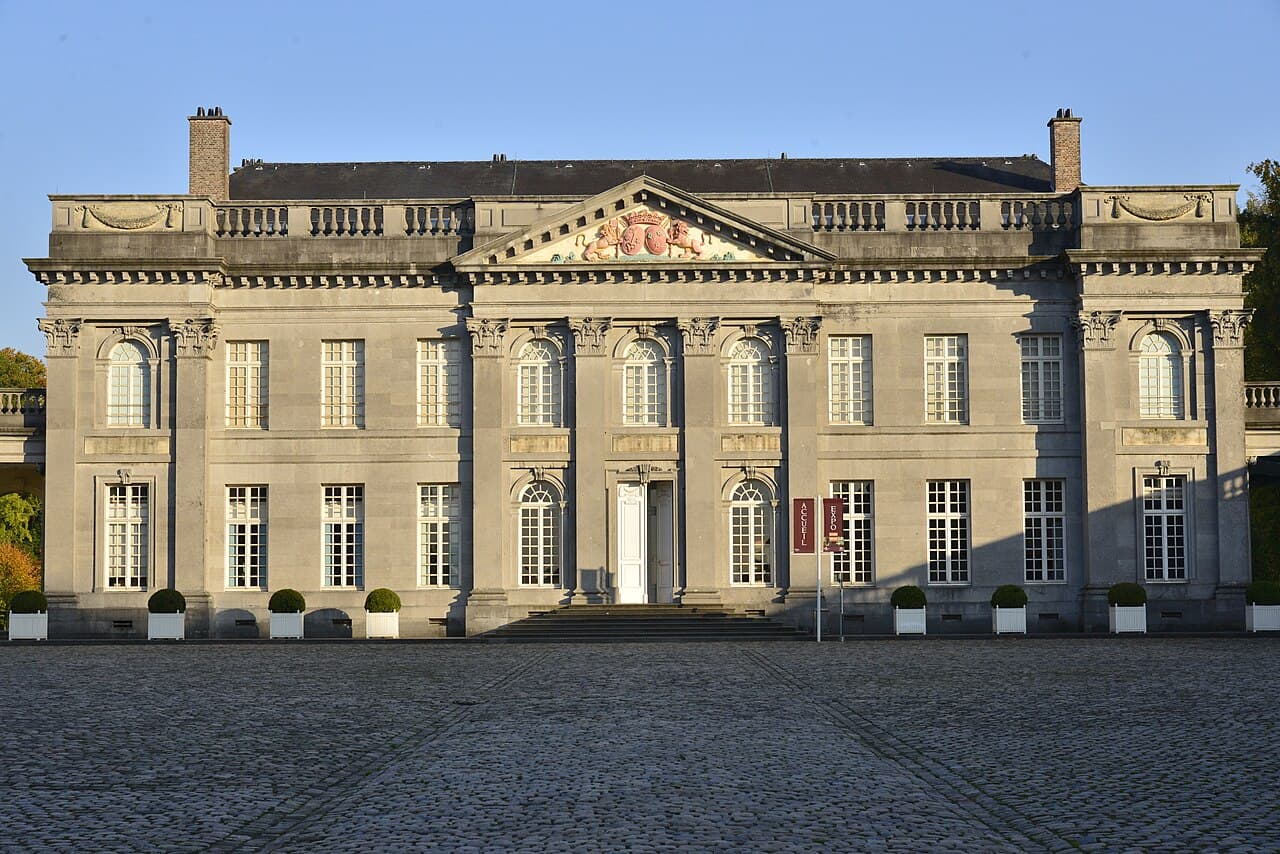
Château de Seneffe
The Château de Seneffe stands as a significant example of 18th-century neoclassical architecture in Belgium. Located in the municipality of Seneffe in the province of Hainaut, Wallonia, this château was built between 1763 and 1768 following the acquisition of the estate by Julien Depestre, a prosperous Walloon merchant. Depestre made his fortune supplying goods to the Imperial Austrian troops stationed in the Austrian Netherlands, which enabled him to commission the construction of this elegant residence. The château is notable for its neoclassical style, inspired by French noble residences and enriched with international influences, particularly from Italy and England.
Historical background and ownership
After Julien Depestre purchased the estate in 1758, the château was erected over a five-year period, reflecting the tastes and architectural trends of the mid-18th century. The estate and its remarkable art collection were confiscated during the upheavals of the French Revolution and the subsequent French occupation of the Austrian Netherlands, specifically in 1797 (art collection) and 1799 (château). Following this period, the property passed through several owners and eventually fell into neglect, particularly in the 1960s when it was abandoned for seven years. During this time, significant looting occurred, with valuable interior elements such as marble fireplaces and carved wainscotings removed and sold. Recognizing its cultural value, the Belgian State purchased the château in 1970 and initiated extensive restoration efforts starting in 1978, which continued until 1995.
Architectural design and features
Exterior and layout
The château exemplifies a mid-18th-century noble residence with a layout and style reminiscent of French royal and aristocratic estates. It is often compared to the Petit Trianon in Versailles, constructed contemporaneously by architect Ange-Jacques Gabriel for King Louis XV. The architect of Château de Seneffe, Laurent-Benoît Dewez, was trained in Italy under Luigi Vanvitelli and incorporated elements from Italian neoclassicism as well as English country houses of the period.
Access to the château is marked by a wide tree-lined alley beginning in the village of Seneffe, leading to a broad lawn and the cour d'honneur (honor courtyard). The courtyard is enclosed by a monumental wrought iron fence featuring a gilded central gate. The main building, or corps de logis, is flanked by two long colonnaded galleries approximately 70 meters long, each terminating in a pavilion. These galleries feature monolithic Ionic columns and are topped by a terrace with a balustered railing. The galleries’ blind walls are decorated with semi-domed and rectangular niches containing decorative vases and sculptures.
The pavilions at each gallery’s end are adorned with Composite order pilasters, niches, and pediment-topped doors. The right pavilion houses a clock and bell within its domed second storey, while the left pavilion serves as the château’s chapel, with its dome functioning as a lantern to provide zenithal light to the interior space.
The façades of the corps de logis feature five bays separated by monumental Composite pilasters spanning two main storeys. The central bay projects slightly and is crowned by a pediment displaying the coats of arms of Joseph Depestre and his wife, flanked by gilded lions. The building is constructed entirely from local "Pierre bleu du Hainaut" or "Petit-Granit", a durable and prestigious greyish-blue limestone that emphasizes the château’s status and permanence.
Interior decoration and style
The interiors of Château de Seneffe represent an early form of continental neoclassicism with strong French influences. Some rooms retain elements of the late Rococo style, while others adopt a more classical aesthetic. The château’s lavish interiors include elaborately patterned parquet floors, finely decorated stucco ceilings—some gilded—and intricately sculpted and molded boiseries. Floors and fireplaces are predominantly crafted from Belgian marble, underscoring the luxury of the residence. These features collectively demonstrate the transition from Rococo to neoclassical tastes during the mid-18th century.
Gardens and parkland
The château is set within extensive grounds laid out in the formal late Baroque French style during the 1760s. The design aligns a central axis through the tree-lined alley, the courtyard, and the middle bay of the corps de logis, extending into the park. Directly behind the château lies a parterre with a central path ending at a formal pond, creating a carefully balanced and symmetrical landscape.
An Orangery built facing south near the park’s boundary remains intact today. In the 1780s, parts of the grounds were transformed into an English landscape garden, reflecting contemporary tastes. This included the addition of several follies such as an island with a temple and a wooden cabin. The most notable addition from this period is the neoclassical theatre designed by the French architect Charles de Wailly. The theatre features a whitewashed exterior and a stage with a fixed scenery that uses a Tuscan order gallery to create a false perspective, aiming to revive classical theatrical traditions. Busts adorning the façade were sculpted by the renowned French artist Augustin Pajou.
Modern use and cultural significance
Today, the Château de Seneffe is owned by the French Community of Belgium and functions as the Centre de l'orfèvrerie de la communauté française, displaying an extensive collection of antique silverware, primarily from the 18th century. This use aligns with the château’s historical period and enhances its cultural value as a site dedicated to craftsmanship and heritage.
The château’s combination of architectural innovation, historical importance, and cultural function makes it a unique destination for visitors interested in neoclassical architecture, European aristocratic residences, and artisanal heritage. Its restoration and preservation efforts have ensured that this remarkable example of mid-18th-century design continues to be appreciated and studied.
Frequently asked questions (FAQ)
- How do I get to Château de Seneffe?
- Château de Seneffe is easily accessible by car and public transport. If you're traveling by train, the nearest station is Seneffe, from which you can take a short taxi ride to the castle. There are also parking facilities available for visitors arriving by car.
- What is the historical significance of Château de Seneffe?
- Château de Seneffe was built in the 18th century and is known for its stunning architecture and rich history. It served as a residence for the Belgian nobility and has witnessed many significant events in Belgium's history. Today, it stands as a testament to the region's cultural heritage.
- When was Château de Seneffe built?
- Construction of Château de Seneffe began in 1763 and was completed in 1770. The castle was designed by the renowned architect Jean-Jacques Huvé, reflecting the elegance of the neoclassical style. Its design and structure have remained a point of interest for historians and architecture enthusiasts alike.
- Can I take guided tours of the castle?
- Yes, guided tours of Château de Seneffe are available for visitors. These tours provide in-depth knowledge about the castle’s history, architecture, and the art collections housed within. It’s recommended to book in advance, especially during peak tourist seasons.
- Is Château de Seneffe accessible for visitors with disabilities?
- Château de Seneffe strives to be accessible to all visitors, including those with disabilities. The grounds and certain areas of the castle are equipped with ramps and facilities to accommodate wheelchairs. However, it is advisable to check in advance for specific accessibility arrangements.
- What are the opening hours for Château de Seneffe?
- Château de Seneffe is typically open to visitors from 10 AM to 5 PM, Tuesday through Sunday. It is closed on Mondays and certain public holidays, so it’s best to check the official website for any updates on hours or special events before your visit.
- What is the best time to visit Château de Seneffe?
- The best time to visit Château de Seneffe is during the spring and early autumn months when the weather is pleasant and the gardens are in full bloom. Additionally, visiting during weekdays can help you avoid larger crowds. Special events and exhibitions are often scheduled during these times as well.
- Are there any nearby attractions to visit?
- Yes, while visiting Château de Seneffe, you can explore other attractions in the area, such as the Parc de Seneffe and the nearby town of La Louvière, known for its industrial heritage. Additionally, the surrounding countryside offers beautiful walking and biking trails for nature enthusiasts.
- What are the ticket prices for Château de Seneffe?
- Tickets for Château de Seneffe are reasonably priced, with discounts available for students and seniors. Children under a certain age can often enter for free. Be sure to check the official website for the most up-to-date pricing and any special offers that may be available.
Photo gallery

Information
Loading map...
Visitor reviews
No reviews yet. Been here? Write the first review and help other travelers!
Write the first reviewVisited this castle? Share your experience
Your review helps other travelers and adds first-hand knowledge to our encyclopedia.



