Farleigh Hungerford Castle
Farleigh Hungerford Castle stands as a remarkable example of a late 14th-century fortified residence in England, embodying the martial and domestic architectural traditions of the medieval period. Located near the village of Farleigh Hungerford in Somerset, this castle was constructed by the influential Hungerford family and has witnessed centuries of English history, from the Hundred Years War through the English Civil War.
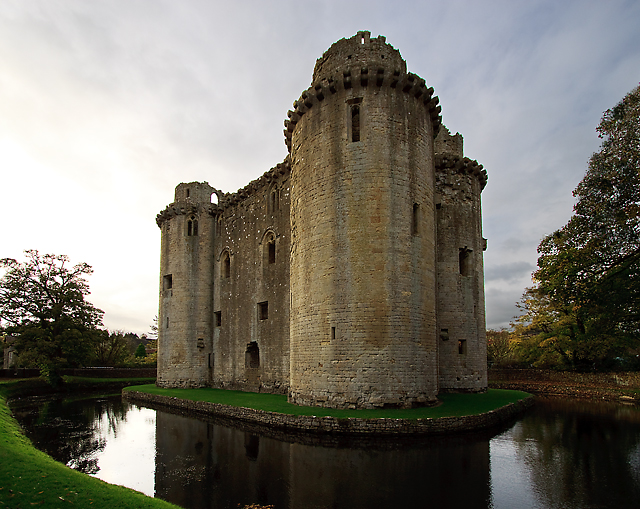
The castle’s origins trace back to between 1377 and 1383, when Sir Thomas Hungerford, steward to John of Gaunt and a wealthy nobleman, replaced an earlier manor house overlooking the River Frome with a fortified inner court. This initial phase established the castle’s core defensive and residential structures, including a quadrangular layout with a central courtyard, surrounded by substantial curtain walls and circular towers at each corner.
To create a deer park, an aristocratic symbol of status and leisure, the nearby village of Wittenham was cleared, illustrating the social and economic impact of noble land management in medieval England. This park not only provided hunting grounds but also enhanced the castle’s prestige.
Architectural development and expansion in the 15th century
Between 1430 and 1445, Sir Thomas’s son, Sir Walter Hungerford, a distinguished knight and courtier to King Henry V, undertook significant expansions. He added an outer court that enclosed the parish church of St Leonard, integrating it into the castle complex as the castle chapel. This incorporation of ecclesiastical architecture into the defensive perimeter was a notable feature, reflecting the dual role of castles as both military strongholds and noble residences.
St Leonard’s Chapel was richly decorated with 15th-century murals, including a rare and well-preserved depiction of St George and the Dragon, one of only four surviving medieval mural paintings of this subject in England. These artworks underscore the castle’s cultural and religious significance during the medieval period.
Defensive features and layout
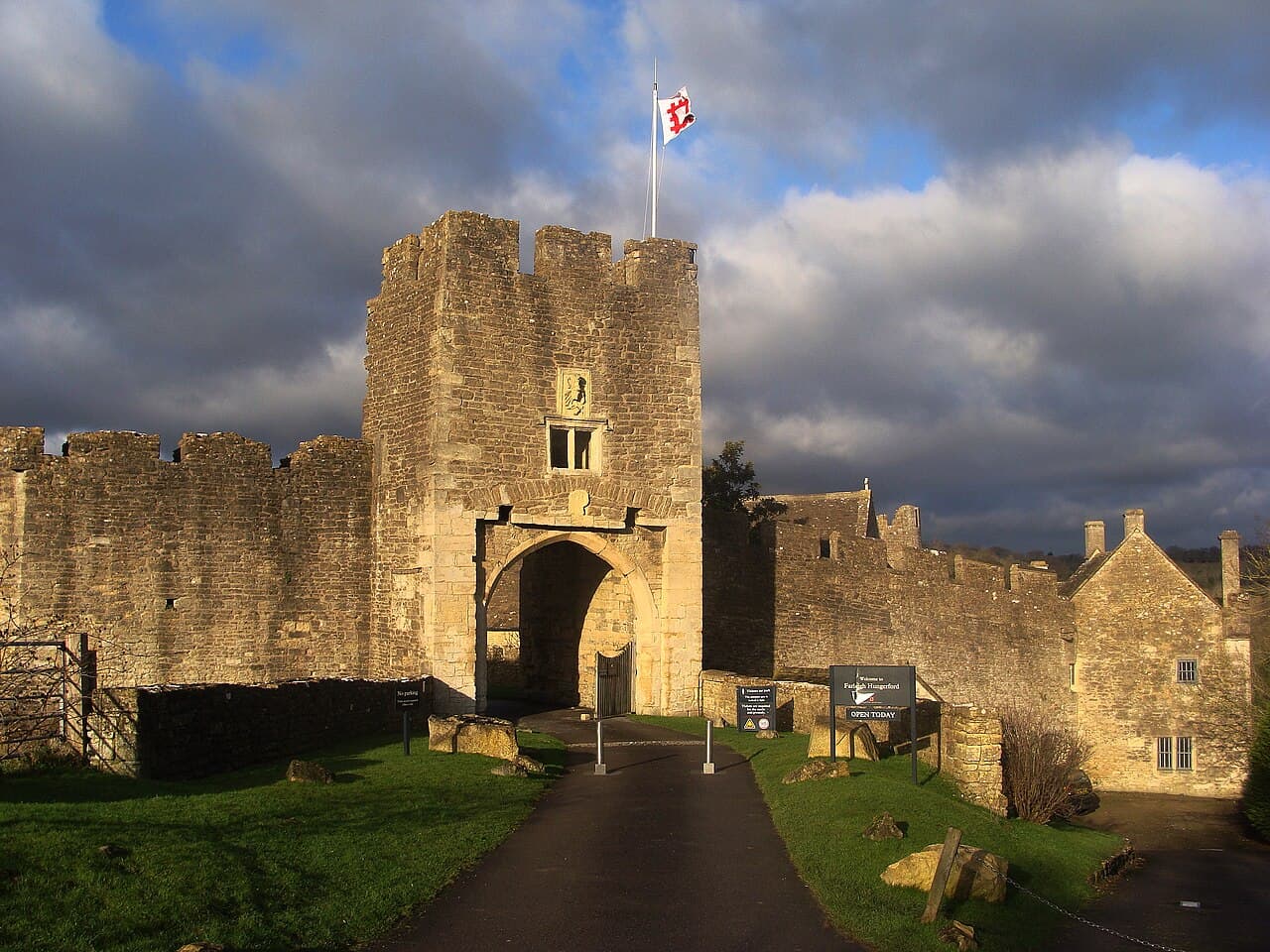
The castle was designed as a quadrangular fortress with an inner courtyard surrounded by a curtain wall punctuated by four circular towers: Redcap Tower (north-east, notably larger), Hazelwell Tower (north-west), and the Lady Tower (south-west). The twin-towered gatehouse controlled access and originally featured a drawbridge, enhancing the castle’s defenses.
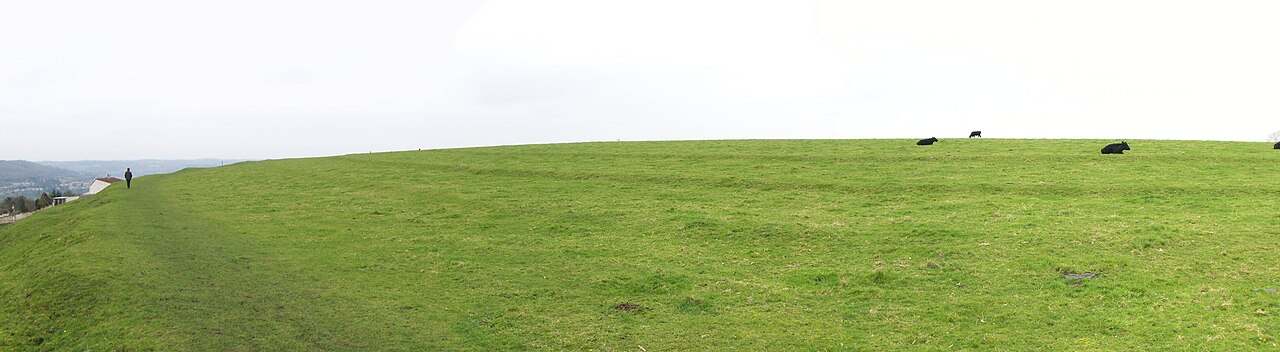
Strategically situated on a low hill above the River Frome, the castle’s southern and western flanks were protected by a wet moat, supplied by a dam and spring system conveyed through a pipe. This water defense added a formidable barrier to potential attackers, despite the site being overlooked by higher ground to the north and west.
Historical significance and turbulent ownership
Farleigh Hungerford Castle remained in the Hungerford family for over two centuries, witnessing England’s turbulent medieval and early modern history. During the Wars of the Roses, the castle was confiscated by the Crown after members of the family were executed for treason. It was granted to Richard, Duke of Gloucester (later King Richard III), before being restored to the Hungerfords under Henry VII.
The 16th century brought further turmoil: Sir Edward Hungerford and his wife Agnes resided here, with Agnes executed for murder in 1523. Another Walter Hungerford was executed for treason in 1540, leading to royal possession of the castle once again, though his son reacquired it in 1554. These events reflect the precarious position of noble families during the Tudor period.
During the English Civil War, the castle was a contested site. Although Sir Edward Hungerford supported Parliament, Royalist forces captured the castle in 1643. It was peacefully surrendered back to Parliamentarian troops in 1645, sparing it from the destruction common in the conflict.
The last Hungerford owner, also Sir Edward Hungerford, inherited the castle in 1657 but financial difficulties led to its sale in 1686 to Sir Henry Bayntun. The castle subsequently fell into disrepair and ruin by the 18th century.
Architectural remains and restoration efforts
Today, much of the inner court survives as foundational remains, with only the outer walls of the south-west and south-east towers remaining intact. The outer court is better preserved, including the eastern gatehouse adorned with the Hungerford family’s heraldic badge and the carved initials of Sir Edward Hungerford from the early 16th century.
The chantry priest’s house, adjacent to the chapel, remains largely intact. This rare example of ecclesiastical domestic architecture measures nearly 12 by 7 meters, with multiple rooms across two floors, illustrating the religious functions integrated within the castle complex.
St Leonard’s Chapel retains visible medieval wall paintings, including the iconic St George and the Dragon mural. The north transept, known as St Anne’s Chapel, houses 17th-century Hungerford family tombs, which have survived remarkably well.
The castle’s crypt contains a unique collection of mid-17th-century lead coffins molded with human facial features resembling death masks, representing the finest surviving group of such burials in England.
In the 18th century, parts of the castle’s stonework and interior fittings were dismantled and reused in nearby estates, including Farleigh House and the grand estate of Longleat. This repurposing contributed to the castle’s gradual decline but preserved some materials in new contexts.
Restoration in the 20th century focused on masonry repairs, ivy clearance, and conservation of the medieval chapel murals. Archaeological excavations in the 19th and 20th centuries uncovered buried foundations and structural details that now form part of the visible remains. English Heritage has managed the site since 1983, ensuring its preservation as a Grade I listed building and scheduled monument.
Farleigh Hungerford Castle in cultural heritage and tourism
Farleigh Hungerford Castle is a significant cultural landmark that offers insights into medieval fortification, noble residence life, and religious art. Its combination of military architecture, domestic quarters, and richly decorated chapel murals provides a comprehensive picture of castle life across several centuries.
The castle is open to visitors who can explore the atmospheric ruins, the chapel with its rare medieval paintings, and the well-preserved chantry priest’s house. The site’s historical layers and architectural features make it a valuable destination for those interested in English medieval history and heritage conservation.
Frequently asked questions (FAQ)
- How do I get to Farleigh Hungerford Castle?
- Farleigh Hungerford Castle is located near the village of Farleigh Hungerford in Somerset, England. It is accessible by car and public transport, with nearby parking and local bus services connecting to the site.
- What are the opening hours for visiting Farleigh Hungerford Castle?
- The castle is generally open to visitors from spring to autumn, with typical opening hours from 10:00 to 16:00 daily. It is advisable to check English Heritage's official website for seasonal variations and special closures.
- Is there an admission fee to enter Farleigh Hungerford Castle?
- Yes, there is an admission fee to enter the castle, which helps fund its maintenance and conservation. Ticket prices vary, with discounts available for children, seniors, and English Heritage members.
- What are the main historical highlights of Farleigh Hungerford Castle?
- Key highlights include the 15th-century chapel murals depicting St George and the Dragon, the well-preserved chantry priest’s house, and the unique collection of 17th-century lead coffins in the crypt. The castle also played roles in the Hundred Years War, Wars of the Roses, and the English Civil War.
- Can I explore the castle’s chapel and see the medieval murals?
- Yes, visitors can explore St Leonard’s Chapel, which retains visible medieval wall paintings, including the famous St George and the Dragon mural. The chapel is one of the best-preserved medieval painted interiors in England.
- Is Farleigh Hungerford Castle suitable for families and children?
- The castle grounds and ruins offer an educational and engaging experience for families. While some areas involve uneven terrain and ruins, the site provides informative displays and safe pathways suitable for children with supervision.
Photo gallery

Information
Sources & official resources
Verify the information above using these authoritative references.
Loading map...
Visitor reviews
No reviews yet. Been here? Write the first review and help other travelers!
Write the first reviewVisited this castle? Share your experience
Your review helps other travelers and adds first-hand knowledge to our encyclopedia.