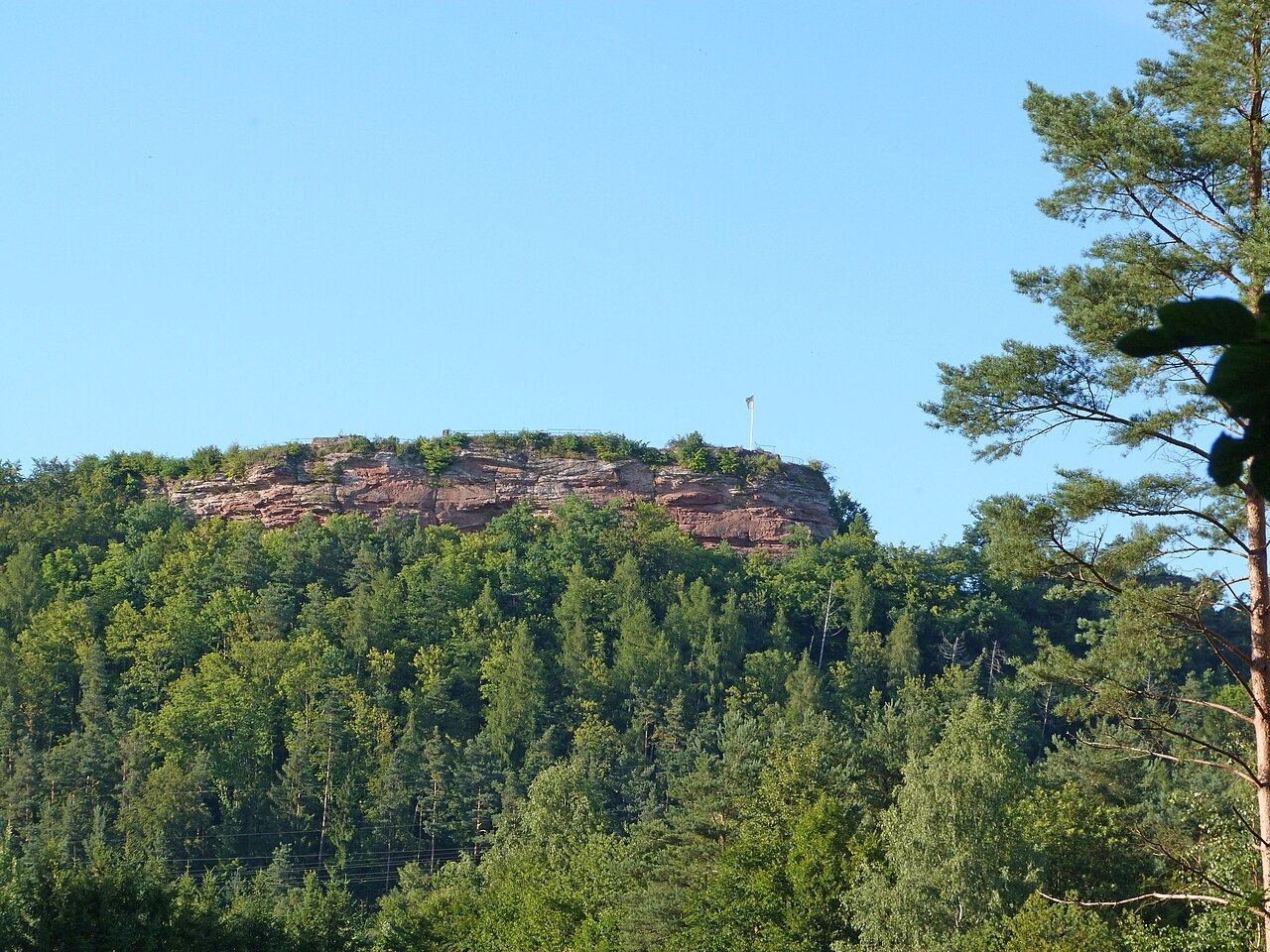
Falkenburg
Falkenburg Castle, located near Detmold-Berlebeck in the North Rhine-Westphalia region of Germany, stands as a remarkable example of a medieval hilltop castle that played a pivotal role in shaping the territorial sovereignty of the noble zur Lippe family. Constructed in 1194 or 1195 by Bernhard II zur Lippe and his son Hermann II, this fortress was among the earliest strongholds northeast of the Teutoburg Forest, alongside the old town of Lemgo. The zur Lippe family, originally from the area of present-day Lippstadt, established Falkenburg as a strategic base that laid the foundation for their rule in what is now the district of Lippe.
Historical significance and foundation
The establishment of Falkenburg Castle marked a significant step in the territorial expansion and consolidation of the zur Lippe dynasty during the High medieval period. The castle's location on a prominent hill provided a commanding view of the surrounding landscape, making it an ideal defensive position and symbol of noble authority. Throughout the Middle Ages, Falkenburg remained a central seat of power for the Lippe counts, underscoring its importance in regional politics and military affairs.
Architectural features and layout
Falkenburg exemplifies the characteristics of a hill castle with a complex defensive system. The castle's core included a robust ring wall that enclosed the main structures, providing formidable protection against attackers. Key architectural components included a keep, serving as the last line of defense and residence, a palace for the noble family, an outer bailey which housed auxiliary buildings and stables, and a kennel or zwinger—a narrow enclosed passage between walls designed to trap and expose enemies to defensive fire.
The castle's design reflects typical medieval military architecture, emphasizing both defense and habitation. The keep was likely a multi-storied stone tower, while the palace combined residential comfort with fortification. The outer bailey expanded the functional space, supporting the castle's self-sufficiency during sieges.
Sieges and conflicts in the 15th century
During the turbulent 15th century, Falkenburg Castle was a focal point of regional conflicts. It endured two major sieges during the Everstein Feud (1404-1409) and the Soest Feud (1444-1449). Despite these aggressive attempts, the castle's defenses held strong, and it was not captured. These feuds were part of broader power struggles among local nobility and cities, reflecting the castle's strategic importance.
However, in 1453, a significant fire damaged parts of the castle complex. The cause of the fire remains unclear, but the event necessitated restoration efforts to maintain the fortress's usability.
Decline and preservation efforts
Following its restoration, Falkenburg Castle continued to be inhabited until 1523. After this period, it gradually fell into disuse and was eventually abandoned. Over subsequent centuries, the castle was neglected and suffered from decay. Its stones were quarried for local construction projects, including roads and houses, which further diminished the structure.
Despite this decline, the ruins of Falkenburg have remained an important cultural and historical landmark. Since 2004, concerted efforts have been made to uncover, secure, and preserve the remaining structures. These efforts have revealed an impressive array of medieval architectural elements, offering visitors a unique glimpse into the castle's original grandeur and defensive capabilities.
Visitor experience and cultural importance
Today, the ruins of Falkenburg Castle provide a valuable educational resource and tourist attraction. Visitors can explore the remnants of the ring wall, keep, palace, outer bailey, and kennel, gaining insight into the medieval lifestyle and military architecture of the Lippe nobility. The site’s elevated position also offers scenic views of the surrounding landscape, enhancing its appeal.
Falkenburg remains a testament to the enduring legacy of the zur Lippe family and their influence on the history and development of the Lippe district. The castle's preservation underscores the importance of safeguarding historical monuments as windows into the past.
Frequently asked questions (FAQ)
- How do I get to Falkenburg Castle?
- Falkenburg Castle is located in Detmold, Germany, and can be easily accessed by car or public transportation. If you're traveling by train, the nearest station is Detmold, from which local buses or taxis can take you directly to the castle.
- What is the historical significance of Falkenburg Castle?
- Falkenburg Castle, built in the early 13th century, played a crucial role in the regional power dynamics of the time. It served as a stronghold for noble families and is an important example of medieval military architecture in northern Germany.
- When was Falkenburg Castle built?
- Falkenburg Castle was constructed around the year 1230. Over the centuries, it underwent several renovations and expansions, reflecting the architectural styles of different periods.
- Can I visit Falkenburg Castle year-round?
- Yes, Falkenburg Castle is open to visitors year-round, but hours of operation may vary by season. It's advisable to check the official website for the latest information on opening times before your visit.
- Why is Falkenburg Castle a popular tourist destination?
- Falkenburg Castle attracts visitors due to its rich history, stunning architecture, and picturesque setting. The castle offers guided tours, which provide insight into its fascinating past and the surrounding natural beauty.
- Is it possible to access all areas of the castle?
- While many parts of Falkenburg Castle are accessible to visitors, some areas may be restricted for preservation reasons. However, guided tours typically include the most significant sections of the castle, allowing you to experience its grandeur.
- What are the ticket prices for visiting Falkenburg Castle?
- Ticket prices for Falkenburg Castle are generally affordable, with discounts available for students and seniors. Children under a certain age may enter for free, and family packages can also be purchased for a more economical visit.
- What is the best time to visit Falkenburg Castle?
- The best time to visit Falkenburg Castle is during the spring and early autumn when the weather is pleasant, and the surrounding scenery is at its most vibrant. Additionally, visiting during weekdays may help you avoid larger crowds.
- Are there any nearby attractions to Falkenburg Castle?
- Yes, there are several nearby attractions, including the beautiful Externsteine rock formation and the picturesque town of Detmold. Both locations offer additional opportunities for exploration and enjoyment of the region's natural beauty and cultural heritage.
Information
Website
Visit websiteSources & official resources
Verify the information above using these authoritative references.
Loading map...
Visitor reviews
No reviews yet. Been here? Write the first review and help other travelers!
Write the first reviewVisited this castle? Share your experience
Your review helps other travelers and adds first-hand knowledge to our encyclopedia.