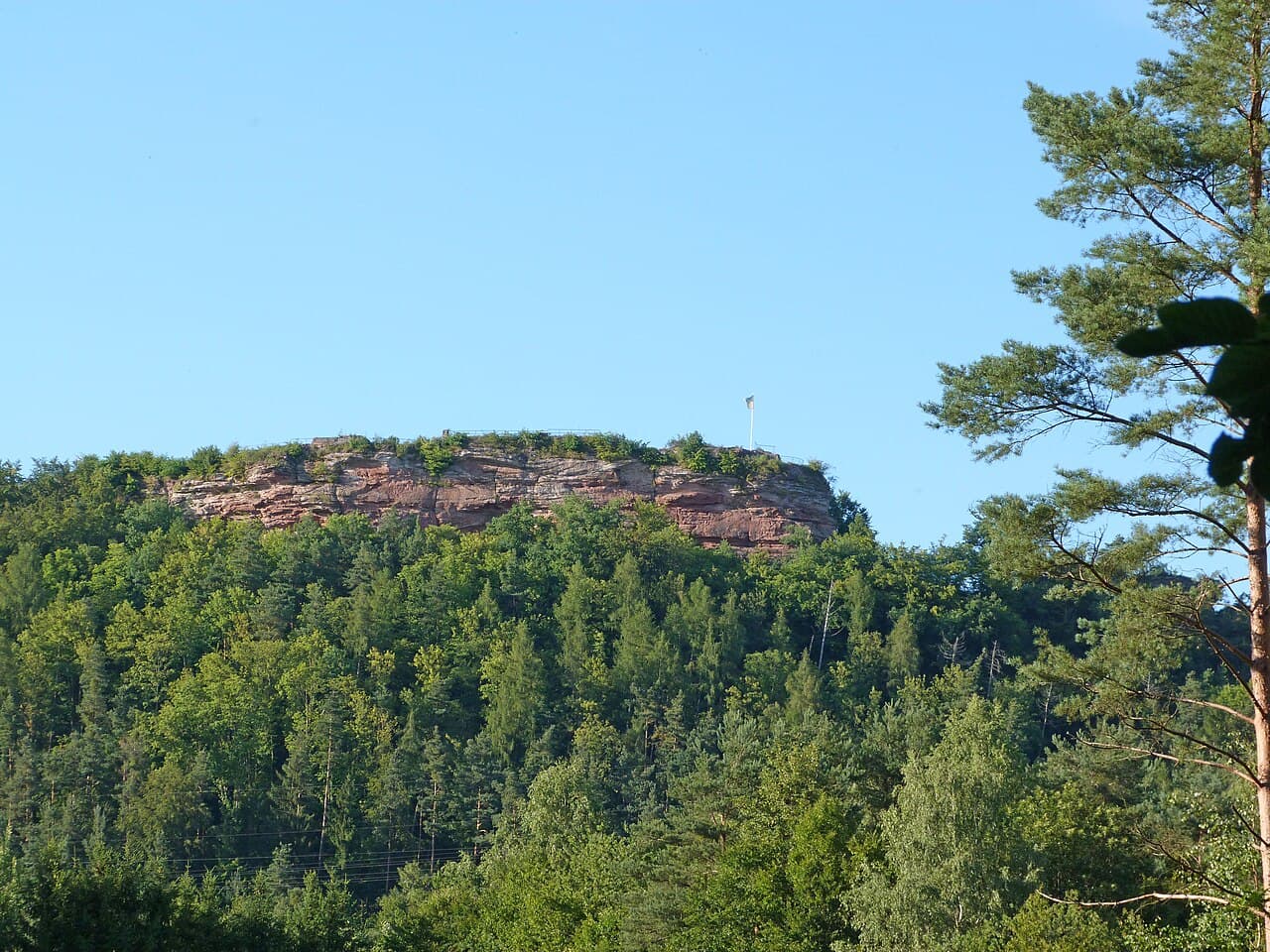
Falkenburg Castle
Falkenburg Castle stands as a significant high medieval fortress ruin located near Detmold, Germany. Constructed around 1190 to 1194 by the noble Lippe family, this castle was strategically positioned on a sandstone outcrop, typical for fortifications in the region. The site offers insight into medieval castle architecture and the defensive strategies employed during the 12th and 13th centuries.
Historical background and construction
The castle was built during a period of territorial consolidation by the Lippe family, who sought to establish their influence in the region. Falkenburg Castle's location on a prominent sandstone hill provided natural defensive advantages, controlling key routes and overseeing the surrounding landscape. The use of local sandstone not only enhanced the castle's defensive structures but also integrated it visually into the Palatinate Forest environment.
Originally, Falkenburg functioned as a noble residence and military stronghold. It was designed to withstand sieges and to assert the power of the Lippe family within the contested territories of the Holy Roman Empire during the high medieval period.
Architectural features and layout
Although today the castle remains a ruin, archaeological studies and remaining structures reveal a typical medieval fortress layout. The castle likely featured a keep or donjon at its core, surrounded by defensive walls and towers adapted to the sandstone terrain. The walls would have included battlements and arrow slits for archers, while the positioning on the hill enhanced visibility and defense.
The use of sandstone as a building material influenced the castle’s design, with carved stone blocks forming the walls, gatehouses, and possibly residential quarters. The castle's layout would have included a courtyard, living quarters, storage rooms, and defensive towers, arranged to maximize protection and functionality.
Destruction and current condition
Falkenburg Castle suffered a devastating fire in the mid-15th century, which led to its abandonment and gradual decay. The fire likely resulted from military conflict or internal strife, common causes of castle destruction during this turbulent period. Since then, the castle has remained in ruins, with only fragments of walls and foundations visible today.
Despite its ruined state, Falkenburg Castle remains under the ownership of the Lippe family, preserving its historical connection to the original builders. The site is classified as an archaeological ruin, attracting historians, archaeologists, and visitors interested in medieval fortifications and regional history.
Location and natural environment
The castle overlooks the village of Wilgartswiesen, situated within the Palatinate Forest in Rhineland-Palatinate. This forested region is known for its sandstone formations and numerous medieval castles, many of which share similar construction characteristics due to the availability of local stone.
The natural sandstone outcrop provided a strong foundation and defensive advantage, while the surrounding forest offered resources and concealment. The site’s elevated position allowed for surveillance of the surrounding valleys and routes, essential for medieval military strategy.
Cultural significance and preservation
Falkenburg Castle is a valuable cultural heritage site, illustrating the architectural and feudal history of the Lippe family and the broader region during the high medieval era. Its ruins contribute to the understanding of medieval castle construction on sandstone formations and the defensive adaptations made by builders of the time.
Preservation efforts focus on maintaining the ruins as an archaeological site, ensuring that remaining structures are stabilized and accessible for educational and touristic purposes. The castle's connection to the Lippe family adds to its historical importance, linking it to the lineage of regional nobility.
Visiting information
While Falkenburg Castle is a ruin, visitors can explore the site and enjoy panoramic views of the Palatinate Forest and Wilgartswiesen village. The site is accessible by hiking trails, reflecting its integration into the natural landscape. Visitors should prepare for uneven terrain and limited facilities.
There are no regular opening hours or entrance fees, as the site is open for public access. Informational signage may be present to guide visitors through the castle’s history and architectural features.
Frequently asked questions (FAQ)
- How do I get to Falkenburg Castle?
- Falkenburg Castle is located in Detmold, Germany, and can be accessed by public transportation or car. If you're taking public transport, check the local bus or train schedules for routes that connect to Detmold. There is also parking available near the castle for those traveling by car.
- What is the historical significance of Falkenburg Castle?
- Falkenburg Castle, built in the 13th century, played a crucial role in the regional power struggles of the time. It served as a defensive stronghold and residence for the noble families of the area. Today, it stands as a testament to medieval architecture and history, attracting visitors interested in the rich past of Detmold.
- When was Falkenburg Castle built?
- Falkenburg Castle was constructed in the early 13th century, with its origins dating back to 1230. Over the centuries, it has undergone various renovations and restorations, reflecting different architectural styles. Its enduring presence highlights the importance of fortifications in medieval Germany.
- Can I explore the interior of Falkenburg Castle?
- Yes, visitors can explore certain areas of Falkenburg Castle, including its impressive towers and surrounding grounds. Guided tours are often available, allowing guests to learn more about the castle's history and architecture. Be sure to check the schedule for any special events or exhibitions that may enhance your visit.
- Why is Falkenburg Castle a popular tourist destination?
- Falkenburg Castle attracts tourists due to its historical significance, stunning architecture, and picturesque location. The castle offers breathtaking views of the surrounding landscape, making it an ideal spot for photography and leisure walks. Additionally, its rich history and engaging tours provide a fascinating experience for visitors of all ages.
- Is it possible to host events at Falkenburg Castle?
- Yes, Falkenburg Castle can be rented for special events such as weddings, corporate gatherings, and private parties. The unique setting offers a memorable backdrop for any occasion. It is advisable to contact the castle administration in advance to discuss availability and specific arrangements.
- What are the opening hours for Falkenburg Castle?
- Falkenburg Castle typically opens to visitors from 10 AM to 6 PM during the peak tourist season, with shorter hours in the off-season. It's recommended to check the castle's official website or contact the administration for the most current opening hours before your visit. Special holiday hours may also apply.
- What are the ticket prices for visiting Falkenburg Castle?
- Ticket prices for Falkenburg Castle vary depending on the age of the visitor and the type of tour. Generally, there is a small fee for adults, while children and students may receive discounted rates. Group discounts are often available, so plan ahead if you're visiting with a larger party.
- What is the best time to visit Falkenburg Castle?
- The best time to visit Falkenburg Castle is during the spring and early autumn when the weather is mild, and the surrounding nature is in full bloom. These seasons also see fewer crowds compared to the peak summer months, allowing for a more enjoyable experience. Additionally, special events and festivals may be held during these times, enhancing your visit.
- Are there nearby attractions to Falkenburg Castle?
- Yes, there are several nearby attractions worth exploring, including the charming town of Detmold, the historic open-air museum, and the beautiful Teutoburg Forest. These sites offer visitors a chance to experience the culture and natural beauty of the region. Make sure to plan your itinerary to include these additional destinations for a full day of exploration.
Photo gallery

Information
Loading map...
Visitor reviews
No reviews yet. Been here? Write the first review and help other travelers!
Write the first reviewVisited this castle? Share your experience
Your review helps other travelers and adds first-hand knowledge to our encyclopedia.


