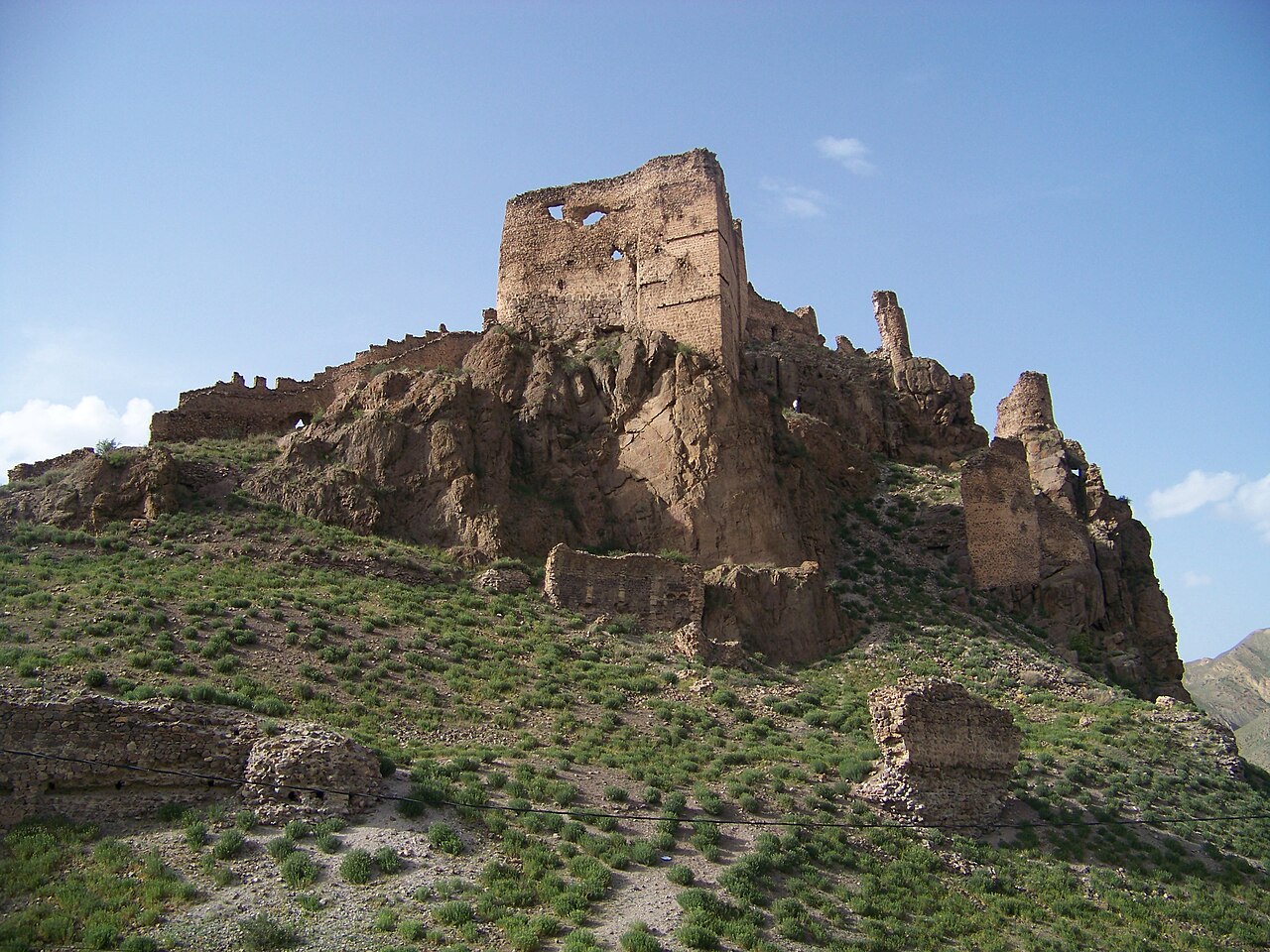
Erzurum Castle
Erzurum Castle, locally known as Erzurum Kalesi, is a prominent historic fortress located on a hilltop in the center of the city of Erzurum in eastern Turkey. This castle has a long and complex history, reflecting the region's strategic importance as a crossroads of empires and cultures. The site has been fortified since ancient times, with the earliest known fortifications dating back to the Urartian period, making it one of the oldest defensive structures in the area.
Early history and Byzantine construction
The castle's current core structure was constructed in 415 AD under the reign of Byzantine Emperor Theodosius II. This period marked a significant phase of fortification in the eastern provinces of the Byzantine Empire, aiming to secure key cities against invasions. Erzurum Castle was built on a hilltop to maximize its defensive advantage, overseeing the surrounding plains and controlling important trade and military routes.
Throughout antiquity and the early medieval period, Erzurum was a contested city, changing hands between various powers including the Assyrians, Sassanians, Persians, Arabs, Romans, and Byzantines. Each successive ruler contributed to the fortifications or repaired damages caused by sieges and battles, reflecting the castle's ongoing military significance.
Saltukid era enhancements
In the 11th century, the castle came under the control of the Saltukid dynasty, a Turkish beylik that governed the region. Under the rule of Saltukid Bey Muzaffer Gazi (1124–1132), significant architectural additions were made, including the construction of the Tepsi Minaret in the southwest corner of the inner castle. This minaret, originally a part of a mosque or chapel complex, remains an important architectural feature.
Mid-12th century Saltukid builders also erected the Mescid, a small chapel within the inner castle grounds, which is still preserved today. These Islamic architectural elements highlight the cultural and religious shifts in the region during this period.
Ottoman restoration and later modifications
Erzurum Castle suffered extensive damage during repeated military conflicts over the centuries. Despite this, it was consistently rebuilt and restored by successive rulers. One of the most notable restoration efforts was undertaken in the 16th century by Ottoman Sultan Suleiman the Magnificent, who reinforced the castle's defenses to maintain control over the eastern frontiers of the empire.
After the castle lost its military role, it was repurposed for storage. In the 19th century, parts of the castle's stonework were removed and reused for repairing nearby bastions dating from the 18th century. During this century, the upper portion of the Tepsi Minaret collapsed but was later rebuilt with a clock, earning it the name Saat Kulesi or "Hour Tower." This clock tower remains one of the castle's most recognizable landmarks.
Architectural features and layout
Erzurum Castle is a hill castle featuring an inner castle and an outer courtyard. The fortress was originally integrated into the town's defensive walls, protecting the northeast corner of the city. The castle was equipped with eight towers constructed from calcareous stone, with walls measuring between 2 and 2.5 meters thick, designed to withstand sieges and artillery attacks.
Most of the original town walls and gates have disappeared, except for a surviving section approximately 90 meters long with three towers located southeast of the castle. The castle's layout demonstrates typical medieval military architecture adapted to the local terrain.
Visiting Erzurum Castle today
Today, Erzurum Castle is partially preserved and accessible to visitors for a small entrance fee. While the interior does not contain extensive exhibits or furnishings, visitors can explore the castle grounds and climb the clock tower for panoramic views over the city of Erzurum and the surrounding landscape. The castle remains a significant cultural and historical monument, reflecting centuries of military architecture and regional history.
Its location in Erzurum city center makes it easily accessible, and it offers insight into the Byzantine, Seljuk, and Ottoman influences that shaped eastern Anatolia. The castle is a popular destination for those interested in medieval fortifications and Turkish history.
Frequently asked questions (FAQ)
- When was Erzurum Castle originally built?
- Erzurum Castle's current structure was built in 415 AD under Byzantine Emperor Theodosius II, though earlier fortifications existed from Urartian times.
- What architectural styles are visible in Erzurum Castle?
- The castle features Byzantine military architecture with later Islamic influences from the Saltukid period, including the Tepsi Minaret and Mescid chapel.
- Can visitors climb the clock tower?
- Yes, visitors can climb the Saat Kulesi (clock tower) to enjoy panoramic views of Erzurum city and its surroundings.
- Is there an entrance fee to visit Erzurum Castle?
- Yes, Erzurum Castle can be visited for a small fee, making it an affordable historical attraction.
- What remains of the original town walls around Erzurum Castle?
- Most of the town walls have disappeared except for a 90-meter section with three towers southeast of the castle.
Information
Address
Kırklar Sk, Turkey
Loading map...
Visitor reviews
No reviews yet. Been here? Write the first review and help other travelers!
Write the first reviewVisited this castle? Share your experience
Your review helps other travelers and adds first-hand knowledge to our encyclopedia.