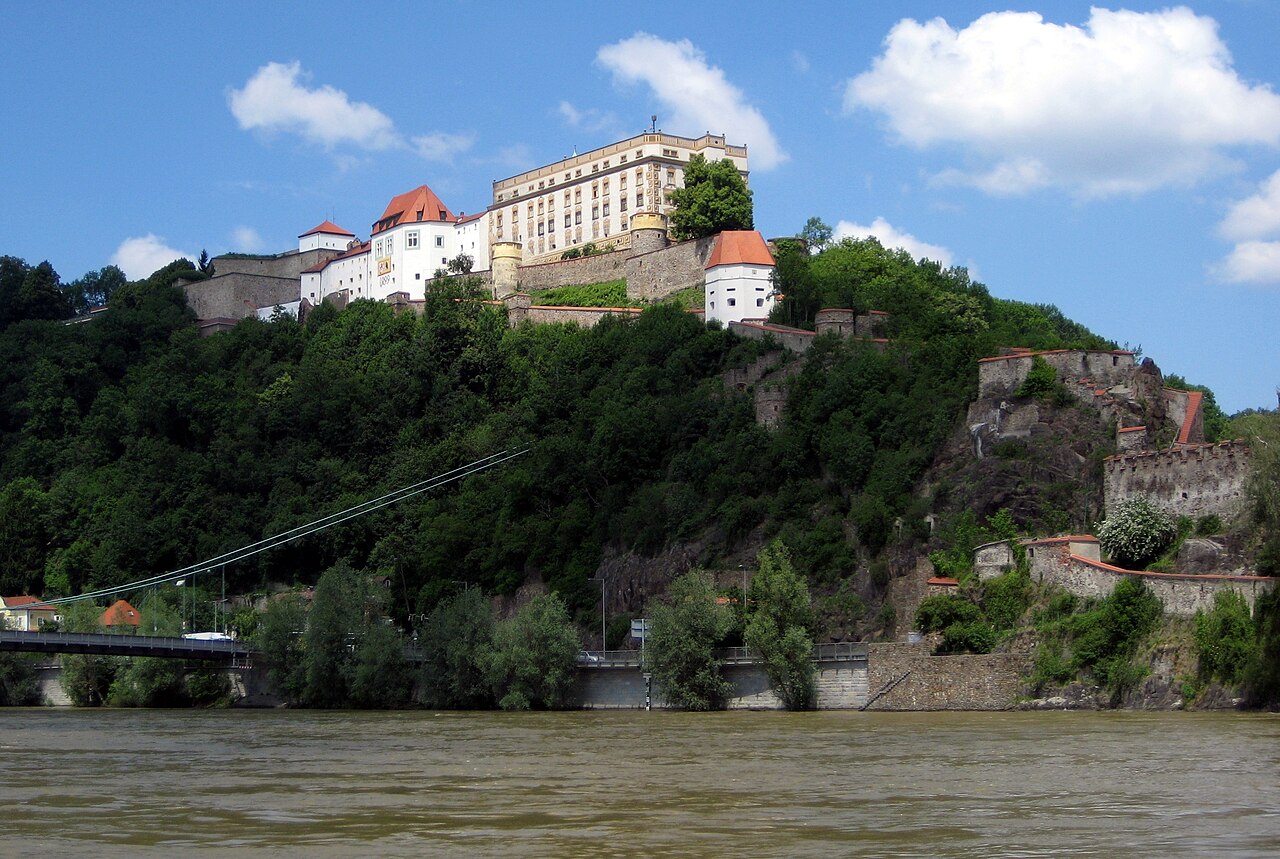
Englburg Castle

Englburg Castle in Tittling, Germany
Tittling, Germany
Late Medieval (14th–15th c.)
Restored

Englburg Castle is a late medieval hill castle located on a prominent 581-meter-high hill near the town of Tittling, Germany. The castle's strategic position atop this elevation provided a commanding view of the surrounding landscape, which was crucial for defense and surveillance during the medieval period.

Historical background and construction

The current structure of Englburg Castle dates back to 1396, following its destruction by the citizens of Passau. This event marked a significant turning point in the castle's history, leading to its reconstruction in the late 14th century. The castle was originally built to serve as a fortified residence and stronghold for local nobility, reflecting the turbulent political and military climate of the late medieval period.

Throughout its history, Englburg Castle endured multiple conflicts, most notably suffering severe damage during the Thirty Years' War in 1634 when it was attacked by Swedish troops. This conflict left lasting scars on the castle's structure and necessitated repairs and modifications in the following centuries.

Architectural evolution and restoration

After a devastating fire in 1874, Englburg Castle underwent significant restoration, which shaped much of its current appearance. The renovations during this period were influenced by the architectural tastes of the 19th century, blending the castle's medieval origins with contemporary styles and functional updates.

The castle was owned by various noble families over the centuries, with the Lords of Taufkirchen being among the last aristocratic owners. In the second half of the 19th century, the Niedermeier family, who were local landowners, initiated further renovations and expansions. Their efforts transformed Englburg into a popular excursion destination, enhancing its appeal beyond its original defensive purpose.

One notable addition from this era is the lookout tower, which remains a prominent feature of the castle grounds and offers panoramic views of the surrounding countryside.

Modern use and preservation

Since 2011, Englburg Castle has undergone thorough renovations aimed at adapting the historic structure for modern use. Today, the castle accommodates apartments, offices, and commercial spaces, integrating contemporary functionality within its historic fabric.

Despite its rich history and architectural significance, Englburg Castle is currently not open to the public. The preservation efforts focus on maintaining the building's structural integrity and adapting it for private use while respecting its cultural heritage.

Architectural features and significance

Englburg Castle exemplifies the characteristics of a late medieval hill castle, with defensive walls, fortified towers, and a layout designed to maximize its elevated position. The castle's various phases of construction and restoration reflect the evolving architectural styles from the medieval period through the 19th century.

The castle's survival through centuries of warfare, destruction, and fire highlights its resilience and the importance placed on its preservation by successive owners. Its transformation from a military stronghold to a leisure destination and now to a mixed-use property illustrates the adaptive reuse of historic castles in Germany.

Frequently asked questions (FAQ)

How do I get to Englburg Castle?
Englburg Castle is located in Tittling, Germany, and can be easily accessed by car or public transportation. If you are driving, there is parking available nearby. For those using public transport, check local train and bus schedules for convenient routes to Tittling.
What is the historical significance of Englburg Castle?
Englburg Castle, dating back to the 13th century, played a crucial role in the defense of the region during medieval times. It served as a residence for various noble families and is a testament to the architectural style of the era. Today, it stands as a symbol of local heritage and attracts history enthusiasts from around the world.
When was Englburg Castle built?
Englburg Castle was constructed in the early 1200s, making it one of the oldest structures in the area. Over the centuries, it has undergone several renovations, preserving its historical features while adapting to new uses. Its long history is reflected in its well-preserved architecture and surrounding landscape.
Can I visit Englburg Castle year-round?
Yes, Englburg Castle is open to visitors year-round, although specific opening hours may vary by season. It is advisable to check the official website or contact the castle administration for the most current visiting information. Guided tours are often available, providing insights into the castle's history and architecture.
Why is Englburg Castle popular among tourists?
Englburg Castle attracts visitors due to its rich history, stunning architecture, and picturesque setting. It offers a unique glimpse into medieval life and fortification techniques, making it a fascinating destination for history and architecture enthusiasts. Additionally, its proximity to beautiful natural landscapes enhances the overall visitor experience.
Is it possible to take guided tours of Englburg Castle?
Yes, guided tours are available at Englburg Castle, providing visitors with a deeper understanding of its history and architectural features. These tours are often led by knowledgeable guides who share interesting stories and facts about the castle. It is recommended to check in advance for tour scheduling and availability.
What are the opening hours for Englburg Castle?
Englburg Castle typically opens to the public from 9 AM to 6 PM during the peak season, with shorter hours in the off-season. However, these hours can vary, so it is best to confirm by visiting the official website or calling ahead. Special events may also affect normal operating hours.
What are the ticket prices for visiting Englburg Castle?
Ticket prices for Englburg Castle are generally affordable, with discounts available for students, seniors, and groups. Children under a certain age may enter for free. It's advisable to check the official website for the most accurate pricing and any special promotions that may be available.
What nearby attractions should I visit while in Tittling?
While visiting Englburg Castle, consider exploring the surrounding natural parks and trails that showcase the beauty of the Bavarian countryside. Nearby, you can also find charming villages, local markets, and other historical sites that enrich the experience of your trip. The region is known for its scenic views and outdoor activities, making it a perfect destination.

Information

Hill Castle

Loading map...

Visitor reviews

No reviews yet. Been here? Write the first review and help other travelers!

Write the first review

Visited this castle? Share your experience

Your review helps other travelers and adds first-hand knowledge to our encyclopedia.

Write a review

(5/5)

0/2000 characters

Your review will be visible after admin approval

Nearby castles

5 km

Burg Saldenburg

Saldenburg, Germany

Burg Saldenburg is a remarkable example of a medieval hill castle located in the municipality of Saldenburg in Bavaria, Germany. Constructed originally in the late 14th century, this fortress was built by the medieval Bavarian civilization to serve both defensive and strategic purposes. Its founding dates back to 1368 when Ritter Heinrich Tuschl von Söldenau erected the castle on behalf of the Counts of Hals. The castle’s primary function was to protect a vital trade route leading to Bohemia and to act as a fortified border position against the neighboring Prince-Bishopric of Passau, emphasizing its role in regional security and commerce during the High to Late Medieval period. Throughout its history, Burg Saldenburg experienced numerous changes in ownership and architectural transformation. Shortly after its establishment, the castle changed hands multiple times. In 1388, it was sold to the dukes of Bavaria, and a year later passed to Ulrich den Egger. By 1446, Count Heinrich von Ortenburg inherited the estate, holding it until 1468 when it transferred to Hans Gewolf von Degenberg. During this era, the castle endured military pressure, notably when Duke Ludwig IX laid siege to it. Despite the siege, the fortress surrendered without significant damage, underscoring its robust defensive capabilities. The Counts of Ortenburg regained control in 1479 and maintained the castle’s influence in regional affairs through the late medieval period. Baroque transformation and later history In the 17th century, Burg Saldenburg underwent significant changes in both ownership and architectural style. The Counts of Preysing-Moos acquired the castle as an allodial property, free from feudal obligations, and commissioned extensive Baroque-style renovations in 1682. These modifications were led by the Italian architect Enrico Zuccalli, whose work transformed the fortress into a more refined and stately residence, hence the castle also became known as Schloss Saldenburg. This transformation marked a shift from purely military functions to a noble residence with enhanced aesthetic and comfort features. However, the castle’s fortunes were challenged in 1742 when it was set ablaze during an attack by the Pandurs, an irregular military force active during the War of Austrian Succession. Despite this setback, the castle remained an important symbol of noble presence in the region. The 19th century brought further changes. In 1826, Count Kaspar II. Preysing bequeathed the estate to Kaspar Freiherr von Berchem. Later, in 1848, ownership transferred to the Bavarian state. By 1928, the castle entered a new phase as it became the property of the German Youth Hostel Association, transitioning from a noble residence to a public facility while preserving its historical significance. Architectural features and layout The castle’s layout is centered on a prominent multi-story residential tower, often referred to as a donjon, which is characterized by a rectangular base and topped with a distinctive tent-shaped roof. This design reflects influences from Crusader castles, inspired by the founder Heinrich Tuschl’s pilgrimage to the Holy Land. Surrounding the donjon are remnants of a ring wall constructed from rubble stone, which once enclosed the central courtyard, providing a defensive perimeter. The courtyard contains a draw-well, highlighting the castle’s capacity for self-sufficiency during sieges. Access to the residential tower was originally via a wooden bridge spanning a moat, reinforcing the castle’s defensive architecture. Inside, the ground floor accommodated functional rooms such as the kitchen and other economic spaces essential for daily operations. The first floor housed the Rittersaal or knights’ hall, which today serves as a dining space. This hall is notable for its ceiling painting by an Italian artist, depicting a triumphal procession led by a Roman general or emperor, linking the interior decoration to Renaissance artistic traditions. On the second floor, visitors find the Gothic Hall, distinguished by its ribbed vaulting typical of medieval architecture. Around 1680, a Baroque chapel dedicated to the Three Wise Men was integrated into the structure. The chapel features ceiling artwork illustrating the circumcision of Christ and an altar painting portraying the Adoration of the Magi. These artworks connect the castle’s religious space to Christian iconography and reflect the patronage of the Preysing-Moos family during the Baroque renovation. Defensive structures and masonry Structural remains reveal parts of the bergfried or keep, constructed with medieval rubble stone masonry arranged on a square plan. Sections of the surrounding ring wall have survived in fragmentary form, built in a similar masonry style. The main building is a four-story cubic block with a hipped roof, retaining much of its original stonework from the 1368 construction alongside restoration efforts from the late 17th century. Due to its elevated position, Burg Saldenburg remains a visible landmark across nearby hills and valleys, embodying its historic role as both a defensive stronghold and a symbol of noble authority in the Bavarian region. Historical significance and cultural heritage Burg Saldenburg stands today as a protected monument under Bavarian heritage laws, recognized for its historical importance and archaeological remains spanning the medieval and early modern periods. The castle’s architectural evolution from a fortified medieval fortress to a Baroque residence illustrates broader trends in castle development in southern Germany. The preservation of Burg Saldenburg offers valuable insights into the military, residential, and religious functions of castles in Bavaria. Its association with notable historical figures such as Heinrich Tuschl von Söldenau, the Counts of Hals, Ortenburg, and Preysing-Moos families, as well as its connection to regional conflicts and trade routes, enriches its cultural narrative. Today, the castle’s adaptation as a youth hostel allows visitors to engage directly with its historical fabric, promoting heritage tourism and education. The site’s archaeological remains continue to be a source of study for medieval and Baroque architecture enthusiasts, contributing to the understanding of castle construction techniques and stylistic transitions over centuries.

Late Medieval (14th–15th c.)
Details
15.7 km

Hilgartsberg Castle

Hofkirchen, Germany

Hilgartsberg Castle, locally known as Burgruine Hilgartsberg, is a striking medieval fortress ruin perched on a mountain overlooking the left bank of the Donau River in the hamlet of Hilgartsberg, within the municipality of Hofkirchen, Bavaria, Germany. This castle holds a significant place in the region's history, reflecting centuries of feudal power struggles, architectural evolution, and military conflicts. Early history and feudal ownership The castle was first documented in 1112, marking its origins in the high medieval period. Initially, it was a fief under the authority of the Bishop of Bamberg, a powerful ecclesiastical figure in the Holy Roman Empire. The castle’s early custodians were the Counts of Sulzbach, a noble family influential in the region during the 12th century. The extinction of the Sulzbach line in 1188 led to a transfer of ownership to the sons of Frederick I, Holy Roman Emperor. These imperial heirs subsequently lent the castle to Walchunus von Kamm, a noble vassal, indicating the castle’s role in the complex feudal hierarchy of the time. Ownership by the house of eck and ducal intervention By 1326, the castle had come into the possession of the House of Eck, a noble family that maintained control for several decades. However, political tensions arose when Peter Ecker von Eck fell out of favor with Duke Albrecht I of Bavaria. This conflict culminated in a siege and conquest of the castle by the Duke in 1357. Following this military action, Duke Albrecht I strengthened the castle’s defenses and appointed a castellan to oversee its administration and security. This period marked a significant phase of fortification and strategic importance for Hilgartsberg Castle. Enlargement and use by the fugger family In the early 17th century, specifically in 1617, the castle came under the use of the prominent Fugger family, renowned bankers and merchants of the Renaissance era. The Fuggers undertook substantial enlargement projects, especially after a devastating fire in 1626 caused considerable damage. These renovations not only restored but also enhanced the castle’s structure, reflecting the architectural styles and functional needs of the period. The castle thus transitioned from a medieval fortress to a more complex residence and administrative center. Military conflicts and decline Hilgartsberg Castle’s strategic location made it a focal point during major European conflicts. In 1704, during the War of the Spanish Succession, the castle was occupied by Austrian troops, demonstrating its ongoing military relevance. Later, in 1742, during the War of the Austrian Succession, the castle suffered a critical blow when Austrian forces, aided by Hungarian troops, conquered and set fire to it. This destructive event left the castle in ruins, and it was never rebuilt, marking the end of its active military and residential use. Post-medieval history and modern use Following its destruction, the ruins of Hilgartsberg Castle changed hands several times, including ownership by a local brewer and eventually the Bavarian State. In the 1970s, part of the ruins was repurposed to serve as a village school, highlighting adaptive reuse of historic structures in rural communities. Today, the castle ruins are freely accessible to the public and serve as a venue for cultural events, preserving its legacy as a landmark of historical and architectural significance in Bavaria. Architectural features and layout Although now in ruins, Hilgartsberg Castle retains several notable architectural features that reveal its medieval origins and subsequent modifications. The castle was originally constructed as a hill castle, taking advantage of its elevated position for defense and surveillance over the Donau River valley. Its fortifications included thick stone walls, battlements, and a gatehouse designed to withstand sieges. The presence of a castellan’s residence and administrative buildings indicates the castle’s dual role as a military stronghold and noble residence. Fortifications and defensive structures The castle’s defensive system was strengthened notably after the 1357 siege, with enhancements such as reinforced curtain walls and improved battlements. These features were typical of high medieval military architecture, designed to repel attackers and provide secure living quarters for the garrison. The castle’s location on a mountain ridge provided natural defenses, supplemented by man-made fortifications. Residential and service buildings The enlargement by the Fugger family in the 17th century introduced Renaissance architectural elements and expanded residential quarters. These additions included larger halls, improved living chambers, and service buildings necessary for the castle’s operation as a noble estate. The fire of 1626 led to rebuilding efforts that incorporated contemporary styles and construction techniques, blending medieval fortifications with Renaissance comfort and aesthetics. Cultural significance and tourism Today, Hilgartsberg Castle stands as a testament to the layered history of Bavaria, reflecting feudal power dynamics, architectural evolution, and the impact of European wars. Its ruins attract visitors interested in medieval history, architecture, and scenic views of the Donau River. The castle’s use as a cultural venue allows for community engagement through concerts, exhibitions, and historical reenactments, fostering appreciation for the region’s heritage. Visitors can explore the castle grounds freely, experiencing the atmospheric ruins and imagining the castle’s former grandeur. The site’s accessibility and cultural programming make it a valuable destination for both local residents and tourists seeking to connect with Bavaria’s medieval past.

High Medieval (11th–13th c.)
Details
19.4 km
Veste Oberhaus — Germany castle

Veste Oberhaus

Passau, Germany

Veste Oberhaus is a prominent high medieval fortress founded in 1219 that has played a crucial role in the history and defense of Passau, Germany. Situated strategically on the St. Georgsberg mountain crest on the left bank of the Danube River, the fortress commands a commanding view over the city of Passau, which lies directly across the river. Its elevated position allowed it to serve as a formidable bastion and symbol of ecclesiastical power for the Bishops of Passau, who used it as their stronghold for centuries. Historical significance and origins The construction of Veste Oberhaus began in the early 13th century during a period of territorial consolidation and frequent regional conflicts. Founded by Bishop Ulrich II of Passau, the fortress was intended to protect the bishopric's interests and secure the city against external threats. Over time, it became a seat of administration and military defense, reflecting the dual religious and secular authority wielded by the bishops in the region. Throughout the Middle Ages, the fortress was expanded and reinforced to adapt to evolving military technology and political challenges. It withstood various sieges and served as a refuge during times of war and unrest, including conflicts during the Thirty Years' War and other regional disputes. Architectural features and layout Veste Oberhaus exemplifies typical high medieval fortress architecture with robust defensive elements designed to withstand prolonged sieges. The fortress complex includes massive stone curtain walls, imposing towers, and fortified gatehouses that controlled access to the interior. The walls are built from local stone, providing both strength and durability against artillery and assault. The fortress is arranged around a central courtyard, which historically housed essential facilities such as barracks, storerooms, and administrative buildings. The elevated position on the St. Georgsberg ridge also allowed for the installation of lookout posts and artillery placements, giving defenders a tactical advantage over attackers approaching from the city or river. Notable architectural elements include the main keep, which served as the last line of defense and residence for the bishop, and the chapel that reflects the religious function of the fortress. The design balances military utility with the ecclesiastical status of its occupants. Later uses and modern adaptations After its military importance declined, Veste Oberhaus transitioned into various civic and cultural roles. Today, it hosts a museum that showcases the history of the fortress, the city of Passau, and the surrounding region. The museum's exhibits include medieval weaponry, historical artifacts, and displays on the fortress's architectural evolution. The site also features a youth hostel providing unique accommodation within the historic walls, attracting visitors interested in heritage tourism. Additionally, a restaurant operates on the premises, offering panoramic views of Passau and the Danube. An open-air theatre established in 1934 utilizes the fortress's courtyard and ramparts, hosting cultural events and performances that connect the historic site with contemporary community life. Visiting Veste Oberhaus Visitors to Veste Oberhaus can explore the extensive fortress grounds, including the museum's exhibits and the architectural features that reflect centuries of history. The location provides breathtaking views over the confluence of the Danube, Inn, and Ilz rivers, often called the "City of Three Rivers." The fortress is accessible by foot from Passau's old town or via a funicular railway that climbs the steep hillside. The combination of historical significance, architectural grandeur, and modern cultural offerings makes Veste Oberhaus a must-visit destination for those interested in medieval fortifications, ecclesiastical history, and Bavarian heritage.

High Medieval (11th–13th c.)
Details