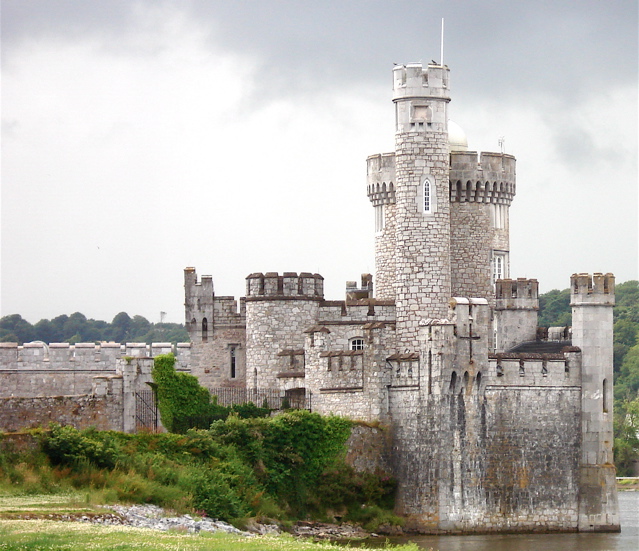
Elizabeth Fort
Elizabeth Fort is a prominent historic site located in the heart of Cork city, County Cork, Ireland. This Renaissance-era fortification was originally constructed in 1601 by Sir George Carew as a timber and earth defensive structure positioned on a hill opposite the medieval walls of Cork. Named after Queen Elizabeth I, the fort was intended to assert English control over the city during a turbulent period of Irish history.
Early construction and initial conflict
The original Elizabeth Fort was built quickly using timber and earthworks, reflecting military engineering practices of the early 17th century. However, the fort's initial existence was short-lived. In 1603, following the accession of James I to the English throne, the citizens of Cork rebelled and attacked the fort, demolishing it as a statement against the new monarch. After Lord Mountjoy recaptured Cork, the local population was compelled to rebuild the fort at their own expense, emphasizing its strategic importance.
Transformation into a star-shaped stone fort
Between 1624 and 1626, the original timber fort was replaced by a more durable and sophisticated star-shaped stone fortification. This design was influenced by contemporary European military architecture, which favored star forts for their improved defensive capabilities against artillery. The star shape allowed defenders to cover all approaches with overlapping fields of fire, minimizing blind spots.
Much of the fort's current structure dates back to this period, including its thick stone walls and angular bastions. In 1649, during the Cromwellian conquest of Ireland, the walls were heightened and further defensive enhancements were made to strengthen the fort against siege warfare.
Role during the williamite war and later military use
In 1690, during the Williamite War in Ireland, Elizabeth Fort was held by Jacobite forces defending Cork against the Williamite army. The fort withstood a four-day bombardment but ultimately surrendered when the city walls were breached. After this conflict, the fort's military significance as a defensive stronghold diminished.
By 1719, Elizabeth Fort was repurposed as a barracks, reflecting a shift from fortress to military accommodation. It continued in this role for much of the 18th century.
Notable historical incident
In 1754, a grim episode occurred when Morty Oge O'Sullivan Beare, known as the 'Captain of the Wild Geese', was executed for murder. His severed head was displayed on a spike atop the fort's walls, and his beheaded body was reportedly interred within the fort's confines, adding a macabre chapter to its history.
Conversion to a prison and later uses
In 1817, Elizabeth Fort was converted into a prison. It primarily housed convicts awaiting penal transportation to Australia and other British colonies until 1837. This period marked a significant change in the fort's function from military defense to incarceration.
Later in the 19th century, the fort returned to military use as a station for the Cork City Artillery, maintaining its connection to the British armed forces.
20th-century conflicts and restoration
During the Irish War of Independence (1919-1921), Elizabeth Fort served as a base for British auxiliary forces combating the Irish Republican Army. The fort's strategic location made it a focal point in the conflict.
In the subsequent Irish Civil War of 1922, anti-treaty forces set fire to the fort, causing significant destruction. The interior structures visible today largely date from the post-fire reconstruction efforts.
In 1929, a new Garda (police) station was established within the fort, which remained in use until 2013. This adaptation highlights the fort's continuous role in public service well into the modern era.
Architectural features and visitor experience
Elizabeth Fort is a star-shaped bastioned fortress typical of Renaissance military architecture. Its thick stone walls, angled bastions, and elevated position provided a commanding view over Cork city and its surroundings. The fort's layout facilitated effective defense against artillery and infantry assaults.
Today, the fort is somewhat concealed by surrounding urban development but remains accessible to the public. Visitors can explore the fortifications, ramparts, and courtyards, gaining insight into the site's layered history. Guided tours are available for a small fee, offering detailed information about the fort's construction, military significance, and historical events.
Elizabeth Fort stands as a significant cultural and historical landmark in Cork, reflecting centuries of military, penal, and civic use. Its preservation allows visitors to connect with Ireland's complex past through tangible architectural heritage.
Frequently asked questions (FAQ)
- What is the historical significance of Elizabeth Fort?
- Elizabeth Fort is a 17th-century star-shaped fortification that played a crucial role in the defense of Cork during various conflicts, including the Williamite War. It was originally built to house troops and protect the city from potential invaders, and it has served various military purposes throughout its history.
- When was Elizabeth Fort built?
- Construction of Elizabeth Fort began in 1601 and was completed in 1606. The fort was named after Queen Elizabeth I and was strategically designed to enhance the military capabilities of the city of Cork.
- What are the opening hours for Elizabeth Fort?
- Elizabeth Fort is typically open to visitors from 10 AM to 5 PM daily, but hours may vary based on the season or special events. It is always best to check the official website for the most current information before your visit.
- Can I visit Elizabeth Fort with children?
- Yes, Elizabeth Fort is family-friendly and welcomes visitors of all ages. The fort offers various educational resources and activities that engage children, making it a great place for a family outing.
- Is it possible to explore the fort on my own?
- Absolutely! Visitors can explore Elizabeth Fort at their own pace, with informative signage throughout the site to enhance your understanding of its history. Guided tours may also be available for those who prefer a more in-depth experience.
- What is the best time to visit Elizabeth Fort?
- The best time to visit Elizabeth Fort is during the spring and summer months when the weather is typically milder and more conducive to outdoor exploration. These seasons also feature various events and activities that may enhance your visit.
- Are there any nearby attractions to visit?
- Yes, Elizabeth Fort is located near several attractions, including St. Fin Barre's Cathedral and the English Market. These sites provide additional opportunities to explore the rich history and culture of Cork.
- What are the ticket prices for visiting Elizabeth Fort?
- Entry to Elizabeth Fort is generally free, making it an accessible option for all visitors. However, there may be fees for guided tours or special events, so it's advisable to check ahead for any potential costs.
- How do I get to Elizabeth Fort?
- Elizabeth Fort is conveniently located in the heart of Cork and can be reached by public transport, car, or on foot. There are also nearby parking facilities if you choose to drive.
Information
Address
Barracks St, Cork, Ireland
Loading map...
Visitor reviews
No reviews yet. Been here? Write the first review and help other travelers!
Write the first reviewVisited this castle? Share your experience
Your review helps other travelers and adds first-hand knowledge to our encyclopedia.