Eketorp Fort
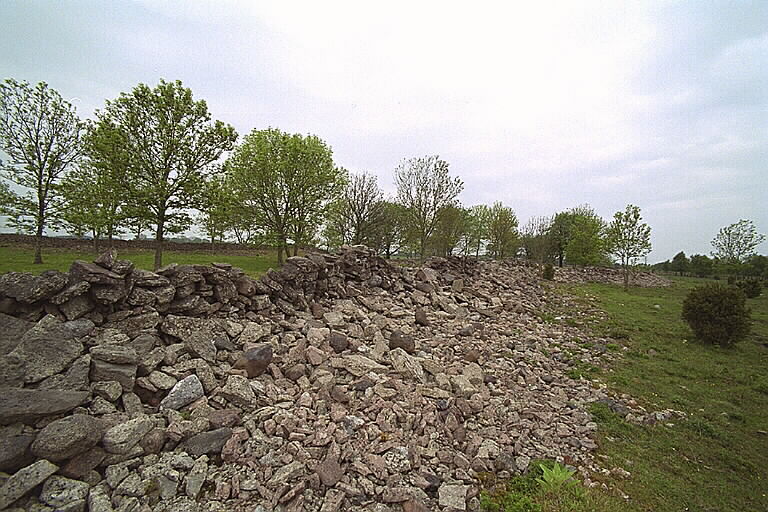
Eketorp fort is a remarkable example of an Iron Age ringfort located in the Stora Alvaret region on the island of Öland, Sweden. This historic fortification has undergone multiple phases of construction and use spanning from approximately the 4th century AD through the 13th century. Today, it stands as a carefully reconstructed site that offers visitors a vivid glimpse into the defensive architecture and daily life of ancient and medieval Scandinavia.
The origins and early construction phases
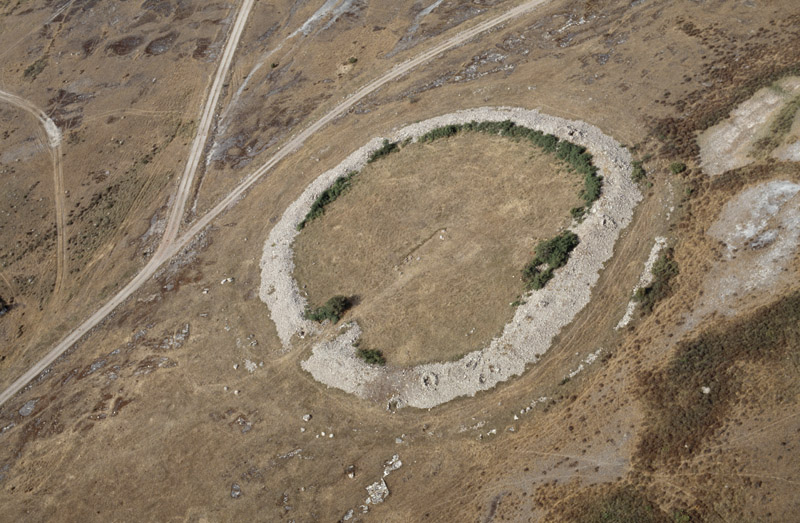
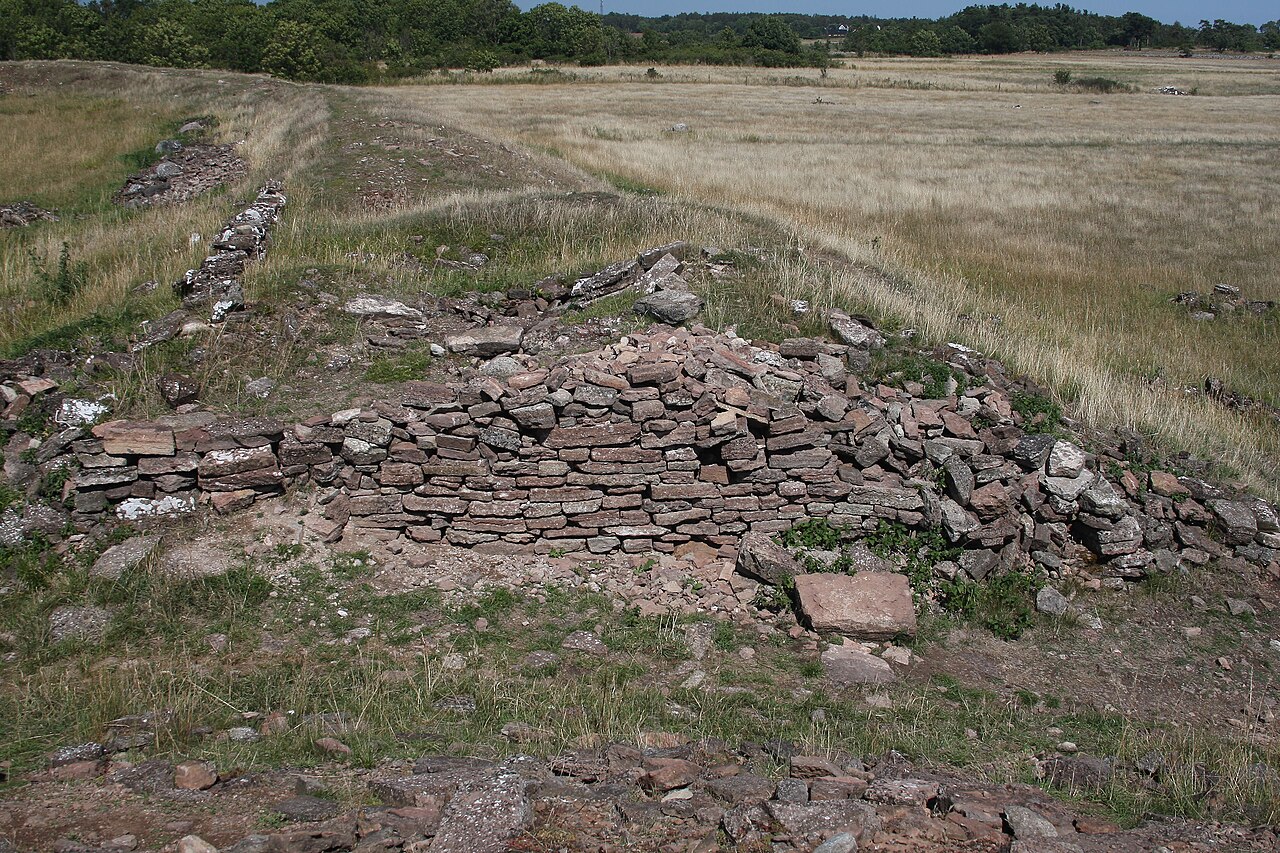
The earliest incarnation of Eketorp fort was established around 400 AD during the Iron Age. This initial ringfort was a circular stone structure approximately 57 meters in diameter, designed to serve as a refuge and gathering place for the local agricultural communities. Its location on the flat terrain of southern Öland necessitated a circular design to provide equal defense from all directions. The fort's curtain wall was complemented by radial interior buildings, some integrated into the wall itself, which provided shelter and storage.
In the following century, around the 5th century AD, the fort was extensively rebuilt and expanded. The original wall was dismantled and a new, larger circular curtain wall was constructed with a diameter of about 80 meters. This expansion included roughly 50 individual cells within the fortification, some positioned along the inner face of the wall and others located centrally within the ring. These cells likely served various functions, including habitation, storage, and defense.
Abandonment and medieval reconstruction
By the end of the 7th century, the fort was abandoned for reasons that remain unclear. It lay unused for approximately three centuries until the 11th century, when it was reoccupied and modified during the medieval period. This phase saw significant changes to the fort's internal structures: the original stone cells were replaced with wooden buildings, reflecting evolving architectural practices and functional needs.
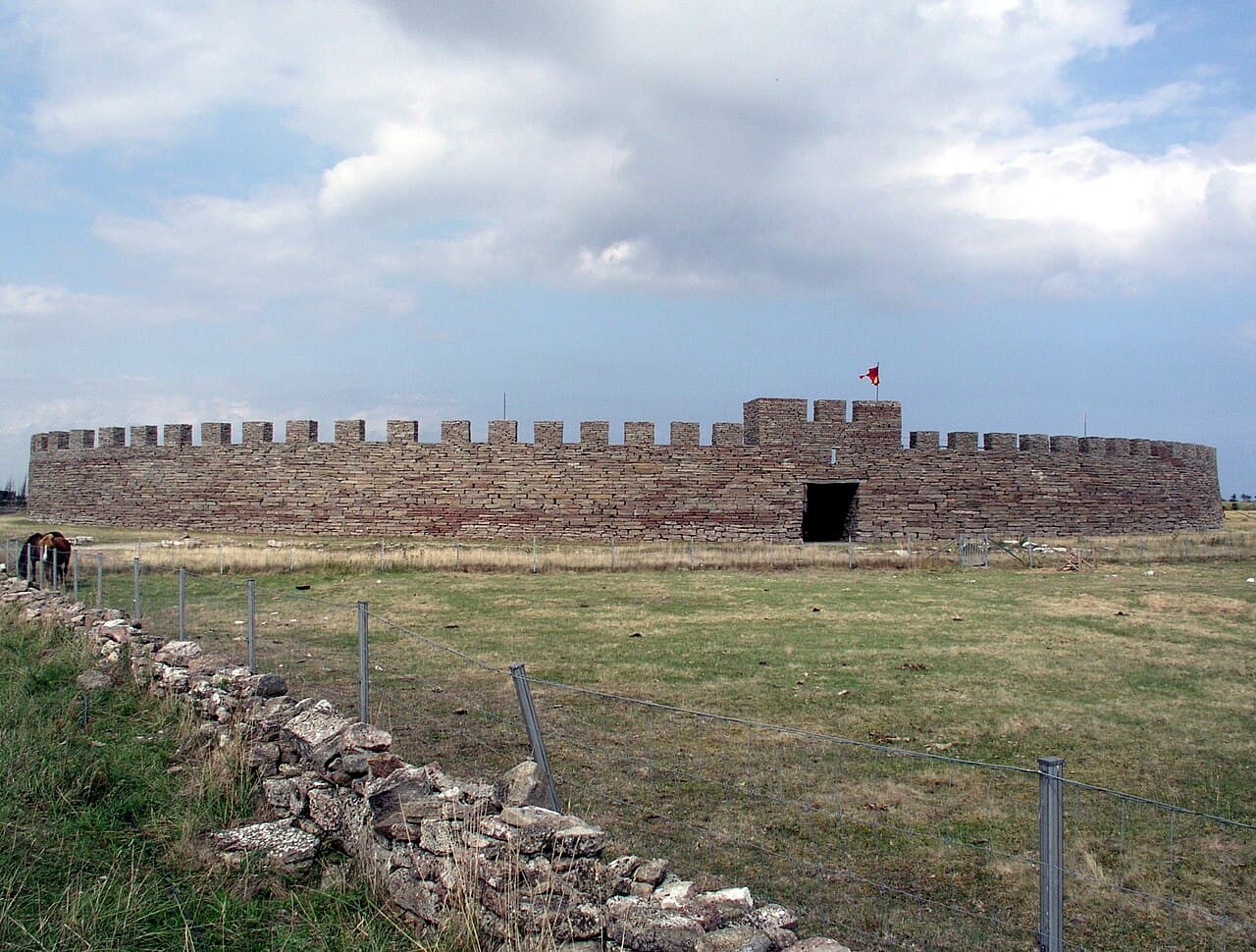
Additionally, a second outer circular wall was constructed, creating a more complex defensive system. This outer wall featured a single entrance, a departure from the earlier three-door design, which controlled access in a counterclockwise direction—a tactic that appears militarily unusual. The curtain wall and battlements were rebuilt in the style of this second medieval settlement phase, blending stone and timber constructions.
Archaeological significance and museum exhibits
Eketorp is the only one of the 19 known prehistoric fortifications on Öland to have been fully excavated, yielding over 24,000 artifacts. These finds provide invaluable insight into the material culture, trade, and daily life of the fort's inhabitants across different periods. The artifacts range from tools and weapons to household items and decorative objects, illustrating a vibrant community with connections extending as far as the Roman world.
Today, a museum located within the reconstructed buildings of the fort displays a selection of these artifacts. The museum offers visitors an educational experience that contextualizes the fort's historical development, its strategic importance, and the lifestyles of those who lived there.
Modern restoration and cultural heritage
In the 20th century, Eketorp fort was extensively reconstructed to serve as a cultural and tourist attraction. The restoration aimed to faithfully represent the fort's medieval appearance while preserving the archaeological integrity of the site. This has made Eketorp a popular destination for visitors interested in medieval history and archaeology.
The fort also hosts historical reenactments, where actors in period costumes demonstrate medieval crafts, trades, and battle scenes, bringing the past to life for contemporary audiences. These events enhance the educational value of the site and contribute to the preservation of regional heritage.
Location and visitor information
Eketorp fort is situated a few kilometers west of Route 136 on Öland. Visitors can access the site via an unpaved parking area located approximately two kilometers west of the island's perimeter highway. On-site amenities include a gift shop and guided tours available during peak summer months. Admission fees apply to support the site's maintenance and programming.
World Heritage status
The surrounding southern Öland area, including the Stora Alvaret limestone plain where Eketorp is located, has been designated a UNESCO World Heritage Site. This recognition underscores the region's unique natural environment and its rich archaeological and cultural history, with Eketorp fort as a key highlight.
Frequently asked questions (FAQ)
- What is the historical significance of Eketorp fort?
- Eketorp fort is a rare example of an Iron Age and medieval ringfort in Sweden, providing insight into ancient defensive architecture and daily life. It was used from around 400 AD through the 13th century and has yielded over 24,000 archaeological artifacts.
- How can visitors experience Eketorp fort today?
- Visitors can explore the reconstructed fort and museum, view artifacts, and enjoy live reenactments of medieval life and battles. Guided tours are available during peak seasons to enhance the experience.
- When was Eketorp fort originally built and how did it change over time?
- The fort was originally built around 400 AD as a circular stone ringfort. It was expanded in the 5th century, abandoned in the 7th century, and then rebuilt in the 11th century with wooden structures and an additional outer wall.
- Where is Eketorp fort located and how do I get there?
- Eketorp fort is located on the island of Öland in Kalmar County, Sweden, near Route 136. There is a parking area about two kilometers west of the island's perimeter highway, with signage directing visitors to the site.
- Is Eketorp fort part of a UNESCO World Heritage Site?
- Yes, the fort lies within the southern Öland region, which is designated as a UNESCO World Heritage Site due to its unique natural and cultural landscape.
Photo gallery

Information
Sources & official resources
Verify the information above using these authoritative references.
Loading map...
Visitor reviews
No reviews yet. Been here? Write the first review and help other travelers!
Write the first reviewVisited this castle? Share your experience
Your review helps other travelers and adds first-hand knowledge to our encyclopedia.