Bårby borg — Sweden castle

Bårby borg

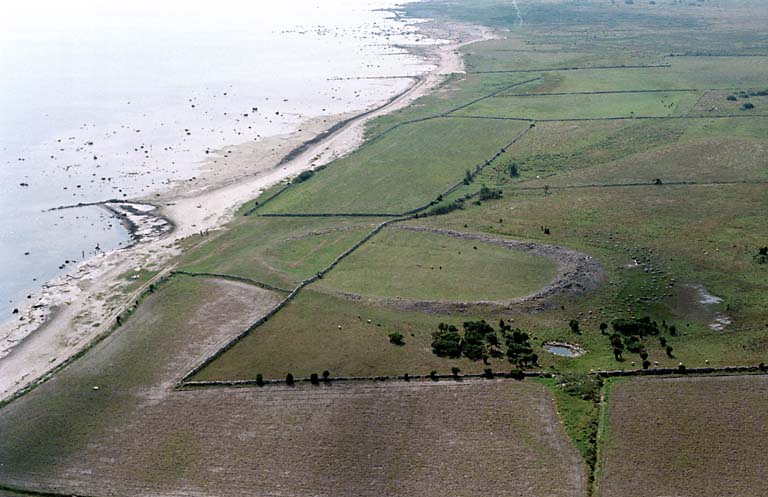
Bårby borg: archaeological ruins of a medieval Swedish castle
High Medieval (11th–13th c.)
Ruins

Bårby borg represents a significant example of medieval fortification in Sweden, known today primarily through its archaeological ruins. Although the exact city location remains uncertain, this site offers valuable insights into the defensive architecture and settlement patterns of the region during the medieval period.

The castle is classified as an archaeological ruins site, reflecting its current state as remnants rather than a fully preserved or restored structure. These ruins provide a window into the past, illustrating the typical construction methods and strategic considerations of medieval Swedish fortifications.

Historical context and significance

Bårby borg likely dates back to the High Medieval period, a time when many such fortifications were established across Scandinavia to assert control over territories and protect local populations. Castles from this era were often built to serve both military and administrative functions, acting as centers of power for local lords or rulers.

The strategic placement of Bårby borg would have been chosen to maximize defense capabilities, possibly situated on elevated ground or near important routes, although exact details are lost to time. The castle's remains suggest it played a role in regional defense and governance during a period marked by frequent conflicts and territorial disputes.

Architectural features and construction

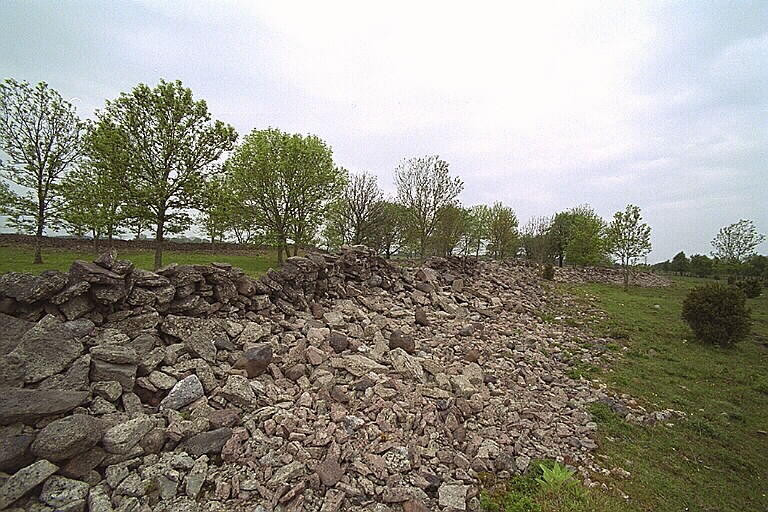
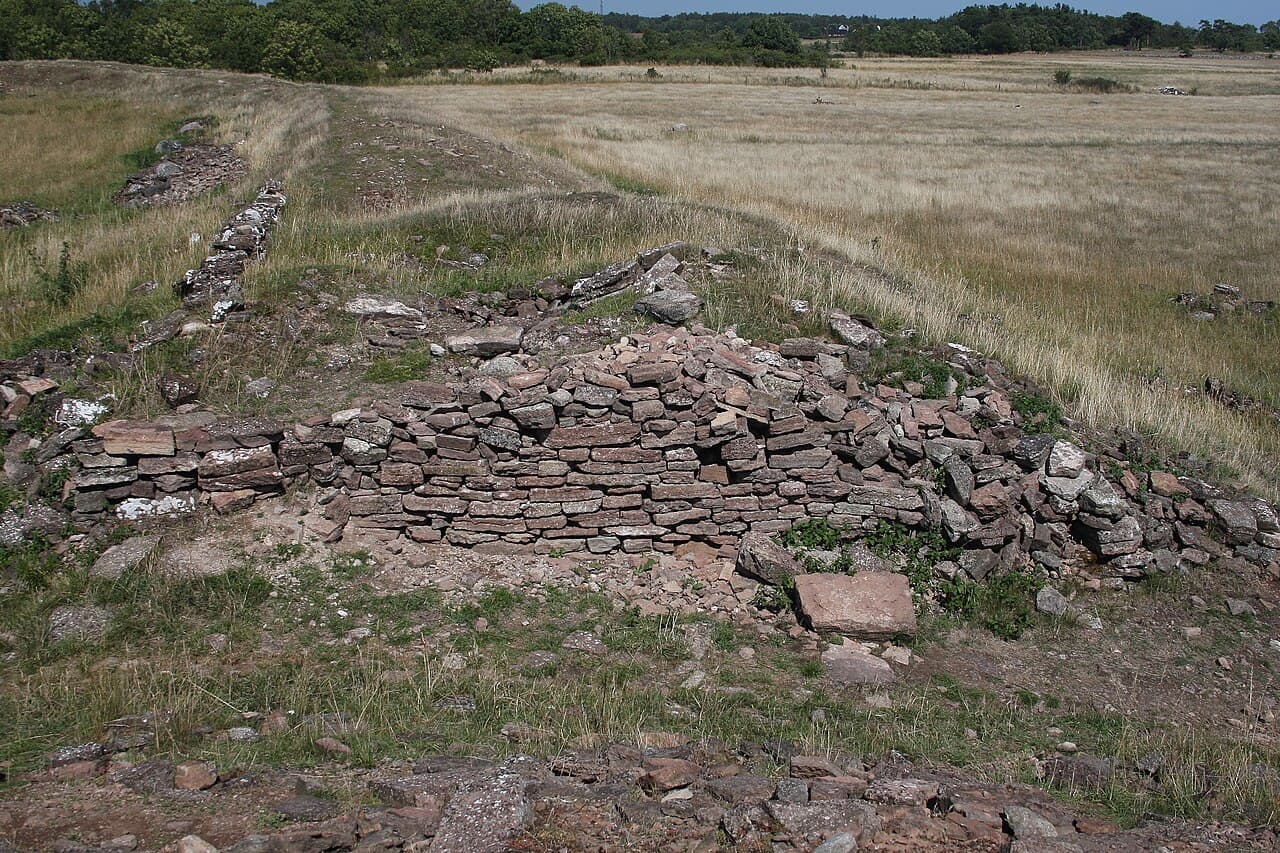
While much of Bårby borg has not survived intact, archaeological studies have uncovered foundational elements typical of medieval castles. These include stone walls that once formed defensive barriers and possibly remnants of towers or gatehouses. The construction techniques reflect the use of locally sourced materials, primarily stone, which was favored for its durability and defensive qualities.

The layout of Bårby borg, as inferred from the ruins, would have included a central courtyard surrounded by protective walls. Defensive features such as battlements and ditches may have been present, designed to deter attackers and provide vantage points for defenders.

Defensive structures

The castle's defensive system likely incorporated a combination of walls and moats or ditches, common in medieval fortifications to slow enemy advances. The presence of a keep or donjon, a strong central tower serving as the last line of defense, is possible but not confirmed due to limited archaeological evidence.

Archaeological investigations and preservation

Excavations at Bårby borg have helped to clarify aspects of its construction and use, although much remains to be discovered. The site is protected as an archaeological heritage location, emphasizing the importance of preserving what remains for future study and education.

Preservation efforts focus on stabilizing the ruins to prevent further deterioration while allowing public access to appreciate the historical significance of the castle. Interpretive signage and guided tours may be available to enhance visitor understanding of the site's context and features.

Visiting Bårby borg

Visitors to Bårby borg can explore the ruins and surrounding landscape, gaining a sense of medieval life and military architecture in Sweden. The site offers opportunities for educational visits and historical research, although facilities may be limited due to the nature of the ruins.

Access to the site is generally free, but visitors should check local resources for information on opening hours and any guided tour availability. The remote location and archaeological status require respectful behavior to protect the fragile remains.

Frequently asked questions (FAQ)

What is Bårby borg and where is it located?
Bårby borg is a medieval castle ruin located in Sweden. The exact city is unknown, but it is recognized as an important archaeological site.
When was Bårby borg likely constructed?
The castle likely dates back to the High Medieval period, reflecting typical fortification styles of that era in Scandinavia.
What remains can be seen at Bårby borg today?
Visitors can see stone foundations and wall remnants that outline the castle's original defensive structures and layout.
Is Bårby borg accessible to the public?
Yes, the site is generally accessible to visitors, though facilities may be limited. It is important to respect the ruins to preserve them.
Are there guided tours available at Bårby borg?
Guided tours may be offered occasionally to provide historical context and explain archaeological findings, but availability varies.

Photo gallery

Bårby borg
Click to view

Photo by Marcus Budde•CC BY 3.0

1 photo • Click any image to view in full screen

Information

Archaeological Site / Ruins

Loading map...

Visitor reviews

No reviews yet. Been here? Write the first review and help other travelers!

Write the first review

Visited this castle? Share your experience

Your review helps other travelers and adds first-hand knowledge to our encyclopedia.
Write a review

(5/5)

0/2000 characters

Your review will be visible after admin approval

Nearby castles

9.1 km
Triberga Castle — Sweden castle

Triberga Castle

, Sweden

Triberga Castle is an archaeological site located in Sweden, known primarily for its ruined remains that offer a glimpse into medieval fortification practices in the region. Although the exact city location is uncertain, the castle's remnants are significant for understanding the defensive architecture and feudal history of Sweden during the Middle Ages. The historical background of Triberga Castle Triberga Castle dates back to the medieval period, likely constructed between the 12th and 14th centuries, a time when castles were essential for regional defense and control. Castles in Sweden during this era were often built to assert territorial dominance and protect trade routes. While specific historical records about Triberga Castle are scarce, its ruins suggest it was a fortified site of some importance. Architectural features and layout The remains of Triberga Castle primarily consist of stone foundations and fragments of defensive walls, characteristic of medieval stone fortifications. The castle's layout likely included a central courtyard surrounded by curtain walls, with towers positioned for optimal defense. The presence of a moat or natural water defenses is possible but not definitively established due to the limited archaeological evidence. Defensive structures Typical of castles from this period, Triberga Castle would have featured thick stone walls designed to withstand sieges and attacks. The ruins indicate the use of local stone materials, and the construction techniques align with other contemporary Swedish castles. Any surviving towers or gatehouses would have served as lookout points and strongholds against invaders. Archaeological significance and preservation As an archaeological site, Triberga Castle provides valuable insights into medieval Swedish fortifications and settlement patterns. Ongoing archaeological efforts have helped to uncover the castle's footprint and understand its historical context. The site is protected under Swedish heritage laws, ensuring its preservation for future study and public education. Current condition and accessibility The castle remains are classified as ruins, with only partial walls and foundations visible today. Visitors to the site can observe the stone remnants and gain an appreciation for medieval construction methods. Access may be limited due to the site's fragile state, and there are no extensive visitor facilities or guided tours available on-site. The role of Triberga Castle in Swedish medieval history While not as prominent as some other Swedish castles, Triberga Castle reflects the widespread network of fortifications that dotted the Swedish landscape in the Middle Ages. These castles were crucial for local lords to maintain power and protect their lands. Triberga would have played a part in regional defense strategies and possibly served as a residence for nobility or military commanders. Context within Scandinavian castle development Swedish castles like Triberga were part of a broader Scandinavian trend of fortification during the medieval period. The architectural style and construction methods show influences from both native traditions and continental Europe. Studying Triberga helps historians trace the evolution of castle building in northern Europe, including adaptations to the local climate and terrain.

Details
14.2 km
Sandby borg — Sweden castle

Sandby borg

, Sweden

Sandby borg is a remarkable example of an Iron Age ringfort located on the island of Öland, Sweden. As one of at least 15 such ringforts on Öland, it stands out due to its exceptional archaeological preservation and the dramatic history uncovered through recent excavations. Situated approximately 2 kilometers southeast of Södra Sandby village in the parish of Sandby, and near the village of Gårdby, the fort occupies a strategic position in southeastern Öland. The architectural layout and structure of Sandby borg Sandby borg is a circular fortification, characteristic of the ringfort type common in the Iron Age Scandinavia. The fort's enclosure measures roughly 120 meters in diameter, surrounded by a substantial stone wall that would have provided formidable defense against attackers. The walls, constructed from locally sourced limestone, reach heights that would have been imposing in their time, and are reinforced with towers at intervals to allow for defensive positions and surveillance. Inside the walls, the fort contained a number of residential houses arranged in a planned manner, with streets running between them. These houses were built using stone foundations with wooden superstructures, typical of the period. The layout suggests a well-organized community with a focus on both defense and daily living needs. The massacre and archaeological significance Excavations beginning in 2011 revealed that Sandby borg was the site of a brutal massacre in the late fifth century AD. The victims, numbering at least 26 individuals, were found lying where they fell inside the houses and scattered in the streets, their bodies left unburied. This extraordinary preservation provides a rare and detailed snapshot of Iron Age violence and conflict. The massacre appears to have been sudden and devastating, with no evidence of subsequent occupation or burial rites. The archaeological findings include weapons, household items, and skeletal remains, which together offer insights into the social dynamics, warfare, and everyday life of the fort's inhabitants. The lack of burial and the state of the remains suggest a violent attack that abruptly ended the community's existence. Insights into Iron Age warfare and society The evidence from Sandby borg challenges previous assumptions about the nature of conflict in Iron Age Scandinavia. The fort's destruction shows organized violence with a high degree of brutality, possibly linked to political or territorial disputes. The discovery also sheds light on the living conditions within ringforts, highlighting their role not only as defensive structures but also as centers of community life. Context within Öland and Scandinavian archaeology Sandby borg is part of a broader network of ringforts on Öland, which were likely constructed during the late Iron Age (approximately 400–600 AD). These forts are among the best-preserved examples of prehistoric fortifications in Scandinavia, offering valuable information about regional defense strategies and settlement patterns. Öland's ringforts, including Sandby borg, contribute significantly to understanding the transition from the Roman Iron Age to the Migration Period in northern Europe. Their study helps illuminate the social and political changes during this turbulent era. Current condition and preservation efforts Today, Sandby borg exists as archaeological ruins with substantial portions of its stone walls still intact. The site is protected and managed to preserve its unique archaeological context. Ongoing excavations and research continue to uncover new information, making Sandby borg a key site for scholars and visitors interested in Iron Age history and archaeology. Visitors to the site can observe the remains of the fort's walls and the layout of the houses, gaining a tangible connection to the past. Interpretive signage and guided tours help explain the significance of the site and its dramatic history. Visiting Sandby borg While the site is primarily an open-air archaeological ruin, it is accessible to the public. Visitors are advised to respect the preservation rules and avoid disturbing the remains. The nearby villages of Södra Sandby and Gårdby offer amenities and additional historical attractions related to Öland's rich cultural heritage.

Early Medieval (5th–10th c.)
Details
17.1 km
Träby borg — Sweden castle

Träby borg

, Sweden

Träby borg is an archaeological site located in Sweden, representing the remains of a medieval hill castle. Though the exact city location is not specified, this castle is part of Sweden's rich medieval heritage and offers valuable insights into the defensive architecture of the period.The castle dates back to the High Medieval period, a time when fortifications were essential for territorial control and protection against invasions. As a hill castle, Träby borg was strategically positioned on elevated terrain, providing natural defense advantages and commanding views of the surrounding landscape. This location would have been critical for monitoring movements and securing the area.Architectural features and layoutAs an archaeological ruin, the physical remains of Träby borg include foundational walls and traces of fortifications that outline the castle's original footprint. The castle likely featured a central keep or stronghold, surrounded by defensive walls and possibly a moat or ditch to enhance its protection. The elevated site would have been fortified with ramparts and battlements typical of medieval hill castles.Excavations at the site have revealed remnants of stone masonry consistent with medieval construction techniques. The castle's design would have incorporated defensive elements such as towers for surveillance and archery, gatehouses controlling access, and living quarters within the protected enclosure. These features reflect the military and residential functions of castles from this period in Sweden.Historical context and significanceTräby borg's origins in the High Medieval period place it within a broader context of regional power struggles and feudal conflicts in Scandinavia. Castles like Träby borg were often centers of local governance and military command, serving as bases for noble families and their retainers.While specific historical records about Träby borg are limited, its status as an archaeological site underscores its importance for understanding medieval fortification strategies in Sweden. The castle's ruins contribute to the study of medieval Scandinavian architecture and the social history of the region during a time of political consolidation and territorial defense.Preservation and archaeological researchCurrently classified as ruins, Träby borg is preserved primarily through archaeological efforts that aim to document and protect its remains. Excavations and surveys have been conducted to map the site's layout and uncover artifacts that shed light on the daily life and military functions of the castle.Preservation challenges include natural erosion and vegetation overgrowth, which threaten the integrity of the stone remains. Efforts to maintain the site focus on stabilizing existing structures and providing information to visitors about the castle's historical context.Visitor experienceAs an archaeological ruin, Träby borg offers visitors a glimpse into medieval fortification through its visible foundations and landscape setting. Interpretive signage and guided tours may be available to explain the site's history and architectural features. Visitors interested in medieval history and archaeology will find Träby borg a valuable destination.Comparative significance in swedish medieval castlesTräby borg is one among several medieval hill castles in Sweden that illustrate the evolution of defensive architecture in the region. Its archaeological remains complement other sites by providing evidence of construction methods and strategic site selection typical of the High Medieval period.The study of Träby borg enhances understanding of how Swedish castles adapted to local geography and political needs. It also highlights the role of such fortifications in securing territories during a period marked by frequent conflicts and shifting allegiances.

High Medieval (11th–13th c.)
Details