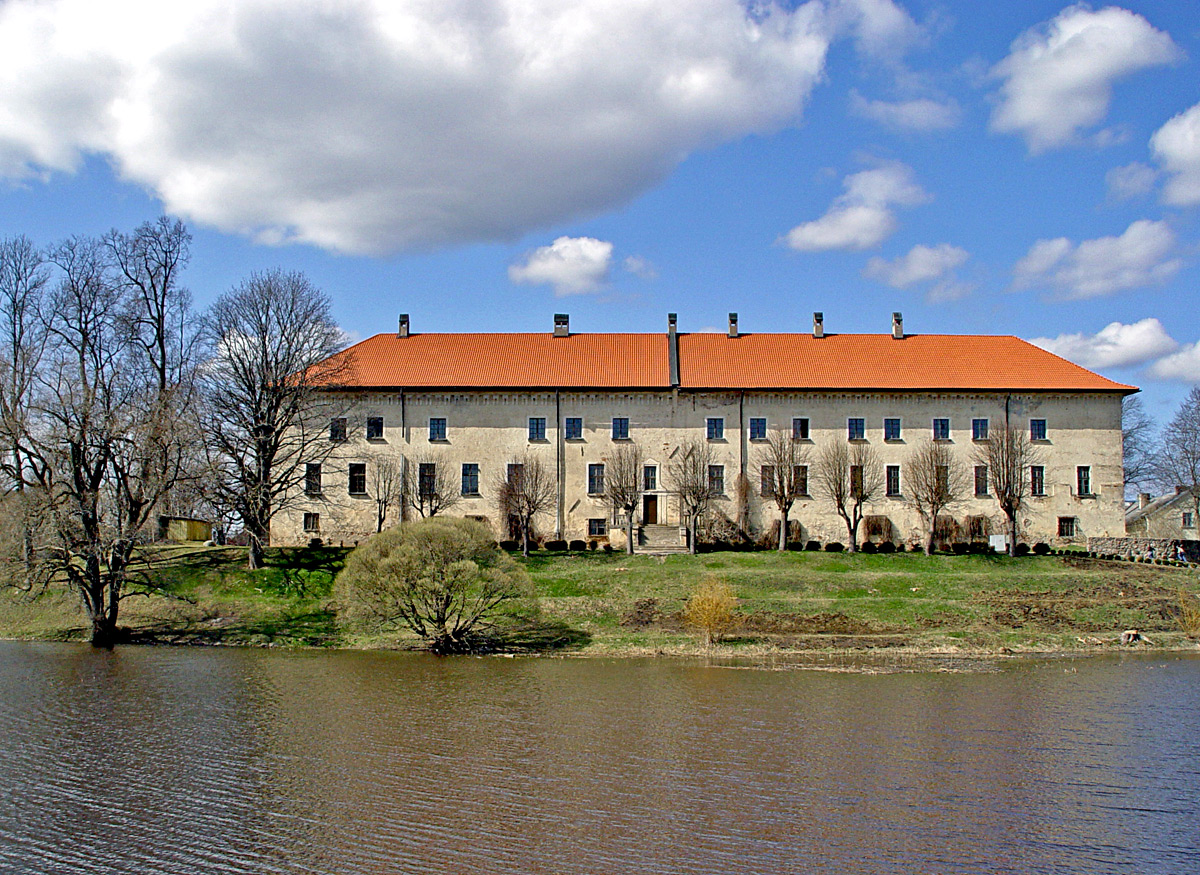
Dundaga
Dundaga Castle stands as a remarkable example of a late medieval bastioned fortress in Latvia, embodying centuries of history and architectural evolution. Located in the town of Dundaga, the castle's origins trace back to the early 13th century, with the first documented mention in 1318 during a conflict involving the Teutonic Order and the Archbishopric of Riga. While the exact date of construction remains uncertain, it is believed that the castle was initially built in the 13th century, serving as a strategic stronghold in the region.
The castle occupies a strategic position on a narrow peninsula surrounded on three sides by the waters of a stream, which were dammed to create several ponds, enhancing its natural defenses. A moat separated the peninsula from the southwest, further fortifying the site. The castle's location was chosen not at the peninsula's tip but slightly inland, where a defensive settlement of the indigenous Curonian people once stood during the castle's construction.
Architectural layout and medieval design
The original plan of Dundaga Castle features a regular rectangular shape measuring approximately 48 by 69 meters. The initial construction phase focused on the southwestern wing, followed by the addition of two more wings, creating a courtyard enclosed by a sturdy stone wall on the northern side. The castle wings are two stories high with vaulted cellars beneath. The upper floors housed the castle's most important rooms, including the chapel and chambers for dignitaries, while the ground floors contained functional spaces such as the kitchen, bakery, and bathhouse.
Although there is no definitive evidence of a large keep or donjon in the castle's early phase, it likely featured a small gate tower located in the northwest part of the courtyard, serving as a defensive entry point. The castle's bastioned design reflects the military architectural trends of the late medieval period, aimed at withstanding sieges and artillery attacks.
Historical significance and ownership transitions
Dundaga Castle played a pivotal role in the turbulent history of the Baltic region, particularly in the conflicts between the Archbishopric of Riga and the Teutonic Order. The castle was occupied by the Teutonic Knights in 1359 and again in 1383 during these power struggles. In 1434, the castle was purchased by Johann IV Tiergart, the Bishop of Courland, marking a new chapter in its history.
The castle remained under the control of the Courland bishops until 1559, when the last bishop, Johann von Munchausen, sold the bishopric to the Danish king. The Danish crown then granted the castle to Magnus, the king's brother. Subsequently, Magnus sold Dundaga Castle to the Polish chancellor Martin von Bersewitz, who later transferred ownership to the von Bülow family in 1588.
The 17th century brought further turmoil as the region became a battleground during the Polish-Swedish wars. In 1656, Swedish forces severely damaged and looted the castle. This devastation marked the beginning of significant changes in the castle's structure and function.
Baroque transformation and later renovations
At the end of the 17th century, Anna Sibylla Maydel (née Osten-Sacken) undertook extensive rebuilding efforts that transformed Dundaga Castle from a medieval fortress into a noble residence. New buildings were constructed, connecting with the older wings to enclose the courtyard completely. The wings retained two stories and added attics. The gate tower was raised and converted into a bell tower, housing a chapel, reflecting the castle's shift from military to residential and ceremonial use.
Another major reconstruction occurred in 1785 under Karl von Osten-Sacken, who added an additional floor to the castle wings, further enhancing its residential character. However, disaster struck on the night of April 1, 1872, when a fire ravaged the castle, causing extensive damage and burying the cellars under rubble. Partial reconstruction efforts were undertaken but remained incomplete.
In 1905, another fire further damaged the castle. Kristian von der Osten-Sacken initiated a restoration project in 1909, which embraced the then-popular neo-Gothic architectural style. This renovation altered the castle's Baroque appearance, introducing Gothic revival elements that gave the castle its current aesthetic.
20th century uses and current status
Following its restoration, Dundaga Castle was adapted for administrative purposes in 1926. After World War II, it served various public functions, including as a secondary school and later as a dormitory. Today, the castle houses multiple public and municipal institutions, maintaining its role as a community hub.
Despite numerous modifications, Dundaga Castle remains one of Latvia's best-preserved medieval fortifications. While much of the original Gothic interior detailing has been lost, the castle's medieval silhouette endures. Notable features include two reliefs created in 1909 by sculptor August Voltz, depicting a Teutonic Knight and a bishop, positioned on either side of the entrance in the inner courtyard.
Cultural and architectural significance
Dundaga Castle is a significant cultural monument that illustrates the evolution of military architecture from the Middle Ages through the Baroque period to the Neo-Gothic revival. Its bastioned layout, strategic location, and layered history provide valuable insights into the region's complex political and social transformations.
The castle's preservation allows visitors to explore a site that has witnessed centuries of Baltic history, from medieval conflicts to noble residences and modern public use. Its combination of defensive features, residential adaptations, and artistic embellishments makes it a unique heritage site in Latvia.
Frequently asked questions (FAQ)
- When was Dundaga Castle originally built?
- Dundaga Castle was likely built in the 13th century, with the first recorded mention in 1318. The exact construction date is uncertain but the castle was well established by the mid-14th century.
- What architectural style characterizes Dundaga Castle?
- The castle originally featured late medieval bastioned fortress architecture, later transformed with Baroque and Neo-Gothic elements during renovations in the 17th and early 20th centuries.
- Can visitors tour Dundaga Castle today?
- Yes, Dundaga Castle is open to the public and currently houses various municipal institutions. Visitors can explore the castle's exterior and inner courtyard, appreciating its historical architecture.
- What significant historical events involved Dundaga Castle?
- The castle was involved in conflicts between the Archbishopric of Riga and the Teutonic Order, was occupied by Teutonic forces in 1359 and 1383, and was damaged during the Polish-Swedish wars in the 17th century.
- How did the 1872 fire affect Dundaga Castle?
- The fire caused extensive damage, burying the castle's cellars under rubble and leading to partial reconstruction efforts. Another fire in 1905 further damaged the structure before the Neo-Gothic restoration.
Information
Current owner
Municipality of Dundaga
Loading map...
Visitor reviews
No reviews yet. Been here? Write the first review and help other travelers!
Write the first reviewVisited this castle? Share your experience
Your review helps other travelers and adds first-hand knowledge to our encyclopedia.