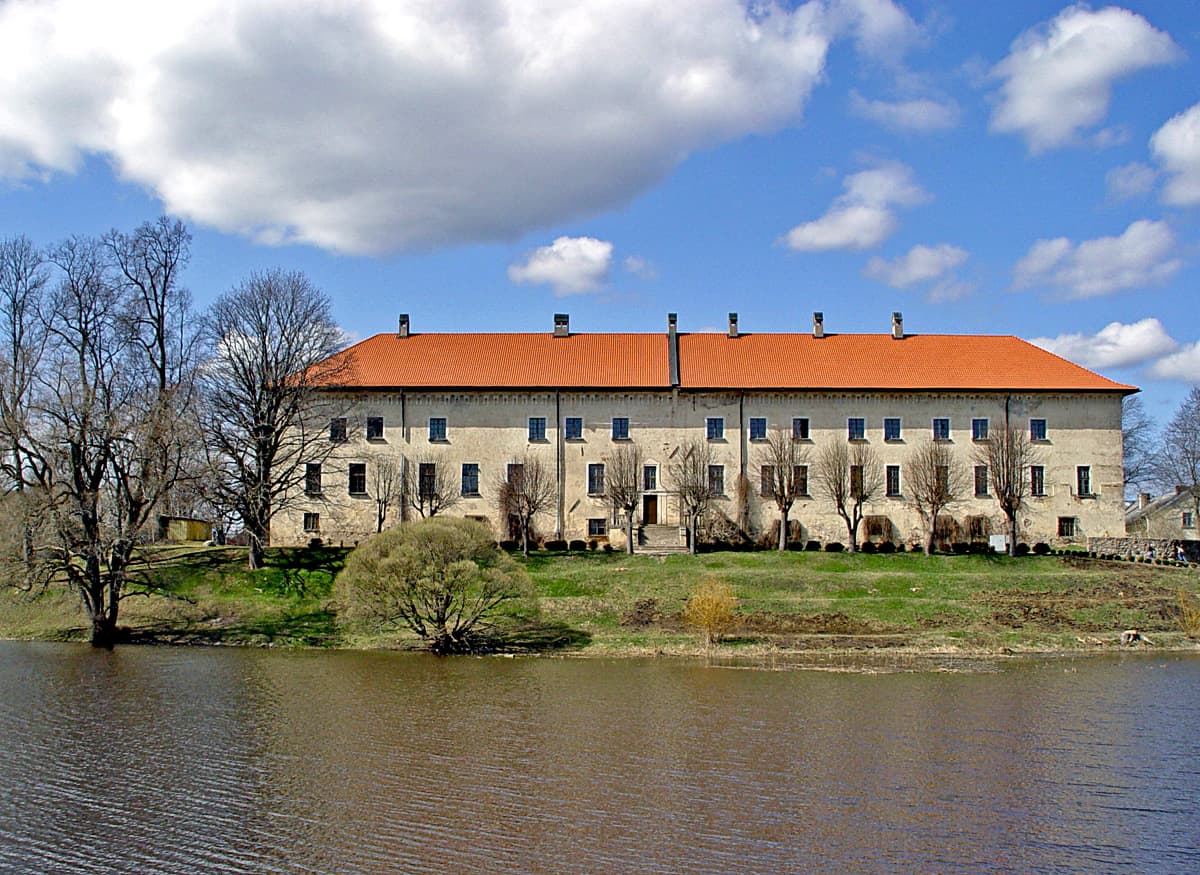
Dundaga Castle
Dundaga Castle stands as a significant medieval fortress located in Dundaga, Latvia, embodying centuries of Baltic history and architectural evolution. Originally established by the Archbishopric of Riga in the early 13th century, this castle was strategically constructed adjacent to a Curonian hillfort settlement known as Dundagas Kalnadarzs. Its first documented mention dates back to 1318, although its construction is believed to have commenced in the late 13th century. Over time, Dundaga Castle witnessed numerous sieges and changes in ownership, reflecting the turbulent political landscape of the High Medieval and early modern periods.
The castle's location on a peninsula surrounded by the Pāce River on three sides provided a natural defensive advantage, while the fourth side was originally protected by a moat. Its rectangular layout, measuring approximately 48 by 69 meters, includes a main castle area and an outer bailey separated by a dividing wall. The main castle, unusually positioned on the southern side, was heavily fortified with thick walls up to three meters thick, constructed using large boulders and later shell masonry techniques. The complex features three wings forming the outer walls, with ground floors dedicated to practical functions such as kitchens and bakeries, upper floors housing residential quarters, and attics used for armaments storage.
Historical development and ownership transitions
Dundaga Castle's history is marked by its role as a military stronghold and an ecclesiastical seat. Initially controlled by the Riga Cathedral Chapter, it endured multiple assaults by the Livonian Order during the 14th century. In 1434, it was sold to the Bishopric of Courland, reinforcing its religious and administrative significance. The mid-16th century brought further change when Bishop Johann V sold the castle to King Frederick II of Denmark in 1559. The Danish monarch then granted it to his brother, Magnus, Duke of Holstein, who became the last Bishop of Courland, intertwining the castle's fate with regional power struggles.
The castle's military importance persisted through the Piltene Succession War in 1583 and the Second Northern War, during which it was occupied by Swedish forces in 1656. These conflicts underscored Dundaga's strategic value in the Baltic region.
Architectural transformation from fortress to noble residence
By the 17th century, Dundaga Castle began its transition from a defensive fortress to a noble residence under the ownership of families such as the Maydell and Osten-Sacken. Significant renovations included the addition of a third floor in 1785 and the removal of the dividing wall between the main castle and outer bailey, allowing for a reorganization of the courtyard and expansion of living spaces.
The gate complex evolved from a simple 14th-century gatehouse into a multi-story gate tower equipped with numerous firing slits for defense. However, in the late 17th century, the upper floors were removed and replaced by a wooden Baroque bell tower, reflecting the castle's shift from military to residential and ceremonial functions.
Interior enhancements included the construction of a chapel in 1683, furnished with wooden benches, a confessional, an organ, and wall frescoes, although it fell into ruin by the 19th century. The castle originally contained over sixty rooms, later expanding to nearly one hundred, serving as a hub for agricultural storage and economic activities, with goods primarily destined for Riga.
19th and 20th century renovations and modern uses
Dundaga Castle suffered significant damage from fires in 1872 and again during the 1905 Russian Revolution. The subsequent renovation beginning in 1909, led by architect H. Pfeiffer, introduced modernization including Tudor Revival and Neoclassical architectural elements. Innovations such as steel-reinforced concrete floors, central heating, and freight elevators were incorporated, marking the castle as a pioneer in integrating modern technology within a historic structure.
Throughout the 20th century, Dundaga Castle served various public roles including a school, municipal administration building, and a cultural center housing a music and art school, library, and youth hostel. Its rich history and architecture have made it a focal point of local heritage and tourism.
Architectural features and preservation
The castle's defensive walls, particularly those flanking the gate tower, still stand up to three meters high, showcasing medieval construction techniques. The use of shell masonry—a method involving two brick walls filled with fieldstones—demonstrates the evolution of building practices over time. The inner courtyard preserves a well, and decorative bas reliefs by artist A. Voltz from 1909 adorn the main entrance, depicting a warrior monk and a bishop, symbolizing the castle's martial and ecclesiastical heritage.
Surrounding the castle is a historic park designed in the 17th century, covering approximately 21.7 hectares. The landscape features carefully arranged ponds and a collection of protected ancient trees, enhancing the castle's aesthetic and cultural value.
Water defenses and landscape setting
Dundaga Castle is classified as a water castle due to its natural moat formed by the Pāce River on three sides and a man-made moat on the fourth side, now filled in. This strategic siting on a peninsula provided formidable defense against attackers and contributed to the castle's longevity as a military and residential site.
Cultural significance and legends
The castle is steeped in local folklore, with numerous legends and ghost stories that often echo real historical events. These tales enrich the cultural tapestry of Dundaga, attracting visitors interested in both history and myth. Its enduring presence in Latvian heritage underscores its importance as a symbol of regional identity and historical continuity.
Frequently asked questions (FAQ)
- What is the historical significance of Dundaga Castle?
- Dundaga Castle, built in the 13th century, is one of the notable medieval structures in Latvia. It served as a residence for the local nobility and played a vital role in the region's history, reflecting the architectural trends of its time.
- When was Dundaga Castle built?
- Dundaga Castle was constructed in the year 1277, making it a significant landmark in Latvia's medieval history. Its long-standing presence offers visitors a glimpse into the architectural styles and societal structures of the era.
- What are the opening hours of Dundaga Castle?
- Dundaga Castle is open to visitors from 10 AM to 6 PM during the summer season, from May to September. In the off-season, the hours may vary, so it is advisable to check the official website before planning your visit.
- Can I take a guided tour of Dundaga Castle?
- Yes, guided tours are available at Dundaga Castle, providing an enriching experience as you explore the history and architecture of the site. Tours are led by knowledgeable guides, ensuring you gain deeper insights into the castle's past.
- Is it possible to visit Dundaga Castle year-round?
- While Dundaga Castle is primarily open during the warmer months, certain areas and exhibitions may remain accessible year-round. Always check ahead for specific dates and availability, especially in winter.
- What is the best time to visit Dundaga Castle?
- The best time to visit Dundaga Castle is during the summer months, from May to September, when the weather is pleasant and all attractions are open. Additionally, visiting during this period allows you to enjoy various events and activities held at the castle.
- Are there any nearby attractions worth visiting?
- Yes, the area around Dundaga Castle offers several attractions, including scenic nature trails and the picturesque village of Dundaga. Visitors can also explore local museums and enjoy the beautiful landscapes of the surrounding countryside.
- How much do tickets cost for Dundaga Castle?
- Ticket prices for Dundaga Castle vary, with discounts available for students and seniors. Generally, admission is quite affordable, making it a great option for families and history enthusiasts alike.
- How do I get to Dundaga Castle?
- Dundaga Castle is accessible by car and public transport from major cities in Latvia. For those traveling by public transport, local buses connect to Dundaga, and the castle is a short walk from the bus stop.
Photo gallery

Information
Website
Visit websiteSources & official resources
Verify the information above using these authoritative references.
Loading map...
Visitor reviews
No reviews yet. Been here? Write the first review and help other travelers!
Write the first reviewVisited this castle? Share your experience
Your review helps other travelers and adds first-hand knowledge to our encyclopedia.



