Dobrá Voda Castle — Slovakia castle

Dobrá Voda Castle

Dobrá voda castle: medieval hill fortress in slovakia
Dobrá Voda, Slovakia
High Medieval (11th–13th c.)
Ruins

Dobrá Voda Castle stands as a significant medieval hill fortress located in the municipality of Dobrá Voda, within present-day Slovakia. Constructed originally in the early 13th century, the castle was built atop an older fortification, capitalizing on its strategic position on a rocky hill that rises approximately 320 meters above sea level. This vantage point afforded commanding views and control over a crucial passage through the Malé Karpaty mountains, a natural barrier in the region.

The castle's earliest documented mention dates back to 1263, confirming its established role within the medieval Kingdom of Hungary. Initially, Dobrá Voda served as a royal property and defensive outpost, guarding the vital trade and military route known as the Czech Road. This route was essential for commerce and troop movements, making the castle a key military and economic asset.

Historical development and ownership

Throughout the late medieval period, Dobrá Voda Castle underwent several changes in ownership, reflecting the shifting political landscape of the Kingdom of Hungary. In the late 14th century, it came under the possession of Stibor of Stiboricz, a prominent nobleman who played a crucial role in Hungarian politics. From 1436, the castle was held by the Ország family, who maintained its defensive function in the region.

The 16th century brought heightened military threats, particularly from the expanding Ottoman Empire. This prompted significant enhancements to the castle's fortifications. Additions included a foregate and multiple bastions, which extended the outer defenses and adapted the fortress to withstand artillery attacks. The access route to the upper castle was deliberately designed with winding, serpentine paths to slow down potential attackers and expose them to defensive fire.

Ownership later transferred to the Erdődy family in the late 1500s, a powerful noble lineage with extensive estates. The Erdődy family continued to use the castle as a defensive stronghold until the late 17th century, when their focus shifted to other residences, leading to Dobrá Voda's gradual abandonment.

Architectural features and layout

The castle complex is divided into an upper castle and a lower castle, encompassing an area of approximately 8,500 square meters. The upper castle was the core defensive and residential area, featuring an elongated palace building flanked by two rectangular towers with prism-like shapes at each end. Today, only the northern wall of this palace remains standing.

Adjacent to the eastern tower lies a small courtyard containing a cistern with a well-preserved sink system, designed to collect and store water for the castle's inhabitants. At the far end of this courtyard stands a Gothic-style chapel, which may have also functioned as a fortified palace wing, serving as a private noble residence within the fortress.

To the west, the upper castle was fortified with a forecastle and a cannon bastion, constructed to mount artillery pieces and enhance the castle’s defensive capabilities against increasingly powerful siege weapons. The main entrance to the upper castle was protected by a simple yet effective barbican, a fortified gateway designed to impede and expose attackers.

The lower castle served as an auxiliary defensive zone, featuring several cannon bastions and supporting buildings. The approach from the lower to the upper castle was carefully engineered, passing through four gates connected by a combination of winding and straight paths. This layout allowed defenders to maintain control over visitors and attackers from elevated positions, maximizing the fortress's defensive potential.

Decline and present condition

Dobrá Voda Castle's decline began in the late 17th century when the Erdődy family moved their residence elsewhere. During Rákóczi’s War of Independence in the early 18th century, the castle sustained damage amid the conflict aimed against Habsburg rule. Although repairs were made after the war, a devastating lightning strike in 1762 caused a fire that destroyed much of the structure. Subsequently, only a section of the castle that functioned as a noble prison remained usable for some time.

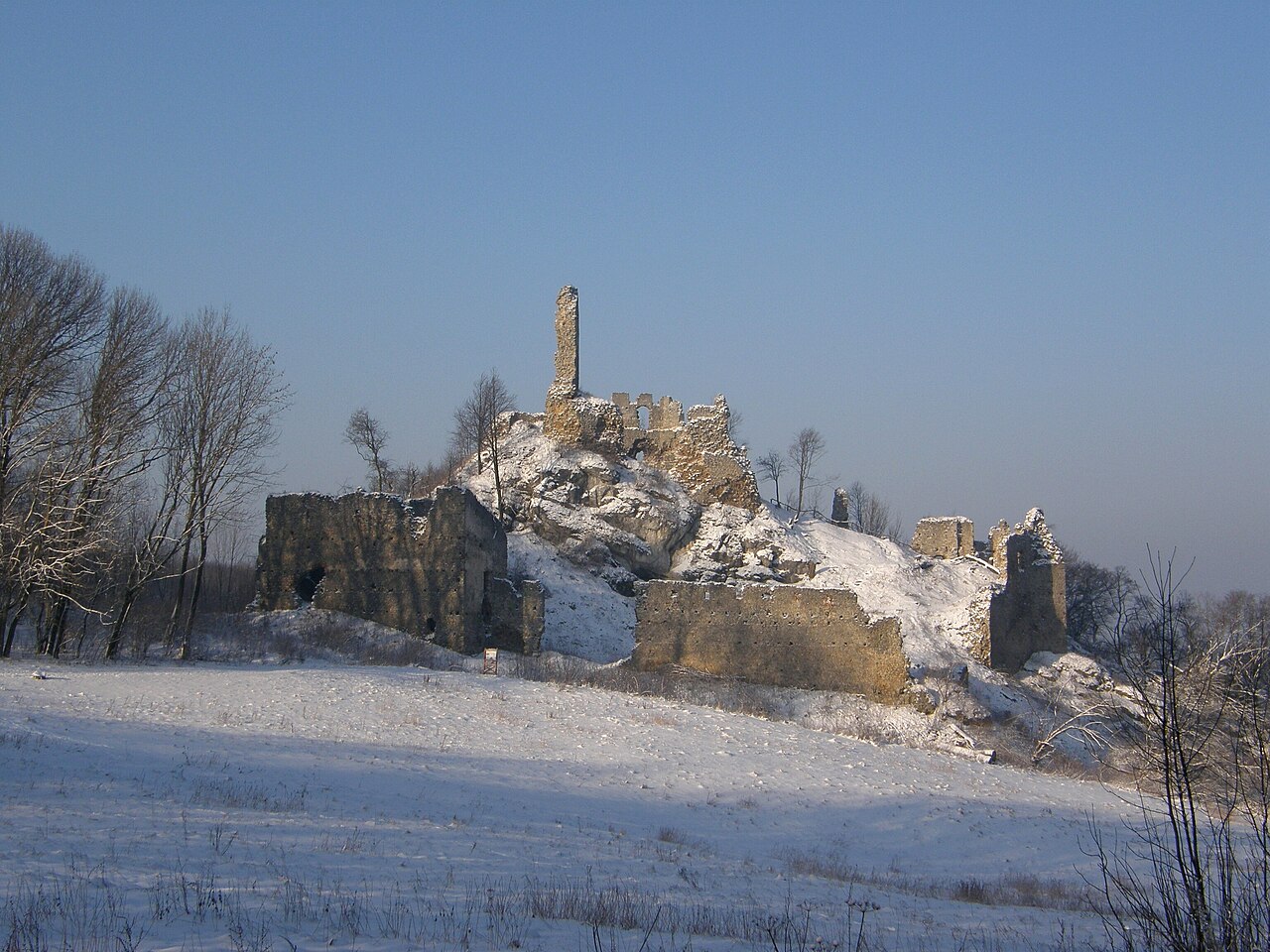
From the 19th century onward, Dobrá Voda Castle fell into ruin. Today, the remains include fragments of defensive walls, partial ruins of the palace and chapel, and scattered architectural elements. The site is overgrown with natural vegetation, which both conceals and preserves the castle's outline within the landscape of the Slopy nature reserve.

Cultural and historical significance

Dobrá Voda Castle is an important example of a hill castle that evolved through several historical periods, reflecting the military and political changes of the Kingdom of Hungary from the medieval era through the early modern period. Its architectural adaptations, including the addition of artillery bastions, illustrate the transition in fortress design responding to advances in warfare technology.

The castle's strategic location and its role in guarding the Czech Road highlight its significance in regional defense and trade control. Though now a ruin, Dobrá Voda remains a valuable cultural heritage site, offering insights into medieval fortification techniques and noble life in Slovakia.

Visitor experience and preservation efforts

Visitors to Dobrá Voda Castle can explore the ruins set within a scenic natural reserve, experiencing the atmospheric remains of a once-formidable fortress. While much of the structure is in ruin, the visible walls, towers, and cistern provide tangible connections to its rich history. Preservation efforts focus on stabilizing the ruins and maintaining the site's accessibility while respecting its natural surroundings.

Dobrá Voda Castle stands as a testament to the region's medieval heritage and continues to attract historians, archaeologists, and tourists interested in Slovakia's castle architecture and history.

Frequently asked questions (FAQ)

What is the historical significance of Dobrá Voda Castle?
Dobrá Voda Castle, built in the 13th century, is a significant historical site that reflects the architectural styles of its era. It played a crucial role in regional defense strategies and has witnessed numerous historical events over the centuries, making it a fascinating place for history enthusiasts.
When was Dobrá Voda Castle constructed?
Dobrá Voda Castle was constructed in the early 13th century, with its foundations believed to be laid around 1250. Over the years, it underwent several renovations and restorations that added to its unique architectural charm.
Can I visit Dobrá Voda Castle?
Yes, Dobrá Voda Castle is open to visitors, allowing them to explore its rich history and stunning architecture. Guided tours are available to provide insights into the castle's past and its significance in Slovak history.
What are the opening hours for Dobrá Voda Castle?
Dobrá Voda Castle is typically open to visitors from 10 AM to 5 PM during the summer months, while winter hours may vary. It is advisable to check the official website or contact the local tourism office for the most current opening hours before planning your visit.
Is it possible to access Dobrá Voda Castle with mobility challenges?
While Dobrá Voda Castle is a historical site, accessibility can be limited due to its age and terrain. Visitors with mobility challenges may find some areas difficult to navigate; however, staff are available to assist where possible.
What is the best time to visit Dobrá Voda Castle?
The best time to visit Dobrá Voda Castle is during the spring and fall when the weather is mild, and the surrounding landscape is beautiful. Additionally, visiting during the off-peak tourist season can provide a more relaxed experience.
Are there any nearby attractions to Dobrá Voda Castle?
Yes, nearby attractions include the picturesque village of Dobrá Voda and several hiking trails in the surrounding hills. Visitors can also explore other historical sites and natural parks in the region, making it an ideal spot for a day trip.
What are the ticket prices for Dobrá Voda Castle?
Ticket prices for Dobrá Voda Castle are generally affordable, with discounts available for students and seniors. It’s best to check the official website for the latest pricing information and any special offers.

Photo gallery

Dobrá Voda Castle
Click to view

Photo by No machine-readable author provided. Rado Bahna~commonswiki assumed (based on copyright claims).•Public domain

1 photo • Click any image to view in full screen

Information

Hill Castle

Sources & official resources

Verify the information above using these authoritative references.

Loading map...

Visitor reviews

No reviews yet. Been here? Write the first review and help other travelers!

Write the first review

Visited this castle? Share your experience

Your review helps other travelers and adds first-hand knowledge to our encyclopedia.

Write a review

(5/5)

0/2000 characters

Your review will be visible after admin approval

Nearby castles

0.7 km

Dobrá Voda Castle Ruins

Dobrá Voda, Slovakia

Dobrá Voda Castle, located in the mountainous terrain of the Carpathian Mountains in Slovakia, is a significant medieval fortress with origins tracing back to the early 13th century. Constructed on the site of an earlier fortification, the castle was strategically positioned on a key road crossing the mountain crest, serving both defensive and administrative functions during the High Medieval period. Early history and strategic importance First documented in 1263, Dobrá Voda Castle was originally a royal property, reflecting its importance in controlling transit routes through the region. The castle's initial structure was an elongated complex featuring a four-sided tower flanked by a palace on the southeast side and a chapel terminating one section. This arrangement suggests a design that balanced residential comfort with military defense, typical of 13th-century castle architecture in Central Europe. Architectural features and layout The castle's core included a palace building adjacent to the tower, providing living quarters and administrative spaces. The chapel was an integral part of the complex, indicating the religious functions within the castle walls. The defensive elements included thick stone walls and a fortified gate. In the late 16th century, the castle underwent significant modifications: the gate was reinforced, and the lower courtyard was restored with the addition of several strongholds integrated into the fortification walls. These upgrades reflect the evolving military technology and the need to strengthen defenses against artillery and siege warfare during the Renaissance period. Ownership and historical events Initially a royal possession, Dobrá Voda Castle was granted to Stibors Stiborice in the 14th century, a notable noble family. By 1436, it came under the ownership of the Orszagh family, who maintained control for several centuries. The castle's strategic and symbolic importance made it a focal point during regional conflicts. Damage and decline The castle suffered significant damage during the uprising of Francis II Rákóczi in 1703, a major anti-Habsburg rebellion in the Kingdom of Hungary. Subsequent to the uprising, the fortress was burned in 1762, which accelerated its decline. Following the destruction, parts of the castle were repurposed as a prison, marking a shift from military to penal use. Current condition and cultural significance Today, Dobrá Voda Castle stands as ruins that reveal its layered history from medieval fortification to Renaissance adaptation and eventual abandonment. The remains include sections of the original walls, the tower base, and traces of the palace and chapel foundations. The site offers valuable insights into medieval castle construction techniques and the historical dynamics of the region. Architectural style and construction The castle exemplifies High Medieval military architecture with later Renaissance modifications. Its stone masonry, layout, and defensive structures illustrate the transition in castle design responding to changing warfare technology. The combination of residential palatial elements and military fortifications demonstrates the dual role castles played as noble residences and defensive strongholds. Visiting and preservation As a protected heritage site, the Dobrá Voda Castle ruins attract historians, architects, and tourists interested in medieval history and architecture. The castle's location in the scenic Carpathian Mountains enhances its appeal. Preservation efforts focus on stabilizing the ruins and providing interpretive information to visitors.

High Medieval (11th–13th c.)
Details
11.2 km
Korlátka Castle Ruins — Slovakia castle

Korlátka Castle Ruins

Cerová, Slovakia

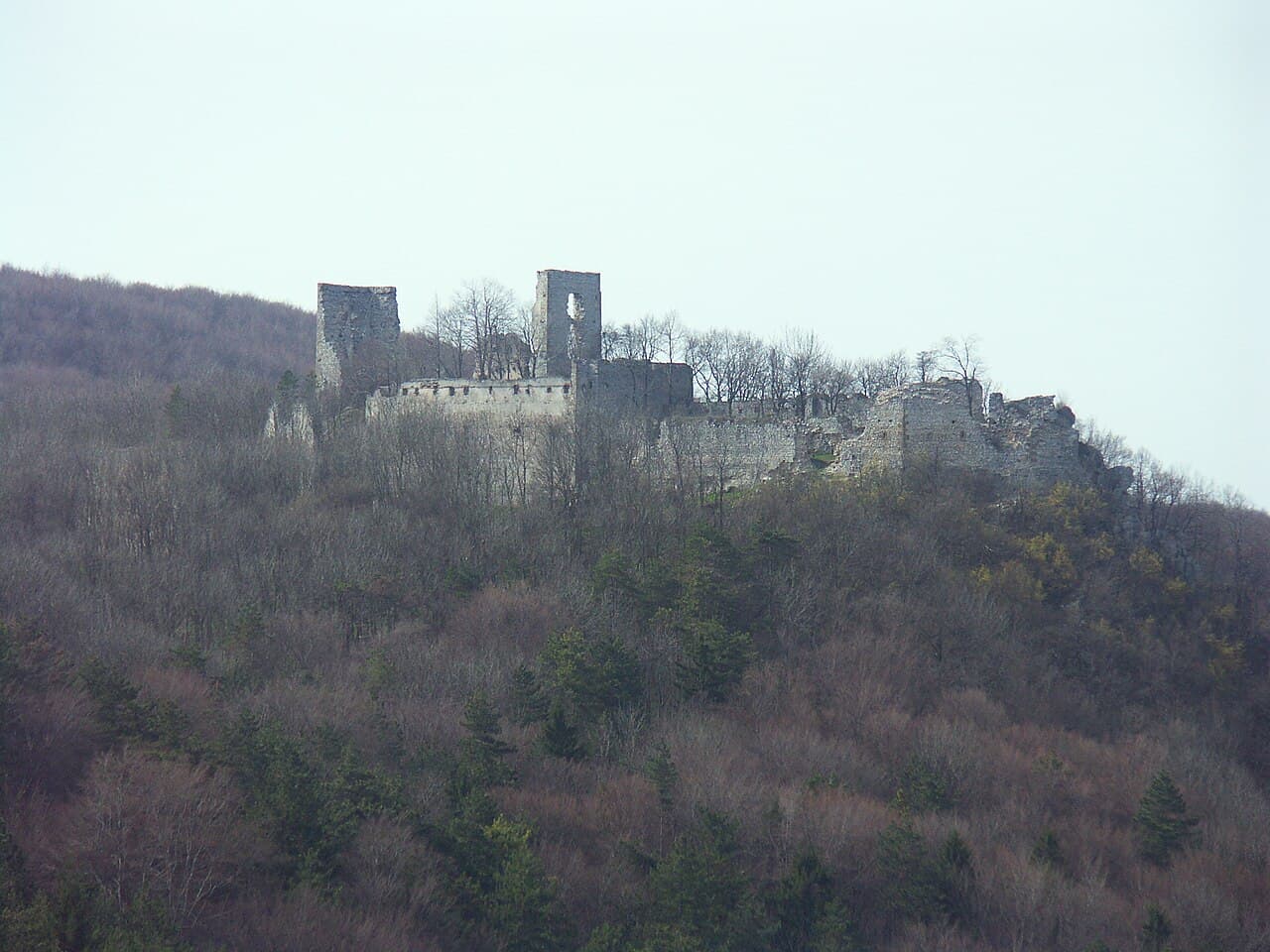
Korlátka Castle, perched on a hilltop above the village of Cerová in Slovakia, is a significant example of a High Medieval Gothic hill castle that played a crucial role in the defense and control of the western frontier of the Kingdom of Hungary. Built in the mid-13th century, this fortress was strategically positioned to oversee the vital medieval trade route known as the “Česká cesta” or Czech Road, which connected important regional centers and facilitated commerce and military movements. The castle’s origins trace back to the latter half of the 13th century, with the first written record appearing in 1298. While the exact founder remains uncertain, historical evidence suggests a connection to Matthew Csák, a powerful magnate who controlled large parts of the region during this period. Korlátka’s construction reflects the typical defensive needs of the era, incorporating robust masonry walls and a layout designed to maximize surveillance and protection of the surrounding landscape. Historical significance and ownership transitions Throughout its history, Korlátka Castle witnessed numerous changes in ownership and played a dynamic role in regional conflicts. In 1394, the castle passed into the hands of Stibor of Stiborice, a prominent nobleman whose family maintained control for several decades. His son, Stibor Stiboricz, inherited the fortress during a turbulent period marked by the Hussite Wars in the early 15th century. During this time, the castle fell under the control of robber knights who used it as a stronghold to disrupt trade and exert local power. This occupation ended around 1444 when forces from nearby Bratislava expelled the bandits, restoring order to the region. Subsequently, from the late 15th century until 1772, the castle was owned by the Korlátsky family, who maintained it as a noble residence and defensive site. The castle’s military importance was reaffirmed in 1645 when it was captured by troops led by George II Rákóczi, a notable figure in Hungarian history. Later, during the early 18th century, kuruc forces—rebels opposing Habsburg rule during Rákóczi’s War of Independence in 1704—occupied the fortress, underscoring its continued strategic value. Architectural features and layout Korlátka Castle exemplifies the Gothic architectural style typical of High Medieval fortifications in Central Europe. The castle’s design focused on strong defensive capabilities, with thick masonry walls and a layout adapted to the natural hilltop terrain. The surviving ruins reveal a complex structure with both military and residential components. Defensive structures One of the castle’s most distinctive features is the remains of a cylindrical tower, which is relatively rare among Slovak castles. This tower would have served as a lookout and a strongpoint for defense, allowing guards to monitor the surrounding countryside for approaching threats. The tower’s advanced stonework and design reflect the architectural sophistication of the period. The castle also retains portions of its outer defensive walls, which enclosed the upper castle and extended to the lower fortifications. These walls were constructed using masonry techniques prevalent in the 13th century, designed to withstand sieges and provide secure barriers against attackers. Residential and economic buildings Within the castle complex, sections of the palace have been partially preserved, indicating the presence of residential quarters and administrative spaces. These areas would have housed the noble family and their retinue, serving as the center of governance and daily life within the fortress. Near the outer bailey, the most intact surviving building is the economic structure ("hospodárska budova"), which supported the castle’s daily operations. This building likely functioned as storage, workshops, or stables, essential for sustaining the castle’s inhabitants during peacetime and conflict. The remains of the entrance gate are also visible, marking the controlled point of access to the fortress. This gate would have been heavily fortified to prevent unauthorized entry and to protect the castle’s occupants. Decline and preservation status Following its active military use in the early 18th century, Korlátka Castle was abandoned in the mid-18th century. Since then, it has gradually fallen into ruin. Today, only fragments of the original structure remain, including the outer walls of the upper castle and several stretches of the lower fortifications. The castle’s ruins are a testament to its historical importance and architectural heritage. Despite the decay, the site offers valuable insights into medieval fortification techniques and noble life in the Kingdom of Hungary. Its location in the Little Carpathians provides a scenic backdrop and strategic vantage point, attracting visitors interested in history, architecture, and nature. Cultural and historical names Throughout its history, Korlátka Castle has been known by various names reflecting the region’s linguistic and cultural diversity. These include Korlátsky hrad, Korlátko, Cerovský zámok, and the German name Konradstein. Historical documents from 1324, 1399, and 1443 reference the castle under different versions of these names, underscoring its enduring presence and significance in the region. Visiting information and accessibility Today, Korlátka Castle ruins are accessible to visitors who wish to explore the remains of this historically significant fortress. The site, located near Cerová village, is open year-round, though there are no formal visitor facilities or entrance fees. Visitors should prepare for a hike up the hill to reach the ruins, where they can enjoy panoramic views of the surrounding landscape and appreciate the castle’s architectural remnants. While the ruins are not fully preserved or restored, they offer a compelling glimpse into the High Medieval period and the defensive strategies employed in the Kingdom of Hungary. The site is valued for both its cultural heritage and its natural setting in the Little Carpathians.

High Medieval (11th–13th c.)
Details
12.8 km
Smolenice Castle — Slovakia castle

Smolenice Castle

Smolenice, Slovakia

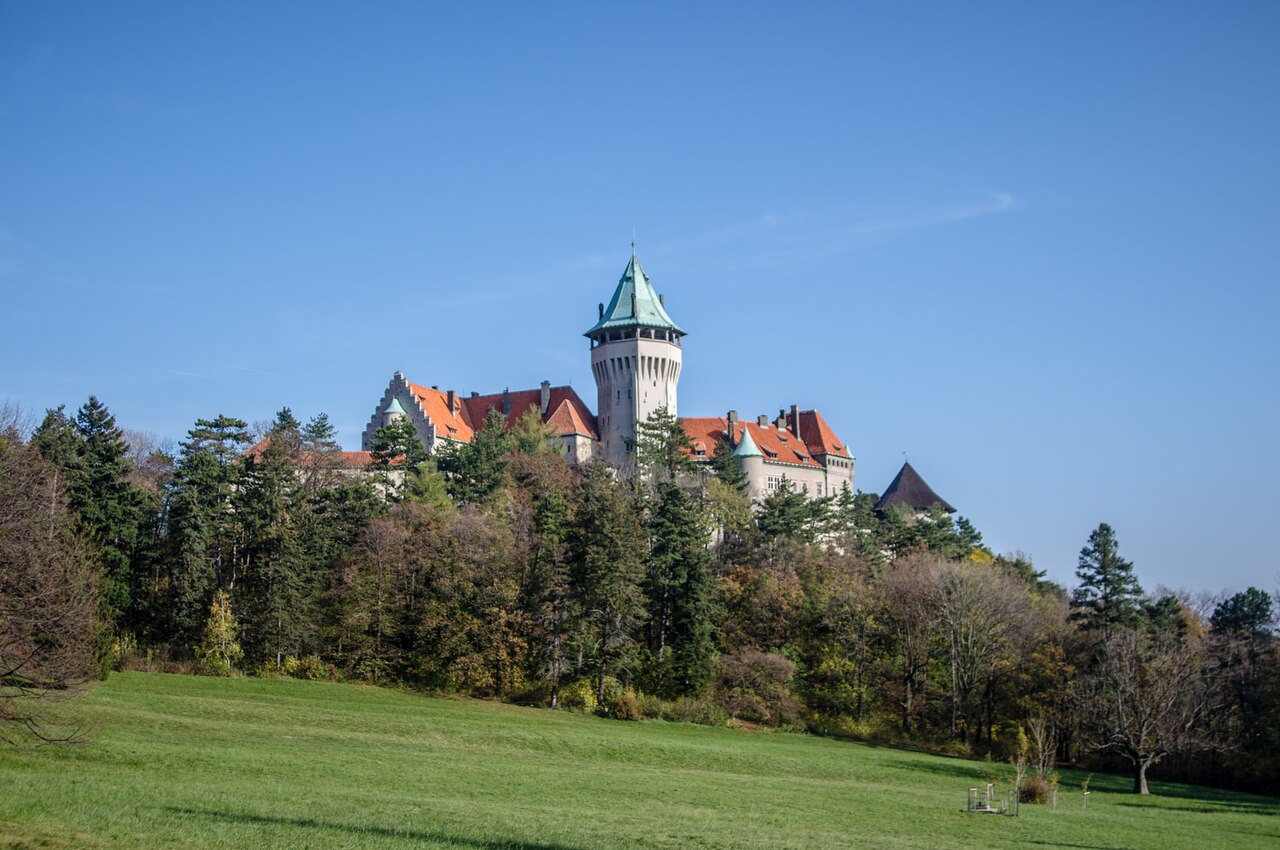
Smolenice Castle is a notable hill castle located on the eastern slope of the Little Carpathians, near the town of Smolenice, Slovakia. Originally constructed in the 15th century during the late medieval period, the castle has undergone significant transformations over the centuries, reflecting the turbulent history and architectural evolution of the region. Medieval origins and early history The castle was initially built as a strategic fortification in the 15th century, serving both defensive and residential purposes. Its location on a hill provided a commanding view of the surrounding landscape, an important feature for protection against invaders. However, the castle's medieval structure did not survive intact through the centuries. During Rákóczi's War of Independence (1703–1711), the castle suffered considerable damage. Later, it was further affected during the Napoleonic wars in the early 19th century, which contributed to its decline and eventual ruin. By the late 18th century, when Count János Pálffy inherited the estate in 1777, the castle was in a poor state and uninhabitable due to the lack of funds for restoration. 20th-century reconstruction and architectural design The castle's revival began in the early 20th century under the direction of Count József Pálffy. The rebuilding project was inspired by the Kreuzenstein Castle near Vienna, a well-preserved example of medieval architecture. The reconstruction was designed by the architect Jozef Hubert, with construction supervision by Pavol Reiter, an architect from Bavaria. The reconstruction employed a diverse workforce, including masters and craftsmen from Italy, Germany, Austria, and Hungary, alongside about 60 local workers from Smolenice and neighboring villages. The main building features two wings and a prominent tower, constructed using ferroconcrete, a modern material choice that allowed for greater structural strength while preserving a historic aesthetic. Damage, state ownership, and modern use In the spring of 1945, during the final stages of World War II, Smolenice Castle sustained damage. That same year, ownership transferred to the state. After 1950, several reconstruction efforts were undertaken to stabilize and restore parts of the castle. Since June 26, 1953, the castle has been the property of the Slovak Academy of Sciences. Today, it functions primarily as a conference centre, hosting various academic and cultural events. Public access is limited, with the castle generally open to visitors only during the summer season. Architectural features and layout The castle's layout includes a main building with two wings arranged around a courtyard, and a distinctive tower that serves as a visual focal point. The use of ferroconcrete in the 20th-century reconstruction reflects a blend of modern construction techniques with traditional castle architecture. The design draws heavily from the medieval style, echoing the original appearance while incorporating contemporary materials for durability. The castle's position on a hillside provides natural defensive advantages, with steep slopes on several sides. The surrounding landscape of the Little Carpathians adds to the castle's scenic and strategic significance. Cultural significance and visitor information Smolenice Castle holds cultural and historical importance in Slovakia, representing centuries of architectural and political history. Its restoration in the 20th century preserved a key piece of the region's heritage, linking medieval traditions with modern uses. Visitors interested in castle architecture, Slovak history, and scenic mountain landscapes find Smolenice Castle an intriguing destination. While the castle is not open year-round, the summer months provide the best opportunity to explore its grounds and appreciate its architectural features. As a conference centre, the castle also plays a role in fostering scientific and cultural exchange, contributing to the intellectual life of Slovakia.

Late Medieval (14th–15th c.)
Details