Dobrá Niva Castle
Dobrá Niva Castle stands as a remarkable example of a Gothic hilltop fortress in Slovakia, embodying the medieval military architecture and regional history of the Kingdom of Hungary. Constructed in the late 13th century, shortly after the devastating Mongol invasion, the castle was strategically positioned on a naturally shaped hill, overseeing a vital trade route between the towns of Krupina and Zvolen. Its location and design reflect the urgent need for fortified strongholds to protect economic and political interests during a turbulent period in Central European history.
The earliest written records of Dobrá Niva Castle date back to 1305 or 1306, marking its significance as a defensive and administrative center. Throughout the Middle Ages, the castle served as the administrative heart of the Dobroniv royal estate, maintaining this role until the 16th century. Its ownership by prominent royal figures such as Barbara of Cilli and Elisabeth of Luxemburg during the 15th century underscores its importance within the royal domains of the Kingdom of Hungary.
Historical context and strategic importance
The construction of Dobrá Niva Castle was part of a broader wave of fortress building across the Kingdom of Hungary following the Mongol invasion of 1241-1242, which exposed the vulnerabilities of the kingdom's defenses. The castle's primary function was to guard a crucial trade route, facilitating commerce and communication between significant urban centers. Its position on a hill naturally shaped like a homestead allowed for excellent visibility and defense against potential invaders.
During the 15th century, the castle experienced the turbulence of the Hungarian civil war over succession to the throne, suffering damage but retaining its strategic value. The growing threat of the Ottoman Empire in the late 16th century further emphasized the castle's military role. Notably, in 1583, Dobrá Niva withstood an Ottoman siege, an event that highlights its resilience and the military capabilities of its defenders. Relief forces from the nearby town of Zvolen played a critical role in lifting the siege, demonstrating the interconnected defensive network of the region.
Architectural features and layout
Defensive structures and fortifications
Dobrá Niva Castle exemplifies the motif of a medieval hill castle, combining natural topography with man-made defenses. The castle's layout includes a central stone-built core surrounded by extensive earthen fortifications forming a defensive ring. This ring comprises wide embankments and deep ditches, characteristic of the motte-and-bailey style, where a raised earth mound (motte) is protected by a courtyard (bailey) with earthworks.
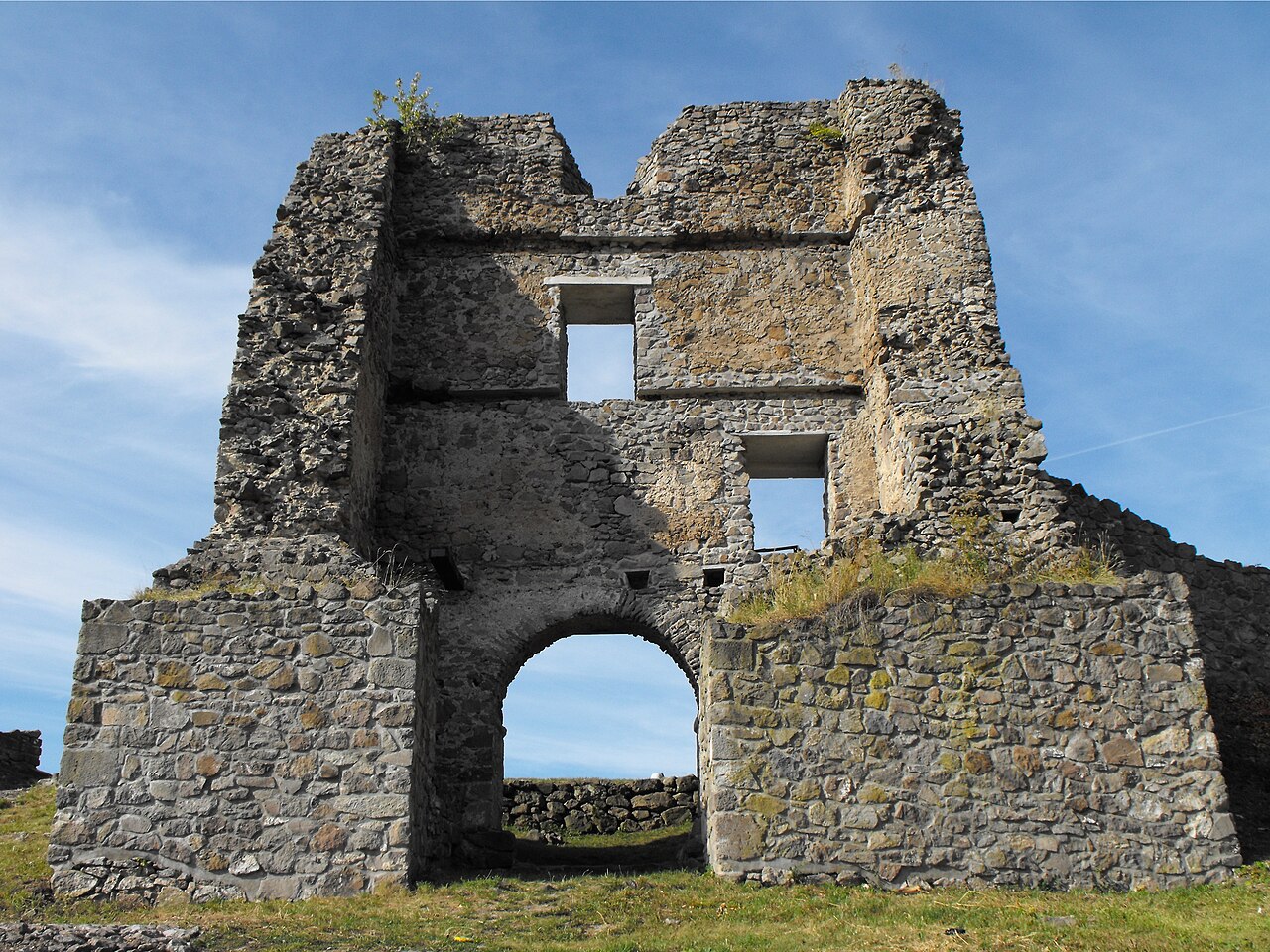
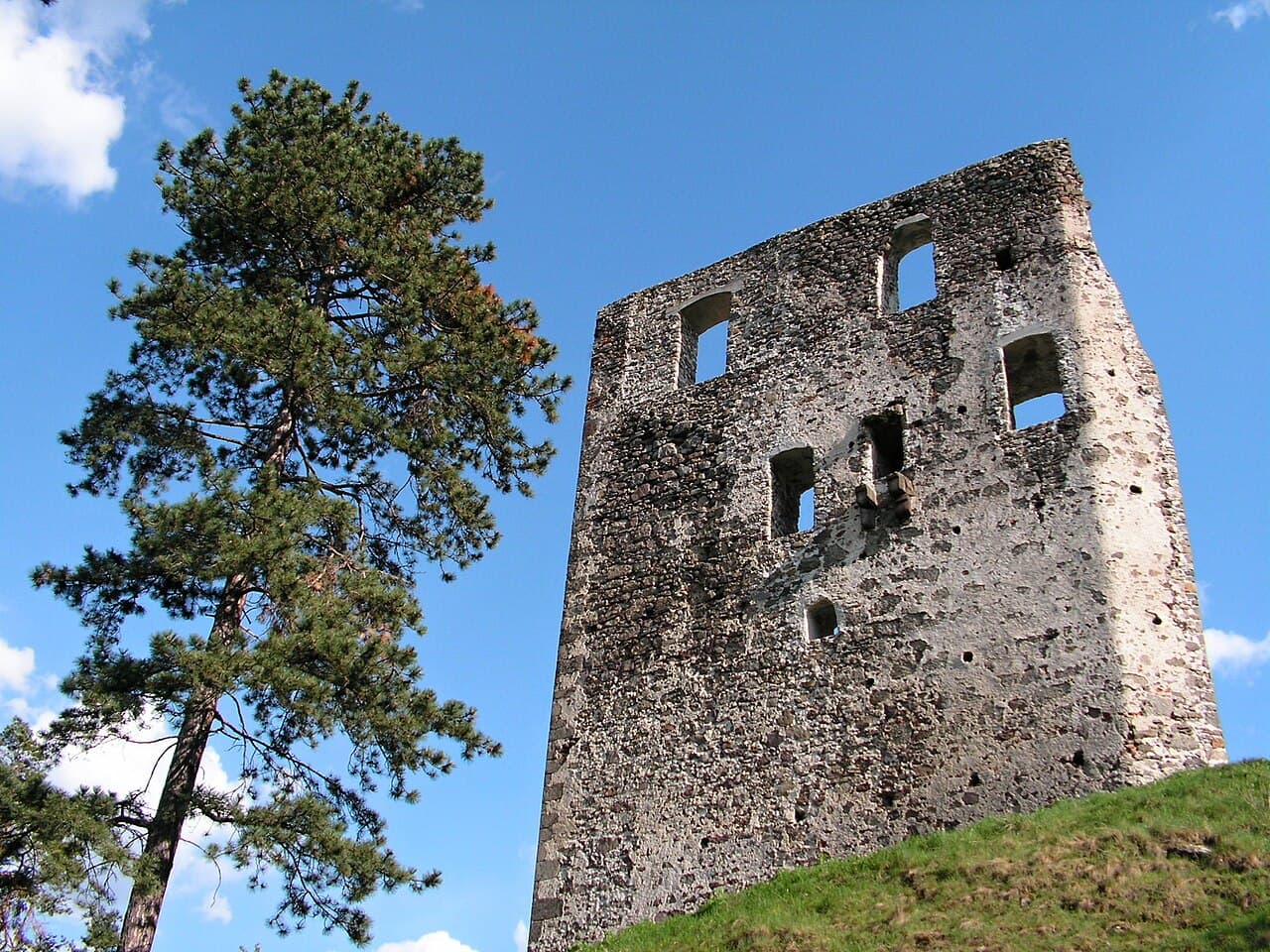
The inner fortification features a two-story stone palas, which served as the main residential and administrative building. Adjacent to the palas stood a defensive tower, both enclosed within stone walls that formed the castle's heart. Two main gates provided controlled access to the fortress, while a bastion projected from the walls allowed defenders to fire along the adjacent curtain walls, enhancing the castle's defensive capabilities.
Defensive design elements and armament
The castle's earthen outer defenses lack visible shooting openings or gunports, suggesting the fortifications predate the widespread use of firearms or were not significantly adapted for them. However, the presence of projections in the earthworks indicates the use of flank bastions, which allowed defenders to cover the sides of the castle against attackers. This design reflects medieval defensive principles focused on overlapping fields of fire and protection against siege engines and infantry assaults.
Later history and decline
By the early 17th century, Dobrá Niva Castle had fallen into considerable disrepair. The estate administration was relocated in 1609 to a newly constructed building at the base of the hill, reflecting the fortress's diminished military and administrative role. A small military garrison remained for some time, but the castle's strategic importance waned as military technology and political circumstances evolved.
Ownership passed to the influential Esterházy family in 1614, who undertook restoration efforts, including repairs documented in 1731. Despite these efforts, the castle gradually lost its military function. By 1805, control transferred to the state, which repurposed the site for mining administration. This change in use led to neglect, and the castle slowly fell into ruin as local inhabitants removed stones for other building projects.
In 1996, conservation efforts aimed to stabilize the ruins, though some interventions were criticized for altering the site's historic character. Today, Dobrá Niva Castle remains a preserved ruin under the care of the municipality of Podzámčok, serving as a poignant reminder of the region's medieval heritage.
Current condition and visitor experience
The surviving remains of Dobrá Niva Castle primarily consist of the torso of the stone palas at the summit, surrounded by earthworks that delineate the original defensive perimeter. The ruins have undergone careful repairs using minimal modern materials to preserve the fortress's authentic medieval appearance. Visitors can explore the site, which is maintained with trimmed grass, benches, a fire pit, informational boards, and coniferous trees, providing a respectful and educational environment.
While detailed architectural features such as inscriptions or decorative elements have not survived, the combination of stone ruins and earthworks offers valuable insight into medieval castle construction and defense strategies. The site provides an evocative experience for those interested in Gothic architecture, medieval history, and the military heritage of Slovakia.
Cultural significance and heritage preservation
Dobrá Niva Castle holds an important place in the cultural landscape of central Slovakia. As a Gothic hill castle with roots in the late 13th century, it embodies the historical narrative of medieval fortress construction in response to external threats and internal power dynamics within the Kingdom of Hungary. Its survival as a ruin allows historians, architects, and visitors to connect with the past and understand the evolution of defensive architecture.
The castle's preservation as a ruin under municipal care ensures that this heritage site remains accessible for educational and tourism purposes. Interpretive materials and site management aim to balance conservation with public engagement, fostering appreciation for Slovakia's medieval history and architectural legacy.
Frequently asked questions (FAQ)
- What is the historical significance of Dobrá Niva Castle?
- Dobrá Niva Castle, located in Podzámčok, Slovakia, dates back to the 14th century and showcases the medieval architectural style of the region. It played a crucial role in the defense against invasions and served as a residence for noble families. Today, it stands as a symbol of Slovak heritage and offers insights into the country's feudal past.
- When was Dobrá Niva Castle built?
- The construction of Dobrá Niva Castle began in the 14th century, with various renovations and expansions occurring over the centuries. Its strategic location made it an important fortification during the medieval period. The castle reflects the architectural trends of its time and has preserved many historical elements through the years.
- Can I visit Dobrá Niva Castle?
- Yes, Dobrá Niva Castle is open to visitors, allowing them to explore its rich history and stunning architecture. Guided tours are often available, providing detailed insights into the castle's past and its surroundings. It’s recommended to check the official website for specific visiting hours and tour availability.
- What are the opening hours for Dobrá Niva Castle?
- The opening hours for Dobrá Niva Castle can vary by season, with extended hours typically available during the summer months. Generally, the castle is open to visitors from late morning until the early evening. For the most accurate and up-to-date information, it's best to consult the official website or contact the castle administration directly.
- Is it possible to access Dobrá Niva Castle by public transport?
- Yes, Dobrá Niva Castle is accessible by public transport, with local buses connecting Podzámčok to nearby towns and cities. Once you arrive in Podzámčok, the castle is within walking distance. However, checking the latest schedules and routes is advisable to plan your visit effectively.
- What is the best time to visit Dobrá Niva Castle?
- The best time to visit Dobrá Niva Castle is during the spring and early autumn months when the weather is pleasant and ideal for outdoor exploration. Additionally, visiting during these seasons allows you to avoid the summer crowds. Special events and guided tours may also be more frequent during these times.
- Are there any nearby attractions to see when visiting Dobrá Niva Castle?
- Yes, the area surrounding Dobrá Niva Castle offers several attractions, including local parks and historical sites that enrich your visit. The scenic countryside is perfect for hiking and nature walks. Additionally, nearby towns feature museums and cultural sites that provide further insights into Slovak history and culture.
- What are the ticket prices for Dobrá Niva Castle?
- Ticket prices for Dobrá Niva Castle are generally affordable, making it accessible for visitors of all ages. Discounts may be available for children, seniors, and groups, so be sure to inquire when purchasing your tickets. It's advisable to check the official website for the latest pricing and any special offers.
Photo gallery

Information
Website
Visit websiteSources & official resources
Verify the information above using these authoritative references.
Loading map...
Visitor reviews
No reviews yet. Been here? Write the first review and help other travelers!
Write the first reviewVisited this castle? Share your experience
Your review helps other travelers and adds first-hand knowledge to our encyclopedia.