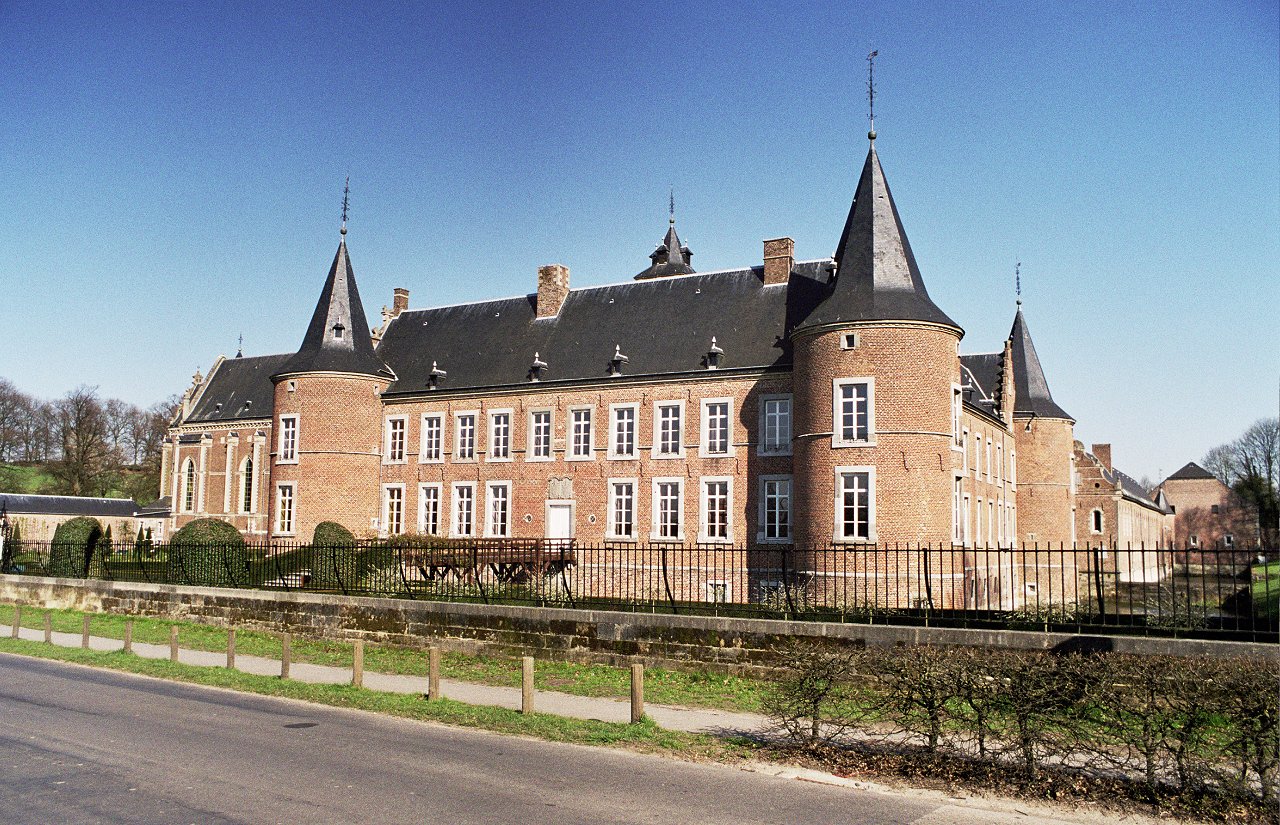
Diepenbeek Castle
Diepenbeek Castle, locally known as Kasteel van Diepenbeek, is situated in the village of Diepenbeek within the province of Limburg in the Flemish region of Belgium. This castle represents a significant example of a moated Renaissance castle with origins tracing back to the early 15th century. It stands near the Demer river, which historically contributed to its defensive moat system.
Early history and origins
The lands of Diepenbeek were historically divided in 1433 between prominent noble families: the Schoonvorst and Van Gaver families on one side, and the Van Horne and De Merode families on the other. Around this period, the original castle was constructed between the village and the Demer river. The castle was designed as a moated fortress, a common defensive feature of the time, surrounded by water to impede attackers.
The remaining tower visible today was originally the gate tower or keep of the castle, serving as a critical defensive and administrative structure. The main castle building extended northwest from this tower, forming the core of the fortified residence.
17th and 18th century expansions
In 1663, the castle changed ownership when the Baroness de Merode sold it to Baron Edmond Godfries van Bocholt, who was the Grand Commander of the Teutonic Order based at Alden Biesen Castle. Under the Teutonic Order's stewardship, the castle underwent significant expansion.
The L-shaped building adjacent to the original tower was constructed in phases during the second half of the 17th century and the first half of the 18th century. This addition served as the seat for the Order's stewards, and the castle became known as the "Rentmeesterij", reflecting its administrative role in managing the Order's estates.
Architectural features and style
Diepenbeek Castle exemplifies Renaissance architectural elements typical of the 17th century, blended with functional defensive features from its medieval origins. The moated design provided a natural barrier, while the gate tower or keep was a strategic point for defense and control of access.
The L-shaped wing added by the Teutonic Order reflects the practical needs of estate administration, with residential and office spaces integrated into the castle's layout. The combination of medieval fortification and Renaissance residential architecture marks the castle's evolution over centuries.
19th century to present day
Following the French occupation of Belgium in the early 19th century, Diepenbeek Castle transitioned into private ownership. During this period, parts of the castle were adapted for civil uses, including functioning as a notary's office.
Today, Diepenbeek Castle remains private property. It has undergone recent restoration and is intended for use as a private residence. Although the interior of the historic gate tower is not publicly accessible, the castle's exterior and its setting by the Demer river continue to attract interest for their historical and architectural significance.
Cultural and heritage significance
Diepenbeek Castle represents a tangible link to the region's noble families and the influence of the Teutonic Order in Limburg. Its moated structure and Renaissance architectural details provide insight into the defensive and residential strategies of the 15th to 18th centuries in this part of Belgium.
The castle's preservation and restoration efforts help maintain the cultural heritage of Diepenbeek village and contribute to understanding the evolution of castle architecture in the Flemish region.
Frequently asked questions (FAQ)
- What are the opening hours of Diepenbeek Castle?
- Diepenbeek Castle is open to visitors from Tuesday to Sunday, 10 AM to 5 PM. It is closed on Mondays and certain public holidays, so it's advisable to check the official website for any seasonal changes in hours before planning your visit.
- What is the historical significance of Diepenbeek Castle?
- Diepenbeek Castle dates back to the 13th century and has played a crucial role in the region's history. Its architecture reflects the medieval style and has been a witness to various historical events that shaped the area.
- Can I take guided tours of Diepenbeek Castle?
- Yes, guided tours are available at Diepenbeek Castle, providing visitors with in-depth knowledge about its history and architecture. It is recommended to book tours in advance, especially during peak tourist seasons.
- Is the castle accessible for visitors with disabilities?
- Diepenbeek Castle strives to be accessible to all visitors, with pathways that accommodate wheelchairs. However, some areas may have limited access due to the castle's historical structure, so it's best to inquire ahead about specific accessibility needs.
- When is the best time to visit Diepenbeek Castle?
- The best time to visit Diepenbeek Castle is during the spring and early autumn when the weather is pleasant and ideal for exploring the grounds. Additionally, visiting during festival seasons can enhance your experience with special events.
- What are the ticket prices for Diepenbeek Castle?
- Ticket prices for Diepenbeek Castle are generally affordable, with discounts available for children, students, and seniors. It's advisable to check the official website for the most current pricing and any special offers that may be available.
- Are there any nearby attractions to visit?
- Yes, Diepenbeek is surrounded by several attractions, including beautiful parks and historical sites. Nearby, you can explore the vibrant city of Hasselt, known for its museums and shopping, making it a great complement to your visit to the castle.
- How do I get to Diepenbeek Castle?
- Diepenbeek Castle is easily accessible by public transportation, with bus and train services connecting to Diepenbeek. If driving, ample parking is available nearby, ensuring a convenient visit for all guests.
Information
Address
Stationsstraat 25, Belgium
Loading map...
Visitor reviews
No reviews yet. Been here? Write the first review and help other travelers!
Write the first reviewVisited this castle? Share your experience
Your review helps other travelers and adds first-hand knowledge to our encyclopedia.