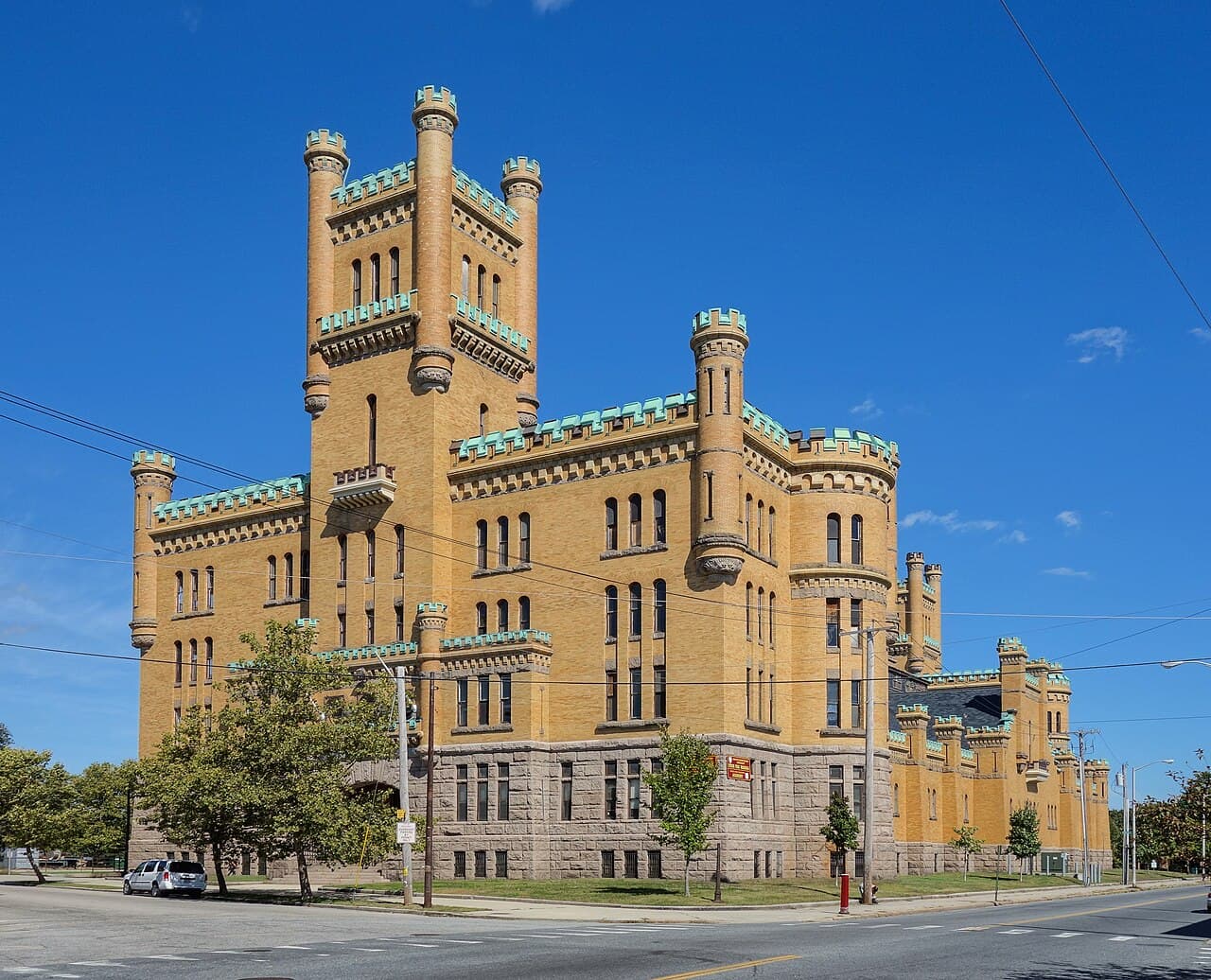
Cranston Street Armory
The Cranston Street Armory stands as a prominent historic building located in the Broadway–Armory Historic District of Providence, Rhode Island. Constructed in 1907 at a cost of $650,000, this armory served as a vital military facility for the Rhode Island National Guard for nearly 90 years, from its opening until 1996. Its architectural design and historical significance have made it a landmark in the city and a symbol of early 20th-century military architecture in the United States.
Architectural features and design
The Cranston Street Armory is characterized by its distinctive yellow brick construction, which sets it apart visually within the historic district. The building's design incorporates crenellated turrets and decorative stonework, elements that evoke the style of medieval fortifications and lend the structure a fortress-like appearance. These features are typical of early 20th-century armory architecture, which often sought to convey strength and security.
The armory's layout includes bastioned elements, which justify its classification as a bastioned fortress. These bastions provided defensive advantages, allowing defenders to cover adjacent walls with gunfire. The overall massing and stylistic details reflect a blend of functional military design and ornamental historicism.
Historical context and military use
Built during a period of expanding military infrastructure in the United States, the Cranston Street Armory was designed to serve as a training and mobilization center for the Rhode Island National Guard. Over its operational lifetime, it housed troops and equipment, supporting state and national defense efforts. The armory's location in Providence was strategic, providing access to transportation and urban resources.
Its use by the National Guard ceased in 1996, coinciding with changes in military facility requirements and the consolidation of resources. Since then, the building has seen adaptive reuse, including partial conversion into film studios and offices for the Rhode Island State Fire Marshal, demonstrating its continued utility in a civilian context.
Preservation and cultural significance
The Cranston Street Armory's historical and architectural value has been recognized by preservation organizations. In 1997, the National Trust for Historic Preservation listed it among America's 11 Most Endangered Historic Places, highlighting concerns about its maintenance and future. This designation brought attention to the need to preserve the armory as a cultural and historic asset.
Its prominent location and distinctive architectural features make the armory an iconic part of the Broadway–Armory Historic District. Efforts to maintain and repurpose the building reflect broader trends in historic preservation and adaptive reuse of military structures in urban settings.
Location and current status
Situated in Providence, Rhode Island, the Cranston Street Armory remains a significant landmark within the city. While no longer serving its original military function, the building's robust construction and architectural character continue to attract interest from historians, preservationists, and the local community.
Its current uses, including film production facilities and government offices, illustrate the versatility of historic armories and their potential for integration into modern urban life without compromising their heritage value.
Frequently asked questions (FAQ)
- What is the historical significance of Cranston Street Armory?
- Cranston Street Armory is an important historical site in Providence, known for its distinctive Romanesque Revival architecture and its role in the military history of Rhode Island. Built in the early 20th century, it served as a training facility and armory for the National Guard, reflecting the state's military heritage and civic pride.
- When was Cranston Street Armory built?
- The Cranston Street Armory was completed in 1907, showcasing the architectural styles popular during that era. Its construction was part of a broader movement to establish civic buildings that represented community values and aspirations in the early 1900s.
- What are the opening hours for visiting Cranston Street Armory?
- Cranston Street Armory is typically open to visitors on weekdays from 9 AM to 5 PM. It's advisable to check the official website or contact the administration for any seasonal changes or special events that may affect visiting hours.
- Can I take a guided tour of Cranston Street Armory?
- Yes, guided tours of Cranston Street Armory are available, providing visitors with a deeper understanding of its history and architecture. Reservations are recommended, especially during peak tourist seasons, to ensure availability.
- Is the Cranston Street Armory accessible for visitors with disabilities?
- Yes, the Cranston Street Armory is equipped with facilities to accommodate visitors with disabilities. Access ramps and elevators are available to ensure that all guests can enjoy the historic site comfortably.
- What is the best time to visit Cranston Street Armory?
- The best time to visit Cranston Street Armory is during the spring and fall when the weather is mild, allowing for a pleasant outdoor experience. Additionally, visiting during weekdays can help avoid larger crowds.
- Are there any nearby attractions to the Cranston Street Armory?
- Yes, the Cranston Street Armory is located near several other attractions in Providence, including the Roger Williams Park and the Rhode Island State House. Visitors can easily explore these sites before or after their visit to the armory.
- What are the ticket prices for visiting Cranston Street Armory?
- Admission to Cranston Street Armory is generally free, but some special exhibitions or guided tours may require a small fee. It's best to check the armory's official website for the most current pricing and any special events that might have associated costs.
Photo gallery

Information
Loading map...
Visitor reviews
No reviews yet. Been here? Write the first review and help other travelers!
Write the first reviewVisited this castle? Share your experience
Your review helps other travelers and adds first-hand knowledge to our encyclopedia.


