
Chihaya Castle
Chihaya Castle stands as a remarkable symbol of Japanese medieval military ingenuity and loyalty. Constructed in 1332 by the legendary Kusunoki Masashige during the Genko War, this hill castle in Osaka played a pivotal role in the conflict between Emperor Go-Daigo and the Kamakura shogunate. Despite its current state as ruins, the castle's historical significance and strategic design continue to captivate historians, castle enthusiasts, and visitors alike.
Historical significance and military role
Chihaya Castle was constructed at a time of intense political upheaval in Japan, during the LATE_MEDIEVAL period. It was built as a defensive fortress by Kusunoki Masashige, a samurai famed for his unwavering loyalty to Emperor Go-Daigo. The castle became a bastion of resistance against the Kamakura shogunate's forces, exemplifying the use of guerrilla warfare and tactical ingenuity in medieval Japanese castle defense.
Masashige's defense strategies at Chihaya Castle are legendary. He employed clever tactics such as rolling large boulders down the slopes to disrupt enemy formations, setting log traps to slow advances, and using "dummy" warriors to exaggerate the size of his defending force. These methods frustrated and demoralized the shogunate army, which ultimately abandoned its siege efforts. The castle's successful defense contributed significantly to the eventual downfall of the Kamakura shogunate and the restoration of imperial rule.
Architectural features and layout
As a hill castle (yamajiro), Chihaya Castle utilized the natural topography of Mount Kongo to enhance its defenses. The castle's design incorporated multiple baileys (courtyards) arranged on terraced slopes, which created layered defensive positions difficult for attackers to penetrate. The main bailey, situated at the highest point, offered commanding views of the surrounding area, allowing defenders to anticipate enemy movements.
Although much of the castle has succumbed to time, several key features remain visible. The dry moat and carved terraces demonstrate sophisticated earthworks typical of Japanese mountain fortresses. The presence of kirigishi slopes—steep, angled embankments designed to impede attackers—and small koshiguruwa side baileys hidden in the woods reflect a complex defensive network. While the stone wall currently visible is a later reconstruction, it likely marks the foundation of a lookout tower or yagura, integral to the castle's early warning system.
Baileys and temples
The castle grounds include the second, third, and fourth baileys, which are now occupied by a temple complex. This integration of religious structures within former military sites is common in Japan, reflecting the layered history and evolving use of castle spaces. Visitors can explore these areas to appreciate the castle's scale and the way natural and manmade elements were combined for defense.
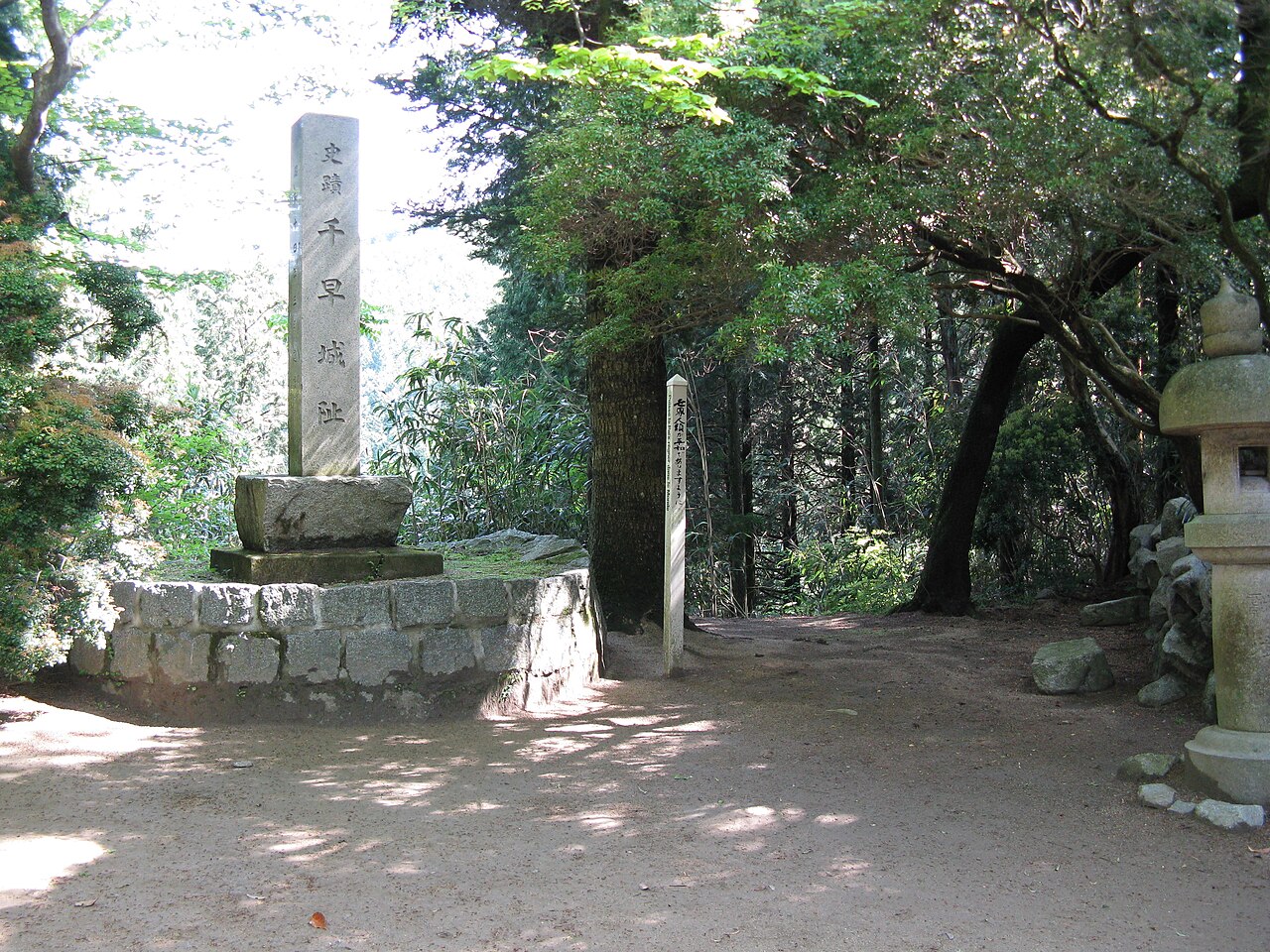
Photo by KENPEI • CC BY-SA 3.0
Visiting Chihaya Castle today
Despite its reputation among some castle enthusiasts as a challenging site to visit due to limited visible remains and difficult access, Chihaya Castle offers a rewarding experience. The castle is included in the prestigious Top 100 Castles of Japan list, highlighting its cultural and historical importance.
Access to the castle involves a hike up Mount Kongo. While there is a steep staircase that many find daunting, a well-maintained hiking trail bypasses these stairs, providing a more manageable route. After about 15 minutes on this trail, a clearly marked side path leads visitors directly to the castle ruins. This hike offers scenic views and an immersive encounter with the natural environment surrounding the fortress.
Previously, the Kongosan Ropeway provided an easier means to reach the mountain summit, offering panoramic views and access to hiking trails. However, the ropeway was closed and dismantled in 2022 due to equipment deterioration, making the hike the primary way to visit the site.
Nearby castles and historical context
Chihaya Castle is part of a network of fortifications linked to Kusunoki Masashige's military campaigns. Nearby castles such as Kami Akasaka Castle and Shimo Akasaka Castle complement the historical narrative of the region, providing additional context for the Genko War and the samurai strategies employed during this turbulent period.
Exploring these sites together offers visitors a comprehensive understanding of the military landscape of 14th-century Japan and the enduring legacy of Kusunoki Masashige as a symbol of loyalty and tactical brilliance.
Preservation and cultural importance
As ruins, Chihaya Castle requires careful preservation to maintain its remaining features and historical integrity. The site is managed to balance public access with conservation efforts, ensuring that future generations can appreciate this emblem of Japan's medieval heritage.
The castle's inclusion in the Top 100 Castles of Japan underscores its significance despite the limited physical remains. It serves as a powerful reminder of the resilience and strategic acumen that defined Japan's feudal conflicts and shaped its history.
Frequently asked questions (FAQ)
- How do I get to Chihaya Castle?
- Chihaya Castle is accessible by train and bus from Osaka city center. The nearest station is Chihaya Akasaka Station, from which you can take a local bus or walk to the castle site.
- What is the historical significance of Chihaya Castle?
- Chihaya Castle, built in the 16th century, played a crucial role during the Sengoku period in Japan. It was strategically located to control the region and served as a stronghold for various feudal lords.
- When was Chihaya Castle originally built?
- Chihaya Castle was constructed in 1585 by the warlord Toyotomi Hideyoshi. The castle has undergone various reconstructions and restorations over the centuries, preserving its historical value.
- Can I explore the castle grounds?
- Yes, visitors are welcome to explore the castle grounds, which offer scenic views and walking paths. While the original structures have mostly been lost, the ruins and surrounding nature provide a glimpse into the castle's past.
- Why is Chihaya Castle a popular tourist attraction?
- Chihaya Castle is popular for its historical relevance and beautiful natural setting in the mountains of Osaka. It attracts history enthusiasts and nature lovers alike, offering a peaceful retreat from the city.
- Is it possible to visit Chihaya Castle year-round?
- Yes, Chihaya Castle is open to visitors year-round, though the best time to visit is during spring and autumn when the weather is mild and the surrounding scenery is particularly beautiful. Check local resources for any seasonal events or activities.
- What are the opening hours for Chihaya Castle?
- Chihaya Castle is generally open from 9 AM to 5 PM, with last entry at 4:30 PM. It's advisable to check for any changes in hours or closures during national holidays.
- Are there any ticket prices for visiting Chihaya Castle?
- There is no admission fee to enter the castle grounds, making it an accessible destination for everyone. However, there may be fees for guided tours or specific events held at the site.
- What nearby attractions should I visit while at Chihaya Castle?
- Nearby attractions include the picturesque Chihaya Shrine and several hiking trails that offer stunning views of the surrounding area. Additionally, the historical town of Sakai is just a short drive away, providing more cultural experiences.
Photo gallery

Information
Sources & official resources
Verify the information above using these authoritative references.
Loading map...
Visitor reviews
No reviews yet. Been here? Write the first review and help other travelers!
Write the first reviewVisited this castle? Share your experience
Your review helps other travelers and adds first-hand knowledge to our encyclopedia.