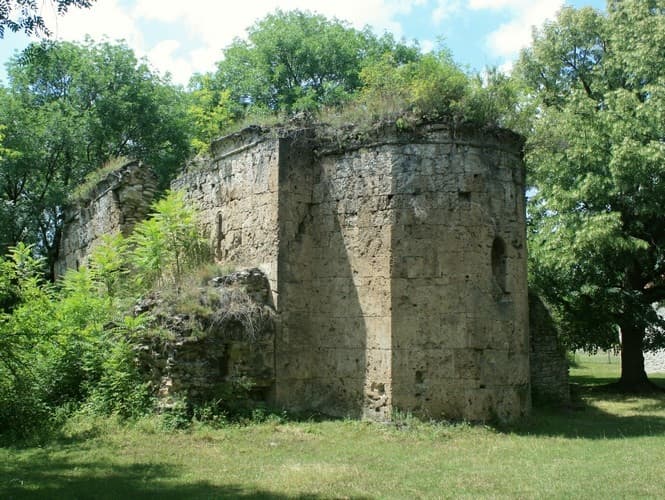
The Cheremi historic site (Georgian: ჭერემის ნაქალაქარი, romanized: ch'eremis nakalakari, literally, "the ruined/former city of Cheremi") is a significant archaeological and historical location in eastern Georgia. It lies in the vicinity of the modern village of Cheremi, within the Gurjaani Municipality of the Kakheti region. The site preserves the remains of an early medieval settlement that once flourished in this part of Georgia.
The site includes the ruins of several early medieval churches, a castle with a circuit wall, and various burial grounds. These remnants correspond to the extinct town of Cheremi, which is documented in early medieval Georgian chronicles as an important local center. The presence of multiple churches indicates the religious significance of the town during its period of habitation. The castle ruins with their defensive walls reflect the strategic importance of Cheremi in the region, serving both as a fortified settlement and a local administrative center.
Historical context and significance
The town of Cheremi is first mentioned in Georgian historical sources dating from the early medieval period, highlighting its role within the political and ecclesiastical landscape of Kakheti. The region was a frontier zone between various Georgian principalities and neighboring powers, which necessitated the construction of fortified sites such as the Cheremi castle. The site’s churches suggest that Cheremi was also a religious hub, possibly housing a bishopric or important monastic community.
Throughout its history, Cheremi experienced periods of growth and decline, influenced by regional conflicts and shifting political boundaries. The archaeological remains provide insight into the urban layout and architectural styles prevalent in eastern Georgia during the early medieval centuries. The site’s inclusion on the list of the Immovable Cultural Monuments of National Significance underlines its importance for Georgian cultural heritage and the study of medieval Georgian history.
Architectural features and layout
Castle and fortifications
The castle at Cheremi was constructed with defensive priorities in mind, featuring a circuit wall that enclosed the settlement. The wall remnants suggest a robust fortification system designed to protect inhabitants from invasions and raids common in the region during the medieval period. Although much of the structure is now in ruins, the layout indicates a typical early medieval Georgian fortress with strategically placed towers and gate structures.
Religious buildings
Several church ruins are scattered across the site, representing different phases of construction and architectural styles. These churches were likely built between the 6th and 10th centuries, reflecting the evolution of Georgian ecclesiastical architecture. The churches’ foundations and surviving walls reveal the use of local stone and traditional masonry techniques. Some churches may have served as cathedrals or monastic centers, emphasizing the spiritual role of Cheremi in the region.
Burial sites
The burial grounds found within and around Cheremi provide valuable archaeological data on the funerary practices of the local population. Grave goods and burial types indicate a society with established Christian traditions and social stratification. These burials contribute to understanding the demographic and cultural aspects of the inhabitants during the early medieval period.
Archaeological research and preservation
Excavations at Cheremi have been ongoing since the 20th century, revealing layers of occupation and a wealth of artifacts that illuminate the daily life, religious practices, and defensive strategies of its medieval residents. The site’s ruins, though partially preserved, require continued conservation efforts to prevent further deterioration.
As an archaeological site listed among Georgia’s most important cultural monuments, Cheremi is a focus of scholarly study and cultural tourism. Efforts to document and stabilize the ruins aim to make the site accessible for educational purposes while preserving its historical integrity.
Visiting the Cheremi historic site
Visitors to Cheremi can explore the remains of the castle walls, church foundations, and burial sites that together tell the story of this early medieval town. The site’s location in Kakheti offers additional opportunities to experience the region’s rich cultural and natural heritage.
Due to the site's archaeological nature and preservation status, access may be limited, and visitors are advised to check local information for visiting hours and guided tours. The site provides a unique glimpse into Georgia’s medieval past, especially for those interested in early Christian architecture and fortifications.
Frequently asked questions (FAQ)
- What is the historical significance of Cheremi historic site?
- Cheremi historic site is known for its rich history that dates back to the medieval period. It served as a strategic fortress, playing a crucial role in the defense against invasions and showcasing the architectural prowess of its time.
- When was Cheremi castle built?
- Cheremi castle was constructed in the 12th century, during a time when Georgia was a powerful kingdom. The castle has undergone various renovations over the centuries, reflecting the evolving architectural styles and historical events.
- What are the opening hours for Cheremi historic site?
- Cheremi historic site is open to visitors daily from 9 AM to 6 PM. It is advisable to check for any seasonal changes in hours or special closures before planning your visit.
- Can I take photographs inside the castle?
- Yes, visitors are allowed to take photographs inside the castle, but it is important to be respectful of the site's historical integrity. Flash photography may be restricted in certain areas to protect the artifacts and the structure.
- Is it possible to access Cheremi historic site for visitors with disabilities?
- Cheremi historic site strives to be accessible to all visitors, including those with disabilities. However, due to the castle's ancient architecture, some areas may have limitations, so it’s best to inquire in advance for specific accessibility options.
- When is the best time to visit Cheremi historic site?
- The best time to visit Cheremi historic site is during the spring and fall when the weather is mild and the landscape is particularly beautiful. These seasons also bring fewer crowds, allowing for a more enjoyable exploration of the site.
- What are the ticket prices for Cheremi historic site?
- Tickets for Cheremi historic site are reasonably priced, with discounts available for students and seniors. Children under the age of 12 can enter for free, making it an affordable outing for families.
- Are there any nearby attractions to visit after exploring Cheremi historic site?
- Yes, there are several nearby attractions, including the stunning natural parks and other historical sites that showcase Georgia's rich heritage. Exploring the local area can provide a more comprehensive understanding of the region's culture and history.
Photo gallery

Information
Loading map...
Visitor reviews
No reviews yet. Been here? Write the first review and help other travelers!
Write the first reviewVisited this castle? Share your experience
Your review helps other travelers and adds first-hand knowledge to our encyclopedia.



