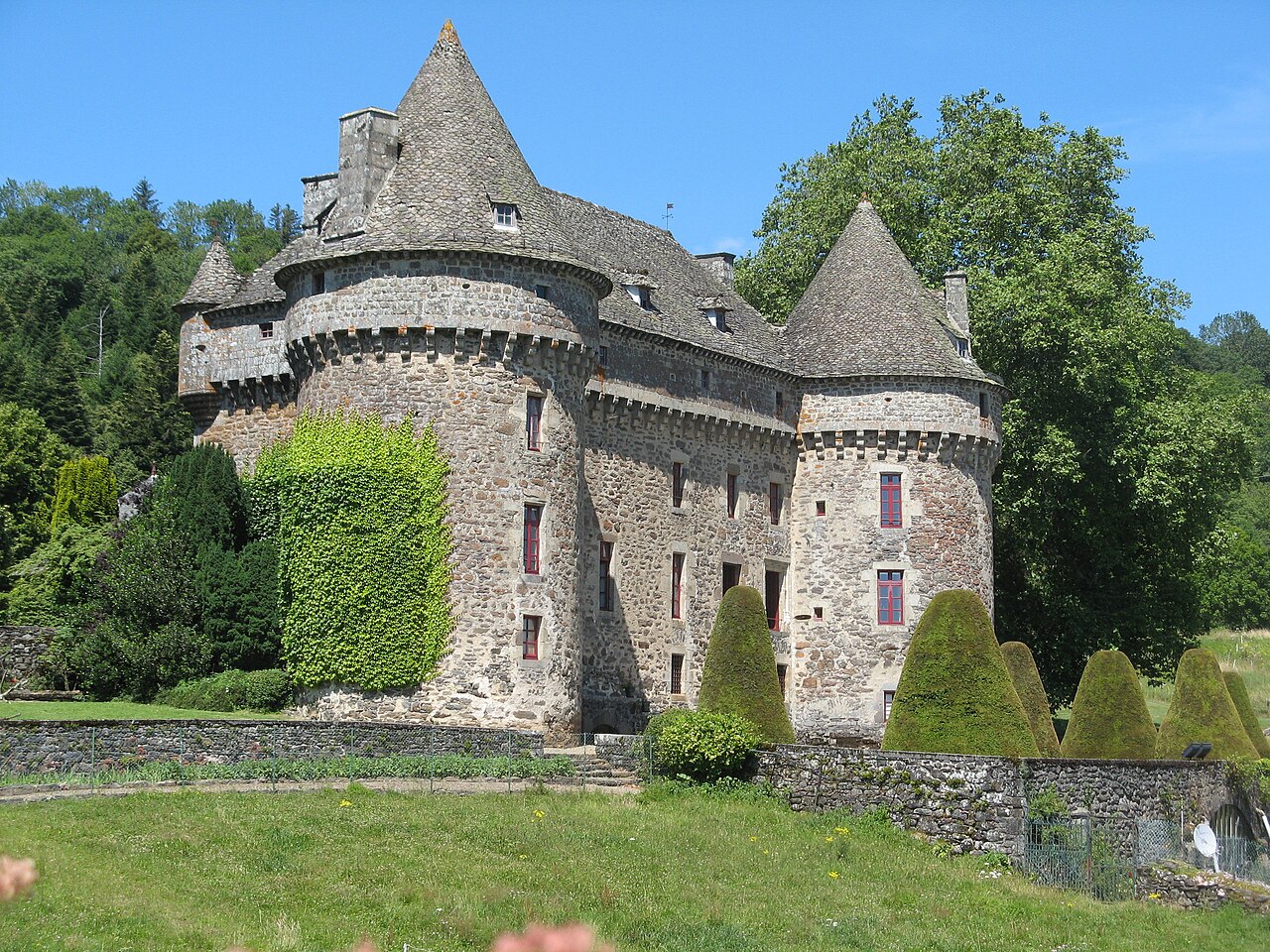
Chavagnac Tower
Chavagnac Tower, also known locally as Tour de Chavagnac and sometimes spelled as Chavaniac, is a notable example of a medieval rural fortified structure located west of the hamlet of the same name in the Cantal department of France. This tower represents the remnants of a small-scale castle complex that played a defensive role in the region during the late medieval period.
Historical background and origins
The site originally hosted a motte-and-bailey castle, a common form of fortification in medieval France, situated a few hundred meters east of the current tower. Today, only a low motte remains visible, marking the location of this earlier fortification. The motte-castle was likely a wooden structure built on an earthen mound, typical of early medieval defensive architecture designed for quick construction and territorial control.
The present stone tower was constructed in 1443 by Louis de Charpentier, who obtained formal permission from his lord, Pierre de Beaufort-Turenne, to erect a fortified tower. The authorization included the right to build palisades, moats, barbicans, machicolations, and other defensive features necessary to protect his lands from thieves and robbers. This reflects the turbulent conditions of the 15th century in rural France, where local lords fortified their holdings against lawlessness and feudal conflicts.
Architectural features and additions
The tower itself is a robust stone structure, characteristic of late medieval military architecture. Its defensive elements such as machicolations—stone projections with openings through which defenders could drop objects or pour substances on attackers—highlight the tower's primary role in defense. The presence of a moat and barbican would have further enhanced its security, controlling access and providing layered protection.
Subsequent modifications included the addition of outbuildings that formed a U-shaped plan around the tower. These extensions likely served domestic or agricultural purposes, indicating a shift from purely military use to a more residential or economic function. In 1731, the tower underwent significant rebuilding under Gilbert de Ribier, which may have involved structural repairs or adaptations to contemporary needs, though the core medieval fabric remains.
Location and setting
Chavagnac Tower is situated in a rural landscape typical of the Cantal region, characterized by rolling hills and agricultural land. Its position west of the hamlet of Chavagnac suggests it was strategically placed to oversee and protect local estates and routes. The surrounding environment would have influenced both its defensive design and its later agricultural integration.
Current status and accessibility
Today, Chavagnac Tower remains a private property and is part of a working farm. Due to its private ownership and active agricultural use, the tower is not open to public visits. Despite this, it stands as a well-preserved example of a fortified rural tower from the late medieval period, retaining significant architectural features that illustrate its historical defensive purpose.
Significance and heritage value
While not a large or famous castle, Chavagnac Tower offers valuable insight into the defensive strategies employed by minor nobility in rural France during the 15th century. It exemplifies the transition from early motte-and-bailey fortifications to more permanent stone towers with complex defensive elements. The tower's survival through centuries, including 18th-century renovations, reflects the layered history of French rural fortifications and their adaptation over time.
Frequently asked questions (FAQ)
- How do I get to Chavagnac Tower?
- Chavagnac Tower is located in Le Château, France, and can be easily accessed by car or public transport. The nearest train station is a short distance away, followed by a scenic walk to the tower. Parking facilities are available for those traveling by car.
- What is the historical significance of Chavagnac Tower?
- Chavagnac Tower dates back to the 12th century and is an important example of medieval military architecture. It served as a defensive structure during various conflicts and played a key role in the region's history. Today, it stands as a testament to the architectural ingenuity of its time.
- When was Chavagnac Tower built?
- Chavagnac Tower was constructed in the 12th century, during a period when fortifications were essential for the protection of territories. Its construction reflects the strategic military needs of the era. Over the centuries, it has undergone several restorations to preserve its historical integrity.
- Can I take photographs inside Chavagnac Tower?
- Yes, visitors are welcome to take photographs inside and outside Chavagnac Tower, allowing you to capture its stunning architecture and beautiful surroundings. However, please be respectful of any specific guidelines or restrictions that may be in place during your visit. Be sure to share your photos using the castle's official hashtag!
- Why is Chavagnac Tower a popular tourist attraction?
- Chavagnac Tower attracts visitors due to its rich history, impressive architecture, and breathtaking views of the surrounding landscape. The tower offers guided tours that provide insights into its past and the significance of the region. Additionally, its picturesque setting makes it a favored spot for photography and exploration.
- Is it possible to access Chavagnac Tower for individuals with mobility challenges?
- Chavagnac Tower has limited accessibility due to its historical structure and terrain. While efforts have been made to accommodate visitors with mobility challenges, it is advisable to contact the site in advance to confirm the available facilities and any assistance required. The staff is committed to ensuring a pleasant visit for all guests.
- What are the opening hours for Chavagnac Tower?
- Chavagnac Tower is open to visitors from 9 AM to 5 PM, with extended hours during the summer months. It is recommended to check the official website for any seasonal changes or special closures. Guided tours typically start every hour, so plan your visit accordingly to make the most of your experience.
- What are the ticket prices for visiting Chavagnac Tower?
- Ticket prices for Chavagnac Tower are quite reasonable, with adult tickets priced at €8 and reduced rates for children and seniors. Family passes are also available, providing a discount for groups. Tickets can be purchased at the entrance or online in advance to avoid long queues.
- What are some nearby attractions to visit after Chavagnac Tower?
- After exploring Chavagnac Tower, visitors can enjoy nearby attractions such as the picturesque village of Le Château and its quaint shops and cafés. Additionally, the beautiful countryside offers walking trails and scenic views, perfect for a leisurely day out. Don’t miss the chance to experience local culture and cuisine in the area!
Information
Loading map...
Visitor reviews
No reviews yet. Been here? Write the first review and help other travelers!
Write the first reviewVisited this castle? Share your experience
Your review helps other travelers and adds first-hand knowledge to our encyclopedia.