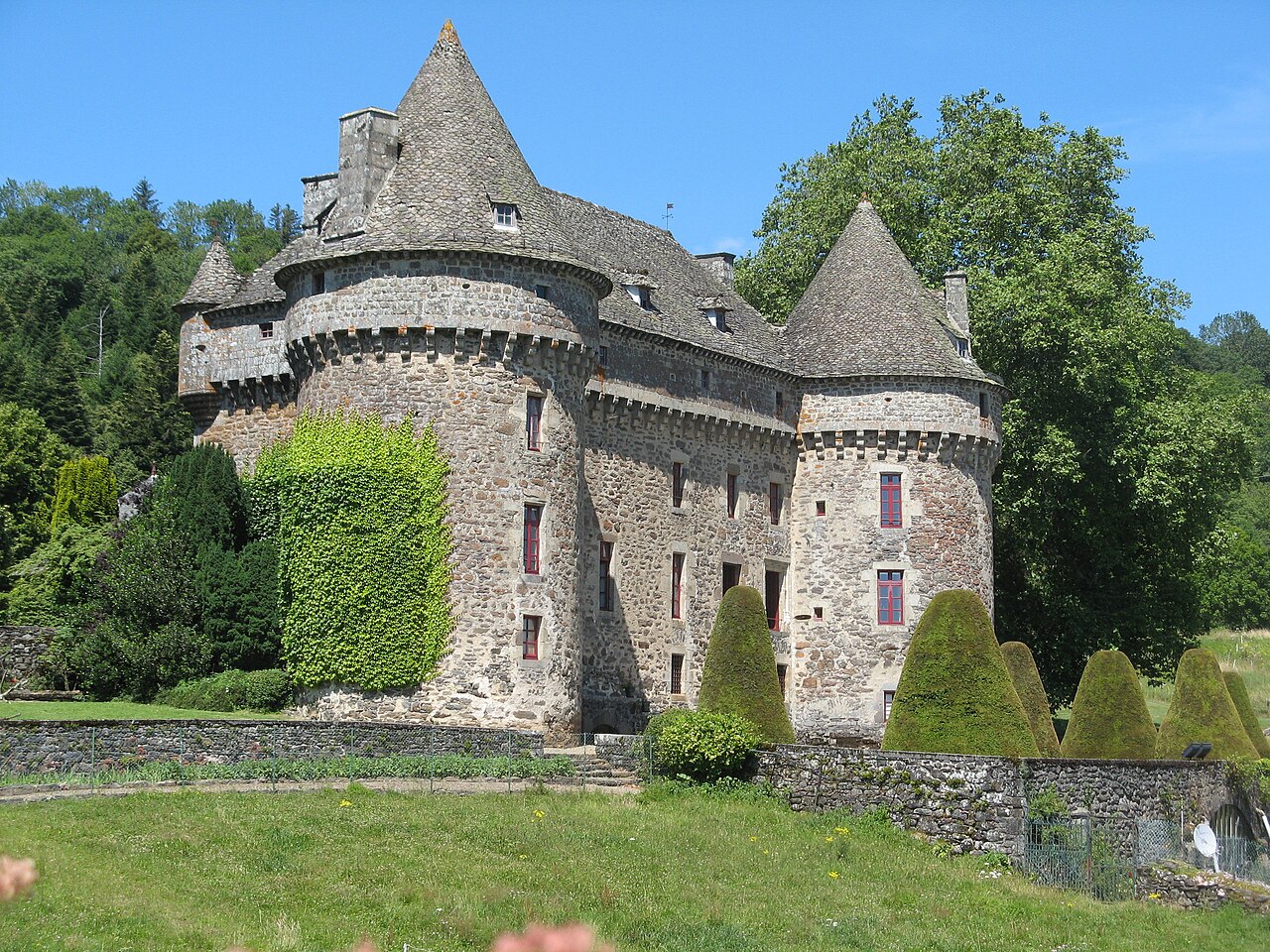
Charlus Castle, or Château de Charlus, is situated east of the small hamlet of Charlus in the Cantal department of France. This site has a long history of fortification, with the original defensive structure dating back to the 9th century atop the basaltic Charlus Peak. The castle that visitors see today, though largely in ruins, primarily reflects the feudal castle built in the 12th century by the powerful House of Ventadour, who held lordship over Charlus and its surrounding lands.
Historical significance and early origins
The strategic location of Charlus Castle on a basaltic outcrop provided natural defensive advantages, which were first exploited in the Early Medieval period. The initial fortification was likely a wooden or rudimentary stone structure designed to control the surrounding territory in the turbulent centuries following the Carolingian empire's decline. By the 12th century, the Ventadours constructed a more substantial stone castle, establishing Charlus as one of the most important fortresses in the Haute-Auvergne region. This period saw the castle serving as a military stronghold and a noble residence, reflecting the feudal system's consolidation in medieval France.
Architectural features and layout
The castle's design was typical of 12th-century feudal fortifications, adapted to the volcanic rock foundation. Although only scant remains survive today, historical records and archaeological studies suggest that Charlus Castle included a fortified keep, defensive curtain walls, and a gatehouse. The basaltic peak provided a natural rock castle foundation, enhancing the defensive capabilities. The castle likely featured battlements and towers for surveillance and defense, along with internal living quarters such as halls and chambers for the lords and their retainers.
Defensive adaptations
The castle's position on a basaltic peak meant that natural cliffs formed part of its defense, reducing the need for extensive man-made fortifications on certain sides. The curtain walls were constructed to protect against siege engines and infantry assaults, while the gatehouse controlled access to the inner bailey. The use of local basalt stone contributed to the durability of the walls, although centuries of weathering and dismantling have left only fragments.
Ownership and military history
The House of Ventadour maintained control of Charlus Castle until 1351, when it was sold to Guillaume III Roger de Beaufort, the Viscount of Turenne. His son, Raimond, inherited the castle later in the 14th century. The castle's military importance continued during the Hundred Years' War, when it changed hands between the English and French forces. The castle's garrison, under Raimond's command, became notorious for housing unemployed soldiers who raided the surrounding countryside, prompting a siege in 1408.
The siege of 1408
Bernard d'Armagnac, the Viscount of Carlat and Constable of France, led a prolonged siege against Charlus Castle to suppress the lawlessness caused by these soldiers. The siege lasted several months, ultimately resulting in the castle's capture and the restoration of order in the region. This event highlights the castle's strategic and social role during a turbulent period of French history.
Later history and decline
In the 16th century, the castle underwent restoration under the ownership of the Lévis family, who maintained it until its decline. The castle was dismantled in 1633 by order of Cardinal Richelieu, a policy aimed at reducing the power of feudal lords and preventing rebellion during the centralization of royal authority in France. Despite this dismantling, the residential lodgings remained habitable until 1689, after which the site was repurposed as a stone quarry.
Current condition and visitor information
Today, Charlus Castle exists primarily as ruins, with only a few overgrown wall fragments remaining to mark its former presence. The castle is freely accessible to visitors, though it offers limited architectural remains to explore. The site provides expansive views of the surrounding Auvergne countryside, making it a destination for those interested in medieval history and natural scenery. While the castle itself offers little in terms of standing structures, its historical context and location contribute to its cultural significance in the region.
Visiting tips
Visitors should prepare for a modest hike to reach the basaltic peak where the castle ruins stand. Due to the minimal remains, it is advisable to visit with a guidebook or local information to fully appreciate the site's historical background. The surrounding region of Cantal offers additional attractions related to medieval heritage and natural landscapes.
Frequently asked questions (FAQ)
- How do I get to Charlus Castle?
- Charlus Castle is located in the picturesque town of Charlus, France. Visitors can reach the castle by car, with ample parking available nearby, or by taking public transportation to the nearest train station followed by a short taxi ride.
- What is the historical significance of Charlus Castle?
- Charlus Castle dates back to the 12th century and has played a vital role in the region’s history as a stronghold during various conflicts. Its architecture reflects the evolution of medieval design and the strategic importance of the location throughout the ages.
- When was Charlus Castle opened to the public?
- Charlus Castle was opened to the public in the late 20th century after extensive restoration efforts. Since then, it has welcomed visitors eager to explore its rich history and stunning architecture.
- Can I take guided tours of Charlus Castle?
- Yes, guided tours are available at Charlus Castle, providing visitors with in-depth knowledge about its history and architecture. Tours are typically offered in multiple languages and are a great way to enhance your visit.
- Why is Charlus Castle considered an architectural gem?
- Charlus Castle is renowned for its blend of Romanesque and Gothic architectural styles, featuring intricately designed facades and impressive towers. The castle’s unique design and well-preserved elements showcase the craftsmanship of the time and make it a must-see for architecture enthusiasts.
- Is it possible to access Charlus Castle with mobility aids?
- Yes, Charlus Castle strives to be accessible to all visitors, with ramps and designated pathways for those using mobility aids. However, some areas may have limited accessibility due to the castle's historical structure, so it's advisable to check in advance.
- What are the opening hours for Charlus Castle?
- Charlus Castle is open to visitors from 9 AM to 6 PM daily, with extended hours during the summer months. It is recommended to check the castle's official website for any special holiday hours or events before planning your visit.
- What are the ticket prices for Charlus Castle?
- Ticket prices for Charlus Castle vary depending on age and group size, with discounts available for students and seniors. Children under a certain age often enter for free, making it an affordable outing for families.
- When is the best time to visit Charlus Castle?
- The best time to visit Charlus Castle is during the spring and early fall when the weather is mild, and the gardens are in full bloom. These seasons also tend to attract fewer crowds, allowing for a more enjoyable experience.
- Are there any nearby attractions to visit along with Charlus Castle?
- Yes, visitors to Charlus Castle can explore several nearby attractions, including the charming village center and local museums that highlight the region's history. Additionally, scenic hiking trails in the surrounding countryside offer beautiful views and outdoor activities.
Information
Loading map...
Visitor reviews
No reviews yet. Been here? Write the first review and help other travelers!
Write the first reviewVisited this castle? Share your experience
Your review helps other travelers and adds first-hand knowledge to our encyclopedia.