Châteaugay Castle
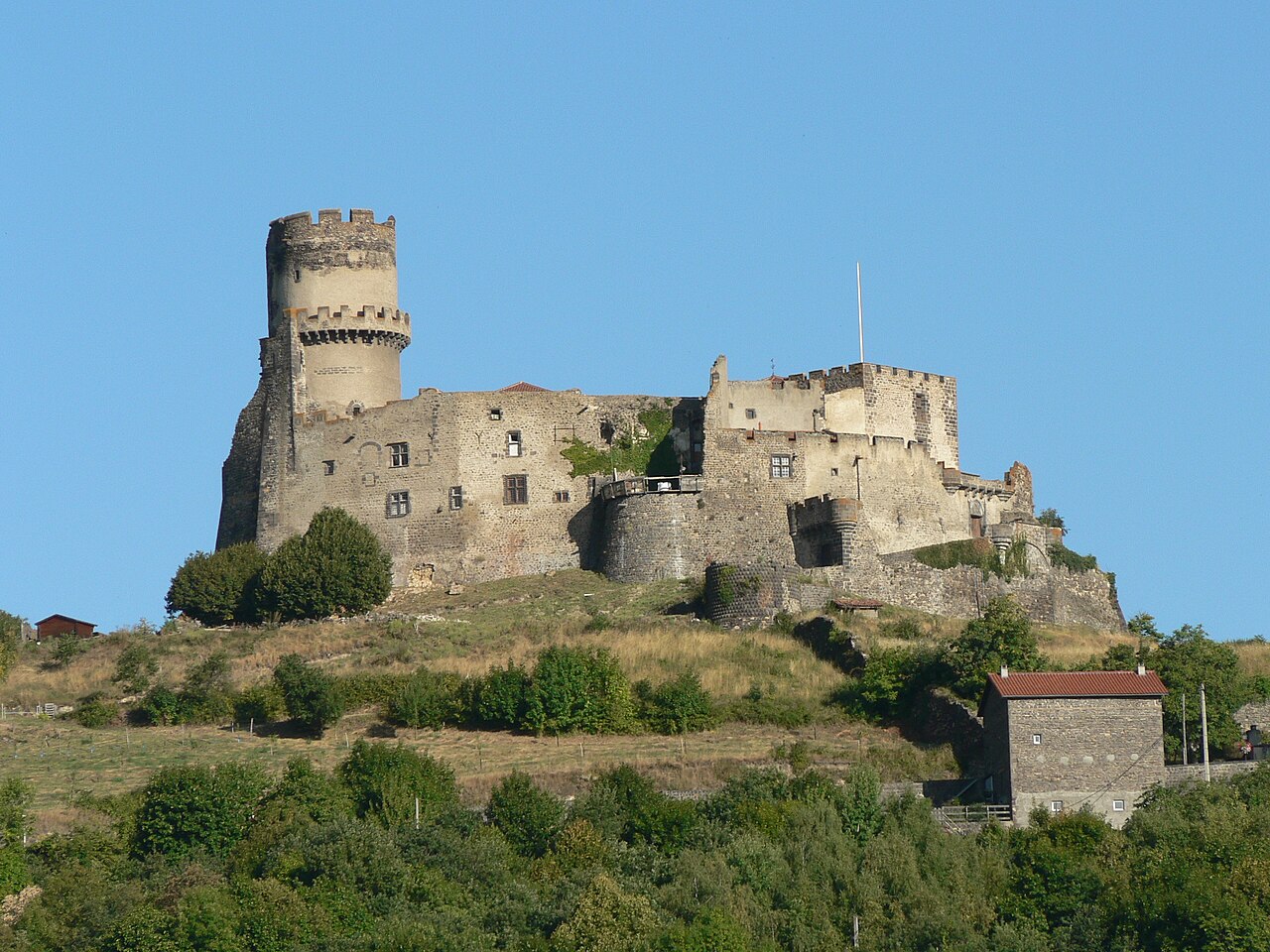
Châteaugay Castle, also known as Château de Châteaugay, is a medieval fortress located in the village of Châteaugay in the Puy-de-Dôme department of central France. Perched on a plateau overlooking the fertile plain of Limagne, the castle occupies a strategic position that has commanded the surrounding landscape for centuries.
Early history and original construction
The site originally hosted a fortress known as Vigosche Castle, constructed in the 11th century during the high medieval period. This first castle served as an outpost for the town of Riom, an important medieval settlement in the region. Unfortunately, no physical remains of this earliest structure survive today, leaving only historical records to attest to its existence.
Rebuilding and architectural evolution in the late medieval period
In 1381, Pierre I de Giac, who served as chancellor to Charles VI of France, commissioned the construction of a new castle on the site. This castle featured a square keep, a common defensive design of the era, surrounded by an enclosure wall that included a main residential building flanked by two turrets. The keep formed the defensive heart of the castle, while the turrets and enclosure walls provided additional protection and living space.
During the early 15th century, the castle became infamous for a grim episode involving Pierre II de Giac, grandson of Pierre I. In 1425, Pierre II imprisoned his pregnant wife, Jeanne de Naillac, in the castle's keep under false accusations of infidelity with Philip the Good, Duke of Burgundy. After poisoning her, he had her body thrown from a cliff. This act was motivated by Pierre II's desire to marry his mistress, Catherine de L'Isle Bouchard.
By around 1430, the castle's defenses were enhanced with the addition of two round towers on the northern facade of the enclosure. These towers, known as the Fort Tower and the Perrière Tower, strengthened the castle's fortifications and reflected evolving military architecture trends of the late medieval period.
Ownership changes and modifications through the renaissance to the 18th century
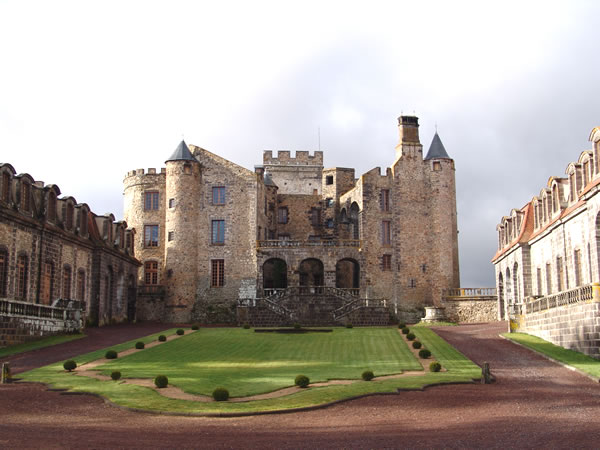
At the end of the 15th century, ownership of Châteaugay Castle passed to the La Queuille family through inheritance. The family undertook restoration and modifications to suit their residential needs, adapting the medieval fortress into a more comfortable noble residence while retaining its defensive features.
In May 1789, the castle hosted a significant meeting between its owner, Jean Claude Marie Victor de La Queuille, Marquis of Châteaugay, and Gilbert du Motier, Marquis de Lafayette. This meeting was part of the preparations for the Estates General of 1789 and discussions on the abolition of feudal privileges, a pivotal moment preceding the French Revolution.
Decline and preservation efforts in the 19th and 20th centuries
Following the upheavals of the French Revolution, the La Queuille family abandoned the castle. In the early 19th century, the castle's defensive moat was filled in, and parts of the surrounding walls were demolished, reflecting changing attitudes toward medieval fortifications and the castle's diminished military role.
In 1828, there was even a proposal to demolish the entire castle and repurpose its stone as a quarry. Fortunately, this plan was never executed, allowing the castle to survive into the present day.
Architectural features and current use
The castle's most prominent surviving feature is its mighty square keep, which remains a dominant element of the structure. The enclosure walls, though partially demolished, still outline the castle's original footprint along with the round towers added in the 15th century.
Today, Châteaugay Castle serves cultural purposes, hosting events and exhibitions that celebrate its historical legacy. While the keep is generally accessible to visitors, it may occasionally be closed for maintenance or special events.
Architectural style and classification
Châteaugay Castle is classified as a hill castle due to its elevated position on a plateau. Its construction and style are characteristic of the high medieval period, with later enhancements reflecting late medieval military architecture. The castle's combination of a square keep and round towers illustrates the transition in defensive design during the 14th and 15th centuries.
Historical significance
The castle's history is intertwined with notable figures such as Charles VI, Philip the Good, and Marquis de Lafayette. Its role in the political events leading up to the French Revolution adds to its cultural importance. The dramatic story of Jeanne de Naillac also contributes to the castle's historical narrative.
Frequently asked questions (FAQ)
- What is the historical significance of Châteaugay Castle?
- Châteaugay Castle, dating back to the 12th century, is a remarkable example of medieval architecture and has played a crucial role in the region's history. It served as a strategic fortification during various conflicts, showcasing the military importance of the area throughout the centuries.
- When was Châteaugay Castle built?
- Construction of Châteaugay Castle began in the early 12th century, with significant modifications and expansions occurring over the following centuries. The castle's enduring structure reflects the architectural styles of the medieval period, making it a fascinating site for history enthusiasts.
- Can I visit Châteaugay Castle?
- Yes, Châteaugay Castle is open to the public for visits. Guests can explore its impressive grounds, enjoy guided tours, and learn about its rich history and architectural features.
- What are the opening hours for Châteaugay Castle?
- Châteaugay Castle is typically open to visitors from 10 AM to 6 PM daily, but hours may vary during the off-season or for special events. It’s advisable to check the official website for the most current information before planning your visit.
- Is Châteaugay Castle accessible for visitors with disabilities?
- Châteaugay Castle strives to be accessible to all visitors, with efforts made to accommodate those with mobility challenges. However, due to its historic nature, some areas may have limitations, so it's best to contact the castle's administration for specific accessibility details.
- What is the best time to visit Châteaugay Castle?
- The best time to visit Châteaugay Castle is during the spring and early autumn when the weather is mild, and the surrounding landscape is vibrant. This is also when the castle hosts various events and activities, enhancing the visitor experience.
- Are there any nearby attractions to visit along with Châteaugay Castle?
- Yes, the area surrounding Châteaugay Castle is rich in attractions, including the picturesque village of Châteaugay and the scenic parks nearby. Visitors can also explore other historical sites in the region, making it a perfect day trip for history and nature lovers alike.
- What are the ticket prices for Châteaugay Castle?
- Ticket prices for Châteaugay Castle are generally affordable, with discounts available for children, seniors, and groups. It's best to check the official website for the most accurate pricing and any ongoing promotions.
Information
Address
12 Rue du Château, Châteaugay, France
Loading map...
Visitor reviews
No reviews yet. Been here? Write the first review and help other travelers!
Write the first reviewVisited this castle? Share your experience
Your review helps other travelers and adds first-hand knowledge to our encyclopedia.