Castle of Tournoel
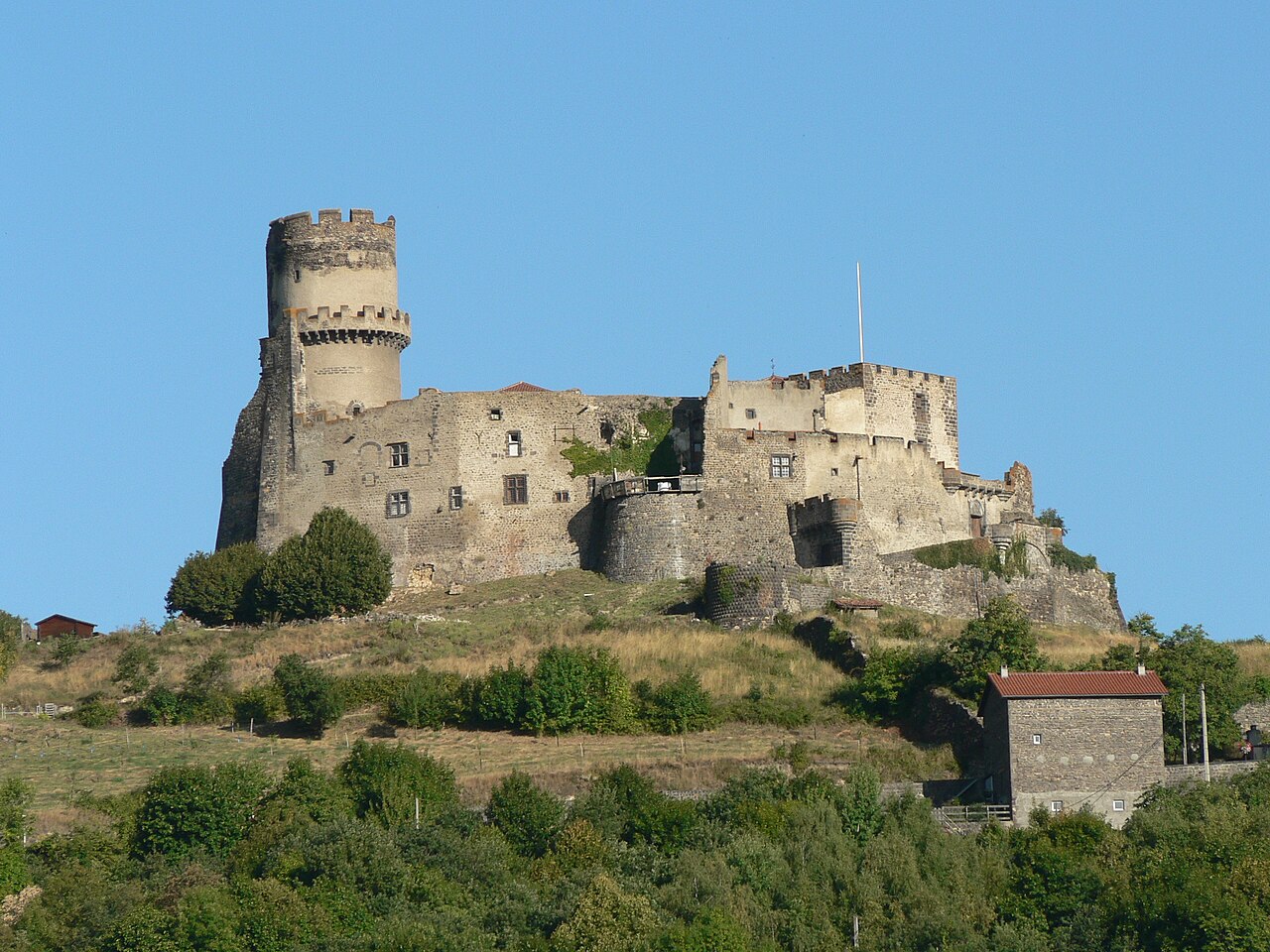
The Castle of Tournoel, also known as Chateau de Tournoel, stands as a remarkable example of a high medieval fortress in the Auvergne region of France. Perched on a rocky mountain spur at an altitude of 594 meters, it commands a strategic vantage point over the expansive Limagne plains near the town of Volvic. The castle's location in the foothills of the Puy de la Banniere provides a natural defensive advantage, rising approximately 350 meters above the surrounding plain near Riom. This elevated position was crucial for surveillance and defense during the turbulent medieval period.
Constructed in the 11th century, the Castle of Tournoel is a significant representation of high medieval military architecture. Originally built as a fortified stronghold, it was designed to protect the local lordship and control the surrounding territory. The castle's architecture reflects the defensive priorities of the time, with thick stone walls, a commanding keep, and fortified curtain walls that enclosed the inner courtyard. Although now partly in ruins, the remains of the castle still reveal its imposing structure and strategic design.
Historical significance and ownership
The Castle of Tournoel has a rich history tied to the feudal lords of the region. It played a vital role in the defense and administration of the area during the high medieval period. Over the centuries, the castle witnessed numerous conflicts and changes in ownership, reflecting the shifting political landscape of medieval France.
Today, the castle is privately owned but recognized for its cultural importance. It has been officially listed as a monument historique by the French Ministry of Culture since 1889, ensuring its protection and preservation as a heritage site. This designation highlights the castle's architectural and historical value and its significance within the regional history of Auvergne.
Architectural features and layout
The castle's design is typical of high medieval fortifications, featuring a robust keep that served as the last line of defense and a residence for the lord. The curtain walls are constructed from local volcanic stone, blending with the natural rocky outcrop on which the castle sits. These walls are punctuated by defensive towers that provided vantage points for archers and lookouts.
Within the walls, the inner courtyard would have contained essential buildings such as the great hall, living quarters, and storage facilities. The castle's elevated position and natural rock foundations made it difficult to besiege, while the surrounding terrain added an extra layer of defense.
Defensive structures
The castle's fortifications include battlements and arrow slits designed for protection and offensive capability. The entrance was likely secured by a fortified gatehouse, possibly with a drawbridge or portcullis, typical of castles from this period.
Current condition and preservation efforts
While the Castle of Tournoel is partly in ruins, significant portions of its walls and structural elements remain intact, offering valuable insights into medieval construction techniques. The site's preservation as a monument historique has helped prevent further deterioration and has promoted archaeological and historical research.
Visitors to the castle can explore the ruins and appreciate the commanding views over the Limagne plains. The castle's setting and remains provide a tangible connection to the medieval past and the feudal history of the Auvergne region.
Visiting information and cultural importance
Although privately owned, the castle is accessible to the public during certain times, allowing visitors to experience its historical ambiance and panoramic vistas. The site is an important cultural landmark that contributes to the understanding of medieval fortification architecture and regional history.
The Castle of Tournoel remains a symbol of the medieval heritage of Volvic and the surrounding area, drawing interest from historians, architects, and tourists alike who seek to explore the legacy of France's fortified past.
Frequently asked questions (FAQ)
- When was the Castle of Tournoel built?
- The Castle of Tournoel was constructed in the 11th century during the high medieval period, reflecting typical medieval fortification design.
- Is the Castle of Tournoel open to visitors?
- The castle is privately owned but can be visited during specific times. Visitors should check local information for access details and opening hours.
- What architectural features characterize the Castle of Tournoel?
- The castle features a fortified keep, thick curtain walls made of volcanic stone, battlements, arrow slits, and defensive towers typical of high medieval hill castles.
- Why is the Castle of Tournoel historically significant?
- The castle played a key role in regional defense and administration in medieval Auvergne and has been protected as a monument historique since 1889.
- What is the condition of the Castle of Tournoel today?
- The castle is partly in ruins but retains significant structural elements, and its preservation status helps maintain its historical integrity.
Information
Sources & official resources
Verify the information above using these authoritative references.
Loading map...
Visitor reviews
No reviews yet. Been here? Write the first review and help other travelers!
Write the first reviewVisited this castle? Share your experience
Your review helps other travelers and adds first-hand knowledge to our encyclopedia.