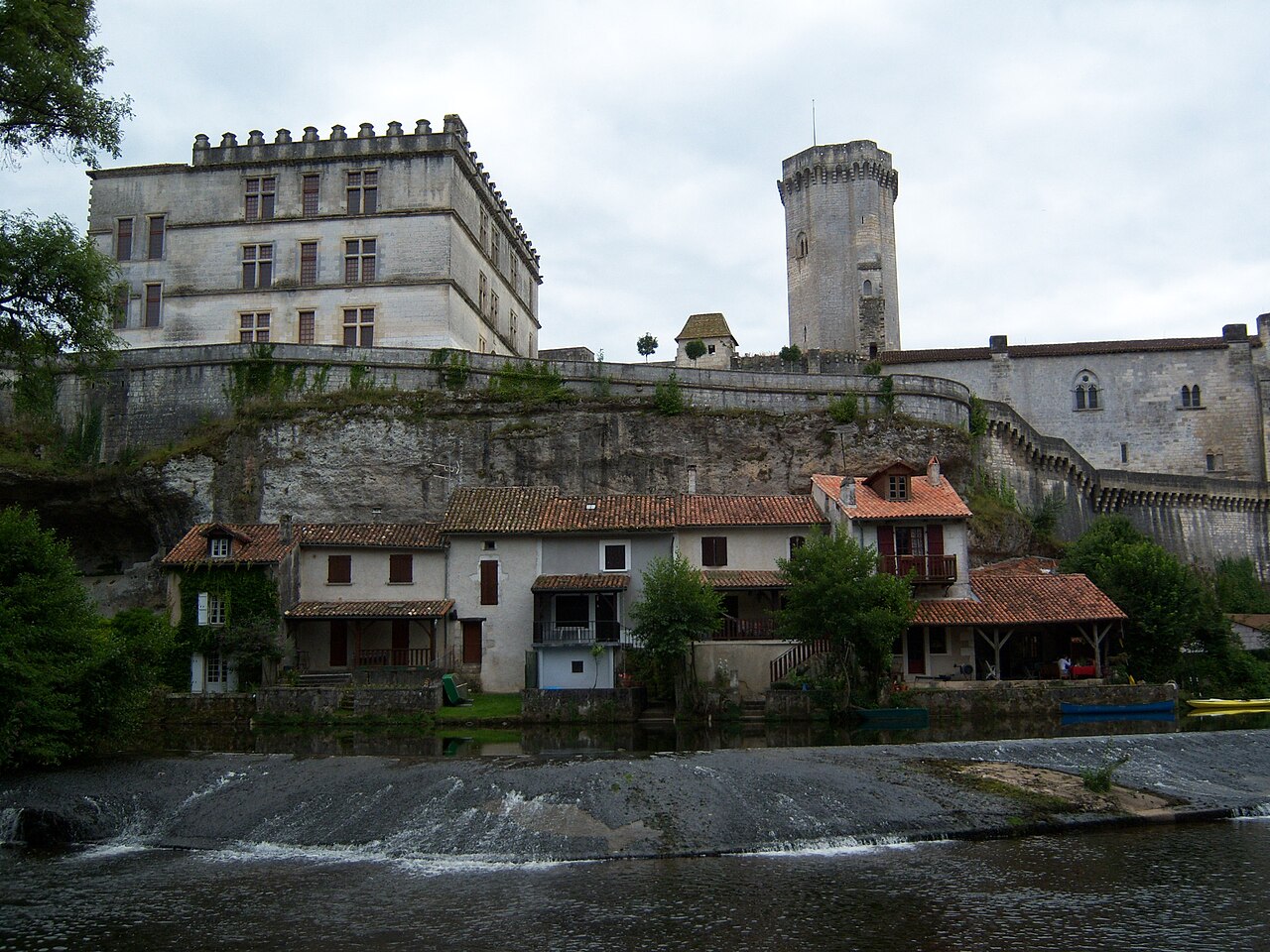
Chateau Marouatte
Chateau Marouatte stands as a remarkable example of medieval military architecture nestled in the commune of Grand Brassac, in the Dordogne department of southwestern France. This historic fortress occupies a strategic position on a site originally fortified during Roman times, serving as a guard post overseeing the vital road below. The castle's foundations date back to antiquity, reflecting a continuity of defensive use that spans centuries.
Historical origins and development
The name "Marouatte" is derived from the Latin Frankish term "Muratum," meaning wall, emphasizing the site's longstanding defensive function. Although the earliest fortifications were Roman, the castle as it is recognized today was primarily constructed during the high medieval period, particularly between the 13th and 15th centuries. The core structures, including the imposing central keep and surrounding fortifications, were erected to assert control over the surrounding territory and protect the local population.
The castle was the ancestral seat of the Montagrier family, who held it for several centuries, overseeing its expansion and fortification. In 1579, the castle's defenses were further enhanced with the addition of the outer bailey, reflecting evolving military needs during the late medieval to early modern period.
Architectural features and layout
Chateau Marouatte is distinguished by its robust defensive elements typical of medieval fortresses. The castle currently boasts seven round towers strategically placed to provide overlapping fields of fire and surveillance. The centerpiece is a tall octagonal central keep, an uncommon shape that provided both strong defense and residential space.
One of the castle's most striking features is its moat cut directly into the rock, a formidable obstacle to potential attackers. The moat, combined with battlements and thick curtain walls, created a highly defensible perimeter. The castle's design reflects a blend of military functionality and residential comfort, typical of high medieval fortifications transitioning into the Renaissance era.
The extensive grounds of the castle cover approximately 110 hectares, encompassing not only the fortified structures but also agricultural and ancillary buildings. Among these is an impressive dovecote, reputed to be the largest in the region, which historically served as a symbol of status and a source of food.
Cultural significance and preservation
Throughout its history, Chateau Marouatte has played a significant role in the local heritage of Grand Brassac. Its continuous occupation and preservation by private owners have helped maintain its structural integrity and historical ambiance. The castle remains a vivid testament to the region's medieval past and architectural evolution.
Today, while privately owned and not generally open to the public, the castle is recognized for its architectural and historical value. Its combination of Roman foundations, medieval military architecture, and Renaissance modifications make it a unique site for scholars and enthusiasts of French castle history.
Notable architectural elements
- Roman foundations underlying the medieval structures, indicating the site's strategic importance since antiquity.
- Seven round towers providing comprehensive defensive coverage and architectural rhythm to the castle's silhouette.
- Octagonal central keep, a rare and distinctive feature enhancing both defense and residential utility.
- Rock-cut moat, an advanced defensive feature that leverages natural geology for protection.
- Outer bailey added in the late 16th century, reflecting adaptation to changing military technologies.
- Large dovecote, serving both practical and symbolic purposes within the castle estate.
The castle in the context of regional history
Located in the Dordogne region, an area rich with medieval castles and fortifications, Chateau Marouatte exemplifies the feudal power structures that dominated southwestern France during the Middle Ages. Its fortifications were part of a network of castles that controlled trade routes and defended territories amid frequent conflicts and political upheavals.
The castle's endurance through centuries of warfare, including the Hundred Years' War and religious conflicts, underscores its strategic importance. The enhancements made in the late 16th century demonstrate adaptation to the evolving nature of warfare, including the introduction of artillery.
Visiting and current status
Although Chateau Marouatte remains privately owned and is not typically accessible to the public, its imposing silhouette and well-preserved features continue to attract interest. The castle's extensive grounds and architectural complexity make it a significant landmark in the Grand Brassac area.
Preservation efforts have maintained the castle in a well-preserved state, ensuring that its historical and architectural legacy endures for future generations. Its presence enriches the cultural landscape of the Dordogne and offers valuable insights into medieval fortification design and feudal life.
Frequently asked questions (FAQ)
- What is the historical significance of Chateau Marouatte?
- Chateau Marouatte is a remarkable example of medieval architecture that dates back to the 13th century. It has played a key role in the region's history, serving as a fortress and a noble residence over the centuries.
- When was Chateau Marouatte built?
- Chateau Marouatte was constructed in the early 13th century, with significant renovations occurring in the following centuries. Its well-preserved structure showcases the architectural evolution of the era.
- What are the opening hours for visiting Chateau Marouatte?
- Chateau Marouatte is typically open to visitors from April to October, with specific hours varying by season. It is advisable to check the official website for the most current information regarding hours and any special events.
- Can I purchase tickets in advance for Chateau Marouatte?
- Yes, visitors can purchase tickets in advance through the castle's official website or at the entrance. Booking in advance is recommended, especially during peak tourist seasons, to ensure availability.
- Is it possible to access Chateau Marouatte with limited mobility?
- Chateau Marouatte has made efforts to improve accessibility for visitors with limited mobility. However, some areas may still present challenges due to the historic nature of the building, so it's best to inquire beforehand for specific accommodations.
- What is the best time to visit Chateau Marouatte?
- The best time to visit Chateau Marouatte is during the spring and early fall when the weather is mild, and the surrounding landscape is particularly beautiful. Additionally, there are often fewer tourists during these times, allowing for a more enjoyable experience.
- Are there any nearby attractions to visit while at Chateau Marouatte?
- Yes, visitors to Chateau Marouatte can explore several nearby attractions, including the picturesque village of Grand Brassac and hiking trails in the surrounding countryside. The region is rich in history and natural beauty, making it a perfect destination for a day trip.
- How do I get to Chateau Marouatte?
- Chateau Marouatte is located in Grand Brassac, France, and is accessible by car or public transport. The nearest major city is Périgueux, which offers various transport options to reach the castle.
Information
Sources & official resources
Verify the information above using these authoritative references.
Loading map...
Visitor reviews
No reviews yet. Been here? Write the first review and help other travelers!
Write the first reviewVisited this castle? Share your experience
Your review helps other travelers and adds first-hand knowledge to our encyclopedia.