Château Gütsch

Château gütsch in lucerne, switzerland
Lucerne, Switzerland
Modern (19th–20th c.)

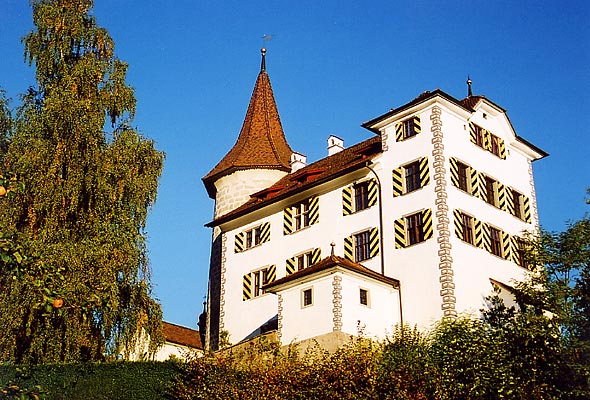
Château Gütsch stands prominently on a hill overlooking the city of Lucerne, Switzerland, offering a striking silhouette reminiscent of a fairytale castle. Its location on the Gütsch hill has historical significance dating back centuries, when the site served as a strategic lookout where guard fires were lit to warn the city of impending dangers or invasions. This early defensive function underscores the hill's importance in Lucerne's medieval fortifications.

Early history and fortifications

The original Gütsch Tower was constructed in 1590 as the terminal point of Lucerne's city fortifications. This tower formed part of the city's defensive network, providing both surveillance and protection. Unfortunately, the tower was destroyed in a fire in 1888, marking the end of its military role. The hill itself remained a notable landmark, with its elevated position offering commanding views of the surrounding landscape and the city below.

Transition to hospitality: the birth of an inn

In 1859, Burkhard Pfyffer purchased the land from the city of Lucerne and acquired the rights to operate an inn on the Gütsch hill. This marked a shift from military to civilian use, capitalizing on the location's panoramic views and accessibility. The inn was later acquired in 1879 by Ignaz Businger, who expanded the establishment into a hotel, catering to the increasing number of visitors attracted to Lucerne's scenic beauty.

Improving access: the gütschbahn funicular

The construction of the Gütschbahn funicular in 1884 greatly enhanced access to the hotel, making it easier for guests to reach the hilltop location. This innovation was crucial in boosting the hotel's popularity and integrating it into Lucerne's tourism infrastructure.

The great fire of 1888 and rebuilding

A devastating fire in 1888 destroyed a large part of the hotel, necessitating extensive rebuilding efforts. The reconstruction culminated in 1901 with the hotel receiving its present-day appearance, characterized by a fairytale castle design featuring towers and oriels. This architectural transformation gave Château Gütsch its distinctive romantic and historicist style that continues to captivate visitors.

20th century challenges and uses

During the First World War and until 1921, the hotel remained closed, reflecting the broader disruptions caused by the conflict. In the Second World War, Château Gütsch served various military-related functions, including housing refugees, returning emigrants, and prisoners of war. These roles illustrate the building's adaptability and its integration into the social and political fabric of wartime Switzerland.

Modern restoration and luxury hotel status

In 2010, the city of Lucerne approved a major renovation and extension project under the ownership of Alexander Lebedev. The hotel reopened in 2014 after a thorough restoration that focused on preserving historical details such as ceiling stucco, wood carvings, parquet floors, and hand-painted wood panelling. The involvement of English interior designer Martyn Lawrence Bullard was instrumental in restoring Château Gütsch's historic charm while integrating modern luxury amenities.

Ownership and cultural significance

Since 2012, the hotel has been owned by Russian businessman Evgeny Lebedev, who has positioned Château Gütsch as a luxury hotel and restaurant. Over its 130-year history, the castle-like hotel has hosted a variety of notable guests including kings, queens, diplomats, and world celebrities, alongside local citizens. Its unique blend of historical architecture and modern hospitality makes it a landmark attraction in Lucerne.

Architectural features and style

Château Gütsch exemplifies the historicist architectural style popular in the late 19th and early 20th centuries, with elements inspired by romantic medieval castles. The building's towers, oriels, and decorative façades contribute to its iconic silhouette. The restoration efforts have carefully preserved these features, ensuring the hotel remains a vivid example of Swiss castle-inspired architecture from the modern period.

Visitor experience and cultural context

Today, Château Gütsch functions primarily as a luxury hotel and restaurant, offering visitors not only accommodation but also a chance to experience a piece of Lucerne's history. Its elevated position provides spectacular views over the city and Lake Lucerne. The hotel's blend of historic ambiance and contemporary comfort attracts tourists seeking both cultural enrichment and relaxation.

Frequently asked questions (FAQ)

How do I get to Château Gütsch?
Château Gütsch is located in Lucerne, Switzerland, and can be easily accessed by public transport or by car. If you are traveling by train, take a local bus or a taxi from the Lucerne train station to reach the castle. There are also designated parking areas for those driving.
What is the historical significance of Château Gütsch?
Château Gütsch was built in the 19th century and is an iconic example of Romantic architecture in Switzerland. The castle was inspired by medieval designs and features stunning views of Lucerne and the surrounding mountains. It has served various purposes over the years, including being a hotel and a private residence.
When was Château Gütsch constructed?
Château Gütsch was constructed between 1880 and 1883. The castle was designed by architect Ferdinand Stadler and completed in just three years. Its construction marked a significant moment in Lucerne's architectural history, reflecting the romantic ideals of the era.
Can I visit Château Gütsch year-round?
Yes, Château Gütsch is open to visitors year-round, although specific opening hours may vary by season. It is advisable to check the official website for the most current visiting hours before planning your trip. Additionally, special events may occur during certain times of the year.
Why is Château Gütsch a popular tourist attraction?
Château Gütsch is popular for its breathtaking views, stunning architecture, and rich history. Visitors are drawn to its picturesque setting overlooking Lake Lucerne and the Swiss Alps, making it a perfect spot for photography and sightseeing. The castle also offers a unique dining experience in its restaurant.
Is it possible to host events at Château Gütsch?
Yes, Château Gütsch provides facilities for hosting a variety of events, including weddings, conferences, and private parties. The castle's enchanting atmosphere and scenic backdrop make it a sought-after location for special occasions. Interested parties should contact the castle's event management team for more details.
What are the ticket prices for visiting Château Gütsch?
Entry to Château Gütsch is generally free, but some areas or special exhibitions may require a ticket. Additionally, dining at the castle's restaurant may incur charges. Be sure to check for any special events that may have a separate admission fee.
What is the best time to visit Château Gütsch?
The best time to visit Château Gütsch is during the spring and autumn months when the weather is mild, and the surrounding scenery is particularly beautiful. Summer can also be an excellent time due to the vibrant flowers and lush gardens. However, winter offers a magical atmosphere, especially if there is snow.
Are there any nearby attractions to Château Gütsch?
Yes, there are several nearby attractions, including the beautiful Lake Lucerne, the historic old town of Lucerne, and the Swiss Museum of Transport. Visitors can also take a scenic boat ride on the lake or explore the nearby mountains via funiculars and cable cars. These attractions make for a perfect day trip in Lucerne.

Information

Sources & official resources

Verify the information above using these authoritative references.

Loading map...

Visitor reviews

No reviews yet. Been here? Write the first review and help other travelers!

Write the first review

Visited this castle? Share your experience

Your review helps other travelers and adds first-hand knowledge to our encyclopedia.
Write a review

(5/5)

0/2000 characters

Your review will be visible after admin approval

Nearby castles

2.9 km
Schauensee Castle — Switzerland castle

Schauensee Castle

Kriens, Switzerland

Schauensee Castle is a notable hill castle located in the municipality of Kriens in the Canton of Lucerne, Switzerland. The castle's origins trace back to the 13th century, when it was first mentioned in historical records in connection with Knight Rudolf von Schauensee (1257-1317). It was likely constructed during this period, embodying the typical defensive features of a high medieval hill castle. Early history and medieval origins The castle was initially built as a fortified residence for the noble family of von Schauensee. Its strategic location on a hill provided natural defense and oversight of the surrounding region. By the early 14th century, however, the castle had fallen into disrepair and was described as being in ruins. This decline reflects the turbulent political and military shifts in the region during the late medieval period, which affected many such castles. Renaissance rebuilding and architectural transformation In the late 16th century, ownership of the castle passed to Johannes von Mettenwyl, who undertook a significant rebuilding project. During this reconstruction, most of the original medieval structures were replaced or heavily modified, with only the original tower retained. This rebuilding likely introduced Renaissance architectural elements, reflecting the changing tastes and functional needs of the period. The tower and surviving medieval elements The preserved tower stands as the last visible remnant of the original 13th-century castle. It illustrates the defensive design typical of medieval fortifications, including thick stone walls and narrow window openings designed for protection and surveillance. Baroque renovation and 18th-century appearance In 1750, the castle underwent another transformation under the ownership of the Meyer von Schauensee family. This phase gave the castle much of its current appearance, characterized by Baroque architectural features. The renovations included aesthetic enhancements and adaptations to suit the castle's evolving role from a military fortress to a noble residence. Modern use and cultural significance In 1963, the municipality of Kriens acquired the castle, known locally as the "Schlössli." Since then, it has been repurposed as a venue for cultural events and receptions. The castle serves as an important community landmark, hosting exhibitions, concerts, and private functions, thereby maintaining its relevance in contemporary society. Preservation and condition Today, Schauensee Castle is well preserved, with careful maintenance ensuring the longevity of its historic structures. The blend of medieval and Baroque elements presents visitors with a tangible narrative of the castle's architectural evolution over several centuries. Architectural features and layout The castle complex includes the prominent medieval tower, surrounded by later additions that form a courtyard and residential wings. The hilltop setting offers panoramic views of the surrounding landscape, emphasizing its original defensive purpose. Architectural details such as stone masonry, arched windows, and decorative facades reflect the castle's historical phases. Visitor information and accessibility Schauensee Castle is accessible to the public primarily during cultural events and special occasions. While it is not a permanent museum, the castle's use as a reception hall allows visitors to experience its historic ambiance. Its location in Kriens makes it easily reachable from the city of Lucerne and surrounding areas.

High Medieval (11th–13th c.)
Details
6 km

Meggenhorn Castle

Meggen, Switzerland

Meggenhorn Castle is a striking example of a 19th-century modern castle located in Meggen, near the city of Lucerne, Switzerland. Constructed between 1868 and 1870 by Edouad Hofer-Grosjean from Mulhouse, the castle draws architectural inspiration from the famous Châteaux de Chambord in the Loire Valley, France. This influence is evident in its romantic design and elaborate decorative elements, reflecting a revivalist approach that combines historic grandeur with modern comforts of its time. Architectural design and stylistic influences The castle's architecture is characterized by its picturesque silhouette featuring multiple turrets, steep roofs, and ornate stonework, typical of the romantic revival styles popular in the 19th century. Although built in the modern period, Meggenhorn Castle embraces historical motifs, blending elements reminiscent of French Renaissance castles with Swiss architectural traditions. The castle's setting amidst vineyards enhances its aesthetic appeal and situates it within a landscape of cultivated natural beauty. Interior features and notable installations In 1926, the castle was equipped with a Welte Philharmonic Organ, a sophisticated mechanical musical instrument renowned for its rich sound and technological innovation during that era. This addition highlights the castle's role not only as a residence but also as a cultural venue. The organ remains a significant attraction, underscoring the castle's historical connection to music and the arts. Historical context and cultural significance Meggenhorn Castle was constructed during a period of renewed interest in historicism and romanticism in architecture, reflecting the aspirations of its original owner, Edouad Hofer-Grosjean. The castle quickly became a symbol of the municipality, representing both local pride and the cultural ties between Switzerland and broader European artistic trends. Its location near Lucerne places it within an area rich in historical landmarks and natural beauty, contributing to its importance as a heritage site. The castle grounds and public access The castle is surrounded by well-maintained vineyards and gardens, which have been open to the public since 1974. These grounds offer visitors a scenic environment for leisure activities such as picnicking and enjoying panoramic views. The castle overlooks Lake Lucerne, providing access to swimming and other recreational opportunities. A family-friendly playground with farm animals is also part of the estate, making it an appealing destination for visitors of all ages. Views and natural environment From the castle's elevated position, visitors can enjoy an impressive 180-degree panoramic view encompassing the city of Lucerne, the majestic Mount Pilatus, and Mount Rigi. This spectacular vista enhances the castle's appeal as a tourist attraction and underscores its harmonious integration with the surrounding natural landscape. Current use and visitor experience Today, Meggenhorn Castle serves primarily as a tourist attraction and reception venue. Its historic ambiance and picturesque setting make it a favored location for cultural events, private celebrations, and public visits. The castle's accessibility and amenities, including its open grounds and playground, provide a welcoming atmosphere for families and tourists interested in exploring Swiss heritage and architecture.

Modern (19th–20th c.)
Details
8.6 km

Schnitzturm

Stansstad, Switzerland

The Schnitzturm is a remarkable example of medieval military architecture located in the municipality of Stansstad, in the canton of Nidwalden, Switzerland. Constructed in the early 14th century, between 1310 and 1315, this stone tower played a crucial role in the defensive system protecting the lakeshore of Lake Lucerne. It was part of a larger fortification network known as the Teller / Palisaden medieval fortifications, which are recognized today as a Swiss heritage site of national significance. The tower's strategic location on an artificial spit extending into Lake Lucerne allowed it to serve as a key point in guarding against attacks from rival forces, particularly from the nearby city of Lucerne. The Schnitzturm was designed with a square footprint measuring 8.8 meters on each side and rising to a height of 16 meters. Its walls, constructed from robust stone, are 1.4 meters thick at the base, providing formidable protection against siege weaponry and assault. Historical significance and military role The Schnitzturm was built during the late medieval period as part of the regional efforts to defend the lakeshore and surrounding territories from external threats. Notably, the tower was active during the Battle of Morgarten in 1315, a pivotal conflict between the Swiss Confederates and the Habsburg forces. According to a 1428 chronicle, defenders stationed in the tower used a mill stone to destroy an enemy ship approaching from Lucerne, demonstrating the tower's defensive capabilities in naval engagements. Despite the defenders' efforts, the attackers eventually breached the fortifications and plundered the town of Stansstad. This event led to the strengthening of the fortifications with additional earthen and stone walls. However, the Schnitzturm's military importance declined after Lucerne joined the Old Swiss Confederacy in 1332, reducing the likelihood of attacks from that direction. Division of ownership and decline Following the division of the region of Unterwalden into Obwalden and Nidwalden in the mid-14th century, responsibility for the tower and its defenses was shared. This joint ownership led to neglect and lack of coordinated maintenance. By 1587, the Schnitzturm had fallen into significant disrepair. Renovations and changes in function The local assembly, known as the Landsgemeinde, ordered renovations to preserve the tower. These included the addition of round arch windows, relocating the entrance from the second floor to ground level on the south side, and constructing a flat hipped roof. These modifications reflected a transition from purely military use to more practical and residential functions. In 1634, the tower suffered damage from a lightning strike that partially destroyed the roof. Repairs were incomplete, leading to interior decay. The tower was subsequently repurposed for drying fishing nets, marking a clear shift away from its original defensive role. Role during the 1798 french invasion During the French invasion of 1798, the Schnitzturm was again manned for military defense. The wooden palisade surrounding the tower was temporarily replaced with floating fir trunks to resist the French fleet advancing on Lake Lucerne. The defenders managed to hold out for several days, but ultimately the town of Stansstad and the tower were captured and burned on April 9, 1798. 19th-century restoration and modern status In 1880, the cantonal authorities undertook a significant restoration of the Schnitzturm. This restoration reinstated the tower's medieval character by adding a staircase, an observation platform, and restoring the crenelations that had been removed during the 1635 roof construction. These efforts preserved the tower as an important historical monument. Historically, ownership of the tower was divided, with Obwalden holding two-thirds and Nidwalden one-third. In 1997, Obwalden transferred its share to the municipality of Stansstad, consolidating ownership and facilitating preservation efforts. Today, the Schnitzturm stands as a well-preserved medieval stone tower and is a prominent feature of the municipal coat of arms. The grounds around the tower are open to the public year-round, allowing visitors to appreciate its historical and architectural significance firsthand. Architectural features and fortifications Construction and materials The Schnitzturm is constructed from durable stone, with walls measuring 1.4 meters thick at the base to withstand attacks. The square plan of the tower, measuring 8.8 meters per side, supports its height of 16 meters, creating a formidable defensive structure. Integration with surrounding defenses The tower was part of a larger defensive complex that included a wooden blockhouse known as the Teller and a palisade formed by approximately 8,000 wooden pillars driven into the lakebed about two meters deep. This palisade created a defensive barrier in the water, complemented by a channel called the Grendel, which allowed controlled boat access to the harbor. Modifications and adaptations Renovations in the late 16th century altered the tower's appearance and function. The addition of round arch windows and the relocation of the entrance to ground level improved accessibility and usability. The original second-floor entrance was closed, and a flat hipped roof replaced the earlier crenelated battlements. Following the lightning damage in 1634, the roof was only partially repaired, accelerating the tower's interior deterioration. The 1880 restoration reversed many of these changes, reinstating the crenelations and adding an observation platform and staircase to facilitate visitor access.

Late Medieval (14th–15th c.)
Details

