Château du Schrankenfels
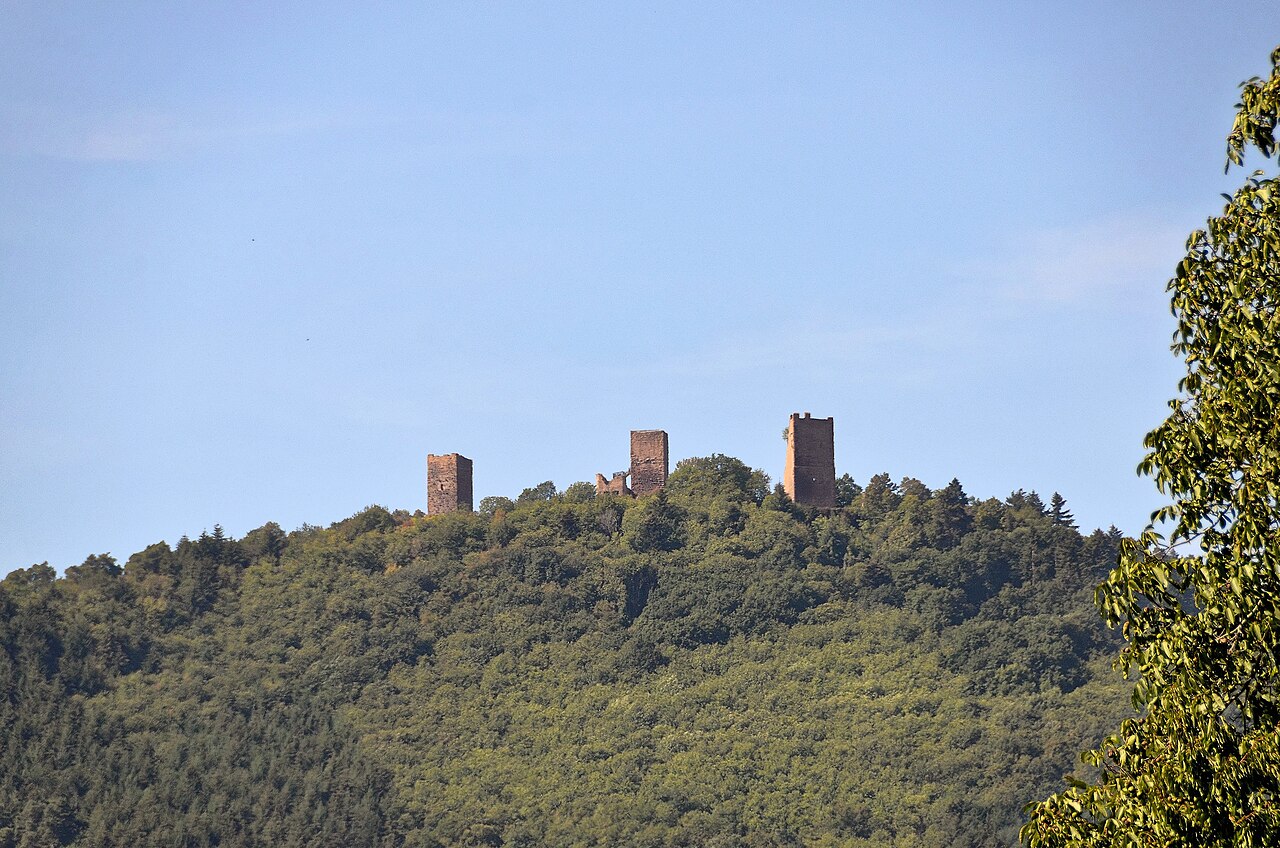
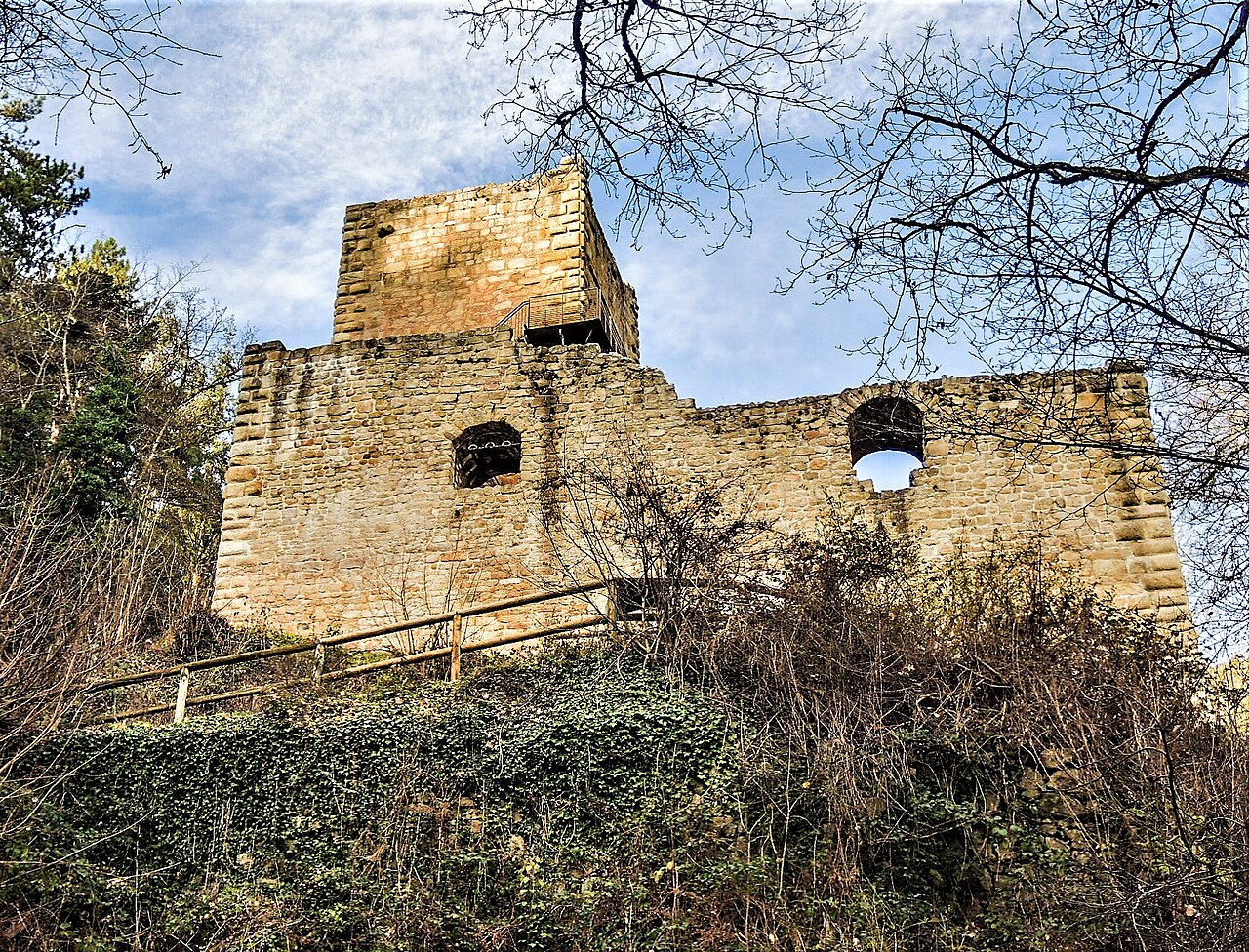
Château du Schrankenfels is a medieval castle ruin located near the village of Soultzbach-les-Bains in the Alsace region of northeastern France. Constructed around 1220-1230, this fortress was originally built by Dietrich de Schrankenfels, a nobleman whose family held local influence during the High Medieval period. The castle's strategic position atop a rocky outcrop provided commanding views over the surrounding valley, essential for defense and control of nearby routes.
Historical background and ownership
The castle was initially a private stronghold of the Schrankenfels family, who played a role in regional feudal dynamics. By the late 13th or early 14th century, ownership transferred to the Bishopric of Strasbourg, reflecting the common medieval practice of ecclesiastical authorities acquiring fortifications to secure their territorial interests. The bishop's control likely influenced the castle's role in local administration and defense.
Despite its importance, Château du Schrankenfels suffered destruction in the late 14th century under circumstances that remain unclear. It is possible that the castle was damaged during regional conflicts or as a result of political struggles involving the bishopric and local lords. The ruins today bear witness to this violent episode in its history.
Architectural features and layout
Though now in ruins, the castle's remains reveal characteristics typical of High Medieval fortifications. The site originally featured a rock castle design, utilizing the natural rocky terrain to enhance its defensive capabilities. The main structure likely included a keep (donjon) serving as the last line of defense and residence for the lord.
The castle was surrounded by curtain walls adapted to the uneven rock formations, with defensive towers positioned to cover vulnerable approaches. The entrance was probably protected by a fortified gatehouse and possibly a drawbridge over a natural or artificial moat. The use of local stone in construction provided durability and helped the castle blend with the landscape.
Interior spaces and facilities
Within the walls, the castle would have contained essential medieval amenities such as a great hall for gatherings, storage rooms, and living quarters. Water supply was a critical concern for hilltop castles; thus, a cistern or well may have been integrated into the design to ensure sustainability during sieges.
Strategic importance and regional context
Located in Alsace, Château du Schrankenfels was part of a network of fortifications controlling trade routes and territorial boundaries in the region. Its position allowed monitoring of movements through the valleys and protection against incursions. The castle's ownership by the bishopric underscores its role in the political and military landscape of medieval Alsace.
Current condition and preservation
Today, Château du Schrankenfels remains a ruined site, with only fragments of walls and foundations visible. The ruins attract visitors interested in medieval architecture and history. Efforts to preserve the site focus on stabilizing the remaining structures and providing interpretive information to enhance understanding of its historical significance.
Access to the castle is possible via hiking trails from Soultzbach-les-Bains, offering scenic views of the surrounding countryside. The site is a valuable cultural heritage landmark, illustrating the medieval military architecture and feudal history of the Alsace region.
Frequently asked questions (FAQ)
- What is the historical significance of Château du Schrankenfels?
- Château du Schrankenfels is a remarkable example of medieval architecture, dating back to the 12th century. It played a crucial role in the regional defense strategies during feudal times and offers insights into the historical conflicts of the Alsace region.
- When was Château du Schrankenfels built?
- The construction of Château du Schrankenfels began in the 12th century and continued over subsequent years as it underwent various renovations and expansions. Its enduring presence highlights the evolution of castle architecture throughout the centuries.
- Can I visit Château du Schrankenfels?
- Yes, Château du Schrankenfels is open to visitors who wish to explore its historical grounds and picturesque surroundings. Guided tours are available, providing in-depth information about the castle's history and architecture.
- What are the opening hours of Château du Schrankenfels?
- Château du Schrankenfels is typically open to the public from April to October, with specific hours varying by month. It is recommended to check the official website or contact the visitor center for the most current opening hours before planning your visit.
- Is it possible to access Château du Schrankenfels with limited mobility?
- While Château du Schrankenfels is a historical site, certain areas may pose challenges for visitors with limited mobility due to uneven terrain and steep paths. It is advisable to contact the castle's administration in advance to inquire about accessibility options and assistance available.
- What are the ticket prices for visiting Château du Schrankenfels?
- Ticket prices for Château du Schrankenfels vary based on age and the type of tour selected. Discounts are often available for students, seniors, and groups, so it’s a good idea to check the official website for detailed pricing information.
- When is the best time to visit Château du Schrankenfels?
- The best time to visit Château du Schrankenfels is during the spring and early autumn months when the weather is mild, and the surrounding landscape is particularly beautiful. Visiting during these seasons also allows you to enjoy fewer crowds.
- What nearby attractions should I consider when visiting Château du Schrankenfels?
- When visiting Château du Schrankenfels, you can explore the charming village of Soultzbach-les-Bains, as well as nearby natural parks and hiking trails. Additionally, the Alsace Wine Route is just a short drive away, offering a delightful experience for wine enthusiasts.
Information
Loading map...
Visitor reviews
No reviews yet. Been here? Write the first review and help other travelers!
Write the first reviewVisited this castle? Share your experience
Your review helps other travelers and adds first-hand knowledge to our encyclopedia.