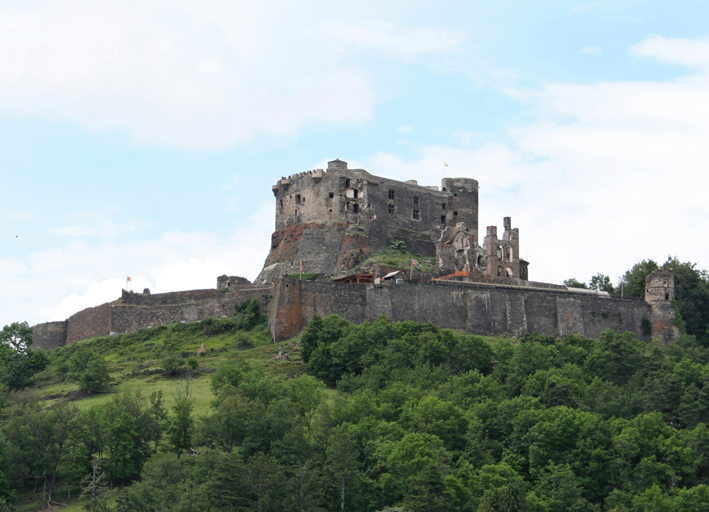
Château du Marchidial

Château du Marchidial: historic hilltop castle and chapel in Hauts-de-France
Hauts-de-France, France

The Château du Marchidial stands as a remarkable example of a hill castle located in the Hauts-de-France region of northern France. Its origins trace back to the early medieval period, with archaeological evidence indicating that the site was initially modified as far back as the 8th century. During this time, early inhabitants undertook significant terracing of the hillside, creating a stable platform that would later support the castle's fortifications and associated structures.

Early history and medieval development

The castle's earliest phase is closely tied to the strategic advantages offered by its elevated position. The terraced hilltop allowed for enhanced defense and surveillance over the surrounding landscape. By the 12th century, the site had developed into a fortified complex featuring a chapel dedicated to Saint-Jean du Marchidial. This chapel was integral to the castle's function, serving both religious and communal roles within the defensive enclosure.

The chapel's Romanesque architectural style is evident in the surviving stone walls and structural elements, characteristic of ecclesiastical buildings from this period. It remained in use as the local parish church until the upheavals of the French Revolution in 1789, which dramatically altered the ownership and function of many religious sites across France.

Architectural features and later modifications

In the 18th century, the Château du Marchidial underwent significant architectural changes, including the construction of a round tower on the northern facade. This tower was topped with a distinctive campanile, or bell tower, which accentuated the chapel's presence and continued religious function within the community. The tower's stone masonry reflects the building techniques of the period, combining both defensive and ecclesiastical architectural elements.

The castle complex also includes low boundary walls that enclose the surrounding grounds, marking a transition from military fortification to agricultural use. These walls delineate plots that were cultivated after the castle's defensive role diminished, illustrating the evolving relationship between the site and its landscape.

Preservation and current condition

Since 1988, a dedicated local association has been actively involved in the preservation and restoration of the Château du Marchidial. Their work includes clearing overgrown vegetation, stabilizing the rocky hilltop, and reconstructing parts of the ruins to reveal the castle's original layout and architectural features. These efforts have been crucial in safeguarding the site's historic fabric and ensuring its accessibility for future generations.

Today, the castle is legally protected as a monument under French heritage conservation laws. The remains offer valuable insights into the medieval fortifications and ecclesiastical architecture of the region. Visitors can observe the interplay between the castle's defensive structures and the religious elements embodied by the chapel and campanile.

Significance within regional history

The Château du Marchidial exemplifies the integration of military and religious functions typical of early medieval hill castles in France. Its enduring presence from the 8th century through to the modern era highlights the site's adaptability and importance in local history. The castle's evolution from a fortified stronghold to a religious center and eventually to agricultural land reflects broader historical trends in the region.

Its preservation today allows for continued study of medieval construction techniques, landscape modification, and the social roles of castles in rural France. The site is a testament to the layered history of Hauts-de-France and the enduring legacy of its medieval heritage.

Frequently asked questions (FAQ)

How do I get to Château du Marchidial?
Château du Marchidial is located in the beautiful countryside of France, easily accessible by car or public transport. The nearest train station is approximately 15 kilometers away, from which you can take a taxi or local bus to reach the castle.
What is the historical significance of Château du Marchidial?
Château du Marchidial dates back to the 12th century and has played a vital role in the region's history, serving as a stronghold during various conflicts. Its architecture reflects the evolution of defensive structures in medieval France, making it an important site for history enthusiasts.
When was Château du Marchidial built?
Construction of Château du Marchidial began in the early 12th century, with various renovations and expansions occurring over the centuries. The castle showcases elements from different architectural styles, representing its long and varied history.
Can I take guided tours of Château du Marchidial?
Yes, guided tours of Château du Marchidial are available and provide an in-depth look at its history, architecture, and the surrounding landscape. These tours are typically conducted in multiple languages to accommodate visitors from around the world.
Why is Château du Marchidial a popular tourist attraction?
Château du Marchidial attracts visitors due to its stunning architecture, rich history, and picturesque setting. The castle also hosts various cultural events throughout the year, making it a vibrant place to experience French heritage.
Is it possible to visit Château du Marchidial year-round?
Château du Marchidial is open to visitors year-round, although opening hours may vary by season. It is advisable to check the official website for the most up-to-date information on visiting hours and any seasonal events.
What are the ticket prices for Château du Marchidial?
Ticket prices for Château du Marchidial vary based on age and type of tour. Discounts are often available for students and seniors, and family packages can provide additional savings for those visiting with children.
What is the best time to visit Château du Marchidial?
The best time to visit Château du Marchidial is during the spring and early autumn months when the weather is mild and the gardens are in full bloom. These seasons also feature fewer crowds, allowing for a more enjoyable experience.
Are there any nearby attractions to Château du Marchidial?
Yes, there are several attractions near Château du Marchidial, including charming villages, local vineyards, and nature parks. Visitors can explore the rich cultural heritage of the area or enjoy outdoor activities like hiking and cycling in the surrounding countryside.

Information

Hill Castle

Sources & official resources

Verify the information above using these authoritative references.

Loading map...

Visitor reviews

No reviews yet. Been here? Write the first review and help other travelers!

Write the first review

Visited this castle? Share your experience

Your review helps other travelers and adds first-hand knowledge to our encyclopedia.

Write a review

(5/5)

0/2000 characters

Your review will be visible after admin approval

Nearby castles

4.2 km

Saint-Floret Castle

Saint-Floret, France

Saint-Floret Castle stands as a remarkable example of medieval fortifications nestled in the picturesque village of Saint-Floret in the Auvergne-Rhone-Alpes region of France. This hill castle, dating back to the 13th and 14th centuries, offers a fascinating glimpse into the military architecture and feudal history of the High Medieval period. The strategic location and historical context Perched atop a rocky promontory overlooking the Alagnon River valley, Saint-Floret Castle was built to control vital routes and assert dominance over the surrounding territory. Its elevated position provided natural defenses, making it a stronghold against invaders during the turbulent medieval era. The castle's origins trace back to the feudal lords who governed the region, reflecting the power struggles and territorial disputes common in medieval France. Architectural features and construction The castle's construction spans the 13th and 14th centuries, showcasing typical High Medieval military architecture. Although now in ruins, key elements remain visible, including portions of the curtain walls, remnants of towers, and the foundations of the keep. The use of local volcanic stone contributes to the castle's robust appearance and durability. Defensive structures Saint-Floret Castle featured a fortified gatehouse that controlled access to the inner ward, along with defensive battlements and arrow slits designed for archers. The walls were thick and high, intended to withstand sieges and attacks common in the High Medieval period. The castle's layout leveraged the natural topography to enhance its defensive capabilities. Residential and functional spaces Within the castle, the keep served as the lord's residence and last line of defense. Adjacent to it were living quarters, storage rooms, and possibly a chapel, although little remains of these structures today. The castle complex also included courtyards that facilitated daily activities and gatherings. Historical significance and legacy Saint-Floret Castle played a significant role in regional conflicts and governance during the High Medieval era. It witnessed various ownership changes and was part of the feudal network that shaped the political landscape of Auvergne. Over time, as military technology evolved and political conditions stabilized, the castle lost its strategic importance and fell into decline. Today, the castle stands as a protected ruin, attracting visitors interested in medieval history and architecture. Its remains offer valuable insights into the defensive strategies and daily life of medieval nobility in this part of France. Visiting Saint-Floret Castle The castle ruins are accessible to the public, allowing visitors to explore the site and enjoy panoramic views of the Alagnon valley. Interpretive signage helps contextualize the castle's history and architectural features. The village of Saint-Floret itself is recognized for its charm and historical ambiance, making it a worthwhile destination for cultural tourism. Preservation efforts Efforts to preserve the castle focus on stabilizing the remaining structures and preventing further decay. These measures ensure that Saint-Floret Castle continues to be a tangible link to the High Medieval heritage of the region. Architectural style and classification The castle exemplifies the High Medieval style of fortification prevalent in 13th and 14th century France. Its classification as a hill castle reflects its strategic siting on elevated terrain, a common defensive approach of the period. The architecture emphasizes functionality and defense, with minimal ornamental features typical of later Renaissance castles.

High Medieval (11th–13th c.)
Details
8.5 km

Saint-Saturnin Castle

Saint-Saturnin, France

Saint-Saturnin Castle stands as a remarkable example of a hill castle nestled in the scenic region of Auvergne-Rhone-Alpes in France. Constructed over several centuries, from the 12th to the 15th century, this castle reflects the architectural evolution and strategic importance of medieval fortifications in the heart of France. Historical background and significance The origins of Saint-Saturnin Castle date back to the High Medieval period, a time when castles were vital for territorial control and defense. Its location atop a hill provided a commanding view of the surrounding landscape, enabling early detection of approaching threats and serving as a stronghold for local lords. Throughout its history, the castle witnessed various phases of construction and modification, adapting to the changing needs of warfare and residence. The extended building period from the 12th to the 15th century means that the castle incorporates elements from different medieval architectural styles, reflecting the transition from Romanesque to Gothic influences. Architectural features and layout Defensive structures Saint-Saturnin Castle is characterized by its robust stone walls and strategically placed towers that enhanced its defensive capabilities. The hilltop position naturally augmented its fortifications, making it difficult for invaders to mount a successful siege. The castle's perimeter likely included a curtain wall with battlements and possibly a moat or ditch, common features in hill castles designed to deter attackers. The presence of a fortified gatehouse would have controlled access, supplemented by arrow slits and machicolations for active defense. Residential and functional spaces Inside the walls, the castle would have contained a variety of chambers and halls serving both residential and administrative functions. The keep or donjon was probably the central stronghold and living quarters for the lord, offering refuge during attacks. Additional buildings such as a chapel, storerooms, kitchens, and stables would have supported the daily life of the castle's inhabitants. The courtyard provided space for gatherings, training, and possibly markets or fairs. Restoration and current condition Today, Saint-Saturnin Castle is restored, preserving much of its medieval character while allowing visitors to appreciate its historical and architectural significance. Restoration efforts have aimed to maintain the integrity of the original structures, using materials and techniques sympathetic to the castle's heritage. The castle serves as a cultural landmark, attracting tourists and scholars interested in medieval architecture and French history. Its preservation contributes to the understanding of feudal society and military architecture in the Auvergne-Rhone-Alpes region. Visiting Saint-Saturnin Castle Visitors to Saint-Saturnin Castle can explore its well-preserved walls, towers, and interior spaces. The hilltop location offers panoramic views of the surrounding countryside, enhancing the visitor experience. The castle often hosts educational tours and events that highlight its historical context and architectural features. Accessibility and opening hours may vary seasonally, so prospective visitors are encouraged to check local information before planning their visit.

High Medieval (11th–13th c.)
Details
9.2 km
Murol Castle — France castle

Murol Castle

Pl. du Château, France

Murol Castle, also known as Château de Murol, is a remarkable hill castle located above the village of Murol in the Puy-de-Dôme department within the Auvergne-Rhône-Alpes region of France. This castle stands prominently on a volcanic basalt outcrop, commanding strategic views over the surrounding landscape including the Couze Valley, Lake Chambon, and the distant Monts Dore volcanic range. Its position atop this natural rock formation was chosen to control important regional crossroads dating back to Roman times, underscoring its enduring military and administrative significance. The origins of Murol Castle trace back to the 12th century, with the earliest fortifications established to oversee three vital routes connecting Limagne, Le Mont-Dore, and Clermont-Ferrand. Over the centuries, the castle evolved from a medieval fortress into a complex residence with architectural elements spanning from the Romanesque through the Renaissance and later neo-Gothic influences. The castle's layered history is reflected in its diverse structures, including a large circular keep (donjon), two chapels, fortified curtain walls with almond-shaped bastions, and a Renaissance pavilion with a hanging garden. Early history and medieval fortifications Archaeological evidence suggests human activity on the basalt promontory since the Neolithic era, highlighting the site's long-standing strategic importance. The first documented castle construction likely began in the 12th century, with defensive walls and a small settlement forming the initial stronghold. The castle was initially built in the Romanesque style, as seen in the stone masonry and vaulted chapels dating from the 11th to 13th centuries. In the late 14th century, Guillaume II de Murol (also known as Guillaume de Sam) played a pivotal role in strengthening the castle's defenses. He constructed the imposing circular keep, a second chapel, and expanded the eastern buildings. These additions enhanced both the military capability and the residential comfort of the fortress. The keep served as the last refuge during sieges and symbolized the lord's authority over the region. Religious significance and chapels The castle complex includes two chapels: an older one from the 11th or 12th century and a funerary chapel built by Guillaume II de Murol at the end of the 14th century. These chapels feature Romanesque architectural elements such as rounded arches, thick walls, and stone vaulting. Murals discovered in the chapel date from the 13th to 15th centuries, illustrating the site's religious importance and the integration of spiritual life within the castle walls. Renaissance transformations and later history Ownership of Murol Castle passed to the prominent d’Estaing family in the 15th century through the marriage of Jehanne de Murol to Gaspard d’Estaing. This transition marked a new phase of architectural and functional development. During the 16th century, under the direction of François I d’Estaing, the castle underwent significant modernization to adapt to evolving military technologies and residential needs. François I d’Estaing initiated the construction of a vast bastioned curtain wall featuring almond-shaped towers designed to mount light artillery, reflecting the introduction of gunpowder weaponry in castle defenses. He also began building a Renaissance pavilion at the foot of the basalt outcrop, which included a large hanging garden. Although this pavilion was never completed, its remaining facade showcases decorative moldings and pilasters characteristic of Renaissance architecture. During the turbulent French Wars of Religion in the late 16th century, Murol Castle endured several sieges by Catholic League forces but remained unconquered. Unlike many other fortresses, it was spared destruction during Cardinal Richelieu's disarmament campaigns in the 17th century, likely due to the d’Estaing family's influence at the royal court. Decline and restoration Following its military and residential peak, Murol Castle gradually lost its strategic importance and fell into disuse. By the late 18th century, during the French Revolution, the castle was repurposed as a prison and later became a hideout for bandits. In the 19th century, it suffered further degradation as locals quarried its stones for other building projects. The castle was declared a historical monument in 1889, which helped safeguard its remains. Although ownership transferred to the local commune, the castle remained partially in ruins until the late 19th century when architect Louis Bruyère, a student of Viollet-le-Duc, undertook an extensive restoration. This restoration introduced neo-Gothic architectural elements, including pointed roofs on towers, reworked battlements, and a grand entrance with a drawbridge and round tower. Decorative gargoyles were added, blending historical styles with Romantic revival aesthetics. Architectural features and layout Murol Castle's layout is strongly influenced by the natural basalt rock outcrop on which it stands, resulting in a polygonal inner enclosure with walls approximately 10 meters high. The castle is composed of several distinct zones: The inner ward contains the large circular keep, two chapels, and residential buildings connected by curtain walls. The outer courtyard houses the Renaissance pavilion and remnants of auxiliary structures such as a kitchen and bakery, complete with large chimneys and ovens essential for sustaining the castle's inhabitants. The bastioned curtain wall surrounds the base of the basalt outcrop, featuring almond-shaped towers designed for artillery defense. Access to the inner ward is gained through a fortified gate adorned with the coats of arms of the Murol and d’Estaing families, symbolizing the castle's lineage. Spiral staircases allow visitors to ascend to the ramparts and the top of the keep, offering panoramic views of the surrounding volcanic landscape. Cultural significance and modern use Murol Castle holds a significant place in French cultural heritage. It has inspired literary figures such as Guy de Maupassant, who described the castle's imposing ruins in his 1883 short story "Humble drame," and George Sand, who featured it in her 1859 novel "Jean de la Roche." These works highlight the castle's evocative presence and its role as a symbol of medieval grandeur and romantic decay. Today, Murol Castle is owned by the local commune and has been developed as a tourist destination. Although privately owned and not open to the public for interior visits, the castle hosts guided tours and cultural events that recreate medieval life, including martial arts demonstrations and son et lumière shows. Its well-preserved fortifications and dramatic setting continue to attract visitors interested in medieval architecture, military history, and the scenic beauty of the Auvergne region. Murol Castle exemplifies the evolution of a medieval fortress adapting to changing military technologies and residential needs over centuries. Its combination of Romanesque chapels, medieval keeps, Renaissance pavilions, and neo-Gothic restorations offers a unique architectural palimpsest that tells the story of French history from the Middle Ages through the modern era.

High Medieval (11th–13th c.)
Details