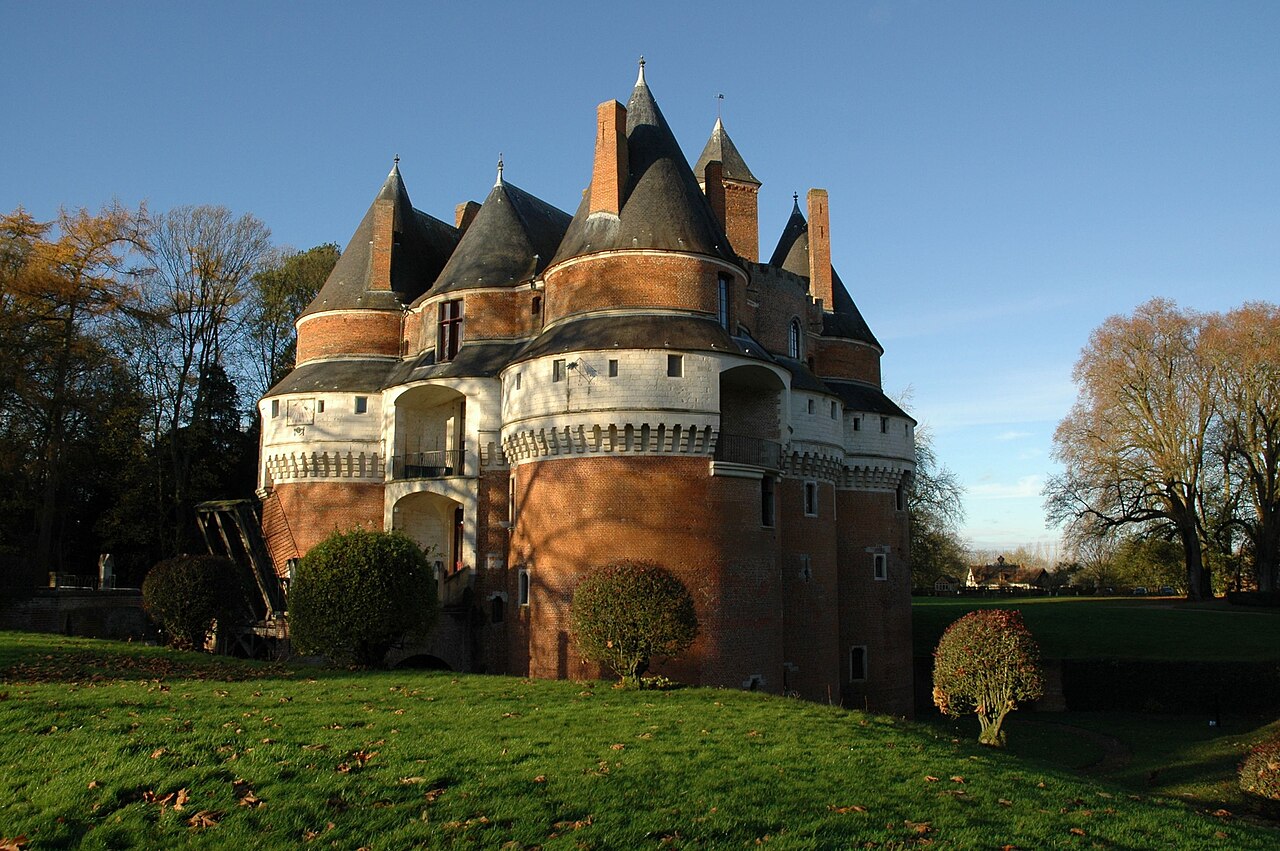
Château d'Eu
The Château d'Eu stands as a significant example of Renaissance architecture in the Normandy region of France. Originally constructed in 1578 by Catherine de Clèves and Henry I, Duke of Guise, the château replaced an earlier fortress demolished in 1475 to prevent English capture during the Hundred Years' War. This strategic decision underscores the turbulent history of the region and the importance of fortifications in medieval and early modern France.
The construction of the château spanned nearly a century, reaching completion under the direction of Anne Marie Louise d'Orléans, Duchess of Montpensier. The château reflects the transition from medieval fortress to elegant aristocratic residence, combining defensive elements with refined Renaissance aesthetics. Its architecture features characteristic elements such as symmetrical façades, ornate stonework, and large mullioned windows that allowed for increased natural light and comfort compared to earlier medieval castles.
Historical significance and royal connections
The Château d'Eu was closely associated with the Orléans family from the mid-17th century, having been acquired by La Grande Mademoiselle in 1657. It later became particularly prominent in the 19th century when it served as the summer residence of King Louis-Philippe between 1830 and 1848. This period marked the château's role as a royal retreat, where the king entertained dignitaries and conducted affairs of state in a more relaxed setting than the traditional palaces of Paris.
One of the château's notable residents was Isabel, Princess Imperial of Brazil, who died there in 1921. She was married to Prince Gaston, Count of Eu, a grandson of King Louis Philippe I and a close friend of Queen Victoria. Isabel is remembered for her significant role in the abolition of slavery in Brazil in 1888, adding an international dimension to the château's history.
Architectural features and layout
The château's design reflects the Renaissance style with a focus on symmetry and proportion. The building is arranged around a central courtyard, a common feature in French châteaux, providing a private and secure outdoor space. The façades are decorated with classical pilasters and sculpted stone details, while the roofs are steeply pitched with dormer windows that add vertical emphasis and light to the upper floors.
The chapel within the château holds the tombs of its original patrons, Henry I and Catherine de Clèves, emphasizing the personal and dynastic importance of the residence. The chapel's interior likely features typical Renaissance religious art and architectural details, contributing to the château's cultural heritage.
Defensive elements and transformation
Although built in the Renaissance period, the château retains some elements of its medieval predecessor, particularly in its robust stone walls and controlled access points. However, by the late 16th century, the emphasis had shifted from military defense to comfort and display of status, reflecting broader changes in castle architecture during this era.
The château in the modern era
In 1964, the city of Eu acquired the château, marking a new phase in its history. It was adapted to serve public functions, including housing the City Hall since 1973 and establishing the Musée Louis-Philippe. This museum preserves and showcases the château's rich history and its connections to the Orléans family and French royalty.
Today, the Château d'Eu is recognized not only for its architectural beauty but also for its role in French history, from its origins in the Renaissance through its royal associations and modern civic use. Visitors can explore its elegant rooms, historic chapel, and the museum's collections, gaining insight into the cultural and political heritage of Normandy and France as a whole.
Visiting the château
The château is located in the town of Eu, in the Normandy region, accessible to visitors interested in French history and Renaissance architecture. Its well-preserved condition allows for an immersive experience of a former royal residence, with opportunities to learn about the lives of its notable inhabitants and the architectural evolution from fortress to palace.
Frequently asked questions (FAQ)
- What is the historical significance of Château d'Eu?
- Château d'Eu is a remarkable example of Renaissance architecture and has played a significant role in French history. It served as a royal residence for the Dukes of Normandy and was a strategic location during various historical conflicts, reflecting the rich heritage of the region.
- When was Château d'Eu built?
- Construction of Château d'Eu began in the 15th century, with significant modifications and expansions occurring in the following centuries. The castle showcases various architectural styles that evolved over time, making it a fascinating site for history enthusiasts.
- What are the opening hours for Château d'Eu?
- Château d'Eu is typically open to visitors from 10 AM to 6 PM, but hours may vary by season. It's advisable to check the official website for any updates or changes in schedule before planning your visit.
- Is it possible to take guided tours of Château d'Eu?
- Yes, guided tours are available and provide a deeper insight into the history and architecture of the castle. These tours often include access to areas not available to general visitors, enhancing your experience.
- Can I purchase tickets online for Château d'Eu?
- Yes, tickets for Château d'Eu can be purchased online in advance, allowing you to skip the line and ensure your entry. Online purchasing is recommended, especially during peak tourist seasons.
- What is the best time to visit Château d'Eu?
- The best time to visit Château d'Eu is during the spring and early fall when the weather is mild and pleasant. Additionally, these seasons typically see fewer crowds, allowing for a more enjoyable experience.
- Are there any nearby attractions to visit along with Château d'Eu?
- Yes, nearby attractions include the picturesque town of Eu, known for its charming streets and local cuisine, as well as the stunning cliffs of Ault. These sites provide a great complement to your visit to the castle.
- How accessible is Château d'Eu for visitors with disabilities?
- Château d'Eu strives to be accessible to all visitors, with facilities in place for those with mobility challenges. However, due to the historic nature of the castle, some areas may have limited access, so it's best to inquire ahead of your visit for specific needs.
Information
Loading map...
Visitor reviews
No reviews yet. Been here? Write the first review and help other travelers!
Write the first reviewVisited this castle? Share your experience
Your review helps other travelers and adds first-hand knowledge to our encyclopedia.