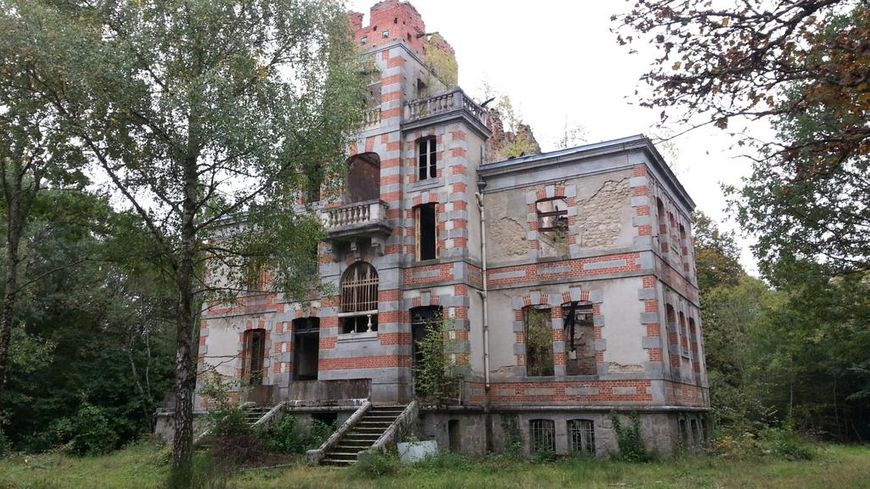
Château de Villemonteix
The Château de Villemonteix stands as a remarkable example of 15th-century fortified medieval architecture in the region of Hauts-de-France, France. Situated in the municipality of Saint-Pardoux-les-Cards, this hill castle was strategically constructed to oversee key routes leading to the town of Ahun. Its commanding position and robust design reflect its primary role as a military fortress during the late Middle Ages.
Historical significance and ownership
Built during the late medieval period, the château played a crucial role in regional defense and control. Throughout its history, it witnessed significant political and social changes, notably during the French Revolution. At that time, the château's owner, the marquis de Biencourt, became involved in a monarchist conspiracy opposing revolutionary forces, highlighting the château's political importance beyond its military function.
Ownership of the château evolved through the centuries, reflecting broader social shifts. In 1803, it was acquired by Charles de la Barre, vicomte de Bridiers. Later, in 1888, the property passed to Madame Aubert, widow of a notary from nearby Boussac. Subsequently, the château came into the possession of the Sallandrouze family, prominent industrial manufacturers from Aubusson. Since 1982, it has been privately owned by Pierre Lajoix, who has preserved the château and made it accessible to the public.
The French government recognized the château's cultural and historical value by designating it a protected historic monument on June 14, 1946. This status helps ensure ongoing conservation efforts and public awareness of its heritage.
Architectural features and design
The château's architecture is centered around a rectangular main residential building, typical of fortified medieval castles. Its west façade is fortified with tall, round towers at each corner, designed to provide defensive advantages such as flanking fire and enhanced surveillance. Opposite these towers, a square staircase tower offers vertical circulation within the structure, connecting its multiple floors.
Two corners feature corbelled watch turrets, known as échauguettes, which project outward to allow sentries to observe the surroundings while remaining protected. The walls are crowned by a battlemented walkway called a chemin de ronde, equipped with machicolations. These openings between supporting corbels were historically used to drop defensive materials on attackers below. The corbels themselves are adorned with delicate pointed-arch openings, showcasing the craftsmanship of the castle's builders.
At the heart of the château's courtyard lies a hexagonal well constructed from multiple stone panels. Its sides are decorated with quadrilobe motifs, ornamental shapes resembling four connected lobes, reflecting the artistic detail typical of the period.
Fortified dovecote and estate grounds
Within the estate grounds stands a fortified dovecote dating from the 15th to 16th centuries. This structure was essential for breeding pigeons or doves, which provided both food and fertilizer, illustrating the château's integration of agricultural practices into its defensive complex. Nearby, a venerable linden tree over three hundred years old adds a living connection to the château's long history.
Interior decoration and furnishings
The château's interior spans approximately twelve rooms across four floors, featuring a blend of historical and artistic elements. Notably, it houses Aubusson tapestries inspired by the 17th-century artist Isaac Moillon, as well as Flemish tapestries from the 16th and 18th centuries. These tapestries enrich the château's cultural ambiance and demonstrate the wealth and taste of its historical owners.
Among the furnishings are several marked pieces of significance, including an 18th-century porcelain table service produced by the renowned Sèvres manufactory. Additionally, the château contains a rare double piano crafted by the Pleyel company. This instrument carries poignant historical associations, linked to the family of Léon Reinach and Béatrice de Camondo, who tragically fell victim to deportation during World War II.
Cultural heritage and public access
Today, the Château de Villemonteix stands as a testament to medieval military architecture and the layered history of the French aristocracy. Its preservation as a protected historic monument ensures that visitors can explore its fortified structures, decorative interiors, and estate grounds. The château offers insight into the defensive strategies of the late Middle Ages, the artistic tastes of subsequent centuries, and the complex social history of the region.
Visitors can appreciate the château's blend of military functionality and refined residential features, making it a unique destination for those interested in castle architecture, French history, and cultural heritage. The presence of ancient trees and agricultural buildings like the dovecote further enrich the site’s historical narrative.
Overall, the Château de Villemonteix exemplifies the enduring legacy of France's medieval fortifications and their evolution into stately residences, reflecting centuries of architectural innovation and historical events.
Frequently asked questions (FAQ)
- What is the historical significance of Château de Villemonteix?
- Château de Villemonteix is a significant example of 15th-century architecture in France, reflecting the region's feudal past. It has served various roles throughout history, including as a noble residence and a strategic military stronghold during conflicts.
- When was Château de Villemonteix built?
- The construction of Château de Villemonteix began in the late 15th century, around 1480, and it was completed in the early 16th century. This castle showcases the transition from medieval fortress styles to more refined Renaissance designs.
- What are the opening hours for Château de Villemonteix?
- Château de Villemonteix is open to visitors from April to October, typically from 10:00 AM to 6:00 PM. It is advisable to check the official website for specific dates and any seasonal variations in opening hours.
- Can I take a guided tour of Château de Villemonteix?
- Yes, guided tours are available and provide a deeper insight into the castle's history and architecture. These tours are led by knowledgeable guides who share fascinating stories and details about the castle's past.
- Is it possible to visit Château de Villemonteix with children?
- Absolutely! Château de Villemonteix is family-friendly, and there are activities designed to engage younger visitors. The castle grounds offer plenty of space for exploration, making it a fun outing for families.
- What is the best time to visit Château de Villemonteix?
- The best time to visit is during the spring and early fall when the weather is mild and the gardens are particularly beautiful. Visiting during these seasons allows for a more enjoyable experience with fewer crowds.
- Are there any nearby attractions to Château de Villemonteix?
- Yes, nearby attractions include the picturesque village of Saint-Pardoux-les-Cards and several hiking trails that showcase the natural beauty of the region. Visitors can also explore local markets and vineyards to enhance their experience.
- How much do tickets to Château de Villemonteix cost?
- Ticket prices for Château de Villemonteix vary, generally ranging from €8 for adults to €5 for children and concessions. Family tickets and group discounts may also be available, so it's worth checking in advance.
- How do I get to Château de Villemonteix?
- Château de Villemonteix is easily accessible by car, located just off the D940 road. Public transportation options may be limited, so driving or arranging for a guided tour that includes transportation is recommended.
Information
Website
Visit websiteSources & official resources
Verify the information above using these authoritative references.
Loading map...
Visitor reviews
No reviews yet. Been here? Write the first review and help other travelers!
Write the first reviewVisited this castle? Share your experience
Your review helps other travelers and adds first-hand knowledge to our encyclopedia.