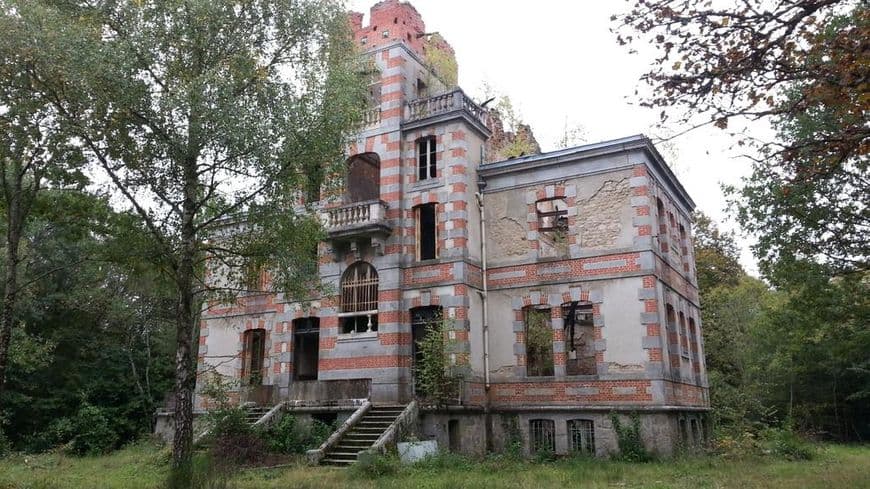
Château de Chaumont — France castle

Château de Chaumont

Château de Chaumont in Creuse, France
Nouvelle-Aquitaine, France
Ruins

Château de Chaumont is a notable 19th-century château located in the Creuse department of the Nouvelle-Aquitaine region in central France. It uniquely straddles the municipalities of Mainsat and La Serre-Bussière-Vieille, with its access road situated in Mainsat and the château itself standing within La Serre-Bussière-Vieille. This positioning highlights the château's integration into the rural landscape of central France.

Historical context and construction

The château was constructed during the 19th century, a period marked by a revival of château building in France, often reflecting romanticized interpretations of earlier architectural styles. While the exact architect remains unknown, the château reflects the tastes and social ambitions of its era, embodying the rural aristocratic lifestyle prevalent in post-Napoleonic France. The building was likely commissioned by local nobility or wealthy landowners who sought to establish a prestigious residence in the Creuse countryside.

Architectural features and style

Though currently in a state of ruins, the château originally exhibited architectural elements typical of 19th-century French country houses. Its design likely incorporated features such as towers, decorative stonework, and possibly mansard roofs or other stylistic elements popular in the period. The château's layout would have included various living quarters, service areas, and possibly a courtyard or gardens, reflecting the functional and aesthetic priorities of its time.

Current condition and restoration efforts

Today, Château de Chaumont is classified as ruins, with significant portions of the structure having deteriorated over time. However, it is currently undergoing extensive restoration aimed at preserving what remains and potentially stabilizing the structure for future use or visitation. These efforts demonstrate a commitment to safeguarding the château's historical and cultural value within the region.

Geographical and cultural significance

Situated in the heart of Nouvelle-Aquitaine, Château de Chaumont contributes to the rich tapestry of French rural heritage. The Creuse department is known for its historical sites and natural landscapes, and the château adds architectural interest to this environment. Its location between two communes underscores the interconnectedness of local communities and their shared history.

Visiting information and accessibility

While restoration is ongoing, public access to Château de Chaumont may be limited. Visitors interested in exploring the château's surroundings can enjoy the rural charm of the Creuse region. The nearby municipalities of Mainsat and La Serre-Bussière-Vieille offer insight into traditional French village life, complementing a visit to the château site.

Nearby attractions

The Creuse region is home to various historical and natural attractions, including medieval churches, scenic hiking routes, and other châteaux. These sites collectively provide a broader context for understanding the historical landscape in which Château de Chaumont exists.

Frequently asked questions (FAQ)

What is the historical significance of Château de Chaumont?
Château de Chaumont is renowned for its rich history, dating back to the 10th century. It has witnessed numerous historical events and served as a residence for influential figures, including Catherine de' Medici. The castle is also famous for hosting the International Garden Festival, showcasing its commitment to art and culture.
When was Château de Chaumont built?
The construction of Château de Chaumont began in the 10th century and continued to evolve through the Renaissance period. It has undergone several renovations and expansions over the centuries, reflecting various architectural styles. The castle we see today is a result of these transformations, particularly influenced by the 15th and 16th centuries.
Is it possible to visit Château de Chaumont year-round?
Yes, Château de Chaumont is open to visitors throughout the year, although hours may vary seasonally. It is recommended to check the official website for any specific closures or maintenance periods. The gardens are especially lovely in spring and summer, making those seasons popular for visitors.
Can I access Château de Chaumont if I have mobility challenges?
Château de Chaumont is committed to accessibility and provides facilities for visitors with mobility challenges. There are designated pathways and ramps to help navigate the grounds, though some parts of the castle may have limited access. It is advisable to contact the castle in advance for specific accommodations.
What are the opening hours for Château de Chaumont?
Château de Chaumont typically opens from 10 AM to 6 PM, with extended hours during the summer months. Visitors are encouraged to arrive early to fully explore the castle and its gardens. Always check the official website for the most current hours and any special events.
What are the ticket prices for visiting Château de Chaumont?
Ticket prices for Château de Chaumont vary based on age and type of visit, typically ranging from €8 to €12 for adults. Discounts are often available for children, students, and groups. It is advisable to purchase tickets in advance online to ensure availability and avoid long lines.
When is the best time to visit Château de Chaumont?
The best time to visit Château de Chaumont is during the late spring and summer months when the gardens are in full bloom. Additionally, the International Garden Festival, held annually, attracts many visitors and showcases innovative garden designs. Autumn also offers beautiful foliage, making it a scenic time to explore.
Are there nearby attractions to visit when at Château de Chaumont?
Yes, there are several nearby attractions worth visiting, including the charming town of Chaumont-sur-Loire and the picturesque Loire Valley, known for its vineyards and historic châteaux. The region is also popular for cycling and walking tours, allowing visitors to enjoy the stunning countryside. Make sure to plan a full day to explore the area.

Photo gallery

Château de Chaumont
Click to view

Photo by Wisi eu•CC BY-SA 4.0

1 photo • Click any image to view in full screen

Information

Archaeological Site / Ruins

Articles on the Castlopedia blog that feature Château de Chaumont.
Loading map...

Visitor reviews

No reviews yet. Been here? Write the first review and help other travelers!

Write the first review

Visited this castle? Share your experience

Your review helps other travelers and adds first-hand knowledge to our encyclopedia.

Write a review

(5/5)

0/2000 characters

Your review will be visible after admin approval

Nearby castles

18.2 km

Château de Villemonteix

Saint-Pardoux-les-Cards, France

The Château de Villemonteix stands as a remarkable example of 15th-century fortified medieval architecture in the region of Hauts-de-France, France. Situated in the municipality of Saint-Pardoux-les-Cards, this hill castle was strategically constructed to oversee key routes leading to the town of Ahun. Its commanding position and robust design reflect its primary role as a military fortress during the late Middle Ages. Historical significance and ownership Built during the late medieval period, the château played a crucial role in regional defense and control. Throughout its history, it witnessed significant political and social changes, notably during the French Revolution. At that time, the château's owner, the marquis de Biencourt, became involved in a monarchist conspiracy opposing revolutionary forces, highlighting the château's political importance beyond its military function. Ownership of the château evolved through the centuries, reflecting broader social shifts. In 1803, it was acquired by Charles de la Barre, vicomte de Bridiers. Later, in 1888, the property passed to Madame Aubert, widow of a notary from nearby Boussac. Subsequently, the château came into the possession of the Sallandrouze family, prominent industrial manufacturers from Aubusson. Since 1982, it has been privately owned by Pierre Lajoix, who has preserved the château and made it accessible to the public. The French government recognized the château's cultural and historical value by designating it a protected historic monument on June 14, 1946. This status helps ensure ongoing conservation efforts and public awareness of its heritage. Architectural features and design The château's architecture is centered around a rectangular main residential building, typical of fortified medieval castles. Its west façade is fortified with tall, round towers at each corner, designed to provide defensive advantages such as flanking fire and enhanced surveillance. Opposite these towers, a square staircase tower offers vertical circulation within the structure, connecting its multiple floors. Two corners feature corbelled watch turrets, known as échauguettes, which project outward to allow sentries to observe the surroundings while remaining protected. The walls are crowned by a battlemented walkway called a chemin de ronde, equipped with machicolations. These openings between supporting corbels were historically used to drop defensive materials on attackers below. The corbels themselves are adorned with delicate pointed-arch openings, showcasing the craftsmanship of the castle's builders. At the heart of the château's courtyard lies a hexagonal well constructed from multiple stone panels. Its sides are decorated with quadrilobe motifs, ornamental shapes resembling four connected lobes, reflecting the artistic detail typical of the period. Fortified dovecote and estate grounds Within the estate grounds stands a fortified dovecote dating from the 15th to 16th centuries. This structure was essential for breeding pigeons or doves, which provided both food and fertilizer, illustrating the château's integration of agricultural practices into its defensive complex. Nearby, a venerable linden tree over three hundred years old adds a living connection to the château's long history. Interior decoration and furnishings The château's interior spans approximately twelve rooms across four floors, featuring a blend of historical and artistic elements. Notably, it houses Aubusson tapestries inspired by the 17th-century artist Isaac Moillon, as well as Flemish tapestries from the 16th and 18th centuries. These tapestries enrich the château's cultural ambiance and demonstrate the wealth and taste of its historical owners. Among the furnishings are several marked pieces of significance, including an 18th-century porcelain table service produced by the renowned Sèvres manufactory. Additionally, the château contains a rare double piano crafted by the Pleyel company. This instrument carries poignant historical associations, linked to the family of Léon Reinach and Béatrice de Camondo, who tragically fell victim to deportation during World War II. Cultural heritage and public access Today, the Château de Villemonteix stands as a testament to medieval military architecture and the layered history of the French aristocracy. Its preservation as a protected historic monument ensures that visitors can explore its fortified structures, decorative interiors, and estate grounds. The château offers insight into the defensive strategies of the late Middle Ages, the artistic tastes of subsequent centuries, and the complex social history of the region. Visitors can appreciate the château's blend of military functionality and refined residential features, making it a unique destination for those interested in castle architecture, French history, and cultural heritage. The presence of ancient trees and agricultural buildings like the dovecote further enrich the site’s historical narrative. Overall, the Château de Villemonteix exemplifies the enduring legacy of France's medieval fortifications and their evolution into stately residences, reflecting centuries of architectural innovation and historical events.

Late Medieval (14th–15th c.)
Details
28.2 km

Château de l’Ours

, France

The Château de l’Ours stands as a remarkable example of a medieval hill castle strategically positioned in the historic borderlands of France. Located in the commune of Sainte-Thérence within the Hauts-de-France region, this fortress was constructed during the early 13th century as a defensive stronghold overseeing critical river crossings along the Cher River. Its origins are closely tied to the turbulent political landscape of the High Middle Ages, when territorial disputes necessitated fortified watchpoints to monitor and deter incursions, particularly from English forces during the period of the Angevin Empire's influence in France. Construction of the castle began in the late 12th century but was not completed until around 1210, under the direction of Guy II de Dampierre, lord of Bourbon. This initiative was undertaken at the behest of monks from the nearby Abbey of Menat, reflecting the intertwined roles of secular and ecclesiastical powers in regional defense strategies. The Château de l’Ours was part of a network of fortifications including the contemporary Château de Ronnet, all designed to secure the border zone between the historic provinces of Auvergne and Berry. The castle's primary function was to serve as a small lordly residence and watchtower rather than a large-scale military fortress, emphasizing surveillance and control of river traffic rather than direct battlefield engagement. Historical context and significance The castle's name, "Château de l’Ours" or "Castle of the Bear," is rooted in local folklore involving Odile de Montluçon. According to legend, her son was raised wearing a bear's skin within the castle, leading shepherds to mistake him for an actual bear. This story not only lends the castle its distinctive name but also reflects the cultural narratives that often develop around medieval sites, intertwining history with myth. Throughout its history, the Château de l’Ours played a modest but vital role in the defense of a contested frontier area. Its strategic location atop a rocky ridge overlooking the confluence of the Cher River and the Petite Rivière de l’Ours provided expansive views and a natural defensive advantage. This vantage point allowed the castle's occupants to monitor movements and potential threats effectively, reinforcing its role as a sentinel in the borderlands. By the late 20th century, recognition of the castle's cultural and historical value led to its designation as a historic monument in 1995. This protection under French heritage laws has ensured the preservation of its ruins and the legacy of its medieval past. Architectural features and layout Site and natural defenses The Château de l’Ours occupies a naturally fortified position on a narrow rocky promontory approximately 50 meters long and 12 meters wide. This elevated site commands the surrounding landscape and the strategic river junction below, making it an ideal location for a defensive stronghold. The natural rock formations provided formidable barriers against assault, reducing the need for extensive artificial fortifications. The keep and defensive structures The centerpiece of the castle is a cylindrical stone keep rising nearly 19 meters in height with a diameter of about 9.5 meters. This tower served as both the main defensive bastion and the lordly residence within the fortress. Its elevated entrance, accessed via a small adjoining tower on the upstream side, exemplifies typical medieval defensive design intended to hinder attackers by raising the entry point above ground level. Surrounding the keep was a curtain wall that traced the contours of the rocky ridge, enclosing the main area of the castle. Although much of this wall has fallen into ruin, its original layout remains discernible, illustrating the compact scale of the fortress. The wall functioned primarily as a protective barrier rather than a massive fortification, consistent with the castle's role as a watchtower and river crossing guard. Additional fortifications and features While the surviving remains are limited, it is likely that the castle included other typical medieval features such as battlements, arrow slits, and possibly a small courtyard within the curtain wall. These elements would have supported the defensive and residential functions of the castle, enabling the lord and garrison to maintain vigilance and control over the surrounding territory. Preservation and current state Today, the Château de l’Ours stands as partially preserved ruins that offer valuable insight into the military architecture and regional history of medieval France. The keep remains the most prominent and intact structure, while the curtain wall and other defensive elements survive mainly as archaeological traces. The castle's elevated position and rocky foundation continue to define its silhouette against the landscape. Its protected status as a historic monument ensures ongoing conservation efforts and public awareness of its significance. Visitors to the site can explore the ruins and appreciate the castle's role in guarding a key frontier during a turbulent period in French history.

Details
30.8 km

Ronnet Tower

Next to the D-154 road, France

Ronnet Tower, also known locally as Donjon de Ronnet, is a medieval stone keep located in the village of Ronnet, within the Allier department in central France. This tower represents a significant example of the architectural transition during the High Medieval period, specifically from the late 12th to early 13th century, when wooden fortifications were increasingly replaced by more durable stone structures. Situated near the D-154 road, Ronnet Tower originally stood at the edge of the historic province of Bourbonnais. It was part of a larger castle complex belonging to the influential House of Bourbon. The tower itself is a remnant of a former motte-and-bailey castle, where a wooden keep on an earthen mound was replaced by this stone donjon, reflecting the evolving defensive needs and architectural techniques of the time. Historical background and ownership The construction of Ronnet Tower is estimated to date back to the 13th century, aligning with the broader trend of stone castle building in medieval France. In 1359, the Duke of Bourbon authorized the sale of the manor of Ronnet, which fell under the jurisdiction of the castellany of Hérisson. This transaction transferred ownership from Jehan de Repenti to Goussaut de Toury, indicating the tower's role within the feudal system and its importance as a manorial seat. Architectural features and design The tower's design is characteristic of early stone keeps, with a simple, robust structure built primarily for defense and residence. Originally, the entrance was located on an upper floor, a common defensive feature to prevent easy access by attackers. The current ground-level entrance was a later modification, likely made to accommodate shelter for livestock rather than for defensive purposes. Unlike many castles of its era, Ronnet Tower lacks extensive finely cut stonework, which may have contributed to its survival when other castle structures were dismantled or fell into ruin. The absence of surviving ancillary buildings suggests that the tower was once part of a larger complex, now lost to time. Current status and accessibility Today, Ronnet Tower stands alone on private land and is not open to public visitation. However, it remains visible from the nearby road, allowing passersby to appreciate its simple yet enduring medieval architecture. The tower's preservation, despite the disappearance of surrounding buildings, offers a tangible link to the region's feudal past and the architectural evolution of medieval fortifications. Significance within medieval French architecture Ronnet Tower exemplifies the transition from wooden motte-and-bailey castles to stone keeps during the High Medieval period. Its survival provides valuable insight into the defensive strategies and residential needs of the House of Bourbon and the feudal lords of the Bourbonnais province. The tower's modest scale and functional design reflect the practical considerations of rural fortifications in medieval France. Although it lacks the grandeur of larger castles, Ronnet Tower's historical and architectural value lies in its representation of typical noble residences of its time and its endurance through centuries of change. It stands as a testament to the region's medieval heritage and the gradual shift in castle construction techniques that shaped the landscape of French fortifications.

High Medieval (11th–13th c.)
Details

