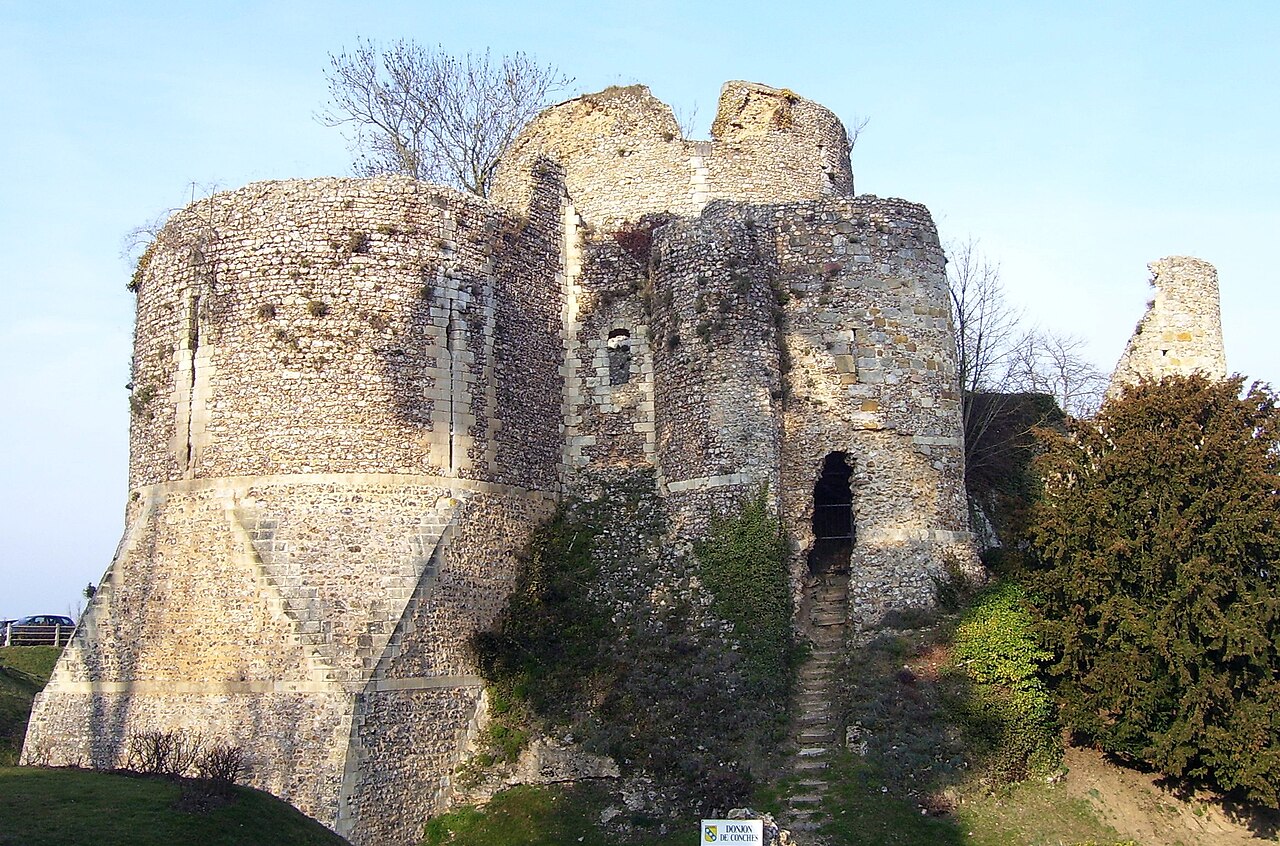
Château de Verneuil-sur-Avre Ruins
Château de Verneuil-sur-Avre is a significant medieval fortress located in the town of Verneuil-sur-Avre in France. Its origins date back to the 11th century, marking it as an important defensive structure during the High Medieval period. The castle was strategically positioned along with other fortifications such as Tillières-on-Avre and Nonancourt to form a defensive line against incursions from the counts of Chartres into the region of Normandy.
Historical context and significance
The castle played a pivotal role in the territorial conflicts of the early 13th century, especially after the conquest of Normandy by King Philippe Auguste in 1204. Following this conquest, Philippe Auguste undertook significant fortification efforts to consolidate his control over the newly acquired lands. Among these efforts was the construction of a notable circular tower at Château de Verneuil-sur-Avre, a hallmark of his military architectural style.
Architectural features and fortifications
The castle is known for its circular tower built shortly after 1204, which is one of the earliest examples of this type of military architecture in France. Circular towers were favored for their improved defensive capabilities, offering better angles of fire and eliminating blind spots compared to square towers. This tower at Verneuil-sur-Avre exemplifies the transition in castle design during the High Medieval period, reflecting advances in siege warfare and defense strategies.
In addition to the tower, the castle formed part of a larger defensive curtain alongside the fortifications at Tillières-on-Avre and Nonancourt. This network of castles was designed to protect the borders of Normandy and to control key routes in the region.
Layout and construction
While much of the original castle now lies in ruins, archaeological evidence and historical records suggest it featured typical medieval defensive elements such as curtain walls, gatehouses, and possibly a moat. The positioning of the castle on elevated ground would have enhanced its defensive capabilities, making it difficult for attackers to mount successful sieges.
Current condition and preservation
Today, Château de Verneuil-sur-Avre remains largely in ruins, with the circular tower being one of the most prominent surviving features. The ruins provide valuable insight into medieval military architecture and the strategic importance of the site during the turbulent period of Norman and French territorial disputes.
Visiting the castle
The ruins of Château de Verneuil-sur-Avre are accessible to visitors interested in medieval history and architecture. The site offers a glimpse into the defensive systems of the High Medieval era and the legacy of Philippe Auguste's military campaigns. Visitors can explore the remains of the tower and surrounding fortifications, appreciating the castle's historical role in the defense of Normandy.
Frequently asked questions (FAQ)
- What is the historical significance of Château de Verneuil-sur-Avre Ruins?
- Château de Verneuil-sur-Avre Ruins holds significant historical value as it dates back to the 11th century and played a crucial role in the defense against invasions during medieval times. The castle was also a residence for nobility, reflecting the architectural styles and feudal history of France.
- When was Château de Verneuil-sur-Avre Ruins built?
- The construction of Château de Verneuil-sur-Avre began in the 11th century, with various modifications and expansions occurring over the centuries. Its ruins today showcase a blend of architectural styles that evolved over its long history.
- Can I visit Château de Verneuil-sur-Avre Ruins?
- Yes, visitors are welcome to explore the ruins of Château de Verneuil-sur-Avre. However, it is advisable to check local guidelines for any restrictions or specific visiting hours before planning your trip.
- What are the opening hours for Château de Verneuil-sur-Avre Ruins?
- Château de Verneuil-sur-Avre Ruins is typically open to the public year-round, but hours may vary seasonally. It is recommended to verify the current opening hours on the official website or through local tourist information.
- Is it possible to access Château de Verneuil-sur-Avre Ruins by public transport?
- Yes, the Château de Verneuil-sur-Avre Ruins can be accessed via public transport, including local buses that connect to nearby towns. Visitors should check the local transport schedules for the most convenient routes.
- What is the best time to visit Château de Verneuil-sur-Avre Ruins?
- The best time to visit Château de Verneuil-sur-Avre Ruins is during the spring and early fall when the weather is mild, and the landscape is picturesque. These seasons also tend to attract fewer tourists, allowing for a more peaceful exploration of the site.
- Are there any nearby attractions to visit when at Château de Verneuil-sur-Avre Ruins?
- Yes, nearby attractions include the charming town of Verneuil-sur-Avre itself, with its historic streets and local shops, as well as other nearby castles and natural parks. Exploring the local area can enhance your visit to the ruins.
- What are the ticket prices for Château de Verneuil-sur-Avre Ruins?
- Entry to Château de Verneuil-sur-Avre Ruins is typically free, making it an accessible destination for all visitors. However, special guided tours or events may have associated costs, so it's best to check in advance.
Loading map...
Visitor reviews
No reviews yet. Been here? Write the first review and help other travelers!
Write the first reviewVisited this castle? Share your experience
Your review helps other travelers and adds first-hand knowledge to our encyclopedia.