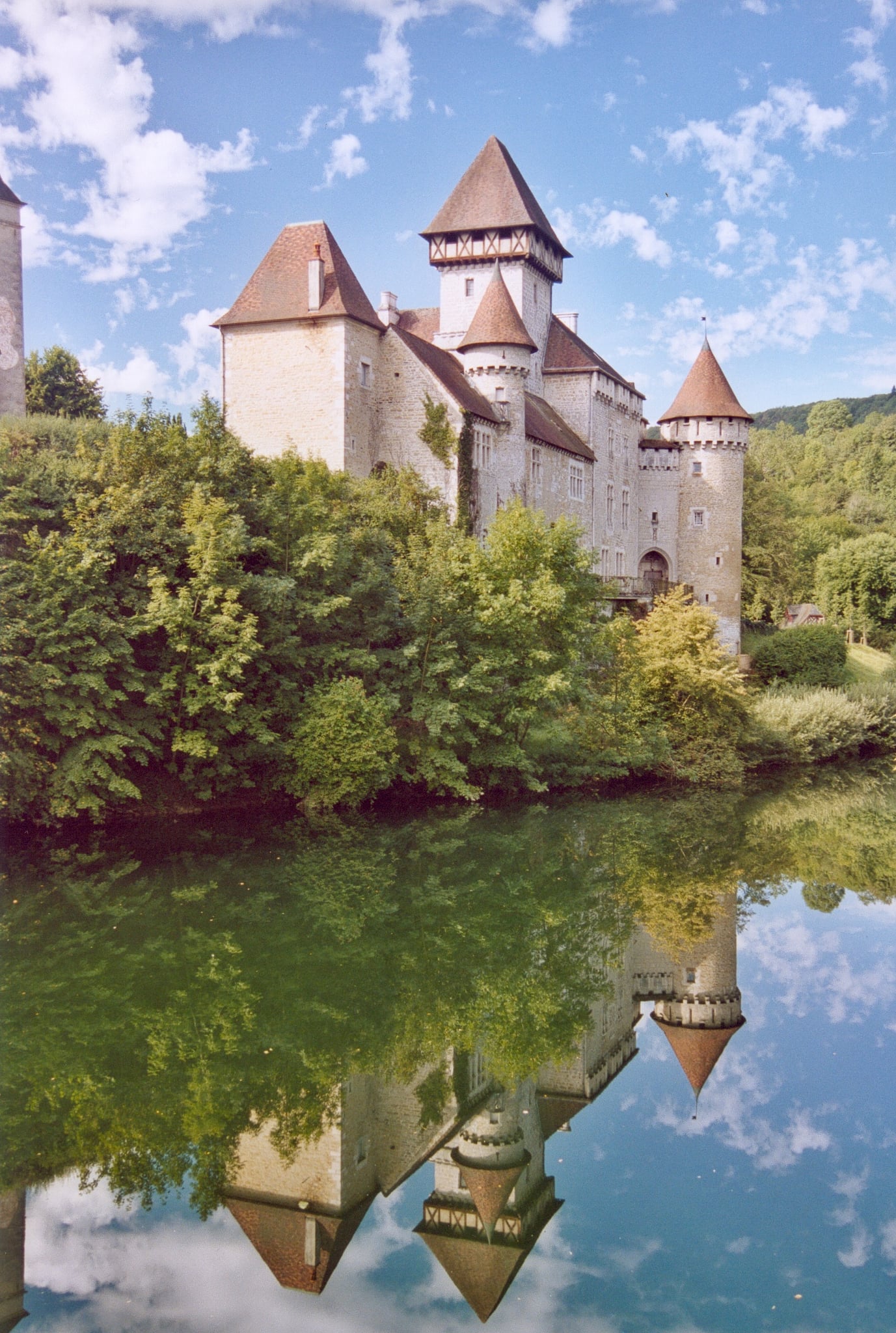
Château de Vaulgrenant
The Château de Vaulgrenant is a notable example of a medieval hill castle located in the region of Hauts-de-France, France. Perched strategically on a rocky ridge overlooking the Loue river, this fortress was originally constructed during the 13th century by local feudal lords. Its position allowed it to dominate the surrounding landscape and control important trade routes, making it a significant military and economic stronghold in the region.
Historical significance and strategic role
During the Middle Ages, the castle served as a vital military bastion and a center of feudal power. It was strategically placed to oversee the Route du sel et du bois, a crucial trade corridor linking Salins-les-Bains and Dole. This route was essential for the transport of salt and timber, two commodities that were economically important in medieval France. The lords of Vaulgrenant exercised control over this passage, using the castle as a base to secure and tax the trade moving through the region.
The castle's military importance is underscored by its robust defensive features and its role in regional conflicts. However, its active use as a fortress came to an end in the late 17th century when King Louis XIV ordered the dismantling of fortifications in the Franche-Comté area. This was part of a broader strategy to centralize royal power and reduce the military autonomy of local lords. Around 1668, the Château de Vaulgrenant was deliberately destroyed, marking the cessation of its military function.
Architectural features and layout
The castle's remains occupy an irregular trapezoidal enclosure approximately 80 meters long and 35 meters wide at its broadest point. This layout reflects typical medieval defensive design adapted to the natural topography of the rocky ridge. The fortress was constructed primarily of stone, featuring curtain walls and towers that enhanced its defensive capabilities.
Defensive structures
Among the most prominent surviving features is a large square tower located midway along the western curtain wall. This tower would have served as a key defensive strongpoint, offering a vantage for surveillance and protection against attacks from the west. Additionally, two square towers flank the northern curtain wall, reinforcing this section which was likely more vulnerable to assault.
Residential and communal spaces
Within the castle's inner courtyard, remnants of a covered gallery supported by pillars arranged in an L-shaped formation have been identified. This architectural element would have provided sheltered walkways or communal areas for the castle's inhabitants. The residential building, or logis, is evidenced by a large hearth set into the northern gable wall, indicating the presence of domestic living quarters within the fortified complex.
Preservation and modern efforts
Today, the Château de Vaulgrenant stands as ruins that have been carefully stabilized to prevent further deterioration. Since 2001, a dedicated group of volunteers known as Les Amis de Vaulgrenant has been actively involved in maintaining the site. Their efforts include cleaning the area, securing the remaining structures, and documenting the castle through detailed photographs and architectural plans. These preservation activities aim to protect the historical integrity of the site and make it accessible to visitors interested in medieval history and architecture.
The castle's ruins provide valuable insight into medieval military architecture and the feudal history of the Hauts-de-France region. Visitors can explore the remains of the defensive walls, towers, and residential quarters, gaining an understanding of the castle's strategic importance and daily life within its walls. The site also serves as a cultural landmark, commemorating the region's rich heritage and the legacy of its feudal lords.
The château in the context of medieval fortifications
The Château de Vaulgrenant exemplifies the characteristics of a hill castle designed to capitalize on natural terrain for defense. Its stone construction, fortified towers, and enclosure walls reflect the military architecture of the high to late medieval period. The castle's role in overseeing a key trade route highlights the interconnectedness of military and economic functions in medieval fortresses.
The deliberate destruction of the castle in the 17th century aligns with broader trends in French history where centralization under the monarchy diminished the power of regional fortresses. This transition marked a shift from feudal fragmentation towards a more unified state, with implications for the design and use of castles across France.
Visiting château de vaulgrenant today
Visitors to the Château de Vaulgrenant can experience the evocative atmosphere of a medieval fortress in ruins. The site is accessible for exploration, with pathways and informational materials provided by the preservation group. The castle's elevated position offers scenic views of the surrounding landscape, including the Loue river valley.
While the castle is no longer intact, the stabilized ruins allow visitors to appreciate the architectural layout and defensive ingenuity of medieval builders. The efforts of Les Amis de Vaulgrenant ensure that this historical monument remains a valuable educational and cultural resource for the region.
Frequently asked questions (FAQ)
- How do I get to Château de Vaulgrenant?
- Château de Vaulgrenant is located in the picturesque region of France, easily accessible by car or public transport. If traveling by train, the nearest station is a short drive away, followed by a scenic route to the castle.
- What is the historical significance of Château de Vaulgrenant?
- Château de Vaulgrenant boasts a rich history dating back to the Middle Ages, serving as a strategic stronghold. It has witnessed numerous historical events and has been preserved to showcase its architectural heritage and the stories of those who lived there.
- When was Château de Vaulgrenant built?
- Construction of Château de Vaulgrenant began in the late 15th century and was completed in the early 16th century. This period marked the transition from medieval architecture to Renaissance styles, evident in the castle's design.
- Can I take guided tours of Château de Vaulgrenant?
- Yes, guided tours are available and highly recommended for a deeper understanding of the castle's history and architecture. Knowledgeable guides provide fascinating insights and anecdotes that enhance the visitor experience.
- Why is the architecture of Château de Vaulgrenant unique?
- The architecture of Château de Vaulgrenant is unique due to its blend of medieval and Renaissance elements, characterized by elegant stonework and intricate detailing. Its towers and fortifications reflect its original defensive purpose while showcasing the artistry of the period.
- Is it possible to visit Château de Vaulgrenant year-round?
- Château de Vaulgrenant is open to visitors throughout the year, but it's best to check the specific opening hours as they may vary by season. During peak tourist months, additional events and activities may also be scheduled.
- What are the ticket prices for visiting Château de Vaulgrenant?
- Ticket prices for Château de Vaulgrenant are quite reasonable, with discounts available for students and seniors. Family packages are also offered, making it an affordable outing for visitors of all ages.
- When is the best time to visit Château de Vaulgrenant?
- The best time to visit Château de Vaulgrenant is during the spring and early autumn when the weather is mild, and the surrounding gardens are in full bloom. Additionally, these seasons tend to have fewer crowds, allowing for a more enjoyable experience.
- What nearby attractions should I consider visiting?
- While at Château de Vaulgrenant, consider exploring the nearby historic towns and natural parks that offer additional cultural experiences. The region is rich in vineyards and scenic landscapes, perfect for a full day of exploration.
Information
Loading map...
Visitor reviews
No reviews yet. Been here? Write the first review and help other travelers!
Write the first reviewVisited this castle? Share your experience
Your review helps other travelers and adds first-hand knowledge to our encyclopedia.