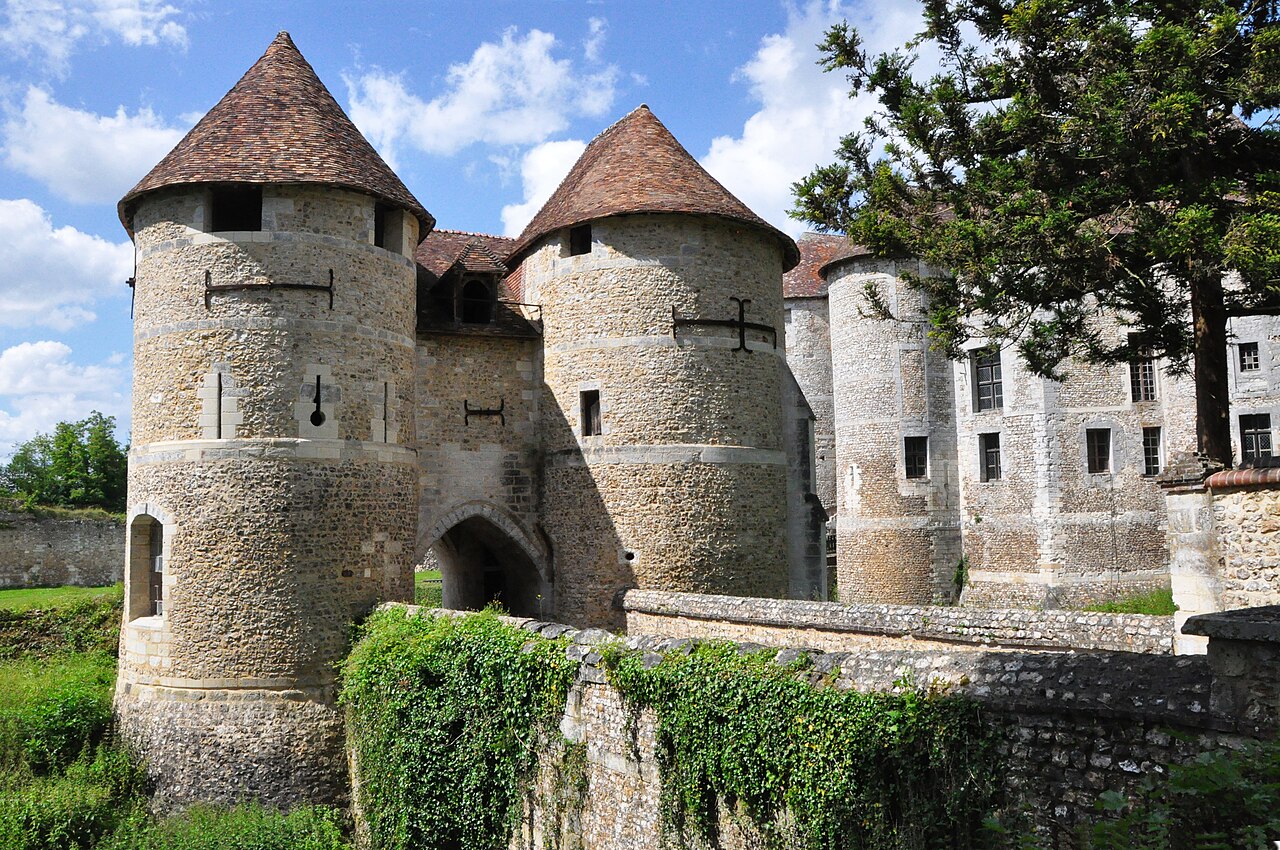
Château de Touffou
The Château de Touffou is a remarkable historic castle located in Bonnes, within the Vienne department of western France. Nestled on a terrace overlooking the left bank of the Vienne River, this castle offers a striking example of architectural evolution from the 12th century through the Renaissance. Originally established as a defensive fortress, it has undergone significant transformations that reflect changing styles and functions over the centuries.
First documented in 1127 under the name "Tolfol," the castle's origins trace back to the medieval period. The initial construction was initiated by the Oger family, who built a Romanesque keep as the core defensive structure. This keep, measuring approximately 27 meters long, 13 meters wide, and rising 18 meters high, features five floors, each with a single room. Notably, the second-floor chamber preserves 13th-century polychrome heraldic decorations, providing a rare and valuable insight into medieval interior art and symbolism.
Medieval origins and defensive architecture
The castle's original design centered on a quadrilateral defensive plan with the imposing rectangular keep at its heart. The keep is fortified with machicolations on its north and east faces—openings in the parapet that allowed defenders to repel attackers by dropping projectiles or boiling substances. These features, along with the corner turrets flanking the keep, underscore the castle's initial military purpose during the turbulent medieval era.
Surrounding the keep, the castle complex includes an enceinte or outer defensive wall, as well as interior and exterior terraces that provided additional layers of defense and living space. The Aumônerie, a building originally intended for charitable or religious functions, is part of the château grounds and contributes to the site's historical depth.
Renaissance transformation under the chasteigner family
From 1280 to 1519, the castle was owned by the Montléon family, who maintained its medieval fortress character. In 1519, ownership transferred to the Chasteigner family. Jean III Chasteigner, who served as chamberlain to King Francis I, spearheaded significant renovations during the 16th century Renaissance. These renovations marked a shift from purely defensive architecture to more comfortable and elegant residential spaces.
The Chasteigner family introduced new residential buildings that incorporated Renaissance architectural elements, reflecting contemporary tastes and the broader cultural movement sweeping through France. This transformation included the creation of more refined living quarters, larger windows, and decorative details that softened the castle's martial appearance while preserving its historic core.
Later history and preservation efforts
After the Chasteigners' tenure ended in 1821, the château passed through several owners. The de Vergie family held the property from 1897 to 1966, during which time they preserved the château's hunting traditions and undertook restoration work to maintain its structural integrity. In 1966, British advertising executive David Ogilvy purchased the château and resided there until his death in 1999, further contributing to its upkeep.
During World War II, the château was used as a garrison for 200 German soldiers stationed in Bonnes, while simultaneously serving as a refuge for evacuees from Moselle since 1939. This dual role highlights the château's strategic and humanitarian importance during the conflict.
The château's historical and architectural significance was formally recognized early in the 20th century. It was classified as a monument historique in 1923, with its gardens and southern avenue receiving registration in 1992. The tower was granted separate classification in 1994, ensuring the protection of these key elements.
Architectural styles and features
The Château de Touffou exhibits a blend of Romanesque, Gothic, and Renaissance architectural styles. The medieval wing retains Romanesque and Gothic features, including the robust keep and defensive structures, while the Renaissance wing showcases the elegance and residential comfort introduced in the 16th century.
The keep's machicolations and corner turrets are prominent defensive features, while the castle's enceinte and terraces add to the layered fortifications. The Aumônerie building adds a unique religious and charitable dimension to the château complex.
Gardens and landscape design
The château is set on a high bank overlooking the Vienne River, surrounded by extensive gardens documented since the French Revolution. These gardens are divided into three distinct styles:
- English garden: Featuring four enclosed yew spaces and a notable rose garden, this area reflects the naturalistic landscaping popular in the 18th and 19th centuries.
- Jardin de l’Aumônerie: This garden contains eleven squares planted with giant artichokes bordered by boxwood, creating a structured and ornamental space.
- Jardin de la Terrasse des Tournois: An Italian-style terraced garden designed by landscape architect Paolo Perjoné, embodying Renaissance Italian garden principles with formal terraces and geometric layouts.
Current use and cultural significance
Today, the château continues to function as both a private residence and a cultural site. The medieval wing, which includes Romanesque and Gothic elements, is used for business meetings and events, while the Renaissance wing remains a private home. The château also hosts a Hunting Museum that displays over 1,500 hunting buttons, reflecting the estate's longstanding association with hunting traditions.
The preservation of the château and its grounds ensures that this historic site remains a valuable resource for understanding the architectural and social history of western France. Its layered history, from medieval fortress to Renaissance residence and modern cultural venue, provides a rich narrative of adaptation and continuity.
Frequently asked questions (FAQ)
- How do I get to Château de Touffou?
- Château de Touffou is located in Bonnes, France, and can be reached by car or public transport. If traveling by car, the château is accessible via the D150 road. Public transport options include regional trains that connect to nearby towns, followed by a short taxi ride to the castle.
- What is the historical significance of Château de Touffou?
- Château de Touffou dates back to the 15th century and is notable for its Renaissance architecture and beautiful gardens. It has been owned by the same family for generations, which adds to its historical importance. The castle also offers insights into the local history and aristocratic life in France.
- When was Château de Touffou built?
- Château de Touffou was originally constructed in the 15th century, with significant modifications made during the Renaissance period. Its architecture reflects the transition from medieval fortification to elegant residence, showcasing various styles and influences over the centuries.
- Can I take photographs inside the château?
- Photography is allowed in certain areas of Château de Touffou, but visitors are encouraged to respect the privacy of the family who still resides there. Be sure to check for any specific restrictions or guidelines upon arrival to ensure a pleasant visit.
- Why is the architecture of Château de Touffou unique?
- The architecture of Château de Touffou is a blend of medieval and Renaissance styles, characterized by its elegant towers and intricate stonework. The castle features beautifully landscaped gardens that complement its historical structure, making it a prime example of French château design. Visitors can appreciate the craftsmanship and attention to detail that went into its construction.
- Is it possible to tour the gardens at Château de Touffou?
- Yes, visitors can tour the exquisite gardens of Château de Touffou, which are renowned for their stunning design and variety of plant species. The gardens are typically open to the public during the castle’s visiting hours and provide a peaceful setting for exploration. Guided tours may also be available to enhance your experience.
- What are the opening hours for Château de Touffou?
- Château de Touffou is usually open to visitors from April to October, but hours may vary depending on the season. It is advisable to check the official website or contact the château directly for the most current opening hours and any special events that may affect access.
- What are the ticket prices for visiting Château de Touffou?
- Ticket prices for Château de Touffou vary based on age and group size, with discounts often available for students and seniors. Family tickets may also be offered, making it an affordable outing for visitors. Always check the official site for the latest pricing information before your visit.
- What is the best time to visit Château de Touffou?
- The best time to visit Château de Touffou is during the spring and early autumn months when the gardens are in full bloom and the weather is pleasant. Additionally, visiting during weekdays can help avoid larger crowds, allowing for a more relaxed experience while exploring the castle and its grounds.
- Are there any nearby attractions to visit after Château de Touffou?
- Yes, there are several attractions near Château de Touffou, including charming villages and other historical sites in the region. After visiting the château, you can explore local markets, enjoy regional cuisine, or discover additional castles and cultural landmarks within a short drive. This makes for a delightful day trip in the French countryside.
Information
Loading map...
Visitor reviews
No reviews yet. Been here? Write the first review and help other travelers!
Write the first reviewVisited this castle? Share your experience
Your review helps other travelers and adds first-hand knowledge to our encyclopedia.