Château de Salveterra
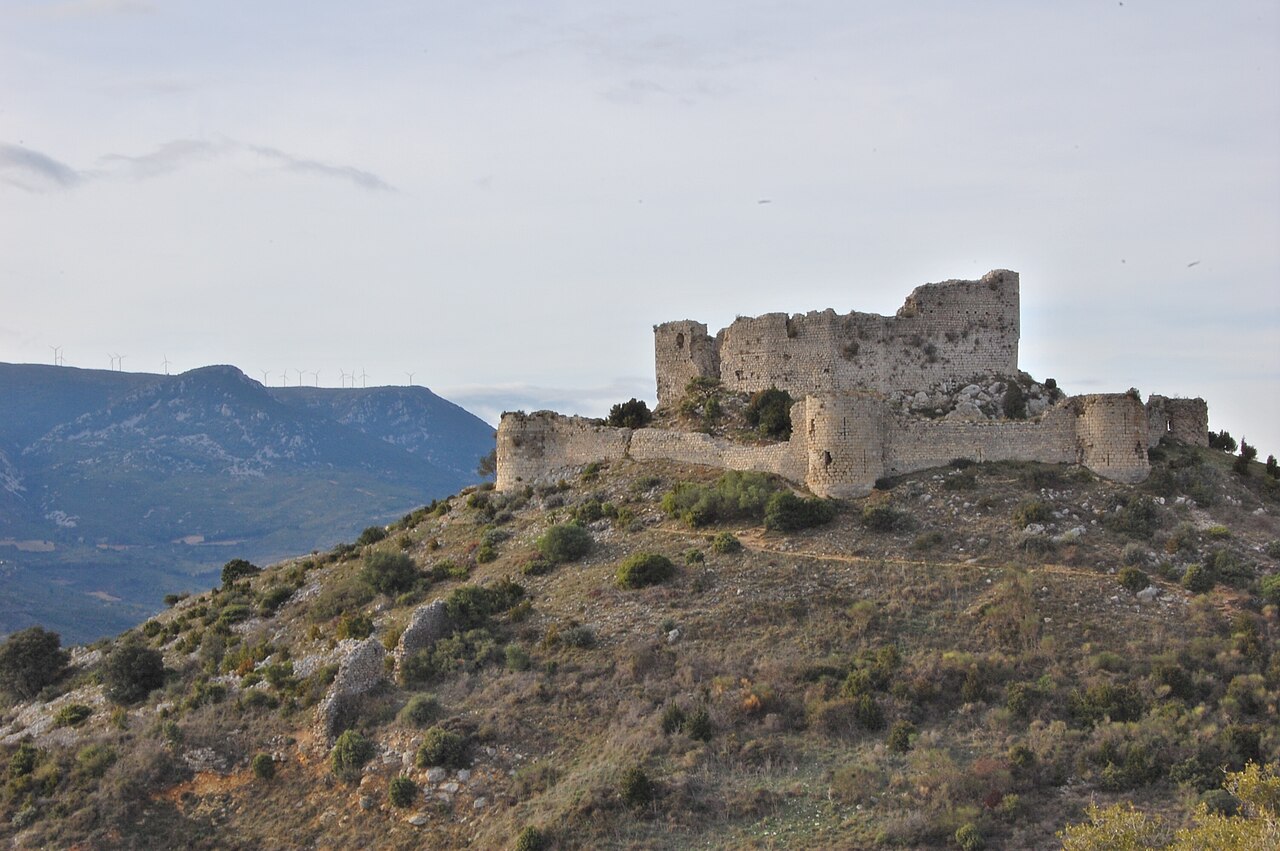
Château de Salveterra stands as a remarkable example of a 13th-century hill castle constructed with a strategic military purpose along the border between the Kingdom of France and the Kingdom of Aragon. Commissioned by King James I of Aragon in 1246, this fortress was designed to assert control and defend the frontier region during the high medieval period. Situated atop a plateau rising approximately 400 meters above sea level, the castle’s location was carefully chosen for its commanding views and natural defensive advantages.
The castle was not only a military stronghold but also the center of a fortified village, established to ensure a stable population loyal to the Crown of Aragon. Inhabitants were granted privileges, including fealty exclusively to the Count of Roussillon and extended municipal rights influenced by the legal customs of Perpignan. This dual function as both a defensive fortress and a community hub was typical of border castles during this era.
Historical context and strategic significance
The construction of Château de Salveterra must be understood within the broader context of medieval territorial conflicts between France and Aragon. The castle was part of a network of fortifications aimed at securing the volatile frontier region. Its establishment coincided with a period of territorial consolidation by James I, also known as James the Conqueror, who sought to strengthen his kingdom’s borders through military and administrative means.
Throughout its history, the castle witnessed significant military action. It endured sieges by French troops in 1598 and again in 1639, reflecting its ongoing strategic importance well into the early modern period. Despite these conflicts, the castle’s isolated and rugged location contributed to difficult living conditions, which ultimately led to the gradual abandonment of the village and castle by the mid-16th century.
Architectural features and defensive elements
Site layout and fortifications
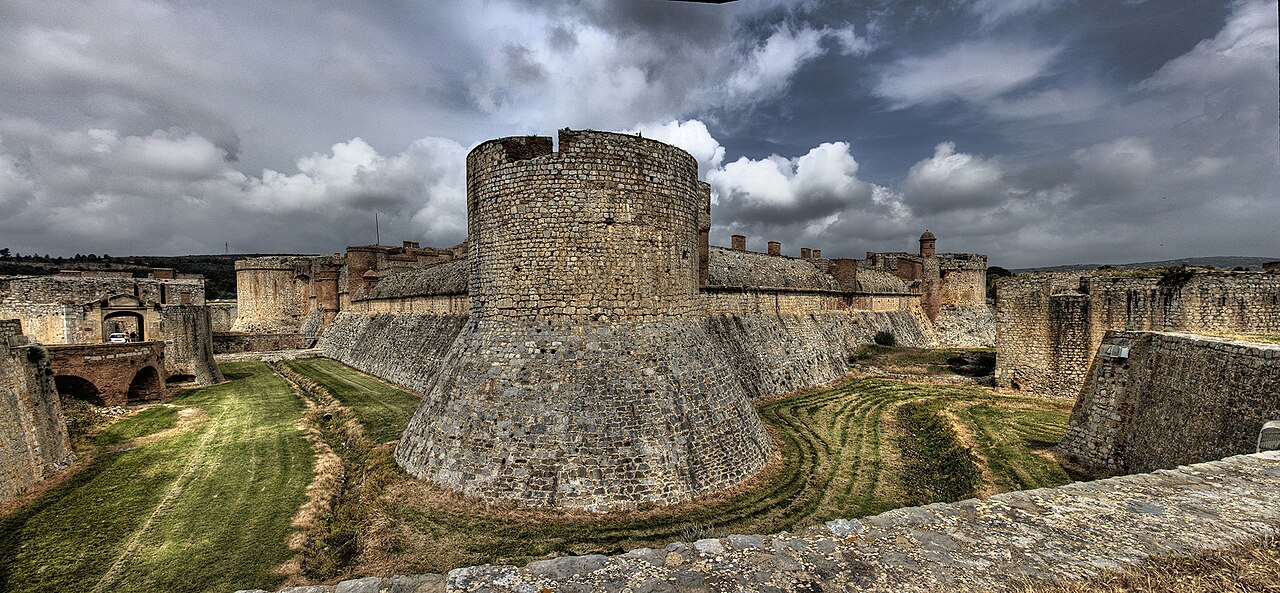
The fortress occupies a compact and irregular footprint shaped by the natural cliffs and topography of the plateau. Its defensive perimeter is defined by thick stone walls reaching up to seven meters in height on the eastern and southern sides. These walls incorporate opus spicatum stonework, a distinctive herringbone pattern that enhances both the strength and aesthetic of the masonry.
Encircling the western and northern edges of the castle is a rock-cut moat, an artificial defensive ditch carved directly into the bedrock to impede attackers. This moat, combined with the natural steep slopes of the plateau, created formidable obstacles for any besieging force.
Additional outer defenses include a countervallation wall that enclosed the fortified village, providing a secondary line of defense separate from the castle itself. The approach to the castle was controlled by a series of auxiliary walls and gates, which regulated access and enhanced security.
Towers, battlements, and defensive architecture
A prominent feature of the castle is the cylindrical tower located at the northwest corner. This tower is strategically positioned on a steep earthen slope above the moat and retains traces of its original arrow slits, narrow vertical openings designed to allow defenders to shoot arrows while remaining protected.
The castle’s perimeter walls are crowned with sections of battlements, including alternating solid merlons and arrow slits, which provided cover and firing positions for archers. A surviving machicolation—a projecting parapet with openings—allowed defenders to drop stones or boiling liquids on attackers attempting to scale the walls.
Interior structures and facilities
Inside the enclosure, rooms are arranged along the interior faces of the perimeter walls on two levels, indicating a functional division of space for residential, administrative, and military purposes. Among these is the remains of a chapel dedicated to Saint Lawrence (Sant Llorenç), located in the northeast sector. Although heavily damaged, the chapel’s ruins reflect the religious practices that were integral to castle life.
The fortress also contains vaulted rooms with arched ceilings, which provided structural stability and efficient use of space. Two cisterns within the enclosure ensured a reliable water supply during sieges or dry periods, underscoring the castle’s preparedness for prolonged defense.
Decline and legacy
By the 16th century, the harsh living conditions and strategic shifts led to the abandonment of the castle and its village. Residents relocated about one kilometer southeast to establish the present-day village of Òpol. Despite this, the castle and its associated settlement retained administrative status as a royal town until the end of the Ancien Régime, highlighting its enduring symbolic importance.
Local traditions have occasionally linked the site to earlier historical events, such as a possible conquest by King Wamba in the 7th century, though no archaeological evidence has confirmed this. Over centuries, the fortress has been known by several names including Castell d’Òpol and Château d’Opoul, reflecting its evolving role in regional history.
Today, the ruins of Château de Salveterra remain a significant cultural and historical landmark. The site offers visitors a glimpse into medieval military architecture and the complexities of border defense during the high medieval period. Its commanding position atop the plateau provides panoramic views of the surrounding landscape, enhancing its appeal as a heritage site.
Visiting Château de Salveterra
Visitors to Château de Salveterra can explore the ruins that include the remaining walls, towers, and defensive features such as the moat and battlements. The site’s elevated position offers spectacular vistas, making it a popular destination for those interested in medieval history and architecture.
While the castle is in ruins, the preservation of key architectural elements allows for an informative experience. The site is accessible via hiking trails from the nearby village of Opoul-Perillos, and interpretive signage provides historical context. Due to its open-air nature, visitors should prepare for uneven terrain and variable weather conditions.
Frequently asked questions (FAQ)
- How do I get to Château de Salveterra?
- Château de Salveterra is located in Opoul-Perillos, France, and can be accessed via car or public transport. The nearest major city is Perpignan, which is about 30 kilometers away. Visitors can find parking near the castle or use local bus services that connect to the area.
- What is the historical significance of Château de Salveterra?
- Château de Salveterra dates back to the 11th century and is a prime example of medieval architecture in the Languedoc region. It served as a strategic fortress during various historical conflicts, reflecting the turbulent history of the area. Today, it stands as a testament to the region's rich cultural heritage.
- When was Château de Salveterra built?
- Construction of Château de Salveterra began in the early 11th century, making it one of the oldest castles in the region. Over the centuries, it has undergone various modifications and restorations, retaining its medieval charm while adapting to changing architectural styles. It is a fascinating site for those interested in medieval history.
- Can I visit Château de Salveterra with my family?
- Yes, Château de Salveterra is family-friendly and welcomes visitors of all ages. The castle grounds offer plenty of space for children to explore, and guided tours often include engaging stories about its history that can captivate younger audiences. Be sure to check for any family packages or discounts available.
- Why is it important to visit Château de Salveterra?
- Visiting Château de Salveterra provides a unique opportunity to experience the history and culture of medieval France. The castle's architecture and scenic views offer a glimpse into the past, making it a worthwhile destination for history enthusiasts and travelers alike. It also allows visitors to appreciate the natural beauty of the surrounding landscape.
- Is it possible to take guided tours of Château de Salveterra?
- Yes, guided tours are available at Château de Salveterra, providing visitors with in-depth knowledge of the castle's history and architecture. These tours often include access to areas not available to the general public. It is advisable to book in advance, especially during peak tourist seasons.
- What are the opening hours of Château de Salveterra?
- Château de Salveterra is typically open to visitors from 10 AM to 6 PM, but hours may vary seasonally. It is recommended to check the official website or contact local tourism offices for the most current information regarding opening times. Planning your visit during weekdays can help avoid crowds.
- What are the ticket prices for Château de Salveterra?
- Ticket prices for Château de Salveterra generally range from €5 to €10 for adults, with discounts available for children, seniors, and groups. Family tickets may also be offered at a reduced rate. Always check for any special exhibitions or events that may have separate pricing.
- When is the best time to visit Château de Salveterra?
- The best time to visit Château de Salveterra is during the spring and fall months when the weather is mild and the tourist crowds are smaller. This allows for a more relaxed experience while exploring the castle and its grounds. Summer months can be hot, so early morning visits are recommended during that time.
- Are there any nearby attractions to visit along with Château de Salveterra?
- Yes, there are several nearby attractions, including the charming village of Opoul-Perillos and the stunning natural landscapes of the Corbières region. Visitors can also explore other historical sites such as the Abbey of Fontfroide and the picturesque beaches along the Mediterranean coast. Combining your visit to the castle with these sites can enrich your experience.
Information
Loading map...
Visitor reviews
No reviews yet. Been here? Write the first review and help other travelers!
Write the first reviewVisited this castle? Share your experience
Your review helps other travelers and adds first-hand knowledge to our encyclopedia.