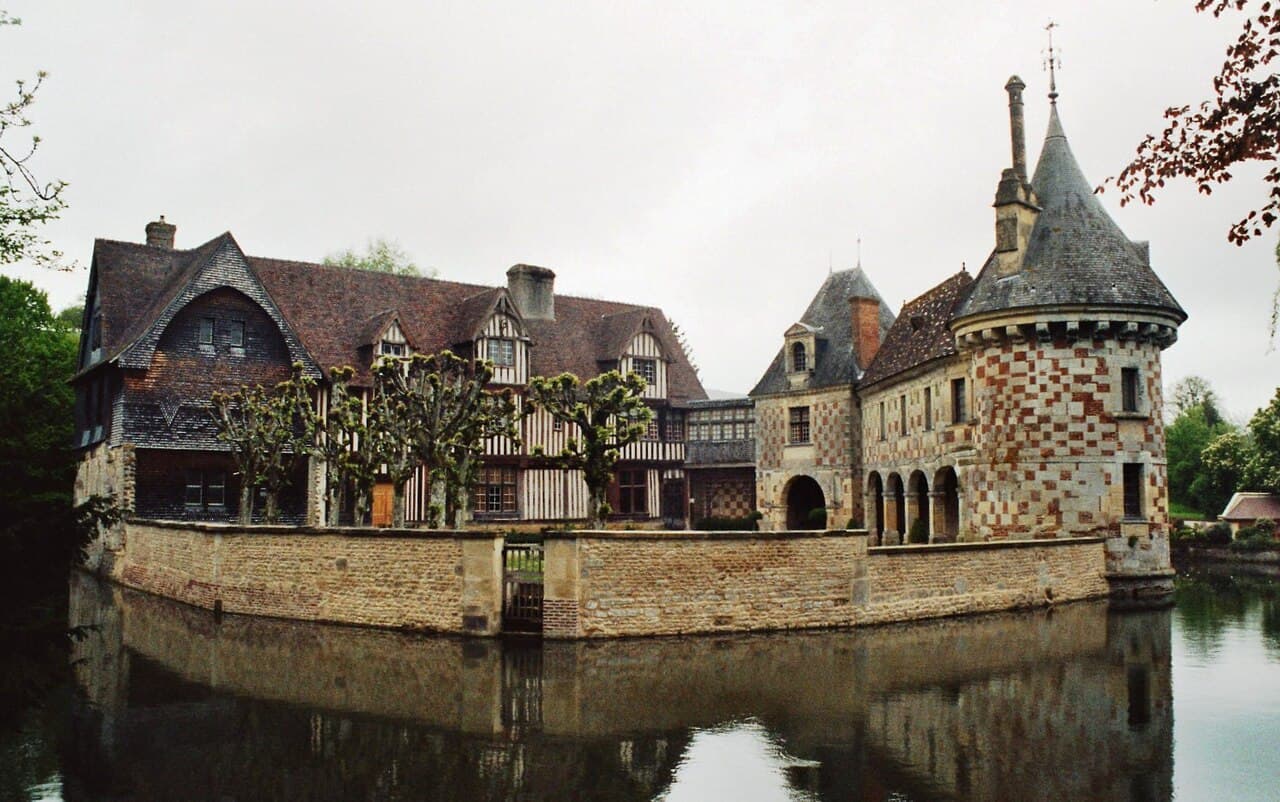
Château de Saint-Germain-de-Livet
Château de Saint-Germain-de-Livet is a notable example of Renaissance architecture located in the Normandy region of France. Built between 1561 and 1578 by the Tournebu family, later known as Tournebu-de-Livet, the château combines a timber-framed manor house dating from the late 15th century with a later 16th-century residence constructed in glazed brick and stone. This architectural ensemble is characteristic of the Pays d'Auge area, reflecting the region's traditional building techniques and stylistic preferences.
Architectural features and layout
The château is classified as a hill castle, situated on slightly elevated terrain which historically provided strategic defensive advantages. One of its defining features is the presence of a corner tower, which enhances both the defensive capability and aesthetic appeal of the complex. Surrounding the buildings is a moat and a lake, elements typical of fortified manors of the period, which served both as protection and as a landscape feature.
The combination of a timber-framed manor and a Renaissance residence constructed from glazed brick and stone is unusual and demonstrates a transitional architectural style. The timber-framed section, dating from the second half of the 15th century, showcases traditional Normandy construction methods, with exposed wooden beams and intricate joinery. The later residence reflects Renaissance influences with its use of brick and stone, glazed surfaces, and more formal, symmetrical design.
Historical context and ownership
The château was commissioned by the Tournebu family, an influential Norman noble lineage. The family's decision to build the Renaissance residence alongside the older manor reflects both their wealth and their desire to embrace contemporary architectural trends while maintaining ties to local traditions.
Today, the château is owned by the municipality of Lisieux, which has opened it to the public. The site hosts seasonal exhibitions, allowing visitors to engage with the cultural and historical heritage of the region. The interiors are fully furnished with period-appropriate pieces, providing insight into the lifestyle of the French nobility during the Renaissance.
Interior and cultural significance
The interior of Château de Saint-Germain-de-Livet is notable for its preservation of original furnishings and decorative elements. Visitors can explore richly appointed rooms that display fine examples of Renaissance craftsmanship, including woodwork, textiles, and period furniture. The château’s layout includes a series of halls, chambers, and service rooms that illustrate the functional organization of a noble residence in the 16th century.
The château not only serves as a historical monument but also as a cultural venue. Its exhibitions often focus on regional art, history, and heritage, making it a significant site for education and tourism in Normandy.
Preservation and visitor information
Château de Saint-Germain-de-Livet is well preserved, with both the timber-framed manor and the Renaissance residence maintained in good condition. The moat and surrounding landscape are also carefully conserved to retain the château’s authentic setting.
Visitors can tour the château during its open season, typically from spring through autumn. The municipality of Lisieux manages the site, ensuring that the château remains accessible and informative for the public. Guided tours and exhibitions enhance the visitor experience, providing detailed historical and architectural context.
Frequently asked questions (FAQ)
- When was Château de Saint-Germain-de-Livet built?
- The château was constructed between 1561 and 1578 by the Tournebu family, combining a late 15th-century timber-framed manor with a Renaissance residence.
- What architectural styles are represented at Château de Saint-Germain-de-Livet?
- The château features a mix of traditional Normandy timber-framed architecture from the 15th century and a 16th-century Renaissance residence built with glazed brick and stone.
- Can I visit the interiors of Château de Saint-Germain-de-Livet?
- Yes, the château is open to the public and its interiors are fully furnished with period pieces, offering a glimpse into Renaissance noble life.
- What are the notable features of Château de Saint-Germain-de-Livet?
- Notable features include the corner tower, moat, lake, timber-framed manor, and the Renaissance residence with glazed brick and stone construction.
- Who owns Château de Saint-Germain-de-Livet today?
- The château is owned and managed by the municipality of Lisieux, which organizes seasonal exhibitions and public visits.
Photo gallery

Information
Current owner
Municipality of Lisieux
Loading map...
Visitor reviews
No reviews yet. Been here? Write the first review and help other travelers!
Write the first reviewVisited this castle? Share your experience
Your review helps other travelers and adds first-hand knowledge to our encyclopedia.



