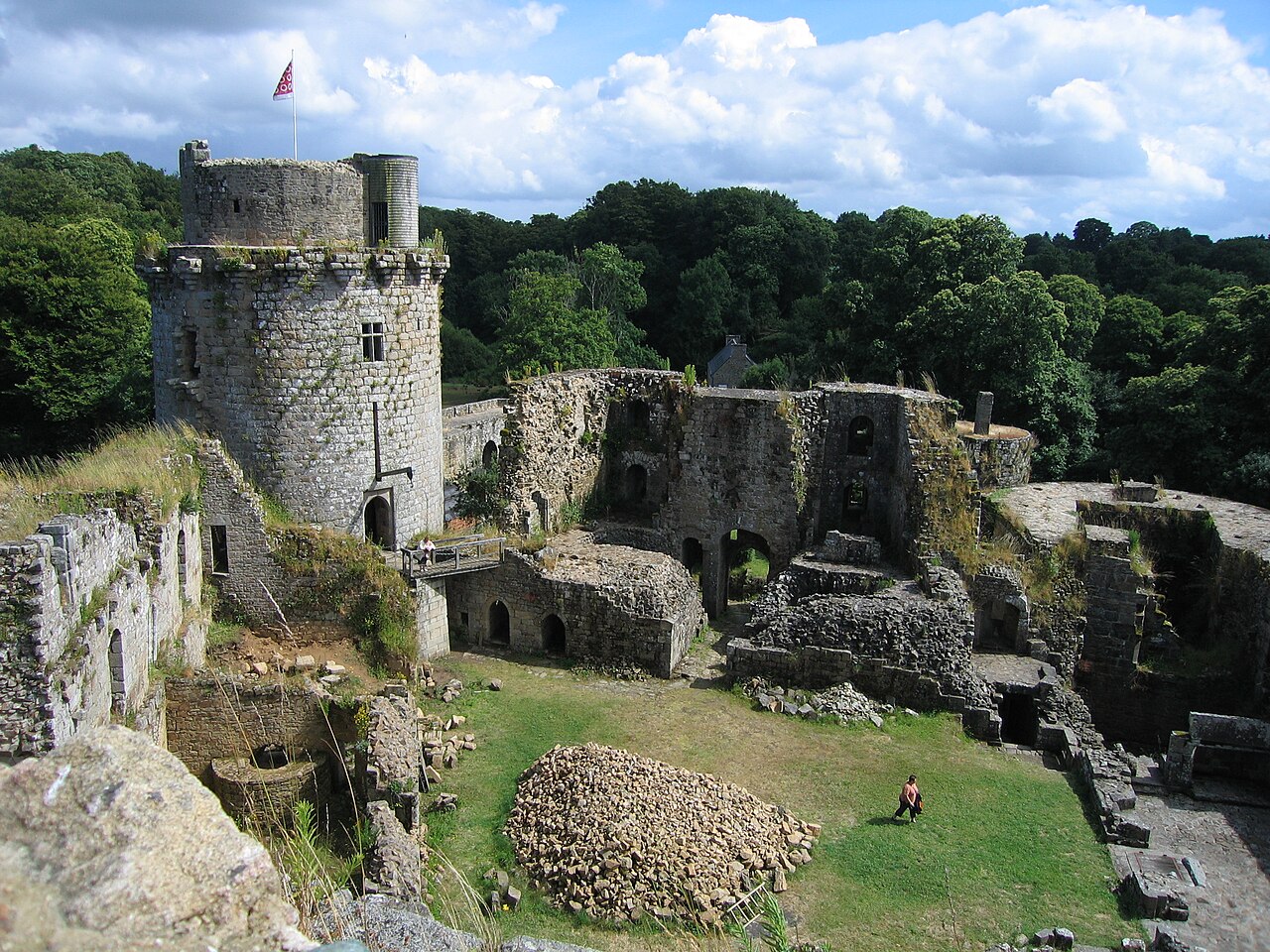
Château de Rosanbo
The Château de Rosanbo stands prominently overlooking the Bô river valley in Lanvellec, France. Its name, derived from the Breton phrase meaning 'rock on the Bô,' reflects the castle's strategic location on a rocky promontory. Originally constructed in the 14th century as a fortified hill castle, it was designed to defend the region against invasions, particularly to prevent Scandinavian forces from ascending the Bô river inland. Over centuries, the château evolved from a purely military fortress into an elegant noble residence, showcasing a rich architectural history that spans the late medieval period through the 18th and 19th centuries.
Medieval origins and strategic importance
The initial construction of Château de Rosanbo in the 14th century established a robust defensive structure on a headland approximately four miles from the bay of Saint-Michel-en-Grève. This positioning was critical for controlling access along the river and protecting the surrounding Breton territory from maritime incursions. The original fortress was built primarily of granite and concrete, materials chosen for their durability and suitability to the rocky terrain.
The castle's design was typical of late medieval fortifications, featuring a square layout that maximized defensive capabilities. Thick walls and battlements provided protection against siege warfare, while its elevated position offered commanding views of the valley below. The château served as the stronghold of the Coskaër de Rosanbo family, a noble Breton lineage who controlled the estate for several centuries.
Architectural evolution through the centuries
Gothic manor addition in the 15th and 16th centuries
During the 15th and 16th centuries, the château underwent significant expansion with the addition of a Gothic manor adjacent to the original fortress. This development marked a shift from purely military functions toward residential comfort and status display. The Gothic manor introduced architectural elements such as pointed arches, large windows, and intricate stonework, blending defensive solidity with aesthetic refinement.
18th-century transformation into a noble residence
The most extensive changes occurred in the 18th century under the direction of Louis Le Peletier de Keranroux, who was the first president of the Paris parliament and husband to Geneviève de Coskaër, the last inheritor of the Coskaër name. This period saw the château's transformation from a fortress into a refined country estate. Architect Joubert was commissioned to add a gallery and a corner room overlooking the valley, enhancing both the château's grandeur and its connection to the landscape.
Interior renovations included the conversion of the old kitchen into a wood-paneled dining room, while the upper floors were expanded to accommodate private bathrooms and boudoirs, reflecting the changing standards of noble living. The addition of Mansard roofs softened the castle's medieval appearance, aligning it with contemporary aristocratic tastes.
19th-century restorations and enhancements
At the end of the 19th century, architect Lafargue, known for his work on the châteaux of Josselin and Chenonceaux, undertook further restorations and designed new suites within the château. These interventions balanced preservation of historical elements with the introduction of modern comforts, ensuring the château remained a functional noble residence.
Historical significance and notable ownership
The château's history is closely tied to prominent Breton and French families. The Coskaër de Rosanbo family originally established the estate, defending the region during turbulent medieval times. Through marriage, the estate passed to the Le Peletier de Rosanbo family, who elevated its status and expanded its architectural footprint.
Notable figures connected to the château include Claude Le Peletier, a successor to Jean-Baptiste Colbert, and associations with military engineer Vauban, statesman Malesherbes, and writer Chateaubriand. The family endured severe trials during the French Revolution, with many members executed in 1794, though the young heir Louis survived to continue the lineage.
In the 20th century, Alain, Marquis de Rosanbo, opened the château to the public in 1958 and later founded the Fondation Alain de Rosanbo in 2007 to ensure its preservation. The château was officially designated a Monument historique on March 22, 1930, recognizing its cultural and historical importance.
Architectural features and interior highlights
The château's layout is a large quadrangular ensemble combining medieval fortress elements with later Gothic and noble residential additions. The central courtyard was gradually defined from the 17th century onward, culminating in a harmonious blend of defensive and residential architecture.
Key architectural features include the robust granite walls, battlements, and the gallery added by Joubert, which offers panoramic views of the valley. The Mansard roofs and large windows introduced in the 18th century contribute to the château's elegant silhouette.
Inside, the château houses an 18th-century salon used for social gatherings, a substantial library containing approximately 8,000 volumes collected by Claude Le Peletier, and a Breton-style room reflecting regional cultural heritage. The former kitchen quarters have been preserved to evoke the atmosphere of historical service areas.
Landscaped grounds and gardens
The château is set within extensive landscaped grounds redesigned in the early 19th century by renowned gardener Achille Duchêne. His design features three large lawns, long avenues lined with approximately 2,500 hornbeam trees trimmed into arcades stretching 2.5 kilometers, and terraces adorned with statuary.
The grounds include distinct garden areas comprising a large and a small park, as well as a traditional dovecote that recalls the estate's historical functions. These gardens, along with the château itself, were recognized as a Monument historique on March 20, 1995, underscoring their heritage value.
Visiting château de rosanbo
Today, Château de Rosanbo is accessible to the public, offering visitors a chance to explore its rich architectural layers and beautifully maintained gardens. The château provides insight into the evolution of Breton noble residences and the region's historical defense strategies. Visitors can appreciate the blend of medieval fortification and refined aristocratic living that defines this remarkable site.
Frequently asked questions (FAQ)
- What is the historical significance of Château de Rosanbo?
- Château de Rosanbo is a remarkable example of 19th-century architecture in Brittany, France. It reflects the region's rich history and the artistic styles of the period, making it a valuable site for visitors interested in French heritage.
- When was Château de Rosanbo built?
- Château de Rosanbo was constructed between 1862 and 1867 by the architect Jean-Baptiste de Rosanbo. It showcases the architectural trends of its time, combining Gothic and Renaissance influences.
- What are the opening hours for Château de Rosanbo?
- Château de Rosanbo is typically open to visitors from April to October, with specific hours varying by month. It is advisable to check the official website or contact the castle for the latest opening hours before planning your visit.
- Can I take guided tours of Château de Rosanbo?
- Yes, guided tours are available at Château de Rosanbo, providing visitors with insights into its history and architecture. These tours are a great way to enhance your experience and learn about the castle's unique features.
- Is it possible to visit Château de Rosanbo year-round?
- Unfortunately, Château de Rosanbo has limited visiting hours and is not open year-round. The best time to visit is during the spring and summer months when the castle is fully accessible and various events may be held.
- What are the ticket prices for visiting Château de Rosanbo?
- Ticket prices for Château de Rosanbo vary based on age and type of tour. Generally, adults can expect to pay a modest fee, while discounts may be available for children and students, so it's best to check the official site for up-to-date pricing.
- How do I get to Château de Rosanbo from nearby towns?
- Château de Rosanbo is accessible by car and is located near several towns in Brittany. Public transport options may be limited, so driving or arranging a taxi is recommended for convenience.
- What nearby attractions can I explore while visiting Château de Rosanbo?
- Visitors to Château de Rosanbo can also explore the beautiful surrounding landscapes, including the remarkable coastline of Brittany. Nearby attractions include local villages, hiking trails, and other historical sites that showcase the region's culture.
- Is Château de Rosanbo accessible for individuals with disabilities?
- Château de Rosanbo strives to accommodate all visitors, but accessibility may vary throughout the site. It's recommended to contact the castle in advance to inquire about specific accommodations for individuals with disabilities.
Information
Website
Visit websiteSources & official resources
Verify the information above using these authoritative references.
Loading map...
Visitor reviews
No reviews yet. Been here? Write the first review and help other travelers!
Write the first reviewVisited this castle? Share your experience
Your review helps other travelers and adds first-hand knowledge to our encyclopedia.