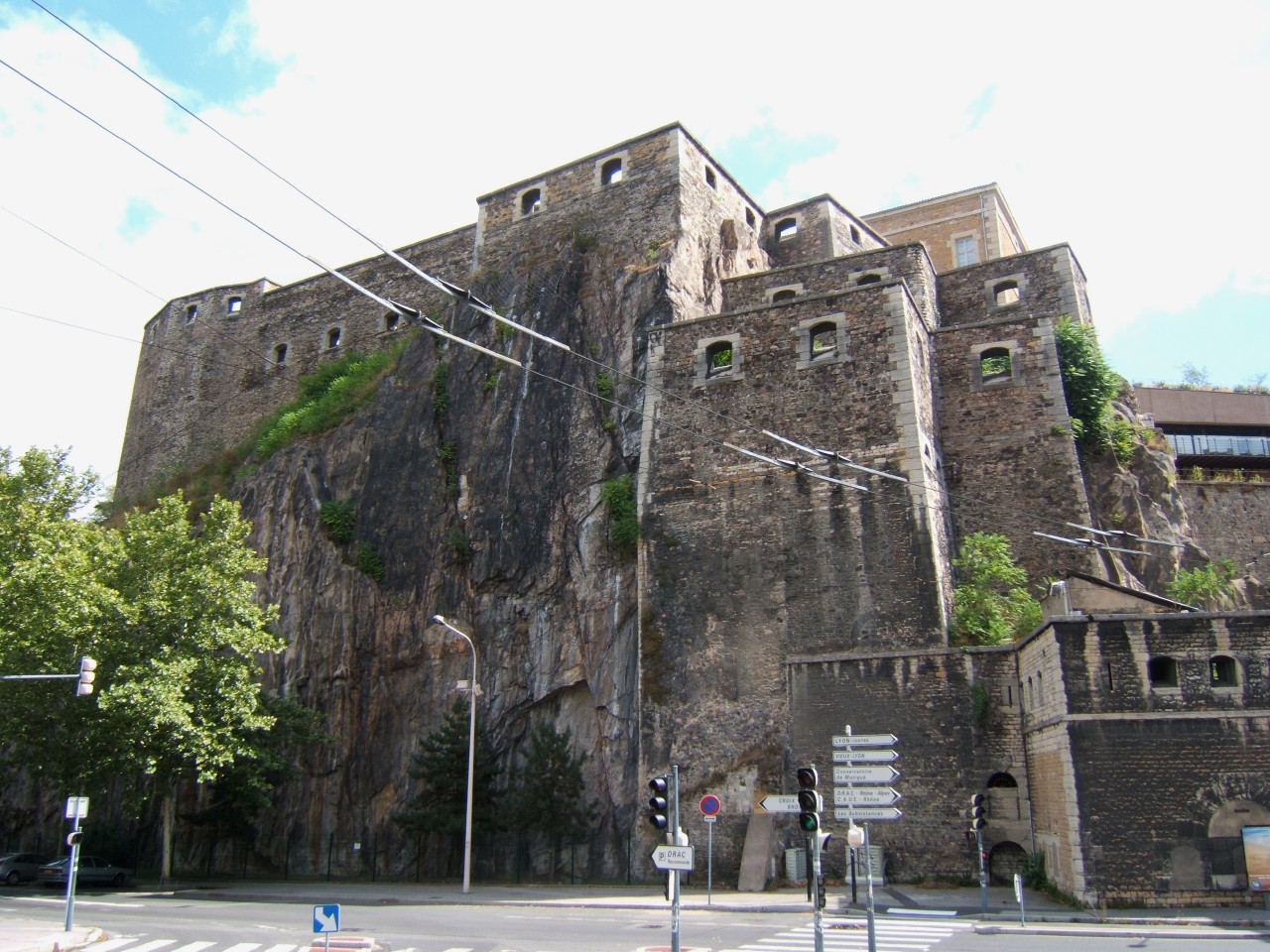
Château de Rochetaillée-sur-Saône
The Château de Rochetaillée-sur-Saône stands as a remarkable example of a medieval hill castle strategically positioned on a spur of the Dombes plateau, overlooking the lush valleys of the Saône and Échets rivers near Lyon, France. This fortress, with origins dating back to the 12th century, embodies the evolution of feudal military architecture and ecclesiastical influence in the region over several centuries.
Early history and ecclesiastical control
Constructed initially by local lords in the high medieval period, the castle's earliest recorded history begins in the mid-12th century. In 1151, the lordship, including the castle and its toll rights, was entrusted by Étienne, lord of Villars, to Girin, abbot of Île Barbe. This transfer effectively brought the fortress under the jurisdiction of the Church of Lyon, marking a significant shift from secular to ecclesiastical control. By the 14th century, the fief had evolved into an obéance, a religious jurisdiction within the franc-Lyonnais territory, granting it exemption from certain taxes and underscoring the castle's important administrative role.
Architectural features and medieval fortifications
The castle's layout is characteristic of a hill castle, designed to maximize defense and surveillance. Its Romanesque gate remains a prominent feature, notable for its rounded arch and robust stone construction, serving as the primary entrance. This gateway leads to a circular defensive tower, typical of early medieval military architecture, providing a commanding vantage point over the surrounding terrain.
Significant enhancements in the 15th century reflect the castle's adaptation to evolving military needs. An octagonal spiral staircase tower was added, combining defensive functionality with architectural elegance. The interior saw the installation of large fireplaces and a French-style ceiling on the ground floor, indicating a blend of comfort and fortification that points to continuous occupation and modification through the late medieval period.
The chapel and religious significance
The castral chapel is a vital component of the château's historical fabric. While its origins date back to the castle's early period, it underwent substantial reconstruction in the early 18th century. The current chapel, completed in 1716 under the patronage of François de Foudras, reflects the religious restoration efforts that followed periods of neglect and damage. This chapel replaced earlier religious structures and remains a significant architectural and spiritual landmark within the castle complex.
Challenges and restoration through centuries
The castle endured numerous trials, including a devastating fire in 1562 during the French Wars of Religion, when Huguenot forces attacked and severely damaged the fortress. The subsequent neglect by the mansionnaires of the church chapter contributed to further deterioration. The plague outbreak of 1628–1629 and floods in 1636 compounded the site's decline.
Restoration efforts were spearheaded by Antoine de Foudras in the 17th century, who repaired both the castle and chapel. The 18th-century reconstruction of the chapel marked a high point in these efforts, preserving the religious and historical essence of the site.
Modern history and preservation
Following the French Revolution, the château was confiscated and sold as national property in 1790, initiating a period of decline and partial ruin. However, the late 19th century saw renewed interest when Pierre Claude Bellingard, a photographer, began restoration work in 1892. Subsequent restorations by Jean Joseph Clerc and later Henri Malartre, who acquired the property in 1959, helped preserve the site. Malartre notably established an Automobile Museum at the château in 1960, integrating cultural heritage with modern use.
Since 1972, the city of Lyon has owned and maintained the château, ensuring its conservation as a historic monument and a testament to the region's rich medieval and religious history.
Strategic location and landscape
The château's commanding position on the Dombes plateau provides extensive views over the Saône valley and the Échets valley, highlighting its strategic military importance. The defensive structures, including the entrance gate, towers, and pavilions, were meticulously arranged to control access and monitor the surrounding landscape, a typical feature of medieval fortifications designed to withstand sieges and attacks.
Architectural legacy and cultural significance
Today, the Château de Rochetaillée-sur-Saône preserves a rich architectural heritage that spans several centuries. Its Romanesque entrance, medieval towers, and early 18th-century chapel collectively narrate the story of feudal power, ecclesiastical authority, and military resilience. The castle remains a vital cultural landmark, reflecting the historical complexities of the franc-Lyonnais region and serving as a tangible connection to France's medieval past.
Frequently asked questions (FAQ)
- How do I get to Château de Rochetaillée-sur-Saône?
- Château de Rochetaillée-sur-Saône is easily accessible by car and public transport. If you're driving, there are parking facilities available nearby. For those using public transport, take the train to the nearest station and then a short bus ride or taxi will get you to the castle.
- What is the historical significance of Château de Rochetaillée-sur-Saône?
- Château de Rochetaillée-sur-Saône has a rich history dating back to the 15th century, serving as a noble residence and a strategic defense point. It reflects the architectural styles and living conditions of the period, making it a significant landmark in French history. The castle also played a role in regional conflicts, adding to its historical importance.
- When was Château de Rochetaillée-sur-Saône built?
- Construction of Château de Rochetaillée-sur-Saône began in the late 15th century and continued into the 16th century. The castle has undergone various renovations over the centuries, preserving its architectural integrity and historical features. Today, it stands as a testament to the evolution of medieval architecture in France.
- Can I take guided tours of the castle?
- Yes, guided tours are available at Château de Rochetaillée-sur-Saône, offering visitors an in-depth look at its history and architecture. Tours are typically conducted in multiple languages and provide fascinating insights into the castle's past. Be sure to check the schedule and book in advance, especially during peak tourist seasons.
- Why is Château de Rochetaillée-sur-Saône a popular tourist attraction?
- Château de Rochetaillée-sur-Saône is popular for its stunning architecture, beautiful gardens, and panoramic views of the Saône River. Visitors are drawn to its historical significance and the opportunity to explore its well-preserved interiors. The castle often hosts cultural events and exhibitions, making it a vibrant part of the local community.
- Is it possible to hold events at Château de Rochetaillée-sur-Saône?
- Yes, Château de Rochetaillée-sur-Saône offers facilities for hosting special events such as weddings, corporate gatherings, and private tours. The picturesque setting and historical ambiance create a unique backdrop for any occasion. For more information on booking and availability, it's best to contact the castle’s administration directly.
- What are the opening hours for Château de Rochetaillée-sur-Saône?
- Château de Rochetaillée-sur-Saône is typically open to visitors from 10 AM to 6 PM, but hours may vary seasonally. It’s advisable to check their official website for the most current opening times before your visit. The castle may also close on certain holidays, so planning ahead is recommended.
- What are the ticket prices for visiting the castle?
- Ticket prices for Château de Rochetaillée-sur-Saône vary based on age and whether you're part of a guided tour. Generally, adult tickets are reasonably priced, with discounts available for students and seniors. Children under a certain age may enter for free, making it a family-friendly destination.
- When is the best time to visit Château de Rochetaillée-sur-Saône?
- The best time to visit Château de Rochetaillée-sur-Saône is during the spring and early fall when the weather is mild and the gardens are in full bloom. Summer months can be busier with tourists, while winter offers a quieter experience. Check for any special events or exhibitions that may enhance your visit during these times.
- Are there nearby attractions to visit along with Château de Rochetaillée-sur-Saône?
- Yes, there are several nearby attractions worth exploring, such as the picturesque villages along the Saône River and other historical sites in the region. The city of Lyon, known for its rich culture and cuisine, is also a short drive away. These options make it easy to plan a full day of sightseeing in the area.
Information
Loading map...
Visitor reviews
No reviews yet. Been here? Write the first review and help other travelers!
Write the first reviewVisited this castle? Share your experience
Your review helps other travelers and adds first-hand knowledge to our encyclopedia.