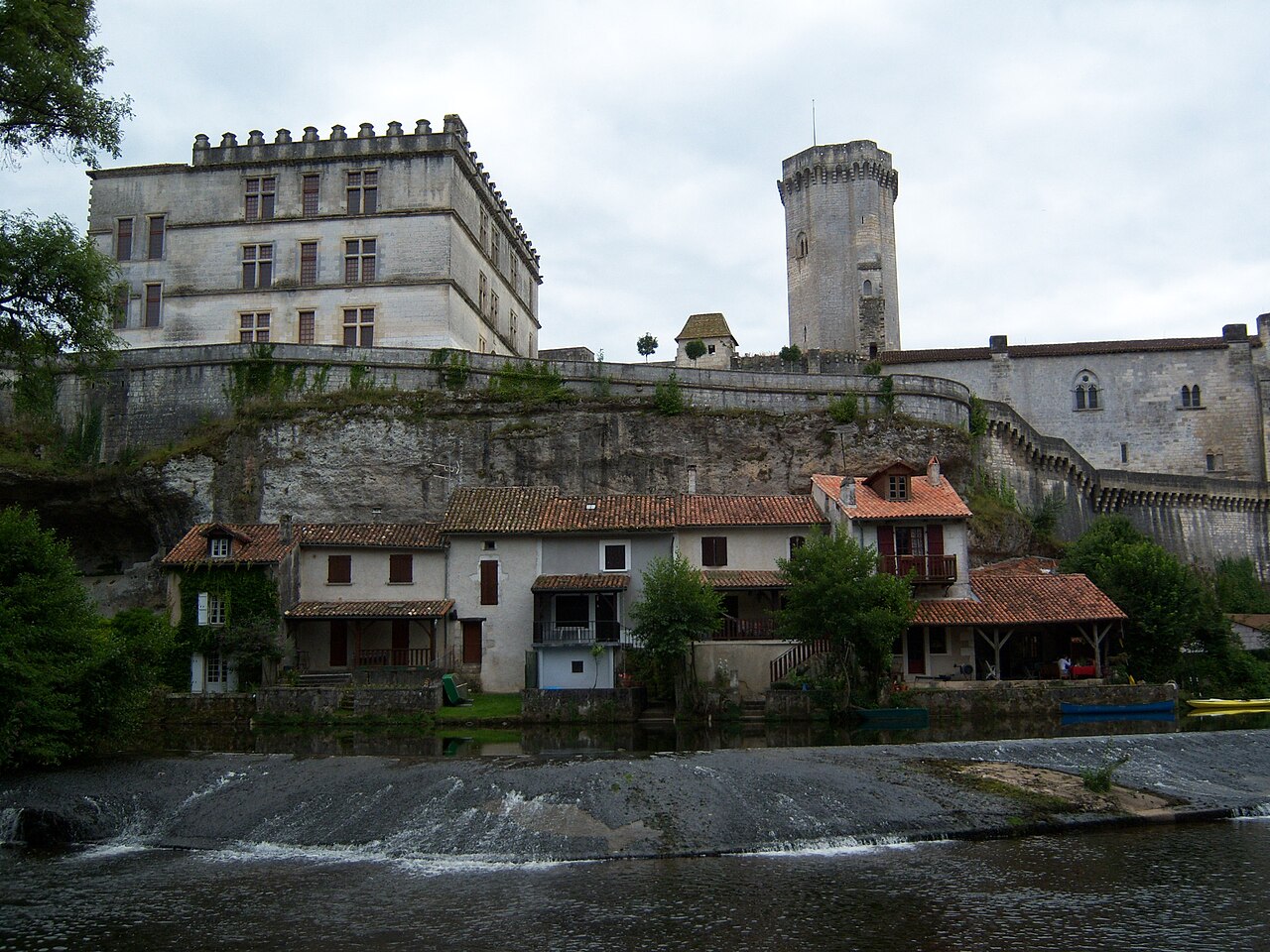
Château de Richemont
The Château de Richemont, located in the municipality of Brantôme en Périgord within the Dordogne region of France, stands as a remarkable example of the architectural transition between the late medieval period and the Renaissance. Constructed primarily in the late 16th century, this hill castle embodies the fusion of defensive medieval features with the emerging elegance and openness of Renaissance design. Its historical and architectural significance is closely tied to its founder, Pierre de Bourdeille, also known as Brantôme, a French nobleman and writer who oversaw its construction and spent his final years within its walls.
Historical context and construction
Construction of the château began in 1564 under the direction of Pierre de Bourdeille, continuing into the early 17th century and reaching completion around 1610. This timeline places the château firmly in the late Renaissance period, during which architectural styles were evolving from fortified medieval forms to more comfortable and representational residences. Brantôme's involvement was not only as a patron but also as a resident; he lived in the château until his death on July 5, 1614, and was buried in the château's chapel, underscoring the personal and historical connection between the site and its founder.
Throughout its history, the château has undergone several modifications reflecting changing tastes and domestic needs. In the 17th century, a terrace was added to enhance the external living spaces, while the 19th century brought interior changes such as the installation of partitions in the residential wing to increase privacy and the inclusion of toilets in individual bedrooms, marking a significant shift in domestic comfort and hygiene. Additionally, the windows of the salon were enlarged during this period, allowing more natural light and aligning with evolving aesthetic preferences.
Since 1927, the château has been officially recognized as a historic monument, which has helped preserve its architectural integrity and cultural heritage. Today, it remains a private property situated on elevated terrain in Saint-Crépin-de-Richemont, within the Dordogne area, further anchoring its identity within the rich historical landscape of Hauts-de-France.
Architectural design and features
Layout and structure
The château's layout consists of two main wings arranged at right angles, connected by a central square tower. This configuration creates a distinctive blend of late medieval defensive architecture and Renaissance elegance. The older wing, completed around 1581, served primarily as the residential area. Its design is characterized by low ceilings and relatively dark rooms, with narrow windows facing outward for security and broader, mullioned windows opening onto the courtyard to admit more light.
In contrast, the newer wing, finished close to 1610, was designed as a reception space. It features higher ceilings and larger rooms with mullioned windows inspired by Italian Renaissance styles. This wing reflects the period's shift towards openness, comfort, and decorative architectural elements.
The central tower
The central square tower is a prominent architectural feature that preserves the appearance of a medieval fortress. Its narrow arrow slits and thickened base walls evoke defensive motifs, though these elements were largely symbolic rather than functional. The chemin de ronde, or wall-walk, is notably narrow, insufficient for two people to pass side by side, further indicating the tower's ornamental rather than military purpose. The tower's robust base was a structural adaptation to compensate for the absence of formal foundations, ensuring stability on the site.
Notable interior features
Among the château's most remarkable interior architectural elements is its double spiral staircase, known as a "perron à double révolution". This staircase, leading to the main hall, exemplifies Renaissance architectural innovation and craftsmanship, combining complexity with elegance. It stands as a testament to the château's unique blend of functional design and artistic expression.
Architectural significance and heritage
The Château de Richemont is an important example of a hill castle that bridges the gap between medieval fortification and Renaissance residential architecture. Its combination of defensive features, such as the central tower's fortress-like appearance, with Renaissance elements like large mullioned windows and refined interior spaces, illustrates the evolving priorities of castle construction in late 16th and early 17th century France.
The château's preservation as a historic monument since 1927 highlights its cultural and architectural value. The careful maintenance of its original features alongside later modifications provides insight into the changing domestic lifestyles and architectural trends over several centuries.
Visiting and cultural context
Although the Château de Richemont is privately owned and not generally open to the public, its historical and architectural importance makes it a significant landmark within the Dordogne region. Its elevated position in Saint-Crépin-de-Richemont offers a glimpse into the landscape and social history of the area during the Renaissance period.
The château's association with Pierre de Bourdeille, a notable figure in French literature and history, adds to its cultural resonance. Visitors interested in Renaissance architecture and French noble heritage often study the château through secondary sources and local heritage initiatives.
Frequently asked questions (FAQ)
- How do I get to Château de Richemont?
- Château de Richemont is located in Brantôme en Périgord, France, easily accessible by car or public transport. The nearest major city is Périgueux, which is about 30 kilometers away. Visitors can also take regional trains or buses that connect to Brantôme.
- What is the historical significance of Château de Richemont?
- Château de Richemont dates back to the 15th century and is known for its Renaissance architecture and rich history. It was originally built as a fortress and has served various roles throughout the centuries, including a noble residence. The castle offers a glimpse into the feudal past of the region.
- When was Château de Richemont built?
- Construction of Château de Richemont began in the late 15th century, around the year 1470. The castle showcases the transition from medieval to Renaissance architecture, reflecting the artistic trends of its time. It has been preserved to maintain its historical integrity.
- Can I take guided tours of Château de Richemont?
- Yes, guided tours are available, providing visitors with in-depth knowledge of the castle's history and architecture. Tours typically run during the peak season, and it is advisable to book in advance for larger groups. Check the official website for the latest information on tour schedules.
- Why is Château de Richemont considered an architectural gem?
- Château de Richemont is considered an architectural gem due to its unique blend of Gothic and Renaissance styles, with intricate stone carvings and beautifully preserved interiors. The castle's design reflects the artistic innovations of the 15th century and showcases the craftsmanship of the period. Its picturesque setting adds to its charm.
- Is it possible to visit Château de Richemont year-round?
- Château de Richemont has specific opening hours that vary by season, typically opening from April to October. During the winter months, the castle may be closed or have limited access. Always check the official website for the most current visiting hours and any seasonal events.
- What are the ticket prices for visiting Château de Richemont?
- Ticket prices for Château de Richemont are generally affordable, with discounts available for students and seniors. Children under a certain age may enter for free. It’s best to check the official website for the most accurate pricing information and any special offers.
- What is the best time to visit Château de Richemont?
- The best time to visit Château de Richemont is during the spring and early autumn months, when the weather is mild and the gardens are in full bloom. These seasons typically see fewer crowds, allowing for a more enjoyable experience. Summer can be busier, but it also offers special events and activities.
- Are there any nearby attractions to Château de Richemont?
- Yes, nearby attractions include the beautiful village of Brantôme, known as the "Venice of Périgord," with its stunning waterways and historic abbey. Additionally, the surrounding Dordogne region offers various outdoor activities, including hiking and canoeing, as well as other historical sites to explore.
Information
Website
Visit websiteSources & official resources
Verify the information above using these authoritative references.
Loading map...
Visitor reviews
No reviews yet. Been here? Write the first review and help other travelers!
Write the first reviewVisited this castle? Share your experience
Your review helps other travelers and adds first-hand knowledge to our encyclopedia.