Château de Reichenstein — France castle

Château de Reichenstein

Château de Reichenstein: medieval castle ruins in Alsace, France
High Medieval (11th–13th c.)
Ruins

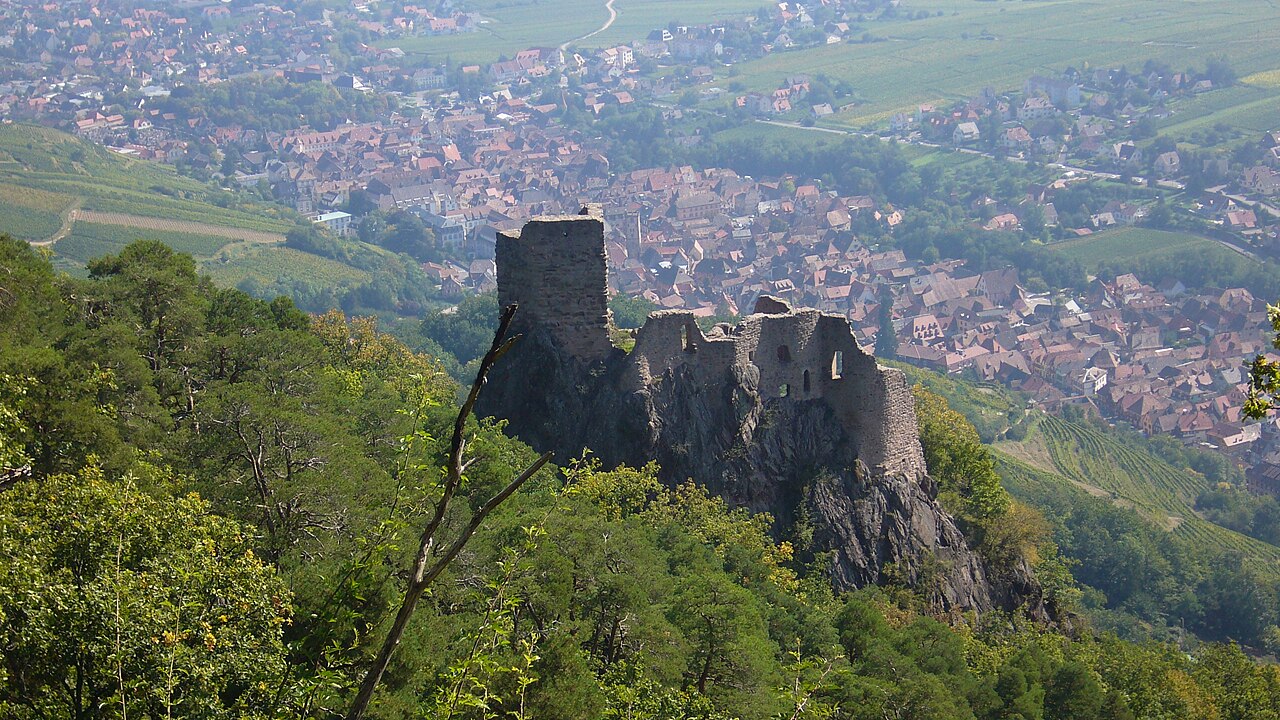
Château de Reichenstein, located in the commune of Riquewihr in the Haut-Rhin department of Alsace, France, is a notable example of a 13th-century medieval castle now preserved as ruins. This castle is part of the rich historical fabric of the region, which is known for its numerous medieval fortifications. The castle has been officially recognized as a listed historical monument since 1990, highlighting its cultural and architectural significance.

The ruins of Château de Reichenstein are situated in the valley of the Sambach brook, a small watercourse that adds to the strategic natural defenses that were typical for castles of this period. The location in a valley provided both natural protection and control over the surrounding landscape, a common feature in High Medieval castle construction.

Historical context and significance

Constructed in the 13th century, Château de Reichenstein was part of the network of fortifications that dotted the Alsace region during the High Medieval period. This era was marked by frequent territorial conflicts and the need for defensive structures to protect local lords and their domains. The castle likely served both as a military stronghold and a residence for nobility or local rulers.

Its proximity to the Château de Bilstein, another castle ruin nearby, suggests that this area was of strategic importance, possibly controlling trade routes or acting as a defensive line within the region. The two castles would have contributed to the security and administration of the territory.

Architectural features and layout

Although now in ruins, the remains of Château de Reichenstein provide insight into medieval castle architecture. The castle was likely constructed using local stone materials, typical of the period and region. Its design would have included defensive walls, towers, and possibly a keep or donjon, which was common in High Medieval castles.

The castle's position in the valley of the Sambach brook would have allowed for a natural moat or water defenses, enhancing its protection against attackers. The layout probably included a courtyard surrounded by fortified walls and living quarters for the lord and his retinue.

Defensive structures

The castle ruins suggest the presence of fortified walls and possibly battlements or parapets that would have allowed defenders to repel assaults. Towers, if present, would have served as lookout points and strongholds within the castle complex.

Current condition and preservation efforts

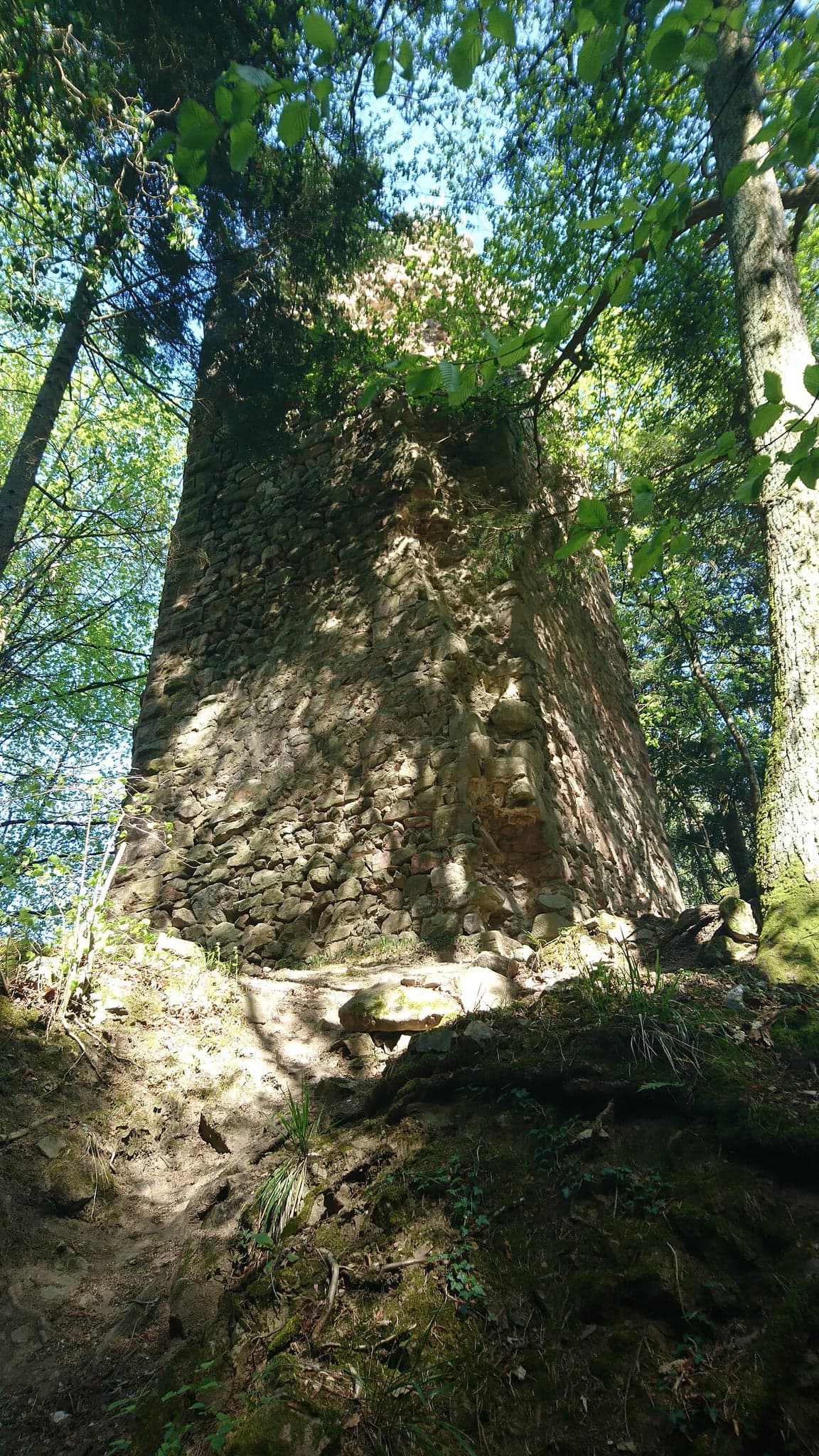
Today, Château de Reichenstein stands as archaeological ruins, with remnants of its walls and foundations visible to visitors. The site has undergone some preservation to prevent further deterioration, but much of the original structure has been lost to time.

Its status as a listed historical monument since 1990 ensures that it is protected under French heritage laws, allowing for archaeological study and conservation. The castle is accessible to visitors interested in medieval history and architecture, although facilities may be limited due to its ruinous state.

Visiting Château de Reichenstein

The castle is located near the town of Riquewihr, a popular tourist destination known for its well-preserved medieval architecture and vineyards. Visitors to the region often explore multiple castle ruins, including Château de Bilstein, which lies nearby.

Access to the ruins involves walking through natural terrain in the valley of the Sambach, offering scenic views and a glimpse into the medieval past of Alsace. The site is ideal for those interested in medieval fortifications, archaeology, and the history of Alsace.

Frequently asked questions (FAQ)

What is the historical significance of Château de Reichenstein?
Château de Reichenstein, located in France, dates back to the 12th century and played a crucial role in the region's defense during various conflicts. Its rich history is intertwined with the noble families of the area, showcasing medieval architecture and the evolution of fortifications over the centuries.
When was Château de Reichenstein built?
Construction of Château de Reichenstein began in the early 12th century, around 1130, and it has undergone several renovations and expansions throughout its history. The castle's architecture reflects the changing styles and needs of its inhabitants over the years.
Can I visit Château de Reichenstein year-round?
Yes, Château de Reichenstein is open to visitors throughout the year, but it is advisable to check the specific opening hours as they can vary with the seasons. Guided tours are available to enhance your experience and provide deeper insights into the castle's history.
What are the opening hours for Château de Reichenstein?
The opening hours for Château de Reichenstein typically range from 10 AM to 6 PM, with extended hours during the summer months. It’s best to consult the official website for the most current information regarding holiday schedules and any seasonal changes.
Is it possible to access Château de Reichenstein with a disability?
Château de Reichenstein aims to be accessible to all visitors, but due to its historic nature, some areas may present challenges for those with mobility issues. It is recommended to contact the castle’s administration in advance to inquire about specific accessibility options available during your visit.
What is the best time to visit Château de Reichenstein?
The best time to visit Château de Reichenstein is during the spring and early fall when the weather is mild and the surrounding landscapes are particularly beautiful. Additionally, visiting during the off-peak months can help you avoid large crowds and enjoy a more intimate experience.
Are there any nearby attractions to visit while at Château de Reichenstein?
Yes, there are several attractions nearby, including picturesque towns, hiking trails, and other historical sites that complement your visit to Château de Reichenstein. Exploring the surrounding area can provide a broader context to the castle’s significance and its role in the region's history.
What are the ticket prices for Château de Reichenstein?
Ticket prices for Château de Reichenstein vary depending on age and the type of tour chosen, with discounts typically available for children and seniors. It is advisable to check the official website for current pricing and any special offers that may be available during your visit.

Photo gallery

Château de Reichenstein
Click to view

Photo by Kroogy68•CC BY-SA 4.0

1 photo • Click any image to view in full screen

Information

Archaeological Site / Ruins

Loading map...

Visitor reviews

No reviews yet. Been here? Write the first review and help other travelers!

Write the first review

Visited this castle? Share your experience

Your review helps other travelers and adds first-hand knowledge to our encyclopedia.

Write a review

(5/5)

0/2000 characters

Your review will be visible after admin approval

Nearby castles

2.2 km

Château de Bilstein

Riquewihr, France

The Château de Bilstein is a high medieval castle ruin located near the town of Riquewihr in the Alsace region of France. This fortress dates back to the 12th century, representing the architectural and feudal developments of the period. The castle was strategically positioned to oversee the surrounding valley and trade routes, serving as a defensive outpost and symbol of feudal authority. Historical background and construction phases The initial construction of Château de Bilstein began in the 12th century, during the high medieval period, a time marked by the proliferation of stone castles across Europe. This era saw the transition from wooden fortifications to more durable stone structures, reflecting advancements in military architecture and the growing importance of territorial control. In the 14th century, the castle underwent significant modifications and expansions. These additions likely included strengthening of the defensive walls, enlargement of the living quarters, and the possible construction of towers or gatehouses to improve the castle's fortifications. The architectural style during this phase would have incorporated elements typical of medieval military design, such as thick curtain walls, narrow arrow slits, and battlements. Destruction and current state of the ruins Château de Bilstein faced destruction in 1636, during the turbulent period of the Thirty Years' War, which ravaged much of central Europe. The castle was likely besieged and deliberately destroyed to prevent its use by opposing forces. Today, it remains a ruin, with remnants of its walls and foundations visible to visitors. The ruins offer a tangible connection to the medieval past and provide insight into the castle's original layout and defensive features. Despite its ruined condition, the site retains enough structural elements to convey its historical significance and architectural character. Location and hiking significance The castle ruins of Bilstein are situated near another notable ruin, the Château de Reichenstein. Both sites are popular destinations for hikers and history enthusiasts exploring the scenic trails of the region. The ruins lie just off the well-known GR 5 hiking route, which traverses the Vosges Mountains and offers panoramic views of the Alsace countryside. Visitors to the site can enjoy a blend of natural beauty and historical exploration, making the area a favored spot for outdoor activities and cultural tourism. The proximity of the two castle ruins allows for combined visits, enriching the experience with varied insights into medieval fortifications. Architectural features and medieval defensive design While much of the Château de Bilstein is in ruins, surviving structures indicate a typical medieval castle layout. The castle likely featured a keep or donjon as the central stronghold, surrounded by curtain walls with defensive towers at key points. The walls would have been constructed from local stone, providing both strength and camouflage within the natural landscape. Defensive elements such as battlements and arrow slits would have been integral to the castle's design, allowing defenders to repel attackers while remaining protected. The castle's elevated position on a hill or rocky outcrop enhanced its defensive capabilities, offering wide visibility and control over the surrounding area. Cultural and heritage importance Today, the Château de Bilstein stands as a testament to the region's medieval heritage and feudal history. It attracts visitors interested in the architectural evolution of castles and the historical conflicts that shaped the Alsace region. The ruins contribute to the cultural landscape, offering educational opportunities and promoting preservation awareness. Efforts to maintain the site focus on stabilizing the remaining structures and providing safe access for tourists. Interpretive signage and guided tours may be available to enhance visitor understanding of the castle's historical context and architectural features.

High Medieval (11th–13th c.)
Details
2.2 km

Hunawihr Fortified Church

Hunawihr, France

The fortified church of Hunawihr in the Alsace region of France is a remarkable example of a medieval ecclesiastical fortress. Situated on a hillside at the edge of the village, this church complex served both religious and defensive purposes, reflecting the turbulent history of the region during the High Medieval period. The church is dedicated to St. James the Greater, and its fortifications illustrate the strategic importance of protecting the local community and its resources. Historical background and construction The origins of the site date back to a primitive church established in the 10th century. The current fortified structure, however, was primarily constructed in the 13th century, a time when many villages in Alsace fortified their churches to defend against raids and conflicts. The church and its surrounding cemetery are enclosed by a robust 13th-century defensive wall, which features a single controlled entrance, enhancing security for villagers during times of attack. The defensive wall is distinguished by its six semicircular bastions, which originally had ports designed for firing guns and crossbows. These bastions are a significant feature of the fortification, providing overlapping fields of fire to cover the walls and approaches. The preservation of these bastions offers valuable insight into medieval military architecture adapted for communal defense rather than a purely military fortress. Architectural features of the church The church itself is a blend of architectural elements spanning several centuries. Its square bell tower, dating to the 15th century, is built with the solidity and defensive qualities of a keep or donjon. This tower not only housed bells but also served as a refuge and lookout point during attacks. The tower’s thick walls and narrow openings emphasize its dual role as a religious and military structure. Decorative details on the church reflect the local culture and economy. Notably, the hands of the church clock are adorned with vine leaves, symbolizing the importance of viticulture to the village of Hunawihr, which remains a prominent wine-producing area in Alsace. Interior decorations and furnishings Inside the church, visitors can find the famous Saint-Nicolas frescoes, which were rediscovered in 1878 after being hidden for centuries. These frescoes are significant examples of medieval religious art and contribute to the church’s cultural heritage. The choir gallery, transept, and nave mostly date from the 16th century, reflecting Renaissance influences in ecclesiastical architecture. The organ case is a later addition from the 18th century, showcasing Baroque stylistic elements and the continued use and adaptation of the church through the centuries. A particularly notable feature is the 16th-century pink sandstone pulpit located in the nave. This pulpit is integrated into a pillar with a small staircase that spirals within it, a rare architectural element in France and unique to the Alsace region. This design highlights the craftsmanship and regional variations in church furnishings during the Renaissance. Fortification and community defense The fortified church of Hunawihr exemplifies the dual function of many medieval churches in border regions or areas prone to conflict. The defensive walls and bastions were vital for protecting villagers, their livestock, and harvests during periods of instability. The single entrance to the enclosure allowed for controlled access, making it easier to defend against attackers. Unlike large castles or military fortresses, the Hunawihr fortified church was a communal refuge, blending sacred space with practical military architecture. This combination reflects the social and political realities of Alsace during the Middle Ages, where local populations often had to rely on their own resources for protection. Preservation and cultural significance The fortified church was officially listed as a historic monument in 1929, recognizing its architectural and historical importance. Today, it remains one of the best-preserved examples of a fortified ecclesiastical complex in the Alsace region. The church and its fortifications attract visitors interested in medieval architecture, religious history, and the unique cultural heritage of Alsace. Its preservation allows for ongoing study of medieval defensive architecture adapted to non-military buildings, as well as the evolution of church art and furnishings over several centuries. The combination of medieval fortifications, Renaissance interior elements, and Baroque additions make the Hunawihr fortified church a valuable site for understanding the architectural and social history of the region. Visiting the fortified church Visitors to Hunawihr can explore the church and its surrounding walls, gaining insight into the medieval defensive strategies and religious practices of the village. The site offers a unique glimpse into the way communities balanced faith and security in a historically contested area.

High Medieval (11th–13th c.)
Details
3.4 km
St. Ulrich Castle — France castle

St. Ulrich Castle

Near Rue du Château, France

St. Ulrich Castle, also known as Château de Saint-Ulrich, Ulrichsburg, or Château de Grand-Ribeaupierre, is a prominent medieval fortress ruin located north of the village of Ribeauvillé in the Haut-Rhin department of France. Nestled in the picturesque region of Southern Alsace within the Vosges mountains, the castle occupies a strategic position on a mountainside peak at an altitude of approximately 520 meters. This site has a rich history, with evidence of prehistoric occupation predating the castle's construction. St. Ulrich Castle is one of the trio known as the Ribeauvillé Castles, alongside Girsberg Castle and Haut-Ribeaupierre Castle, both visible from St. Ulrich. These castles collectively dominate the landscape around Ribeauvillé and serve as a testament to the region's medieval feudal history. The castle's origins and historical development The earliest known remains of St. Ulrich Castle date back to the 12th century, although the site itself was likely referenced as Castrum Rapoldstein in medieval documents. The castle was originally constructed as a residential fortress for the local nobility, with significant expansions and fortifications added over subsequent centuries. Before the year 1200, a keep was added to the northwest corner of the castle, enhancing its defensive capabilities. Around the same period, a rectangular hall—now referred to as the Knight's Hall—was built, serving as a central space for gatherings and administration. Adjacent to this hall are the remains of the St. Ulrich chapel, which was named in the 15th century and played a religious role within the castle complex. A second keep was constructed around 1200 in the western corner, later modified in the 14th century to adapt to evolving military needs. Throughout the 15th and 17th centuries, the castle underwent further enhancements, including the addition of a barbican, a drawbridge, and a southern bailey. These features reflect the castle's adaptation to changing defensive technologies and the increasing importance of controlling access points. Despite a gradual abandonment beginning in the late medieval period, the castle chapel remained active until 1573, indicating the site's continued religious significance even as its military role diminished. Architectural features and layout Defensive structures St. Ulrich Castle exemplifies the characteristics of a hill castle with its elevated position and natural defensive advantages. The castle's fortifications include multiple keeps, curtain walls, and a barbican that protected the main entrance. The drawbridge was a critical feature for controlling access across the castle's moat or ditch, enhancing security against attackers. Residential and ceremonial spaces The Knight's Hall served as the castle's primary residential and ceremonial space, characterized by its rectangular plan and substantial size. The adjacent chapel dedicated to St. Ulrich provided a spiritual center for the castle's inhabitants and visitors. The presence of two keeps indicates the castle's dual role as both a military stronghold and noble residence. Access and surroundings The castle is accessible only by foot via steep and strenuous paths, reflecting its defensive purpose and mountainous location. Visitors can climb the surviving keep to enjoy panoramic views of the surrounding Alsace countryside and the village of Ribeauvillé below, offering a tangible connection to the medieval landscape. Historical context and significance St. Ulrich Castle was built and controlled by the Lords of Ribeaupierre, a noble family that played a significant role in the region's medieval history. The castle's strategic location allowed the lords to oversee and protect their territories while asserting their power over trade routes and local settlements. The castle's gradual decline began in the late 16th century as political and military circumstances changed, leading to its abandonment as a primary residence. However, its ruins remain a powerful symbol of the medieval heritage of Alsace and continue to attract historians, architects, and tourists interested in feudal fortifications and castle architecture. Visiting St. Ulrich Castle today Today, St. Ulrich Castle stands as a well-preserved ruin open to the public. Visitors can explore the extensive remains, including the keeps, Knight's Hall, and chapel ruins. The site offers a unique opportunity to experience the atmosphere of a medieval fortress set amidst the dramatic landscape of the Vosges mountains. Due to its location on a steep mountainside, reaching the castle requires a moderate to strenuous hike, and visitors should be prepared for rugged terrain. The castle is freely accessible, and climbing the keep rewards visitors with spectacular views of the Ribeauvillé valley and surrounding vineyards. For those interested in exploring the full historical context, the other two Ribeauvillé Castles—Girsberg Castle and Haut-Ribeaupierre Castle—are within walking distance, though the paths connecting them are challenging and require adequate preparation and time. Nearby castles: Girsberg and Haut-Ribeaupierre Girsberg Castle, also known as Château du Girsberg, lies opposite St. Ulrich Castle and shares a similar historical background. Built in the early 13th century by the Lords of Ribeaupierre, it was later owned by the knights of Girsberg. The castle features a distinctive pentagonal keep and a late Gothic gate, illustrating adaptations to firearm warfare. Though smaller than St. Ulrich, it offers commanding views and a fascinating example of medieval military architecture. Haut-Ribeaupierre Castle is situated further up the mountain and completes the trio of Ribeauvillé Castles. Each castle played a role in the defense and administration of the region during the High and Late Middle Ages. Exploring these castles provides insight into the feudal system, defensive strategies, and architectural evolution across centuries in the Alsace region.

High Medieval (11th–13th c.)
Details