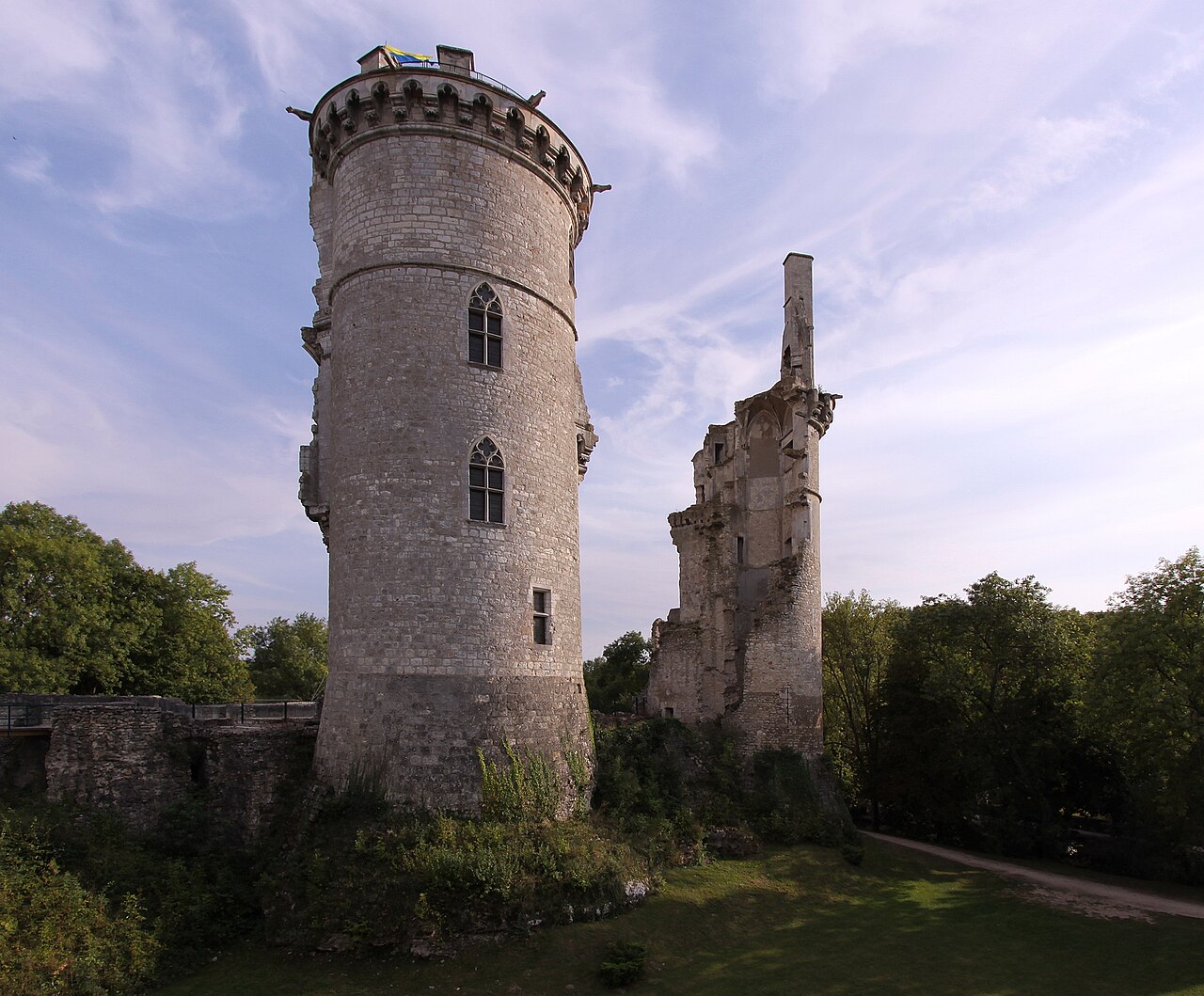
Château de Quincy
The Château de Quincy stands as a remarkable example of a 17th-century French hill castle located in the commune of Quincy in the Hauts-de-France region. Perched atop a hill on the left bank of the Cher River, the château commands expansive views over the surrounding valley, integrating both noble residence and productive agricultural landscape. Its history is deeply intertwined with French nobility, regional administration, and legendary figures, making it a site of considerable cultural and architectural significance.
The early history and noble ownership
The origins of the estate trace back to a significant property in the Cher region, reflecting its longstanding role in French aristocratic and administrative history. In the late 14th century, the estate was under the ownership of the Trousseau brothers, Jacquelin and Johannet, who were notable patrons of religious architecture, having contributed to the construction of a chapel within the Bourges Cathedral. This connection highlights the estate’s early prominence within ecclesiastical and noble circles.
Subsequently, the estate passed to Regnault Thierry de Mehun, a surgeon to King Charles VII. During this period, local tradition holds that the celebrated French heroine Joan of Arc stayed at the château, adding a layer of legendary significance to its history. This association with Joan of Arc enhances the château’s historical allure and connects it to pivotal moments in French medieval history.
By 1490, Louis Dupont, lord of Meart and Quincy, secured royal permission from King Charles VIII to fortify the castle. This authorization underscores the estate’s strategic importance during the late medieval period. However, despite this official sanction, the planned fortifications were never realized, leaving the château without the defensive structures that might have transformed its silhouette.
17th-century transformation and architectural style
The château underwent significant transformation in the 17th century under the reign of King Louis XIV. In 1648, the seigneurie was elevated to a viscounty, granted to Charles Pinon de Quincy, a prominent official who served as master of requests and intendant for the Berry region. This elevation marked a formal recognition of the estate’s importance within the royal administrative hierarchy.
The current château, constructed in the Louis XIII architectural style, replaced an earlier fortress that may have dated back to or even preceded 1490. Its design drew inspiration from notable regional residences such as Bois-Bouzon and Jussy, embodying the architectural tastes and social aspirations of French nobility in the early modern period. The château’s layout features a rectangular main residence flanked by two wings extending north and south at right angles, creating a balanced and formal composition.
Encircling the eastern side of the central courtyard, known as the courtyard of honor, are four pavilions. Two are positioned at the entrance, and two angular pavilions stand before the lateral wings, enhancing the château’s symmetrical and imposing façade. This arrangement reflects the period’s emphasis on harmony, proportion, and the display of noble status through architecture.
Estate grounds and agricultural heritage
The château’s grounds extend beyond the residence to include a complex of farm buildings to the north, illustrating the estate’s integrated agricultural function. These buildings include an infirmary, a bakery, enclosures for cattle and sheep, and a dovecote located at the heart of the enclosed courtyard. The presence of a cellar emphasizes the estate’s ongoing tradition of viticulture, with a large wine press historically housed beneath a barn in this courtyard, underscoring the importance of wine production on the estate.
The southern section of the estate was historically dedicated to service areas, including kitchens and stables. However, half of this area was dismantled in the 19th century to accommodate the construction of the local town hall. The former courtyard in this section now serves as a school playground, demonstrating adaptive reuse of the château’s ancillary spaces over time.
Gardens and landscaped park
The château’s gardens descend the hillside in three terraced levels, connected by stone staircases and supported by retaining walls. This arrangement forms a broad, amphitheater-like platform that visually anchors the château within its natural setting. The terraced gardens include a kitchen garden, a fruit orchard, and vineyards, highlighting the estate’s blend of ornamental and productive landscaping.
A distinctive feature is the so-called “green room,” a shaded avenue composed of linden trees that links the château to a walled wooded park covering approximately 17 hectares to the south. This wooded park provides a natural extension of the formal gardens and serves as a landscaped transition from the cultivated grounds to the surrounding countryside.
Preservation and heritage significance
The Château de Quincy is protected as a historic monument, with preservation extending beyond the main building to include its interior decorations, entrance pavilions, façades, and roofs. The protection also covers the farm buildings, various courtyard spaces, the gardens with their stone stairs, retaining walls, and balustrades, as well as two pools located on the lower terraces.
The wooded park, furnished with benches, and the boundary walls are included in the site’s heritage designation, emphasizing the ensemble’s architectural coherence and historical integrity. This comprehensive protection reflects the château’s significance as a well-preserved example of 17th-century French aristocratic architecture and its role in the cultural landscape of the region.
Architectural details and stylistic features
The Château de Quincy exemplifies the Louis XIII style, characterized by its balanced proportions, use of brick and stone, and classical elements such as pilasters and cornices. The rectangular main building and its flanking wings create a harmonious composition, while the four pavilions add vertical emphasis and rhythm to the façade.
The terraced gardens and the “green room” reflect the period’s interest in integrating architecture with the natural landscape, creating a seamless transition from formal spaces to the surrounding environment. The estate’s agricultural buildings demonstrate the multifunctional nature of noble estates, combining residential grandeur with productive land use.
Legacy and current status
Owned by the Pelletier-Ponroy family for over eight generations, the château remains a private estate that preserves its historical character and architectural integrity. Its status as a protected historic monument ensures ongoing conservation efforts and highlights its importance within the heritage of the Hauts-de-France region.
Visitors and scholars alike value the Château de Quincy for its rich history, architectural elegance, and the evocative landscape that surrounds it. The château stands as a testament to the evolution of French noble residences from medieval estates to refined aristocratic homes of the early modern era.
Frequently asked questions (FAQ)
- How do I get to Château de Quincy?
- Château de Quincy is located in the beautiful region of France, easily accessible by car or public transport. If you are driving, the castle is just a short distance from the nearest major highway, and parking is available on-site. For public transport, you can take a train to the nearest town and then a local bus or taxi to reach the castle.
- What is the historical significance of Château de Quincy?
- Château de Quincy dates back to the 13th century and has played a vital role in the history of the region. It served as a stronghold during various conflicts and has been home to several noble families. Today, it stands as a testament to medieval architecture and history, attracting visitors interested in France's rich heritage.
- When was Château de Quincy built?
- Château de Quincy was originally constructed in the 13th century, with several renovations and expansions occurring over the following centuries. The architectural style reflects the transition from medieval fortifications to more elaborate Renaissance designs. Its storied past is evident in the structure and features that have been preserved over time.
- Can I take guided tours of Château de Quincy?
- Yes, guided tours of Château de Quincy are available and highly recommended for a deeper understanding of its history and architecture. These tours are usually conducted by knowledgeable guides who share fascinating stories and insights about the castle. Be sure to check the schedule and book in advance, especially during peak tourist seasons.
- Why is Château de Quincy a popular destination for visitors?
- Château de Quincy is popular due to its stunning architecture, rich history, and picturesque surroundings. Visitors are drawn to its well-preserved structures and beautiful gardens, making it an ideal spot for photography and leisurely strolls. Additionally, the castle often hosts cultural events and exhibitions, enhancing its appeal to tourists.
- Is it possible to host events at Château de Quincy?
- Yes, Château de Quincy offers facilities for hosting various events, including weddings, corporate gatherings, and private celebrations. The stunning backdrop of the castle, along with its historical ambiance, makes it a unique venue. Interested parties should contact the castle's administration for more details on availability and arrangements.
- What are the opening hours for Château de Quincy?
- Château de Quincy typically opens to visitors from 9 AM to 6 PM, but hours may vary depending on the season. It is advisable to check the official website or contact the castle directly for the most current information and any scheduled closures for maintenance or special events. Planning your visit accordingly can enhance your experience.
- What are the ticket prices for visiting Château de Quincy?
- Ticket prices for Château de Quincy vary based on age and whether you opt for a guided tour. Generally, adult tickets are reasonably priced, with discounts available for students and seniors. Family packages may also be offered, making it an affordable outing for groups.
- When is the best time to visit Château de Quincy?
- The best time to visit Château de Quincy is during the spring and early autumn when the weather is mild, and the gardens are in full bloom. These seasons also see fewer crowds compared to the summer months, allowing for a more enjoyable experience. Additionally, special events often take place during these times, adding to the castle's allure.
- Are there any nearby attractions to visit after Château de Quincy?
- Yes, there are several nearby attractions worth exploring after your visit to Château de Quincy. You can check out charming local villages, vineyards, and other historic sites in the region. The area offers a rich cultural experience, making it easy to fill your day with beautiful scenery and fascinating history.
Information
Website
Visit websiteSources & official resources
Verify the information above using these authoritative references.
Loading map...
Visitor reviews
No reviews yet. Been here? Write the first review and help other travelers!
Write the first reviewVisited this castle? Share your experience
Your review helps other travelers and adds first-hand knowledge to our encyclopedia.