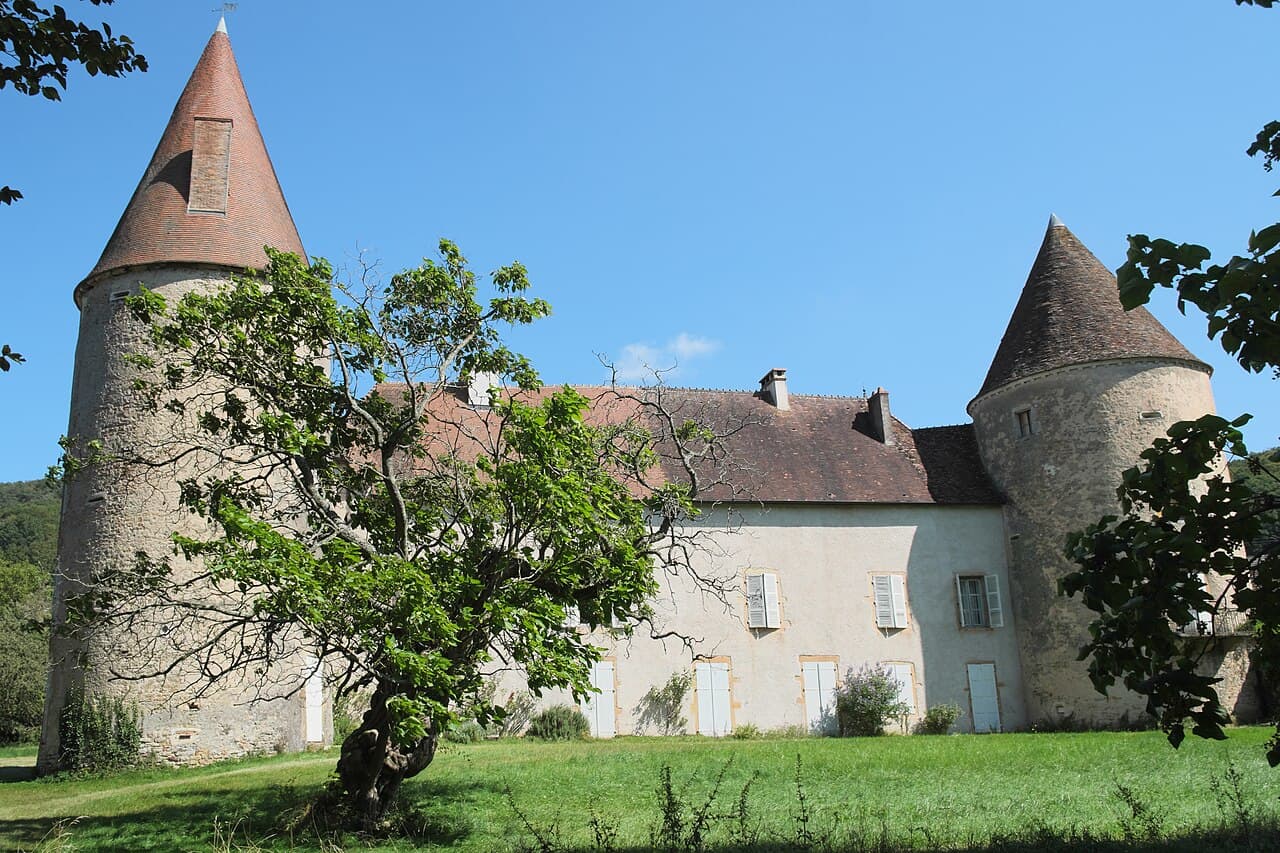
Château de Nobles
The Château de Nobles stands as a remarkable example of a medieval hill castle nestled in the region of Hauts-de-France, France. Its origins date back to the 14th century, with documented lordship beginning in 1370. The castle's history intertwines with noble families such as the Nanton and La Baume, reflecting the shifting tides of French aristocratic power through the centuries.
Medieval origins and noble lineage
The castle's earliest known lord was Antoine de Nanton, a nobleman from the Mâcon region, who inherited the estate through his maternal line in the late 14th century. The Nanton family held the lordship for several generations, with records from the early 16th century indicating Louis de Nanton as lord in 1503. His marriage to Françoise de Bellecombe likely influenced the castle’s development during the Renaissance, a period marked by architectural transformation and embellishment.
Renaissance modifications and architectural features
Significant 16th-century renovations introduced Renaissance stylistic elements to the castle. Notably, the ground floor features two distinct doors: one a fully arched Renaissance-style door set within a Tuscan bay framed by fluted pilasters, and the other a rectangular door with composite capitals combining Ionic and Corinthian orders. The shafts of these pilasters are adorned with scale-like motifs, supporting an entablature with recessed coffers.
A wide spiral staircase accessed through the Renaissance arched door provides vertical circulation, demonstrating the blend of defensive and residential functions. On the first floor, a richly decorated room boasts a large fireplace with a lintel featuring an oval medallion surrounded by leather-like motifs and rose window designs. This lintel rests on four fluted columns with Ionic capitals, underscoring the castle’s artistic refinement during this era.
Castle layout and defensive structures
Perched on a hillside, the castle’s main structure is a long rectangular corps de logis topped with a hipped roof. At each end stand round towers with conical roofs, featuring cannon openings near their upper sections, indicative of the castle’s original defensive purpose. A projecting square tower on the east side adjoins a lean-to structure, opening onto a courtyard surrounded by agricultural outbuildings.
The fortified entrance to this courtyard is located on the south side, suggesting controlled access to the estate’s working areas. Although the castle’s original fortifications were removed during 19th-century restoration efforts, the surviving towers and main building retain significant medieval and Renaissance architectural characteristics.
Historical transitions and the impact of revolution
At the end of the 16th century, ownership passed to the La Baume family through marriage, maintaining control until the fall of the Ancien Régime. During the French Revolution, the castle was owned by Florent-Alexandre-Melchior de La Baume, Count of Montrevel and Baron of Lugny. The revolution brought turmoil, resulting in looting and partial destruction of the castle, reflecting widespread anti-aristocratic sentiment and violence.
19th and 20th century changes
In 1856, significant restoration led to the removal of the castle’s remaining defensive elements, marking a transformation from fortress to more residential or agricultural use. The castle’s role evolved further during World War II, when it served as the headquarters of a compagnie hors rang (CHR), affiliated with the Échelette maquis, a French Resistance group active in the region.
Current status and architectural legacy
Today, the Château de Nobles remains privately owned and is not open to the public. Despite the loss of its original fortifications, the castle’s corps de logis, towers, and Renaissance details survive as a testament to its layered history. Its hillside location and architectural features offer valuable insight into the evolution of French noble residences from the medieval through the Renaissance periods.
Architectural significance
The castle exemplifies the transition from fortified medieval stronghold to Renaissance manor, blending defensive features like cannon openings with elegant decorative elements such as fluted pilasters and composite capitals. The presence of a spiral staircase and richly adorned fireplaces highlight the increasing importance of comfort and status in castle design during the 16th century.
Historical importance in regional context
Situated in the historic region of Hauts-de-France, the castle’s history reflects broader social and political changes in France, from feudal lordship through revolutionary upheaval to modern times. Its use during World War II as a Resistance headquarters connects it to significant 20th-century events, adding layers to its historical narrative.
Frequently asked questions (FAQ)
- What is the historical significance of Château de Nobles?
- Château de Nobles is significant for its medieval origins, Renaissance architectural features, and its role during the French Revolution and World War II. It reflects the evolution of French noble residences and regional history.
- Can I visit Château de Nobles?
- Château de Nobles is privately owned and not open to the public, so visits are not possible. Its preservation is maintained by the private owner.
- When was Château de Nobles built?
- The castle dates back to the 14th century, with the earliest recorded lordship in 1370. It underwent Renaissance modifications in the 16th century.
- What architectural styles are present in Château de Nobles?
- The castle features a mix of medieval defensive architecture and Renaissance decorative elements, including Tuscan bays, fluted pilasters, and composite capitals.
- What happened to Château de Nobles during the French Revolution?
- During the French Revolution, the castle was looted and partially destroyed, reflecting the widespread anti-aristocratic violence of the period.
Photo gallery

Information
Sources & official resources
Verify the information above using these authoritative references.
Loading map...
Visitor reviews
No reviews yet. Been here? Write the first review and help other travelers!
Write the first reviewVisited this castle? Share your experience
Your review helps other travelers and adds first-hand knowledge to our encyclopedia.



