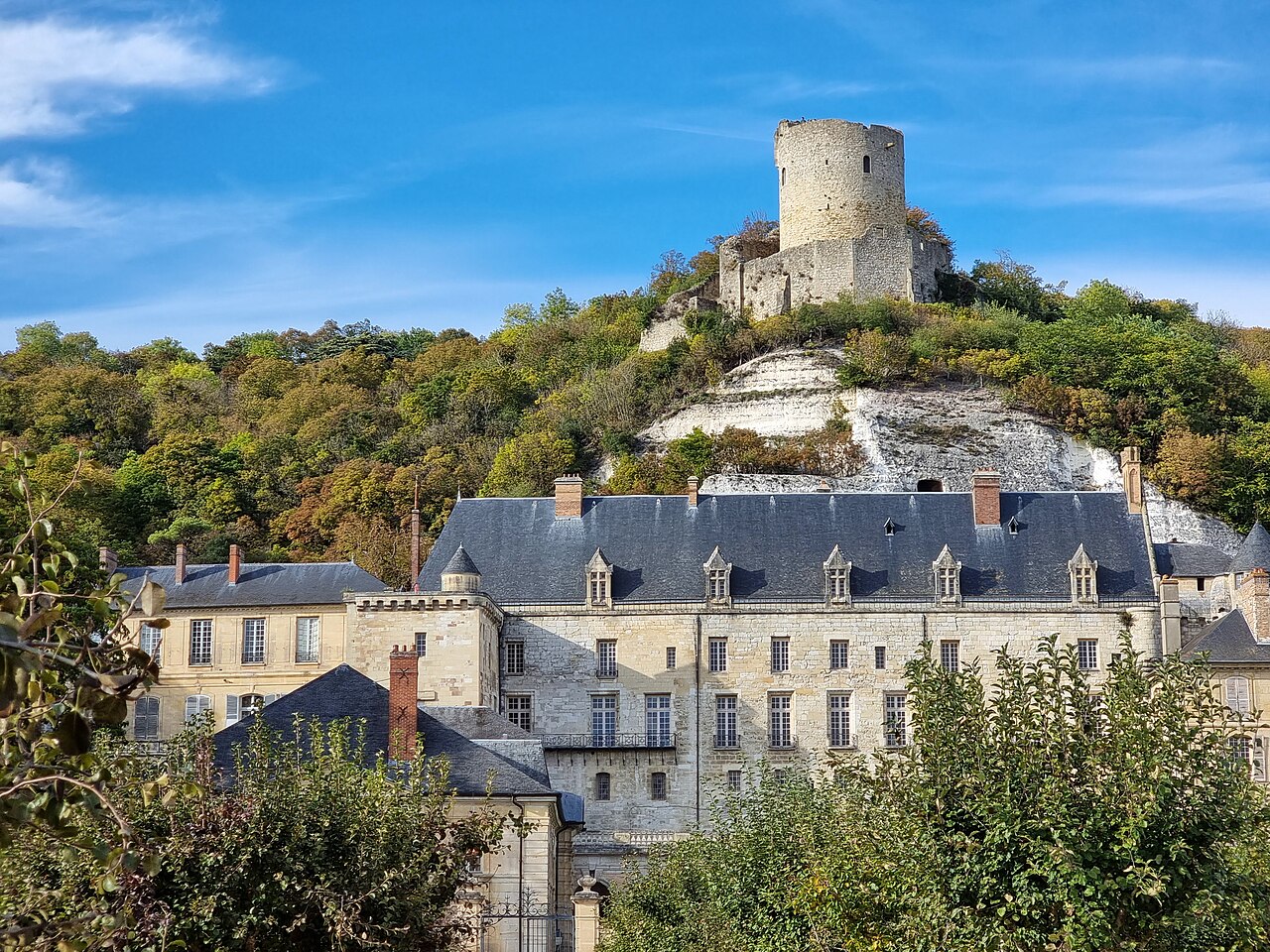
Château de Maudétour
The Château de Maudétour stands as a remarkable testament to the architectural and cultural heritage of 17th and 18th-century France. Located in the village of Maudétour-en-Vexin within the Hauts-de-France region, this château exemplifies the evolution of French noble residences, blending historical significance with architectural refinement. Its origins trace back to a vanished manor, the Manoir des Rubentel, marking the site as a long-standing seat of local aristocracy.
In the early 1600s, Charles de Rancher and his wife Élisabeth de Blagny embarked on an ambitious project to establish a grand residence. Their vision was a symmetrical three-wing complex, a common design for noble estates intending to convey balance and grandeur. However, only the southwest wing was completed during this initial phase, setting the foundation for the estate's future development under the de Rancher family's stewardship.
Architectural development and design features
The château's architectural identity is deeply rooted in the early modern period, reflecting the tastes and social aspirations of the French nobility during the 17th and 18th centuries. The main building is a two-story structure distinguished by a central projecting risalit, a feature that adds depth and prominence to the façade. This risalit is surmounted by a triangular pediment bearing two coats of arms beneath a marquis's crown, symbolizing the union of the de Rancher and de Blagny families. These heraldic sculptures, crafted in 1818 by the artisan Zéphir from Magny-en-Vexin, are also replicated on the rear façade, reinforcing the estate's noble lineage.
The château's layout remains asymmetrical due to the uncompleted left wing, which was originally intended to mirror the right wing. This incomplete plan lends a unique character to the estate, distinguishing it from other symmetrical French noble residences. The buildings extend from the central structure toward the right, with a gradual decrease in height, creating a dynamic architectural composition.
Ancillary structures and estate features
Beyond the main residence, the estate includes several noteworthy ancillary buildings. Among these are the stables and the "Audience," a justice pavilion that housed a basement prison, highlighting the château's administrative and judicial functions. The presence of such a pavilion indicates the estate's role in local governance and law enforcement during its peak.
A striking 19th-century dovecote constructed from finely cut stone stands on the grounds, alongside an 18th-century timber-framed stable that remarkably retains its original roofing framework. These structures underscore the estate's self-sufficiency and the importance of agricultural and domestic operations in sustaining noble households.
Landscape and park design
The château is set within a park spanning approximately 12 to 13 hectares, designed in the formal style associated with André Le Nôtre, the famed 17th-century landscape architect responsible for the gardens of Versailles. Although much of the original French formal garden has been lost, surviving elements include parts of a kitchen garden, a lime tree-lined avenue bordered by retaining walls overlooking the Vexin plain, and a still-operational fountain. These features reflect the historical integration of architecture and landscape, emphasizing harmony and controlled nature.
Within the park lies an early 18th-century icehouse, a vaulted structure capable of storing nearly 100 cubic meters of ice. This facility was essential for preserving food before modern refrigeration, enabling ice to last through the warmer months until June or July. The presence of such an icehouse illustrates the advanced domestic technologies employed at the château.
Historical evolution and cultural significance
Following its initial construction phase, the château saw renewed building activity in the 18th century under Antoine de Rancher, a royal advisor and lieutenant of Berry. He added a southeast wing intended as the château's central feature and commissioned the construction of a chapel consecrated in 1738. This chapel served both the château's inhabitants and the local parish community for many years until its demolition in 1933 due to structural deterioration.
Throughout the 20th century, the château underwent several changes in ownership, reflecting broader trends in the fate of French historic properties. Its cultural and architectural value was formally recognized in 1947 when both the château and its park were designated as listed French historical monuments. This status has helped preserve the estate's legacy and guided restoration efforts.
Between 2006 and 2009, significant restoration transformed the main building to accommodate guest lodgings and converted former service buildings into reception venues. As of 2017, the château could host events for up to 250 people, blending historical ambiance with modern functionality.
Courtyard and spatial organization
The château is arranged around a paved courtyard bordered by two perpendicular alleys, each terminating in wrought-iron gates opening into the park. The northern entrance is marked by a finely crafted wrought-iron gate bearing the initials "CR" for Charles de Rancher, symbolizing the estate's founding lord. This gate serves as a prominent threshold connecting the château to its surrounding landscape.
The courtyard is bordered by the former chapel site and the justice pavilion, framing the central space of the estate. Additional park structures include a vaulted fruit storage building and the large stone dovecote, underscoring the estate's agricultural heritage and self-sustaining operations.
Architectural legacy and preservation
Today, the Château de Maudétour stands as a partially preserved example of French noble architecture from the early modern era. Its incomplete wings and surviving ancillary buildings provide valuable insight into the lifestyle, social structure, and architectural trends of the 17th and 18th centuries. The estate's integration of residential, administrative, and agricultural functions illustrates the multifaceted role of noble residences in rural France.
The château's designation as a historical monument and the careful restoration work undertaken in the 21st century have ensured its continued relevance as a cultural landmark. Visitors can appreciate not only its architectural details and heraldic symbols but also the landscaped park and surviving estate features that collectively narrate centuries of French aristocratic life.
Frequently asked questions (FAQ)
- How do I get to Château de Maudétour?
- Château de Maudétour is located in Maudétour-en-Vexin, France, easily accessible by car and public transport. If you’re traveling by train, the nearest station is in nearby Gisors, from where you can take a local bus or taxi to the castle.
- What are the opening hours of Château de Maudétour?
- The castle is open to visitors from Wednesday to Sunday, from 10 AM to 5 PM. It is closed on Mondays and Tuesdays, as well as on certain holidays, so it's advisable to check the official website for any updates.
- Is there an entrance fee to visit Château de Maudétour?
- Yes, there is an entrance fee to explore the Château de Maudétour. Ticket prices are approximately €10 for adults, with discounts available for children, students, and seniors. Guided tours may have separate fees.
- When was Château de Maudétour built?
- Château de Maudétour dates back to the 12th century, showcasing a rich history that reflects the architectural styles of the various periods it has undergone. The castle has undergone numerous renovations, preserving its historical significance and charm.
- Can I take photographs inside Château de Maudétour?
- Photographs are allowed in many areas of Château de Maudétour, but some restrictions may apply in specific rooms or during guided tours. Be sure to check the signage and respect the rules to ensure a pleasant visit.
- What is the historical significance of Château de Maudétour?
- Château de Maudétour is significant for its role in French history, serving as a strategic fortress during various conflicts. It has been home to noble families and has witnessed many historical events, making it an important site for understanding regional history.
- Is the castle accessible for visitors with disabilities?
- Château de Maudétour strives to be accessible to all visitors. However, due to its historical architecture, some areas may present challenges. It’s recommended to contact the castle ahead of your visit to inquire about specific accessibility options.
- What is the best time to visit Château de Maudétour?
- The best time to visit Château de Maudétour is during the spring and early autumn months when the weather is pleasant and the gardens are in bloom. These seasons also tend to see fewer crowds, allowing for a more enjoyable experience.
- Are there any nearby attractions to visit after Château de Maudétour?
- Yes, there are several attractions near Château de Maudétour, including the picturesque town of Gisors and the stunning Vexin French Regional Natural Park. Visitors can enjoy local dining options and explore the beautiful countryside for a full day of activities.
Information
Website
Visit websiteSources & official resources
Verify the information above using these authoritative references.
Loading map...
Visitor reviews
No reviews yet. Been here? Write the first review and help other travelers!
Write the first reviewVisited this castle? Share your experience
Your review helps other travelers and adds first-hand knowledge to our encyclopedia.