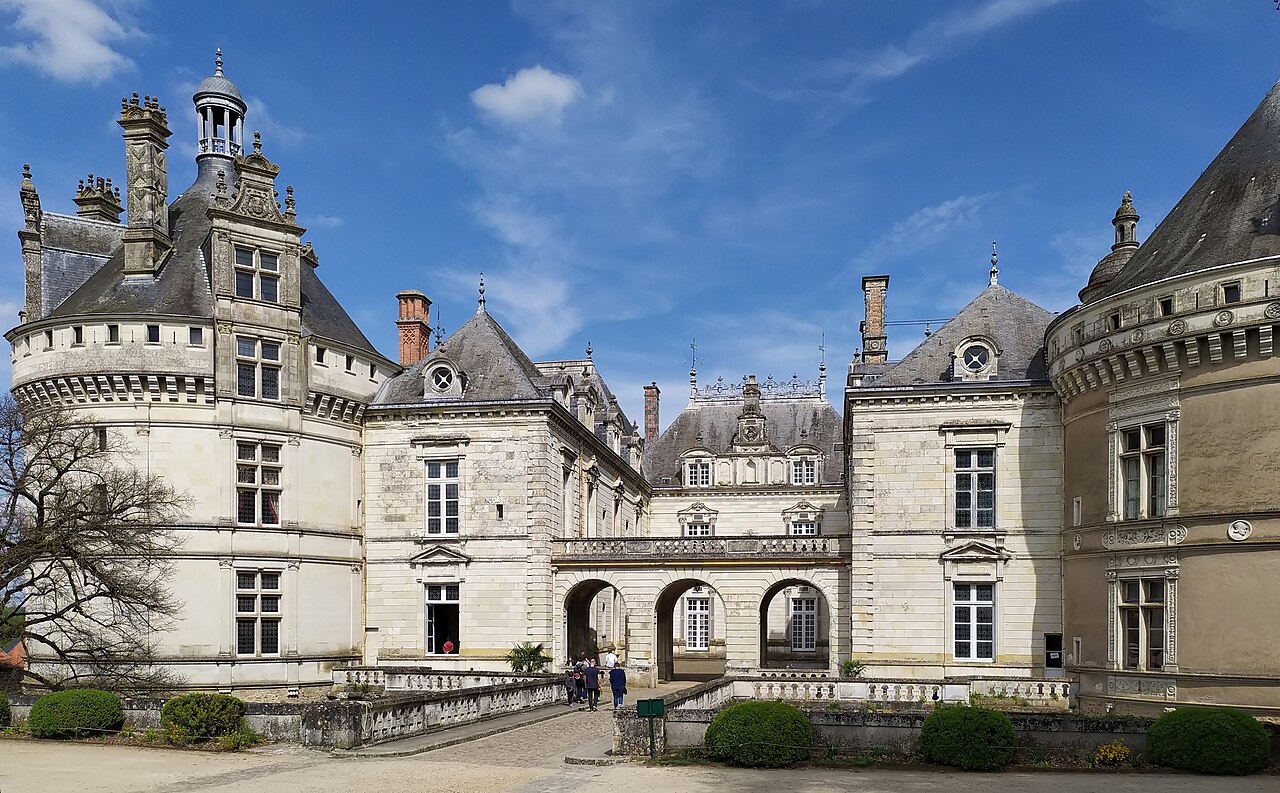
Château de Marcilly-sur-Maulne
The Château de Marcilly-sur-Maulne stands as a remarkable example of early 17th-century French castle architecture, nestled near the village of Marcilly-sur-Maulne in the Hauts-de-France region. This historic estate, first documented in 1467, embodies centuries of noble lineage and architectural evolution, reflecting the cultural and political shifts of France from the late medieval period through the post-Renaissance era.
Historical background and noble ownership
The castle's origins trace back to the lordship of Guy II de Laval-Loué, an influential figure who initially controlled the estate. Over time, ownership passed to his descendants, the Sennetère family, who maintained the property within their noble lineage. A significant transition occurred in 1608 when Charles Fouquet, a prominent treasurer of France from Tours in the Touraine region, acquired the château. Fouquet's acquisition marked a new chapter, as he undertook substantial developments that aligned the estate with the architectural and cultural trends of the early 17th century.
The château remained within the extended family through the marriage of Fouquet's daughter, Françoise, to Gilles II de Lusignan de Saint Gelais, lord of Azay-le-Rideau. This union ensured the estate's continuity within the family until the late 20th century, specifically until 1970. Among the notable family members was Marie Madeleine de Vassé, the marquise de La Rochebousseau, famously nicknamed “la Diablesse” for her turbulent presence during the reign of King Louis XV. Her legacy adds a layer of intrigue and historical richness to the château's story.
Recognition of the château's cultural and architectural significance came on August 3, 1944, when it was officially designated as a protected historical monument. This status underscores the château's importance as a heritage site and ensures its preservation for future generations.
Architectural features and design influences
The château exemplifies the transition from late Renaissance to early Baroque architectural styles prevalent during the reigns of Henri IV and Louis XIII. Its design draws inspiration from the works of Jacques Androuet du Cerceau, a renowned architect known for his geometric precision and harmonious proportions.
The estate's layout is characterized by a grand pavilion that uniquely combines a chapel and a staircase, serving as the focal point of the complex. This central structure is flanked symmetrically by detached pavilions, creating a strong visual depth and theatrical effect through the use of perspective. The precise geometric arrangement reflects the era's emphasis on balance and order in architectural composition.
Inside the main residence, visitors can admire surviving mural paintings that depict intricate baskets filled with flowers, fruits, and cornucopias—symbols of abundance and prosperity. These decorations contrast with the more restrained timber-framed outbuildings, which retain their original construction style, showcasing traditional building techniques of the period.
Later additions and 19th-century enhancements
The château's stables, constructed in the 19th century during the time of Napoleon III, highlight the estate's continued prosperity. Notably, the feeding troughs made of pink marble exemplify the wealth and refinement associated with the property during this era. These stables represent an important phase in the château's architectural evolution, blending functionality with luxurious materials.
Landscape and surrounding parkland
The château is set within a sloping park that offers commanding views over the village of Marcilly-sur-Maulne and the Maulne valley. This elevated position not only enhances the castle's defensive advantage but also provides a scenic backdrop that complements its architectural grandeur.
While some garden structures have not survived, the remaining traces reveal the original layout and design, reflecting the formal garden styles of the period. A notable feature of the park is a stream that originates within its grounds, historically marked by ancient dolmens. These prehistoric stone monuments indicate the site's long-standing human occupation and add a layer of archaeological significance to the estate.
Cultural and heritage significance
The Château de Marcilly-sur-Maulne is more than an architectural landmark; it is a repository of French noble history and cultural heritage. Its continuous occupation by prominent families, architectural innovations, and preserved artworks provide valuable insights into the social and artistic developments from the late medieval period through the 19th century.
As a protected historical monument, the château attracts scholars, historians, and visitors interested in exploring France's rich past. Its combination of architectural elegance, historical depth, and picturesque setting makes it a significant site for cultural tourism and heritage conservation.
Visiting information and accessibility
While specific visiting hours and ticket prices are not widely published, the château's status as a historical monument suggests that it may be accessible to the public for tours or special events. Visitors interested in exploring the château and its grounds should seek local tourist information for the most current access details.
Frequently asked questions (FAQ)
- What is the historical significance of Château de Marcilly-sur-Maulne?
- Château de Marcilly-sur-Maulne is a notable example of 16th-century French architecture, reflecting the Renaissance style. It has served various purposes throughout its history, including as a noble residence and a strategic fortification during local conflicts.
- When was Château de Marcilly-sur-Maulne built?
- The construction of Château de Marcilly-sur-Maulne began in the early 16th century, with significant modifications made over the years. Its architectural elements showcase the evolution of design and function through the Renaissance period.
- Can I visit Château de Marcilly-sur-Maulne?
- Yes, visitors are welcome to explore Château de Marcilly-sur-Maulne. Guided tours are available, allowing guests to learn about the castle's history and architecture in depth.
- What are the opening hours for Château de Marcilly-sur-Maulne?
- Château de Marcilly-sur-Maulne is typically open to visitors from April to October, with specific hours varying by season. It is recommended to check the official website for the most current hours before planning your visit.
- Is it possible to access Château de Marcilly-sur-Maulne for individuals with mobility issues?
- The château strives to be accessible for all visitors, with some areas equipped for individuals with mobility challenges. However, given its historic nature, certain parts may still pose difficulties; it is advisable to contact the site in advance for specific accessibility inquiries.
- What are the ticket prices for visiting Château de Marcilly-sur-Maulne?
- Ticket prices for Château de Marcilly-sur-Maulne vary depending on age and group size, with discounts available for children and seniors. Check the official website for the latest pricing and any special offers for groups or families.
- When is the best time to visit Château de Marcilly-sur-Maulne?
- The best time to visit Château de Marcilly-sur-Maulne is during the spring and early autumn when the weather is mild and pleasant for exploring the grounds. Additionally, visiting during these seasons often means fewer crowds, allowing for a more enjoyable experience.
- What nearby attractions can I visit after Château de Marcilly-sur-Maulne?
- After visiting Château de Marcilly-sur-Maulne, you can explore nearby historical sites such as the Abbey of Saint-Pierre de Bourgueil and the charming town of Saumur, known for its beautiful landscapes and wine production. These attractions provide a rich cultural experience in the Loire Valley region.
Information
Website
Visit websiteSources & official resources
Verify the information above using these authoritative references.
Loading map...
Visitor reviews
No reviews yet. Been here? Write the first review and help other travelers!
Write the first reviewVisited this castle? Share your experience
Your review helps other travelers and adds first-hand knowledge to our encyclopedia.