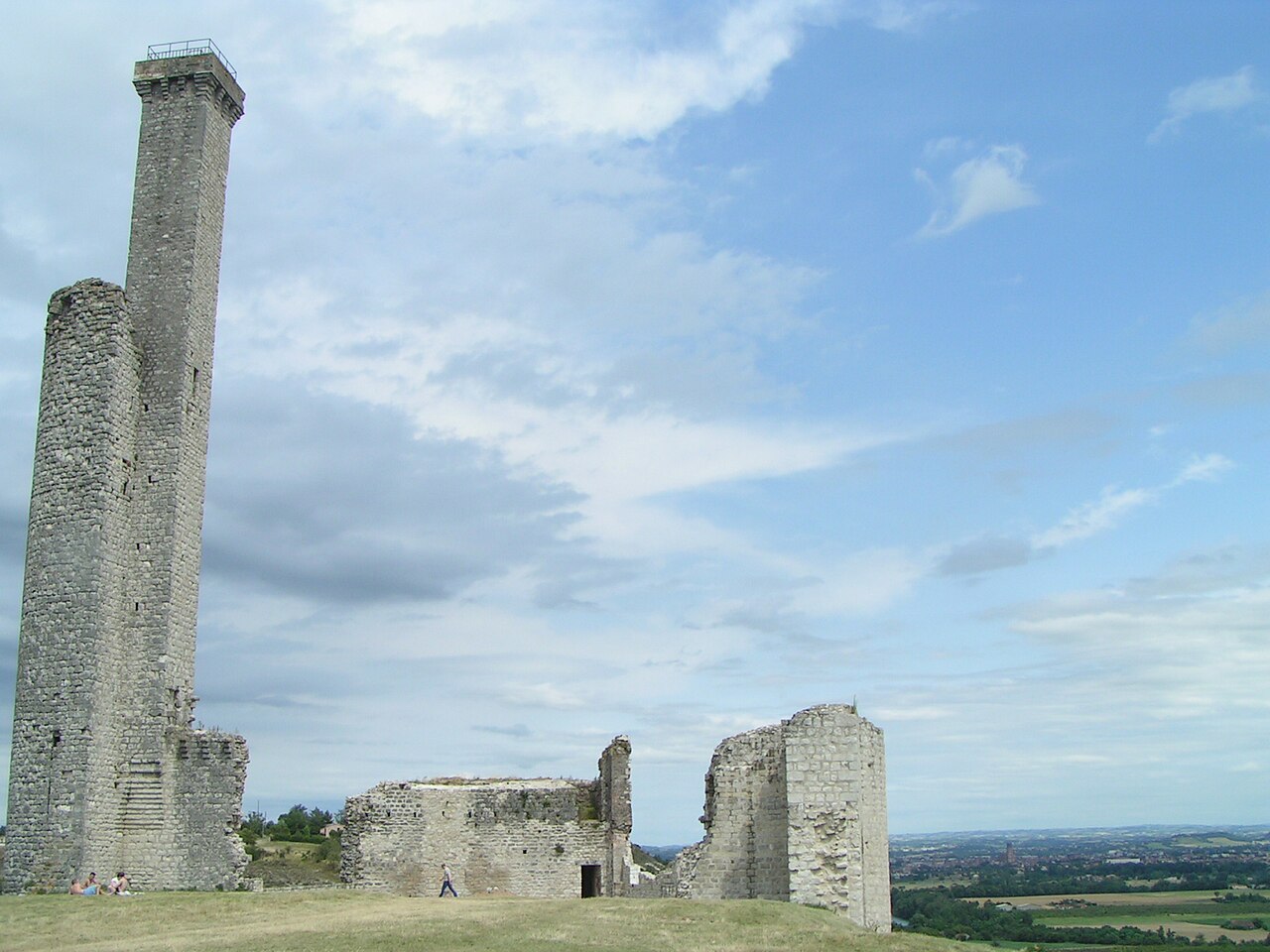
Château de Mailhoc
Château de Mailhoc stands as a significant medieval fortress located in the commune of Mailhoc, France. First documented in 1227, this castle exemplifies 13th-century military architecture with its characteristic square layout and imposing corner towers. Originally constructed during the High Medieval period, the castle played a notable role in several historic conflicts, including the Hundred Years' War and the Wars of Religion in France.
Architectural design and defensive features
The castle's square plan is typical of High Medieval fortifications, designed to maximize defense and surveillance. The four corner towers provided vantage points for archers and guards, enabling comprehensive coverage of the surrounding landscape. These towers were integral to the castle's defensive strategy, allowing defenders to repel attackers from multiple angles.
The original walls were constructed with thick stone masonry, designed to withstand sieges and artillery of the era. The castle likely included a moat or natural defensive barriers, common in fortifications of this period, although specific details about such features at Château de Mailhoc are scarce.
Historical significance during the Hundred Years' War and Wars of Religion
During the Hundred Years' War (1337–1453), Château de Mailhoc was strategically important due to its location. It served as a military stronghold and refuge amidst the prolonged conflict between England and France. The castle's robust defenses would have been critical in withstanding sieges and raids during this turbulent period.
In the 16th century, the castle also witnessed the Wars of Religion, a series of civil wars in France primarily between Catholics and Huguenots. The castle's fortifications would have been adapted or reinforced to meet the evolving military technologies and tactics of the time.
Renaissance alterations and architectural evolution
Following its medieval military use, Château de Mailhoc underwent significant alterations during the Renaissance period. These modifications introduced architectural elements reflecting the era's aesthetic preferences and improved living conditions. Renaissance features typically include larger windows, decorative stonework, and more comfortable residential spaces, marking a shift from purely defensive design to a blend of fortification and habitation.
While retaining its original High Medieval structure, the castle's transformation during the Renaissance illustrates the broader trend in castle architecture where fortresses were adapted into stately homes. This evolution highlights the changing role of castles from military bastions to symbols of noble status and refined living.
Preservation and current condition
Today, Château de Mailhoc remains a valuable cultural and historical monument. Its partially preserved state allows visitors and scholars to appreciate the architectural features spanning several centuries. The castle's enduring presence offers insights into medieval military architecture and Renaissance adaptations in southern France.
Efforts to maintain and restore the castle have helped protect its structural integrity, although some sections may show signs of wear typical for buildings of this age. The castle's location in Mailhoc makes it accessible for those interested in exploring France's rich medieval heritage.
Visiting Château de Mailhoc
Visitors to Château de Mailhoc can explore the imposing corner towers and the castle's robust stone walls. The site provides a tangible connection to France's medieval past and the architectural transitions of the Renaissance. While specific visitor amenities and opening hours may vary, the castle remains a point of interest for history enthusiasts and architectural scholars.
Nearby attractions include other medieval sites and the scenic landscapes of the region, offering a comprehensive cultural experience for travelers.
Frequently asked questions (FAQ)
- When was Château de Mailhoc originally built?
- Château de Mailhoc was originally built in the 13th century, with the first documentation dating back to 1227.
- What architectural style characterizes Château de Mailhoc?
- The castle features a mixed architectural style, primarily High Medieval with Renaissance alterations reflecting later adaptations.
- What role did Château de Mailhoc play in historical conflicts?
- The castle was a strategic military stronghold during the Hundred Years' War and the Wars of Religion, serving defensive and refuge purposes.
- Is Château de Mailhoc open to visitors?
- While specific visiting hours are not widely published, Château de Mailhoc is accessible to visitors interested in medieval architecture and history.
- What are the notable architectural features of Château de Mailhoc?
- Notable features include its square plan, four corner towers, thick stone walls, and Renaissance modifications such as larger windows and decorative stonework.
Information
Loading map...
Visitor reviews
No reviews yet. Been here? Write the first review and help other travelers!
Write the first reviewVisited this castle? Share your experience
Your review helps other travelers and adds first-hand knowledge to our encyclopedia.