Château de la Forêt-Grailly

Château de la Forêt-Grailly: late medieval fortress in Saint-Christophe-le-Chaudry
Saint-Christophe-le-Chaudry, Centre-Val de Loire, France
Late Medieval (14th–15th c.)
Partially Preserved

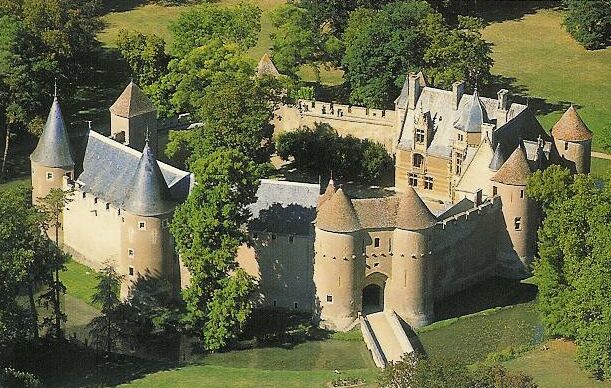
The Château de la Forêt-Grailly stands as a notable example of a late medieval fortress located in Saint-Christophe-le-Chaudry, France. Documented as early as 1380, this castle was originally constructed to serve both defensive and residential functions during a turbulent period marked by the Hundred Years' War. Its strategic location near the Arnon River allowed it to control and monitor river traffic, which was crucial for military and trade purposes.

The castle was fully fortified with moats surrounding its perimeter and featured a drawbridge providing controlled access to the interior. The defensive design included four corner towers, although by the early 18th century, one tower had collapsed and another disappeared in the 19th century, leaving only two of the original towers intact. These towers were integral to the castle's fortifications, offering vantage points for surveillance and defense.

Architectural features and fortifications

The moats that once encircled the château were water-filled, enhancing its defensive capabilities by creating a barrier against invaders. Access to the castle was via a wooden bridge that crossed the moat, leading into the enclosed courtyard. The château was surrounded by walls that enclosed both the courtyard and an adjacent farmyard, reflecting the blend of military and domestic functions typical of medieval castles.

Inside, visitors can explore three vaulted ground-floor rooms that highlight the castle's architectural significance. Two of these are rib-vaulted halls dating from the early 15th century. These halls are notable for their naïve sculptures that adorn the vaults, providing insight into the artistic expressions of the period. Additionally, there is a Romanesque barrel-vaulted room that predates the rib vaults, indicating that parts of the château may incorporate earlier architectural elements or styles.

Historical evolution and restorations

By 1723, the château was described as having transformed into a pavilion-style residence, reflecting changes in architectural tastes and residential needs after the medieval period. The original defensive structures had been modified, with the moats eventually filled in and the enclosing walls demolished over time. This transition marks the château's evolution from a military fortress to a more domestic and aesthetic function.

The château underwent significant restoration efforts in the 16th century and again around 1880. These restorations aimed to preserve its historical character and structural integrity. The 19th-century restoration likely addressed the loss of two corner towers and other deteriorations, helping to maintain the château as a heritage site.

Significance in the regional context

The Château de la Forêt-Grailly played a key role during the Hundred Years' War due to its strategic location near the Arnon River. Its fortifications and watchtowers allowed it to monitor and control movement along this important waterway, which was vital for military logistics and regional security.

Today, the château is a valuable cultural and historical monument that offers visitors a glimpse into the architectural and military history of the late medieval period in central France. Its surviving vaulted halls and towers provide tangible connections to the past, illustrating the blend of defensive architecture and residential comfort that characterized many castles of the era.

Exploring the château today

Visitors to the château can explore the vaulted ground-floor rooms, including the rib-vaulted halls with their unique sculptures and the Romanesque barrel-vaulted chamber. The remaining two corner towers stand as silent witnesses to the castle's medieval fortifications. Although the moats have been filled in and some walls demolished, the site retains much of its historical atmosphere and architectural interest.

The château's location in the rural setting of Saint-Christophe-le-Chaudry adds to its charm, offering a peaceful environment to appreciate medieval architecture and history. The castle's layered history from a fortified stronghold to a pavilion-style residence reflects broader trends in French castle development and adaptation over the centuries.

Frequently asked questions (FAQ)

How do I get to Château de la Forêt-Grailly?
Château de la Forêt-Grailly is located in Saint-Christophe-le-Chaudry, France, and can be easily accessed by car or public transport. The nearest major city is Bourges, which offers various transportation options, including trains and buses. Visitors can also enjoy the picturesque countryside on their way to the castle.
What is the historical significance of Château de la Forêt-Grailly?
Château de la Forêt-Grailly has a rich history dating back to the 15th century, playing a crucial role in the region's feudal system. It has witnessed numerous historical events and transformations, reflecting the architectural and cultural trends of its time. Today, it stands as a testament to the heritage of the Loire Valley.
When was Château de la Forêt-Grailly built?
The construction of Château de la Forêt-Grailly began in the early 15th century and continued over several decades. The castle showcases a blend of medieval and Renaissance architectural styles, which were prominent during this period. Its enduring structure highlights the craftsmanship and design philosophies of that era.
Can I take guided tours at Château de la Forêt-Grailly?
Yes, guided tours are available at Château de la Forêt-Grailly, providing visitors with in-depth insights into its history and architecture. Tours are typically offered in multiple languages to accommodate international guests. It's recommended to check the official website for scheduling and availability.
Why is the architecture of Château de la Forêt-Grailly noteworthy?
The architecture of Château de la Forêt-Grailly is noteworthy for its unique combination of medieval fortifications and Renaissance elegance. Visitors can admire its impressive towers, intricate stonework, and beautifully preserved interiors that reflect the artistic tastes of its time. This architectural blend makes it a fascinating subject for history and design enthusiasts.
Is it possible to host events at Château de la Forêt-Grailly?
Yes, Château de la Forêt-Grailly offers facilities for hosting various events, including weddings and corporate gatherings. The enchanting setting and historical ambiance make it a popular choice for memorable occasions. It's advisable to contact the management for specific arrangements and available services.
What are the opening hours for Château de la Forêt-Grailly?
Château de la Forêt-Grailly is typically open to visitors from April to October, with specific opening hours varying by day. During peak tourist season, extended hours may be offered to accommodate more visitors. Always check the official website or contact the castle directly for the most accurate and up-to-date information.
What are the ticket prices for Château de la Forêt-Grailly?
Ticket prices for Château de la Forêt-Grailly vary depending on the age of the visitor and whether they are part of a group. Discounts may be available for students, seniors, and children. For the most current pricing details, refer to the castle's official website before planning your visit.
When is the best time to visit Château de la Forêt-Grailly?
The best time to visit Château de la Forêt-Grailly is during the spring and early fall when the weather is mild and the gardens are in full bloom. Additionally, visiting during weekdays can help avoid larger crowds, allowing for a more enjoyable experience. Special events and exhibitions are often held during the summer months, providing unique opportunities for visitors.
Are there nearby attractions to explore after visiting Château de la Forêt-Grailly?
Yes, there are several nearby attractions to explore after visiting Château de la Forêt-Grailly, including the stunning parks and gardens of the Loire Valley. Additionally, the charming town of Saint-Christophe-le-Chaudry offers local shops and cafes. History enthusiasts can also visit other nearby châteaux, each with its own unique story and architecture.

Information

Water Castle

Loading map...

Visitor reviews

No reviews yet. Been here? Write the first review and help other travelers!

Write the first review

Visited this castle? Share your experience

Your review helps other travelers and adds first-hand knowledge to our encyclopedia.
Write a review

(5/5)

0/2000 characters

Your review will be visible after admin approval

Nearby castles

3.8 km
Château de Culan — France castle

Château de Culan

Culan, France

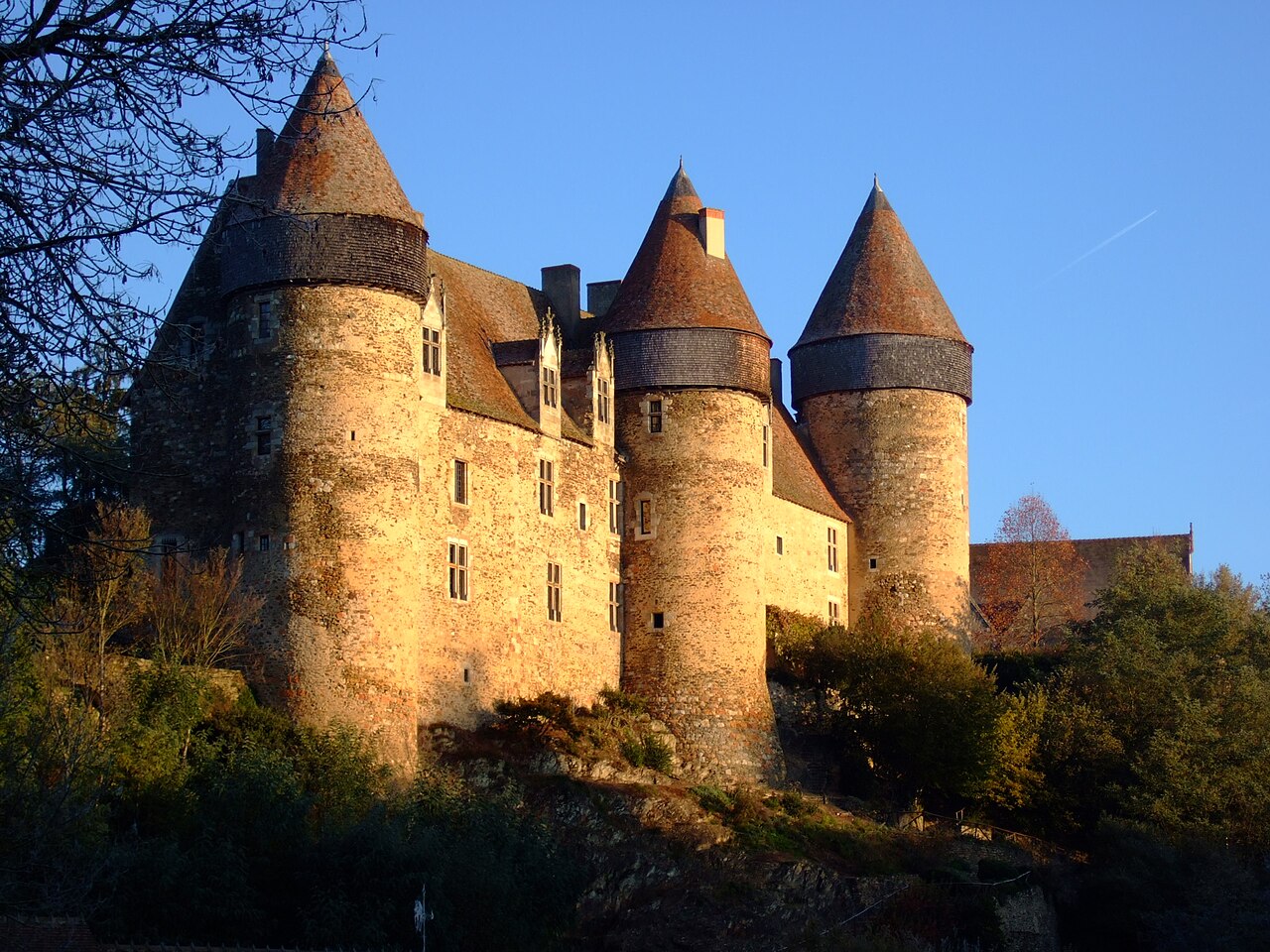
Château de Culan stands as a remarkable example of a medieval hill castle in the heart of the Centre-Val de Loire region of France. Perched on a rocky outcrop overlooking the River Arnon, this fortress commands a strategic position that has shaped its turbulent and illustrious history over centuries. Listed as a Monument historique since the early 20th century, the castle's imposing silhouette and well-preserved structures offer a vivid window into medieval military architecture and aristocratic life from the 12th to the 15th centuries, with notable Renaissance additions. The origins of Château de Culan trace back to a 10th-century wooden fortification, which no longer exists. This initial structure was replaced by a stone castle, parts of which were destroyed during the siege by King Philip II Augustus in 1188 amid his conflict with Henry II Plantagenet, King of England. The current castle's core dates from the 12th century, evolving through the High and Late Medieval periods with expansions and fortifications added up to the 15th century. The castle’s architecture reflects this layered history, showcasing defensive walls, wooden turrets designed for dropping projectiles on attackers, and monumental 15th-century fireplaces that highlight the residential aspect of the fortress. Historical significance and notable owners Throughout its history, Château de Culan has been associated with several prominent figures. It was once owned by Admiral Louis de Culant (1360–1444), a key military leader during the Hundred Years' War. Later, it belonged to Maximilien de Béthune, duc de Sully (1599–1621), the influential minister of King Henry IV of France, and subsequently to the Prince de Condé. The castle witnessed significant military action during the Fronde (1648–1653), when Cardinal Mazarin's forces besieged the town in 1651, leading to the destruction of the 15th-century ramparts. The château has also welcomed a remarkable array of visitors, including Joan of Arc, King Louis XI, Madame de Sévigné, the novelist George Sand, and the scholar Ernest Renan. In the 20th century, after World War II, General Charles de Gaulle visited nearby Saint-Amand-Montrond but chose to stay in a private residence rather than the castle itself. Architectural features and restoration efforts Château de Culan is distinguished by its wooden turrets, a rare surviving feature that enabled defenders to hurl stones and other projectiles onto assailants below. The castle's massive stone walls and defensive towers illustrate typical High Medieval military architecture, while the Renaissance additions reflect the transition toward more comfortable residential spaces within fortified structures. The castle's interior boasts impressive monumental fireplaces from the 15th century, demonstrating the blend of defensive and domestic functions. Surrounding the castle, medieval-style gardens were laid out at the end of the 20th century, enhancing the historical ambiance and visitor experience. Between 1950 and 1980, significant restoration was undertaken by Jean Ferragut, a previous owner who also transformed the château into a cultural venue hosting exhibitions featuring artists like Pablo Picasso and Bernard Buffet. These efforts preserved the castle's structural integrity and historical character, allowing it to remain in excellent condition today. Cultural importance and visitor experience Today, Château de Culan remains a vibrant cultural landmark, owned and maintained by Jean Pierre Marquis and Edouard Marquis, who continue restoration and preservation efforts. The castle is open to the public daily from Easter through October, offering visitors a chance to explore its medieval architecture, historic interiors, and scenic surroundings. Special events such as medieval weekends in July and August and torchlight tours during summer evenings provide immersive experiences that bring the castle's history to life. These events celebrate the château’s rich heritage and attract enthusiasts of medieval history and architecture from around the world. Legacy of Philippe-Ernest Legrand The château also served as the residence of the distinguished French Hellenist Philippe-Ernest Legrand (1866–1953) after his retirement, adding an intellectual chapter to its long history. His presence underscores the château’s role not only as a military and noble residence but also as a place of scholarly retreat. The strategic location and natural surroundings Strategically located on a rocky promontory above the River Arnon, the castle’s position was chosen for its natural defensive advantages and commanding views of the surrounding landscape. The site is classified as a site naturel classé, recognizing its environmental and historical value. The river and the rugged terrain contributed to the castle’s defensive capabilities and influenced its architectural development. The surrounding landscape, with its medieval gardens and natural beauty, complements the castle’s historic atmosphere, inviting visitors to experience a blend of cultural heritage and nature.

High Medieval (11th–13th c.)
Details
3.9 km

Castle of Culan

Culan, France

The castle of Culan stands as a remarkable example of medieval military architecture in the heart of France. Located in the commune of Culan within the Cher department of the Centre-Val de Loire region, this hill castle is perched on a strategic rocky outcrop overlooking the Arnon river valley, a site celebrated for its natural beauty and defensive advantage. The castle's history spans several centuries, reflecting the turbulent political and military events of high medieval and later periods. Originally, the site hosted a wooden fortress constructed before the 10th century, though no physical traces of this early structure remain today. This initial fortification was demolished in the 10th century amid the era's conflicts. A subsequent stone castle was built but was besieged and destroyed in 1188 by King Philip II Augustus during his campaigns to consolidate royal power. The present stone castle's construction started in the late 12th or early 13th century and continued intermittently until the 15th century, incorporating both defensive features and residential comforts. Historical significance and notable figures The castle's history is intertwined with several prominent historical figures and events. In the 15th century, it was associated with Admiral Louis de Culant (1360–1444), a notable military leader. The fortress also hosted the legendary Joan of Arc in 1429 during her campaign to liberate France from English occupation. Later, King Louis XI visited the castle in 1465, underscoring its strategic and political importance. Ownership changed hands several times over the centuries. From 1614 to 1621, the castle belonged to Maximilien de Béthune, Duke of Sully, a key minister of King Henry IV. It subsequently passed to the Prince of Condé until his death in 1646. During the Fronde civil wars in 1651, Cardinal Mazarin ordered the partial destruction of the upper donjon, some ramparts, and the gatehouse to prevent the castle from serving as a stronghold for rebellious forces. In 1663, the estate was sold to Michel Le Tellier de Chaville, Marquis of Barbezieux. The castle remained in the hands of his descendants, including the Harcourt and Croÿ families, until the upheavals of the French Revolution, when the property was divided and sold as national property. Architectural features and restoration The castle of Culan is notable for its quadrilateral defensive enclosure built on a rocky spur. The main surviving structure is the corps de logis, the principal residential building, which sits along the edge of the ravine. This building is flanked by three towers, each equipped with rare and well-preserved wooden hoardings (hourds). These projecting wooden galleries allowed defenders to drop stones and projectiles onto attackers, a defensive feature uncommon in surviving medieval castles. The castle's interior includes monumental fireplaces dating from the 15th century, showcasing the domestic architecture of the late medieval period. Renaissance influences are evident in the mullioned windows and a gallery added in 1619 against the north curtain wall, blending the fortress's defensive origins with later residential enhancements. The original defensive walls surrounding the courtyard have mostly disappeared, surviving only as foundations that now delineate garden spaces. The upper part of the donjon and sections of the ramparts were destroyed in 1651 during the Fronde, reducing the castle's defensive capabilities. The wooden framework of the Notre-Dame tower suffered partial damage from a lightning strike in 1722, illustrating the ongoing challenges of maintaining wooden elements. Between 1950 and 1980, extensive restoration was carried out by Jean Ferragut, an owner dedicated to preserving the castle's historic character. These efforts included structural repairs and the organization of art exhibitions that brought renewed cultural life to the site. Subsequent owners have continued restoration and conservation work, ensuring the castle remains in excellent condition. Gardens and landscape setting The castle's surroundings enhance its historic ambiance. In 1995, medieval-style gardens were planted at the base of the castle slope, featuring enclosed beds bordered with boxwood. These gardens cultivate seasonal flowers, medicinal herbs, fruit trees, and ancient roses, reflecting horticultural traditions of the medieval period. The broader park is designed in the English landscape style, with mature trees such as lindens, oaks, maples, and plane trees lining broad avenues. This landscape complements the castle's setting on the rocky promontory and provides a serene environment that contrasts with the fortress's martial origins. Cultural heritage and notable visitors Throughout its history, the castle of Culan has attracted many distinguished visitors, highlighting its cultural significance. Among these were Madame de Sévigné, famed for her letters documenting French society; the novelist George Sand, who visited with composer Frédéric Chopin; and the scholar Ernest Renan. These visits underscore the castle's role not only as a military stronghold but also as a center of cultural and intellectual life. Today, the castle is recognized as a Monument historique, with its facades and roofs classified since 1956. It stands as a testament to the region's rich medieval heritage and the ongoing efforts to preserve France's architectural treasures.

High Medieval (11th–13th c.)
Details
17 km
Ainay-le-Vieil Castle — France castle

Ainay-le-Vieil Castle

7 Rue du Château, France

Ainay-le-Vieil Castle, also known as Château d'Ainay-le-Vieil, is a remarkable example of medieval fortification and early Renaissance architecture located in the village of Ainay-le-Vieil in the Centre-Val de Loire region of France. This hill castle stands on a site with a long history of occupation, beginning with the Gallo-Romans, and later becoming a strategic fortress during the High Medieval period. The castle's unique octagonal layout and its nickname "the little Carcassonne" reflect its distinctive defensive design reminiscent of the famous fortified city of Carcassonne. Historical significance and strategic location The site of Ainay-le-Vieil has been fortified since the 12th century, originally as a motte-and-bailey castle that guarded a critical frontier between the Frankish kingdom and Aquitaine, later contested between the French and English crowns. Its position in the border region of the Cher department made it a vital stronghold, especially during the Hundred Years' War. Throughout its history, the castle was held by influential noble families close to the French crown, including the House of Bourbon, the Barres, and the Sully family. The Sully family is particularly notable for rebuilding the castle in the late 13th and early 14th centuries, giving it the form largely visible today. The castle was one of the few in the region to remain under French control after the Battle of Poitiers in 1356, when many others fell to English forces. Architectural evolution Medieval fortifications The present castle was constructed over the earlier motte in the second half of the 13th century, probably by the Sully family. The design features an irregular octagonal enclosure surrounded by a broad moat of running water. It was fortified with seven round towers and a main entrance gate flanked by two additional towers, providing formidable defense capabilities. Originally, the castle included a second outer wall with a double moat and drawbridge, enhancing its defensive perimeter, although these outer fortifications have since disappeared. The lack of natural defensive features necessitated these extensive man-made fortifications. Pre-Renaissance additions In the early 16th century, between 1500 and 1505, Charles de Chevenon, Lord of Bigny, transformed part of the castle into a comfortable residence by adding a lodging in the Louis XII style, blending late Gothic and early Renaissance architectural elements. This building was constructed using brick and stone, signaling a shift from purely military architecture to a more domestic and aesthetic function. The castle's large living room contains one of the Loire Valley's most beautiful fireplaces, a testament to the castle's status and refinement during this period. The chapel features unique wall paintings attributed to the Bigny workshop, which also contributed to the cathedral of Bourges, highlighting the artistic connections of the castle's owners. Role during the Hundred Years' War and later history During the Hundred Years' War, Ainay-le-Vieil served as a critical French stronghold used to harass English forces. Its strategic importance is underscored by its survival as the only castle in the region to remain in French hands following the devastating Battle of Poitiers in 1356. Ownership changed hands several times in the 15th century, notably when Jacques Cœur, the influential treasurer of King Charles VII, purchased the castle in 1435. After Jacques Cœur's fall from grace and confiscation of his properties in 1450, the castle was restored to his son but later sold to Charles de Chevenon in 1467, who initiated the significant architectural enhancements. The castle's military relevance declined after the French victory at the end of the Hundred Years' War. It transitioned into a noble residence, with gardens laid out and embellishments added, reflecting the changing needs and tastes of its owners. Survival through the French Revolution and modern era Remarkably, the castle survived the turmoil of the French Revolution largely intact. Though the Marquis of Bigny was executed and his family scattered, the castle remained in the hands of the Chevenon family. The family undertook restoration efforts in the mid-19th century, preserving both the castle and its gardens. Today, Ainay-le-Vieil Castle remains under the ownership of the descendants of the Chevenon family. It is recognized as one of the best-preserved fortresses of the 14th century in France and has been listed as a Monument historique since 1968 by the French Ministry of Culture. Architectural features and visitor experience The castle's moat, filled with running water, still encircles the fortress, enhancing its picturesque and defensive qualities. The combination of medieval fortifications and early Renaissance residential buildings offers visitors a comprehensive view of architectural evolution over centuries. The gardens, including a fragrant rose garden with varieties dating back to the 15th century, add to the castle's charm and historical ambiance. Visitors can explore the castle's interiors, including the grand living room with its magnificent fireplace and the chapel with its rare wall paintings. Ainay-le-Vieil Castle is accessible to the public for a fee, providing an enriching experience for those interested in medieval military architecture, Renaissance art, and French history. Its nickname, "the little Carcassonne," emphasizes its distinctive circular design and well-preserved defensive structures.

High Medieval (11th–13th c.)
Details