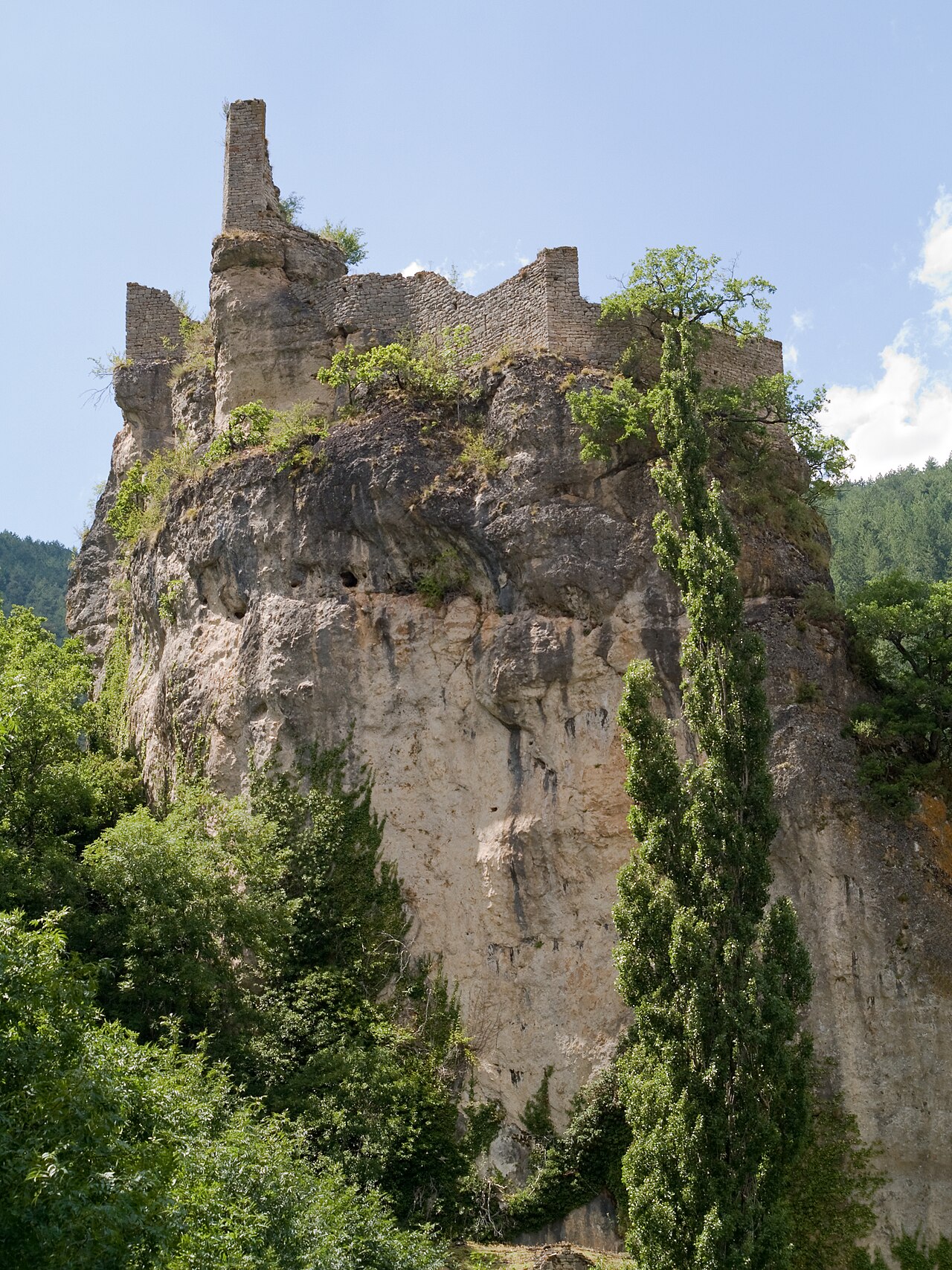
Château de La Caze
Château de La Caze is a significant late medieval castle located in the picturesque village of Sainte-Enimie in southern France. Constructed in 1420 by Soubeyrane Alamand and Guillaume de Montclar, this fortress exemplifies the military architecture of the 15th century, a period marked by the transition from medieval fortifications to more residential and comfortable noble residences. The castle's strategic position overlooking the Tarn Gorge provided both defense and control over the surrounding region.
Historical context and construction
The castle was built during the late medieval period, a time when France was emerging from the turmoil of the Hundred Years' War. The builders, notable local lords, designed Château de La Caze to serve both as a stronghold and a noble residence. Its construction reflects the defensive needs of the era, with thick stone walls and fortified towers designed to withstand sieges and attacks.
Founders and their legacy
Soubeyrane Alamand and Guillaume de Montclar were influential figures in the region, and their collaboration on this castle underscores the importance of alliances among noble families during the period. Their legacy is preserved not only in the castle's robust architecture but also in its continued prominence in local history.
Architectural features
The castle exhibits typical late medieval military architecture with a focus on defense. It features thick curtain walls and corner towers that provided vantage points for surveillance and defense. The entrance was likely protected by a gatehouse and possibly a drawbridge, common features in castles of this era to control access.
Internally, the castle would have contained a great hall for gatherings and feasts, private chambers for the lords, and service areas. While much of the original interior layout has been adapted over time, traces of the medieval design remain visible.
Location and strategic importance
Situated in the Lozère department of the Occitanie region, Château de La Caze commands views over the Tarn River and the surrounding gorges. This vantage point was crucial for monitoring trade routes and defending against potential invaders. The castle's location also reflects the medieval practice of situating fortresses in naturally defensible positions.
Role during the French Revolution
During the French Revolution, Château de La Caze was repurposed as a prison. This change of use illustrates the turbulent social and political upheavals of the time, when many noble estates were confiscated and adapted for revolutionary needs. The castle's robust construction made it suitable for detaining prisoners securely.
Modern use and preservation
Today, Château de La Caze has been transformed into a luxury hotel, offering visitors a chance to experience its historic ambiance combined with modern comforts. The adaptive reuse of the castle has helped preserve its structure and maintain its relevance in contemporary times. Guests can appreciate the castle's medieval architecture while enjoying amenities that respect the building's heritage.
The preservation of Château de La Caze ensures that its historical and architectural significance remains accessible, contributing to the cultural tourism of the region. Its status as a well-maintained late medieval fortress provides valuable insights into the defensive strategies and noble lifestyles of 15th-century France.
Frequently asked questions (FAQ)
- What is the historical significance of Château de La Caze?
- Château de La Caze, located in the picturesque region of Sainte-Enimie, France, dates back to the 15th century. It played an important role in the local feudal system and has witnessed many historical events, making it a valuable piece of French heritage.
- When was Château de La Caze built?
- The construction of Château de La Caze began in the late 15th century, around 1480, and it was completed in the early 16th century. Its architecture showcases the transition from medieval to Renaissance styles, reflecting the historical context of its time.
- Can I visit Château de La Caze?
- Yes, visitors are welcome at Château de La Caze. The castle offers guided tours that delve into its rich history and stunning architecture, allowing guests to fully appreciate its significance.
- What are the opening hours for Château de La Caze?
- Château de La Caze is typically open to visitors from April to October, with hours varying by season. It's best to check the official website or contact the castle directly for the most current opening hours before planning your visit.
- Is it possible to access Château de La Caze for those with mobility issues?
- Château de La Caze has made efforts to improve accessibility for visitors with mobility challenges. However, due to its historical nature and the structure of the castle, some areas may still present difficulties. It is advisable to contact the castle in advance for specific accommodations.
- What is the best time to visit Château de La Caze?
- The best time to visit Château de La Caze is during the spring and early autumn months when the weather is pleasant and the surrounding landscapes are at their most beautiful. This period also tends to be less crowded, allowing for a more enjoyable experience.
- Are there any nearby attractions to visit while at Château de La Caze?
- Yes, nearby attractions include the stunning Gorges du Tarn, the charming village of Sainte-Enimie, and various hiking trails in the Cevennes National Park. Combining these visits with Château de La Caze makes for a wonderful day exploring the region.
- What are the ticket prices for Château de La Caze?
- Ticket prices for Château de La Caze are generally affordable, with discounts available for students and seniors. It is recommended to check the official website for the latest pricing information and any special offers that may be available.
Information
Sources & official resources
Verify the information above using these authoritative references.
Loading map...
Visitor reviews
No reviews yet. Been here? Write the first review and help other travelers!
Write the first reviewVisited this castle? Share your experience
Your review helps other travelers and adds first-hand knowledge to our encyclopedia.