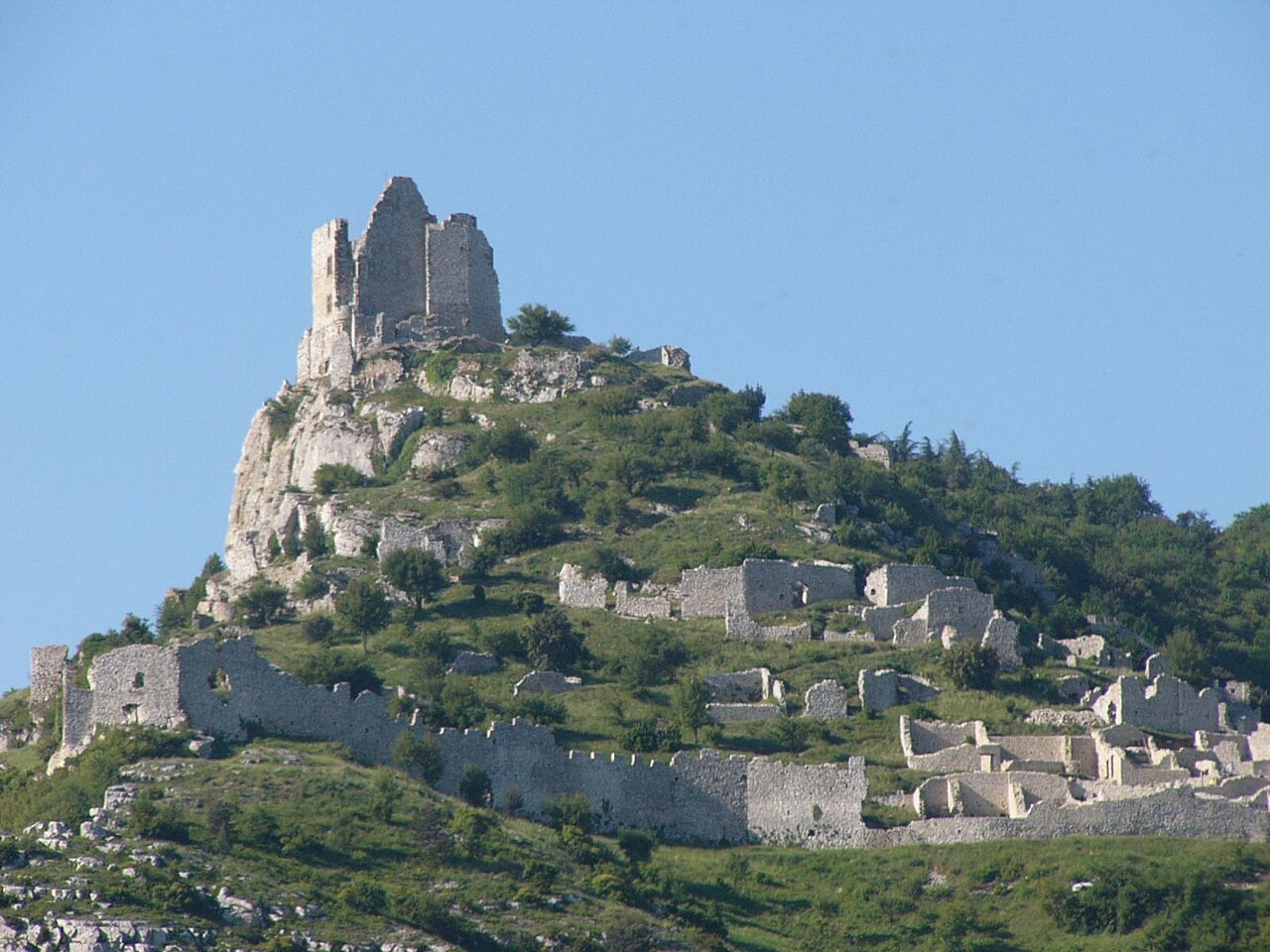
Château de la Boisse

Château de la Boisse in Étoile-sur-Rhône
Étoile-sur-Rhône, Auvergne-Rhone-Alpes, France
Ruins

The Château de la Boisse is a historic hill castle located in the commune of Étoile-sur-Rhône, within the Auvergne-Rhône-Alpes region of southeastern France. Perched strategically above the Rhône valley, this castle's ruins offer a glimpse into medieval fortification architecture and the regional history of the area. Although now in a state of ruins, the castle remains a significant cultural landmark and a testament to the defensive needs of the medieval period.

Historical context and origins

The origins of Château de la Boisse date back to the High Medieval period, when fortifications along the Rhône river were crucial for controlling trade routes and defending territories. Its location on a hill provided natural defensive advantages and allowed surveillance over the surrounding lands and river traffic. The castle was likely constructed between the 12th and 14th centuries, a common era for such hilltop fortresses in this part of France.

Throughout its history, the castle would have played a role in regional conflicts, including feudal disputes and possibly skirmishes during the Hundred Years' War, although specific documented events are scarce. The castle's decline began as military technology and political landscapes evolved, reducing the strategic importance of such fortifications.

Architectural features and layout

The Château de la Boisse exemplifies typical medieval hill castle architecture with remnants of defensive walls, towers, and a central courtyard. The castle's layout was designed to maximize defense with thick stone walls and elevated vantage points. Although much of the structure is ruined, visitors can observe the remains of curtain walls and foundations that outline the original perimeter.

Key architectural elements likely included a keep or donjon serving as the last stronghold, alongside watchtowers positioned for optimal visibility. The castle's construction utilized local stone materials, contributing to its endurance despite centuries of exposure and neglect.

Defensive structures

The castle's hilltop position was enhanced by natural slopes, supplemented by man-made fortifications such as a moat or ditch, though evidence of these features is limited due to ruinous conditions. Battlements and arrow slits would have been integral to its defense, allowing archers to protect the castle from attackers.

Current condition and cultural significance

Today, Château de la Boisse remains in a state of ruins, with partial walls and foundational structures visible. The site is an important cultural heritage location, attracting visitors interested in medieval architecture and history. Its scenic placement offers panoramic views of the Rhône valley, making it a favored spot for hikers and history enthusiasts alike.

Conservation efforts focus on preserving what remains of the castle to prevent further deterioration while allowing public access to appreciate its historical value. Interpretive signage and guided tours help contextualize the castle's role in regional history.

Visiting information

The castle is accessible to the public, though facilities may be limited due to its ruinous state. Visitors are advised to wear appropriate footwear for uneven terrain and to respect preservation guidelines. The best time to visit is during the warmer months when weather conditions enhance the experience of exploring the ruins and surrounding landscape.

Frequently asked questions (FAQ)

How do I get to Château de la Boisse?
Château de la Boisse is located in Étoile-sur-Rhône, France, easily accessible by car from major cities like Valence and Romans-sur-Isère. Public transportation options include local buses that connect to nearby train stations, making it convenient for visitors without a vehicle.
What is the historical significance of Château de la Boisse?
Château de la Boisse dates back to the 15th century and has played a crucial role in the region’s history. It was originally built as a defensive structure and has been a witness to many historical events, reflecting the architectural evolution of the time.
When was Château de la Boisse last renovated?
The last significant renovation of Château de la Boisse took place in the early 21st century, focusing on preserving its historical features while modernizing amenities for visitors. The restoration aimed to maintain its charm and integrity, making it a delightful site for exploration.
Can I take photographs inside Château de la Boisse?
Yes, photography is allowed both inside and outside Château de la Boisse, although visitors are advised to respect any areas that may be marked as off-limits. Capturing the stunning architecture and picturesque surroundings is a great way to remember your visit.
Why is Château de la Boisse popular among tourists?
Château de la Boisse is popular due to its rich history, stunning architecture, and beautiful gardens that provide a serene atmosphere. Visitors are drawn to its unique blend of cultural heritage and natural beauty, making it a perfect spot for history buffs and casual tourists alike.
Is it possible to book guided tours at Château de la Boisse?
Yes, guided tours of Château de la Boisse are available and can be booked in advance through their official website or visitor center. These tours provide in-depth insights into the castle's history, architecture, and significant events, enhancing your overall experience.
What are the opening hours for Château de la Boisse?
Château de la Boisse is open to the public from 10 AM to 6 PM, Tuesday through Sunday, with extended hours during the summer months. It is recommended to check the official website for any seasonal changes or special events that may affect opening times.
What are the ticket prices for visiting Château de la Boisse?
Ticket prices for Château de la Boisse vary depending on age and group size, with discounts available for students and seniors. It is advisable to purchase tickets online in advance to ensure availability and to take advantage of any promotional offers.
What nearby attractions can I visit after Château de la Boisse?
After visiting Château de la Boisse, you can explore nearby attractions such as the picturesque town of Étoile-sur-Rhône, known for its charming streets and local shops. Additionally, the scenic Rhône Valley offers beautiful landscapes and opportunities for outdoor activities, making it a perfect complement to your castle visit.

Information

Hill Castle

Loading map...

Visitor reviews

No reviews yet. Been here? Write the first review and help other travelers!

Write the first review

Visited this castle? Share your experience

Your review helps other travelers and adds first-hand knowledge to our encyclopedia.

Write a review

(5/5)

0/2000 characters

Your review will be visible after admin approval

Nearby castles

9 km

Crest Tower

Crest, France

Crest Tower stands as a monumental symbol of medieval military architecture in southeastern France. Towering at an impressive height of 52 meters, it is the highest surviving keep in France and one of the tallest in Europe. The tower once formed the centerpiece of a vast fortress that dominated the town of Crest and the surrounding Drome valley. Its imposing stature and robust construction reflect its critical role in regional defense and lordly authority from the 12th century through the early modern period. The strategic significance of the Crest site derives from its location overlooking the Drome river valley, a key trade route connecting southern France to Italy through the Alps. This geographic advantage made the fortress a coveted stronghold throughout its history. The earliest documented reference to a fortress at Crest appears in a 1120 papal letter, indicating the presence of a defensive structure by that time. Concurrently, a medieval town began to develop around the fortress, adopting the name Crest from its ruling lord, Arnaud de Crest. The castle's construction evolved over several centuries, culminating by the 14th century in a formidable fortress featuring a grand square keep. This massive tower served multiple purposes: a defensive bastion against attacks, a secure refuge for the lord and inhabitants, and a potent symbol of feudal power. The keep's walls, up to 4 meters thick, and its austere design with no superfluous decoration, emphasize its military function and resilience. Historical development and ownership The origins of Crest Tower trace back even further to a 4th-century Roman military base, upon which the medieval fortress was later built. During the 11th century, the initial medieval donjon was constructed atop this Roman foundation. By the early 12th century, the castle—then called Castrum Cristam—had become a significant stronghold, issuing important documents such as the papal letter from Pope Callixtus II. Throughout the 12th and 13th centuries, the castle was a contested possession between the lords Arnaud de Crest, who later assumed ecclesiastical roles as bishops of Die, and the counts of Valentinois from the Poitiers family. The fortress played a notable role during the Albigensian Crusade, successfully resisting a siege led by Simon de Montfort in 1217, underscoring its strategic and military importance. In the early 15th century, the seigneurie was unified under Aymar VI de Poitiers. After the death of the last heir in 1419, the castle passed to the French crown in 1426, marking a transition to royal ownership. Subsequently, the French kings granted the fortress to noble families, including the Grimaldi, ancestors of the Princes of Monaco. Destruction and transformation under royal authority In 1632, during the reign of King Louis XIII and under the direction of Cardinal Richelieu, the castle was largely dismantled to diminish its military threat. This was part of a broader policy to reduce the power of feudal fortresses that could oppose royal authority. Remarkably, the massive keep—the Crest Tower—was spared demolition and remains the sole surviving element of the original fortress. Following its military decline, the tower was repurposed primarily as a courthouse and prison from the 16th century through the 19th century. It housed Protestant prisoners after the revocation of the Edict of Nantes, as well as political detainees and opponents of the Second Empire, earning it the nickname "Bastille of the South." The prison function continued until 1873, with the last prisoners being those who opposed Napoleon III's 1851 coup d'etat. Architectural features and defensive design The Crest Tower exemplifies the architectural defense systems of the Middle Ages. Its footprint measures approximately 20 by 32 meters, with walls reaching up to 4 meters thick, constructed in a robust and austere style that prioritizes defense over decoration. The tower is primarily quadrangular, with an attached taller, irregular quadrangular tower of nearly triangular shape sharing a "shield wall" on its northeast side. The roof, featuring an inverted double-pitched design covered with tiles, replaced an earlier open terrace. This design efficiently channels rainwater into a vertical conduit leading to a cistern at the base, demonstrating medieval ingenuity in water management within fortified structures. Defensive elements include murder holes, machicolations, and arrow slits—all designed to repel attackers and protect the tower's occupants. The tower contains 15 rooms that served as living quarters during the medieval period and later as prison cells. The interior walls preserve hundreds of graffiti left by prisoners from the 17th to 19th centuries, including a notable depiction of the musketeer d’Artagnan. Cultural significance and current status The tower's eastern wall is currently used for abseiling activities, enhancing visitor engagement during tours. The site has inspired detailed replicas, including a Playmobil historical scene and a 1.10-meter tall model constructed from 4,000 Kapla wooden planks displayed inside the tower, reflecting its cultural resonance and educational value. Officially classified as a historic monument since 1877, the Crest Tower was acquired by the town of Crest in 1988 and opened to the public as a tourist attraction. Visitors can explore its 15 rooms, climb staircases to panoramic viewing points, and enjoy expansive views of the town and the Drome River valley. Remnants of the original castle's base walls and defensive earthworks, known as glacis, remain visible around the site, offering insights into the scale and complexity of the former fortress complex. The Crest Tower remains a remarkable testament to medieval military architecture, feudal power, and the evolving history of southeastern France. Its preservation allows visitors to appreciate the ingenuity and resilience of medieval fortifications and the layered history of the region.

High Medieval (11th–13th c.)
Details
9.9 km

La Voulte-sur-Rhône Castle

La Voulte-sur-Rhône, France

La Voulte-sur-Rhône Castle stands as a remarkable example of a late medieval hill castle located in the town of La Voulte-sur-Rhône within the Auvergne-Rhône-Alpes region of France. Its strategic position atop a hill overlooking the Rhône River provided both defensive advantages and control over the surrounding valley, a common feature for castles built during the 14th to 17th centuries. Historical background and strategic importance The castle's origins trace back to the 14th century, a period marked by feudal conflicts and the need for fortified residences that could serve both military and administrative functions. Over the centuries, La Voulte-sur-Rhône Castle evolved through several phases of construction and renovation, reflecting changes in architectural styles and defensive needs up to the 17th century. Its location on a hill provided a commanding view of the Rhône River, a vital trade and communication route in medieval France. This vantage point allowed the castle's occupants to monitor river traffic and control access to the region, enhancing its role as a local power center. Architectural features and layout The castle exemplifies typical features of a hill castle with robust defensive structures adapted to the terrain. The fortification includes thick stone walls, battlements, and towers strategically positioned to maximize defense and surveillance. The complex likely contained a keep or main tower serving as the last line of defense and the lord's residence. Surrounding the keep, there would have been a series of curtain walls enclosing courtyards, living quarters, and service buildings. Defensive elements such as arrow slits, machicolations, and possibly a moat or ditch would have been incorporated to deter attackers. Architectural details from the late medieval period are evident in the castle's stone masonry and the design of its defensive works. Later modifications in the Renaissance period may have introduced more comfortable living spaces and stylistic elements, reflecting the transition from purely military fortress to noble residence. Restoration and current condition Today, La Voulte-sur-Rhône Castle is restored, preserving much of its historical fabric and allowing visitors to appreciate its architectural and historical significance. Restoration efforts have focused on stabilizing the structure, repairing stonework, and maintaining the castle's distinctive medieval character. The castle is accessible to the public, offering insights into medieval fortification techniques and the history of the region. Interpretive signage and guided tours may be available to enhance the visitor experience. Cultural significance and tourism As a prominent landmark in the Auvergne-Rhône-Alpes region, La Voulte-sur-Rhône Castle contributes to the area's rich cultural heritage. It attracts tourists interested in medieval architecture, French history, and scenic views of the Rhône valley. The castle's preservation supports local identity and education, serving as a tangible link to the past and a symbol of the region's historical resilience. Visiting La Voulte-sur-Rhône Castle Visitors to the castle can explore its fortified walls, towers, and courtyards while enjoying panoramic views of the surrounding landscape. The site provides a unique opportunity to experience a well-preserved example of a hill castle that has withstood the test of time. For those interested in medieval military architecture and French heritage, La Voulte-sur-Rhône Castle offers a captivating destination that combines history, architecture, and natural beauty.

Late Medieval (14th–15th c.)
Details
11.7 km
Château de Crussol — France castle

Château de Crussol

Saint-Péray, France

Château de Crussol stands as a remarkable medieval fortress perched atop a limestone cliff in the commune of Saint-Péray, France. This hill castle was originally constructed in the 12th century by the Bastet de Crussol family, a noble lineage that played a significant role in the region's medieval history. The castle's strategic location on a cliff 337 meters high overlooking the Rhône valley provided both defensive advantages and commanding views over the surrounding landscape, spanning several French départements including the Alps and Cévennes. The site of Château de Crussol has a rich history of human occupation that predates the castle itself, with archaeological evidence revealing continuous settlement since the Upper Paleolithic era. Successive cultures, including those from the Neolithic, Bronze Age, Roman, and early medieval periods, utilized this location due to its natural prominence and defensibility. Historical documents from 963 AD mention a wooden fortification here, which was eventually replaced by the stone castle founded by Giraud I. Bastet in the early 12th century after acquiring the land through marriage in 1110. Medieval origins and expansion The initial construction of Château de Crussol reflects typical medieval military architecture of the period, emphasizing strong defensive walls and towers. Over the centuries, the Bastet de Crussol family expanded the castle complex, enhancing its fortifications and residential quarters. By the 15th century, the castle was not only a fortress but also a fortified village known as the Villette, capable of housing around 700 inhabitants. This village included essential communal facilities such as a chapel dedicated to the Virgin Mary, communal ovens, and a windmill, which supported the local population especially during times of conflict. Architectural features and fortifications The castle's defenses were formidable, featuring a ring wall approximately 335 meters in length, with thicknesses ranging from 0.8 to 1 meter and an average height of 8 meters. This wall was reinforced by two prominent towers: a round corner tower and a semicircular wall tower. The presence of wooden hoardings—overhanging wooden galleries used for defense—along the walls indicates advanced medieval defensive techniques, although the absence of arrow slits suggests construction methods dating back to before the 12th century. The main entrance to the castle is marked by a fortified 12th-century gatehouse or châtelet, protected further by an outer barbican. This entrance led into the fortified village area, which served both as a residential and refuge zone. The core of the castle lies on the highest southern point of the site, dominated by a rectangular donjon or keep, which was the primary stronghold and last line of defense. Adjacent to the donjon is a 13th-century stone residential building notable for its stair tower, which provided access to upper floors. Within the central courtyard, a cistern carved into the bedrock collected water, essential for sustaining the inhabitants during sieges. Historical significance and decline Château de Crussol played a significant role during the French Wars of Religion in the 16th century, a period marked by intense conflict between Catholic and Protestant factions. The castle changed hands multiple times, suffering damage from sieges and fires. In 1622, to prevent its use by Protestant forces, Catholic commanders deliberately destroyed the castle's defensive structures through controlled explosions, leading to its ruin. Subsequent centuries saw further degradation. In 1855, quarry explosions severely damaged the structure, and a lightning strike in 1952 destroyed the north tower. Despite this, the castle's historical importance was recognized early, and it was classified as a protected monument in 1927. Restoration efforts began in the 1960s under the Fondation de Crussol, with ongoing conservation managed by the municipality of Guilherand-Granges since 1984. Current remains and natural environment Today, the remnants of Château de Crussol cover about three hectares atop the cliff. Visitors can explore the surviving sections of the ring wall, the foundations of the donjon, parts of the residential building including the northern gable wall, and the ruins of the fortified village. The site offers panoramic views that highlight its strategic medieval significance. Beyond its architectural and historical value, the castle's surroundings are ecologically important. The area is protected as a Natura 2000 site and designated an Espace naturel sensible, reflecting its role as a nature reserve. It supports a diverse ecosystem with around forty species of orchids, some unique to the region, as well as birds of prey, bats, wild boars, and various insects, making it a site of both cultural heritage and natural biodiversity. Visitor experience and cultural heritage Visitors to Château de Crussol can appreciate the blend of medieval architecture and natural beauty. The site’s ruins invite exploration of its defensive structures and village layout, while the surrounding landscape offers opportunities for hiking and wildlife observation. The castle remains a symbol of the region's rich medieval past and ongoing commitment to heritage preservation.

High Medieval (11th–13th c.)
Details