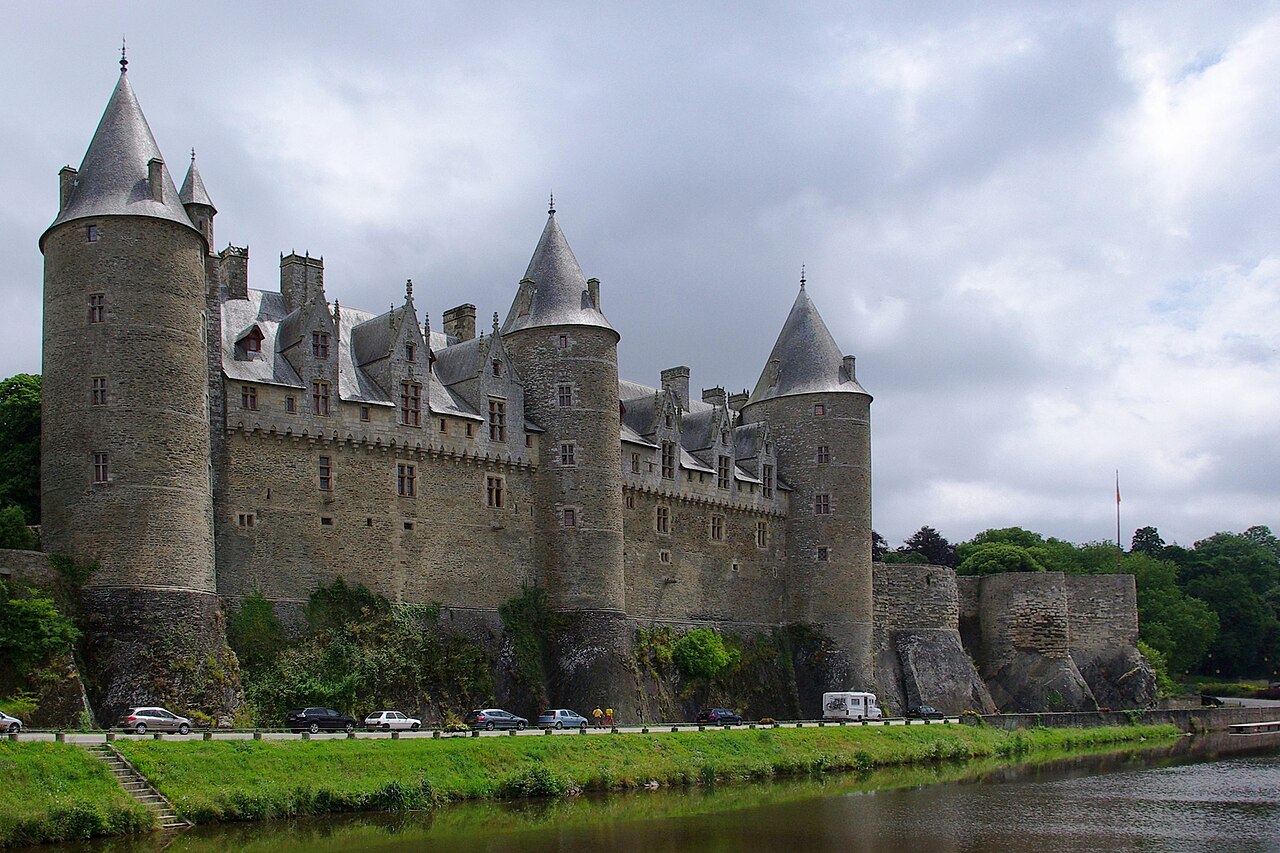
Château de Kerguéhennec
The Château de Kerguéhennec, often called the "Versailles Breton," stands as a remarkable example of early 18th-century French noble architecture located in Bignan, Morbihan, France. Constructed beginning in 1710, the château was designed by the French architect Olivier Delourme under the patronage of the wealthy Hogguer brothers, Swiss bankers from Saint-Gall who were shareholders in the French East India Company. This aristocratic estate reflects the grandeur and refinement typical of the period, combining elegant architectural design with extensive landscaped grounds that have evolved over centuries.
Architectural design and construction
The château exemplifies the early 18th-century French classical style, characterized by balanced proportions, symmetry, and restrained ornamentation. While specific architectural details are not exhaustively documented, the château’s layout follows the conventions of noble residences of the time, with a central corps de logis flanked by wings and accompanied by various outbuildings. The design emphasizes harmony with the surrounding landscape, a principle that would later be enhanced by the landscaping efforts of the 19th century.
The estate’s construction under Olivier Delourme, a notable architect of the era, highlights the influence of French architectural traditions blended with the financial power of Swiss patrons. The château’s solid masonry, elegant façades, and refined interior spaces attest to the high craftsmanship and artistic standards of the period.
Historical ownership and transformations
From banking patrons to noble proprietors
Originally commissioned by the Hogguer brothers, the château transitioned in 1732 to the ownership of Guy-Auguste de Rohan-Chabot, Comte de Maillé-Seizplouë. Although he did not reside on the estate, his acquisition marked a shift from a private residence to a property focused on agriculture and forestry. Ownership passed to his son, Louis-Antoine de Rohan-Chabot, Duc de Rohan, who held the estate until the upheavals of the French Revolution led to its sale.
19th-century restoration and landscaping
In 1802, Comte Louis Henri de Janzé purchased the château, maintaining it until 1872 when it was transferred to his cousin, Paul-Henri de Lanjuinais, a prominent political figure in Morbihan. Paul-Henri initiated a significant restoration project, enlisting the Parisian architect Ernest Trilhe to modernize the château’s structure while respecting its original character.
Complementing the architectural restoration, Paul-Henri commissioned the renowned Swiss landscape architect Denis Bühler to design the château’s extensive park. Bühler created a masterful blend of a French formal garden near the château, with its characteristic symmetry and geometric patterns, and an English-style park to the north, featuring a naturalistic landscape and an arboretum dedicated to the study and collection of trees. This dual garden style reflects 19th-century tastes and the evolving relationship between architecture and nature.
The estate grounds and contemporary art integration
The 170-hectare grounds of Château de Kerguéhennec remain a defining feature, showcasing the juxtaposition of formal and informal garden styles. The French formal garden immediately surrounding the château emphasizes order and control, with manicured parterres, gravel paths, and carefully clipped hedges. In contrast, the English park offers a more relaxed, picturesque environment with winding paths, open lawns, and diverse tree species within the arboretum.
Since 1986, the estate has embraced a new cultural role by hosting an open-air sculpture garden featuring around thirty works by internationally acclaimed contemporary artists. Sculptures by Richard Long, Giuseppe Penone, Toni Grand, Dan Graham, Jean-Pierre Raynaud (notably his "1000 pots bétonnés pour une serre ancienne"), Marta Pan, and Malachi Farrell enrich the natural landscape, creating a dynamic dialogue between art and environment.
Preservation and current status
Ownership of the château passed to the local government of Morbihan in 1972, reflecting a commitment to preserving its cultural and historical significance. Since 1988, Château de Kerguéhennec has been officially listed as a historic monument, ensuring protection and recognition at the national level.
Currently, the château itself is closed to the public due to ongoing restoration work projected to continue until 2027. However, the extensive park and sculpture gardens remain accessible, inviting visitors to experience the unique fusion of 18th-century architecture, 19th-century landscaping, and contemporary art. This evolving use underscores the château’s enduring relevance as a site of heritage and cultural innovation.
Frequently asked questions (FAQ)
- How do I get to Château de Kerguéhennec?
- Château de Kerguéhennec is located in Bignan, France, and can be easily accessed by car or public transport. The nearest train station is in Auray, from where you can take a bus or taxi to reach the castle.
- What is the historical significance of Château de Kerguéhennec?
- Château de Kerguéhennec, built in the 18th century, is a stunning example of neoclassical architecture and serves as a symbol of the region's rich history. It was originally constructed as a private residence and has since been transformed into a cultural site, showcasing art and heritage.
- When was Château de Kerguéhennec built?
- The construction of Château de Kerguéhennec began in 1769 and was completed in 1772. The castle has undergone several renovations over the years, preserving its historical integrity while adapting to modern uses.
- Can I visit the gardens at Château de Kerguéhennec?
- Yes, the gardens at Château de Kerguéhennec are open to visitors and are a beautiful extension of the castle grounds. They feature a variety of plant species and offer scenic walking paths for guests to enjoy.
- Why is Château de Kerguéhennec a popular tourist destination?
- Château de Kerguéhennec is popular due to its stunning architecture, rich history, and beautiful gardens. Additionally, the castle hosts various cultural events, exhibitions, and workshops, making it an engaging destination for visitors of all ages.
- Is it possible to take guided tours of Château de Kerguéhennec?
- Yes, guided tours are available at Château de Kerguéhennec, providing visitors with in-depth information about its history and architecture. These tours are typically conducted in multiple languages and enhance the overall experience of the castle.
- What are the opening hours for Château de Kerguéhennec?
- Château de Kerguéhennec is generally open to the public from Tuesday to Sunday, with varying hours depending on the season. It is advisable to check the official website for the most current hours and any special closures.
- What are the ticket prices for visiting Château de Kerguéhennec?
- Ticket prices for Château de Kerguéhennec are typically affordable, with discounts available for students and seniors. Children under a certain age may enter for free, making it accessible for families.
- When is the best time to visit Château de Kerguéhennec?
- The best time to visit Château de Kerguéhennec is during the spring and summer months when the gardens are in full bloom. Additionally, various cultural events and exhibitions are often held during this time, enhancing the visitor experience.
- Are there any nearby attractions to explore after visiting Château de Kerguéhennec?
- Yes, after visiting Château de Kerguéhennec, you can explore nearby attractions such as the historic town of Auray and the picturesque Gulf of Morbihan. These locations offer additional cultural experiences and beautiful landscapes to enjoy.
Information
Website
Visit websiteSources & official resources
Verify the information above using these authoritative references.
Loading map...
Visitor reviews
No reviews yet. Been here? Write the first review and help other travelers!
Write the first reviewVisited this castle? Share your experience
Your review helps other travelers and adds first-hand knowledge to our encyclopedia.