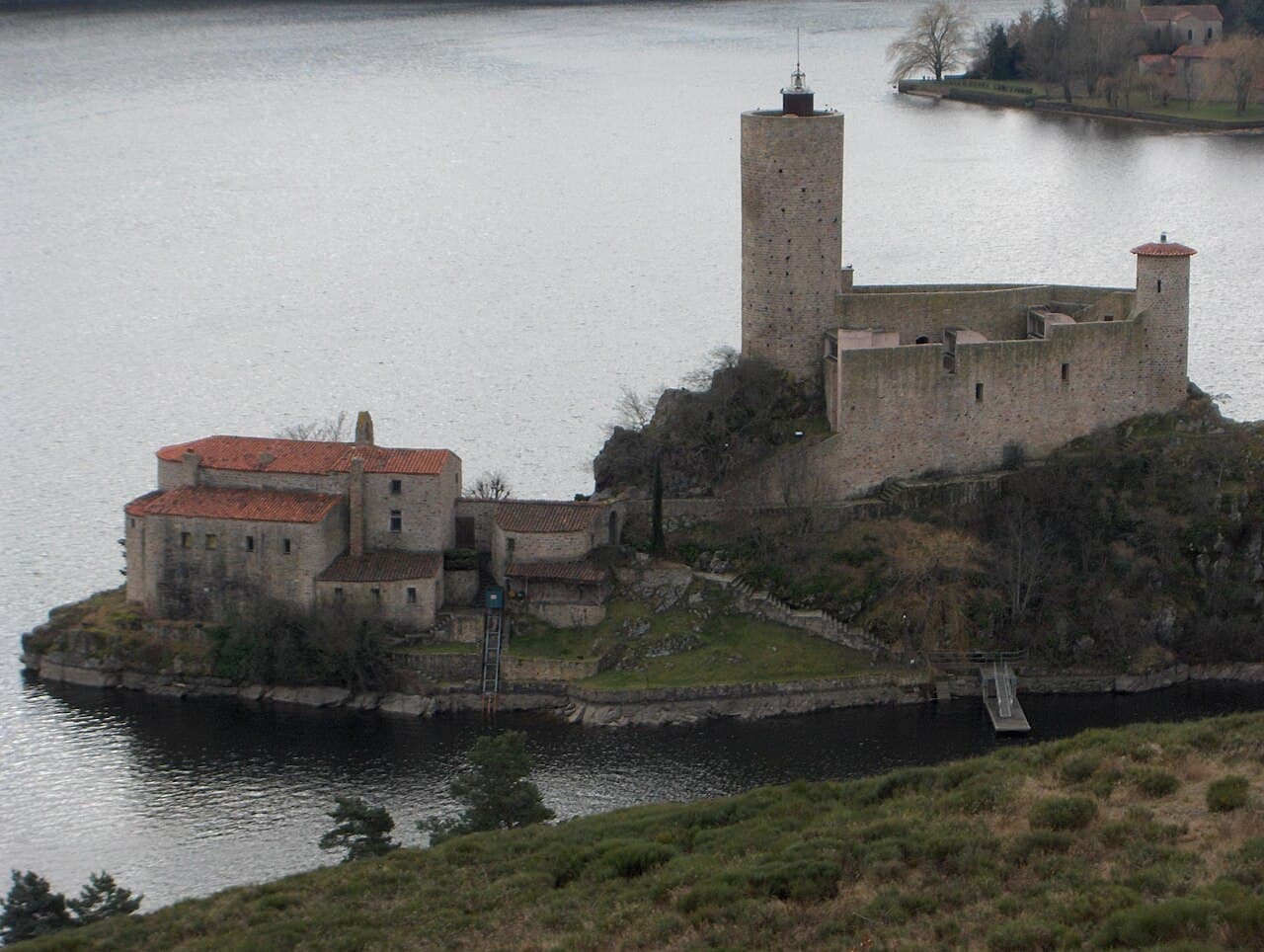
Château de Grangent
The Château de Grangent is a remarkable example of an early medieval hill castle located in the municipality of Saint-Just-Saint-Rambert within the Loire department of central France. Perched originally on a rocky promontory approximately 50 meters above the Loire River, the castle's strategic position provided commanding views over the surrounding landscape and control of the river valley. Its origins date back to around the year 800 AD, placing it among the earlier fortifications established during the early medieval period by local Frankish lords seeking to consolidate power in this region.
Historical significance and feudal role
The castle is first explicitly documented in 1173 through a feudal agreement involving the Count of Forez and the Church of Lyon. This record confirms the castle's role as a feudal stronghold, where the holder was required to swear loyalty and homage to the Count, underscoring its integration into the medieval system of governance and territorial control. Throughout the high and late medieval periods, the Château de Grangent experienced multiple cycles of destruction and rebuilding, reflecting the turbulent political and military landscape of the region.
Following the upheavals of the French Revolution, the castle was sold as national property in 1796, a common fate for many noble estates during this period of secularization and redistribution. In the twentieth century, its cultural and architectural significance was formally recognized when it was listed as a historic monument by the French Ministry of Culture in 1945. The designation was notably influenced by the preservation of its distinctive Saracen-style chimney, a rare architectural feature in the region. The entire site, including the tower and surrounding area, received protected status in 1946.
Architectural features and remains
The Château de Grangent is primarily known for its keep (donjon), which occupies a relatively narrow footprint. This vertical tower is unusual in its internal arrangement, as it lacks traditional staircases; instead, vertical movement between floors was facilitated by ladders. This design choice reflects the compactness of the structure and its defensive priorities, emphasizing verticality and controlled access within the tower. The keep remains the most prominent surviving element of the castle.
One of the castle's most distinctive architectural elements is its Saracen-style chimney. This chimney is an exceptional feature that contributed significantly to the castle's classification as a historic monument. Its design reflects cultural influences that were uncommon in medieval French castles, making it a unique point of interest for historians and visitors alike. The chimney remains preserved in situ, allowing for direct study and appreciation of its craftsmanship.
Landscape transformation and current context
The landscape surrounding the castle underwent a dramatic transformation following the construction of the Grangent dam in 1957. The damming of the Loire River created the Lac de Grangent, a reservoir that submerged the original promontory and isolated the castle on a small island. This change altered the castle's immediate environment but preserved its essential medieval structure. Today, the castle stands as a ruin on this island, maintaining its historical silhouette against the backdrop of the lake.
The castle's location near the larger and better-preserved Château d’Essalois situates it within a historically rich feudal landscape. While the Château de Grangent is fragmentary, its remains provide valuable archaeological insight into early medieval fortification techniques and regional power dynamics.
Preservation and access
Despite being privately owned, the Château de Grangent benefits from its status as a protected historic monument, ensuring ongoing preservation efforts for its unique architectural features. The site’s combination of early medieval origins, distinctive Saracen-influenced design elements, and dramatic island setting make it a significant cultural landmark within the Loire region.
Frequently asked questions (FAQ)
- What is the historical significance of Château de Grangent?
- Château de Grangent, originally built in the 12th century, stands as a testament to medieval architecture and history in the Loire Valley. It played a crucial role in the region's defense and has witnessed various historical events, making it a point of interest for those exploring France's rich past.
- When was Château de Grangent constructed?
- Construction of Château de Grangent began in the 12th century, with significant modifications occurring over the centuries. The castle has been restored and maintained, allowing visitors to appreciate its historical evolution and architectural features.
- What are the opening hours for Château de Grangent?
- Château de Grangent is generally open to visitors from April to October, with varying hours depending on the season. It is advisable to check the official website or local tourism information for the exact opening times before planning your visit.
- Can I access Château de Grangent with a wheelchair?
- While efforts have been made to improve accessibility, portions of Château de Grangent may present challenges for wheelchair users due to its historic architecture. Visitors are encouraged to contact the castle management in advance to inquire about specific accessibility options and accommodations.
- What is the best time to visit Château de Grangent?
- The best time to visit Château de Grangent is during the spring and early autumn months when the weather is pleasant and the crowds are smaller. This allows for a more enjoyable experience while exploring the stunning landscapes surrounding the castle.
- Is there an admission fee to visit Château de Grangent?
- Yes, there is an admission fee to enter Château de Grangent. Ticket prices vary depending on the age of the visitor and any special exhibitions, so it's recommended to check the official website for the most current pricing information.
- Are there nearby attractions to Château de Grangent?
- Yes, the area surrounding Château de Grangent offers several attractions, including scenic hiking trails along the Loire River and charming villages to explore. Visitors can also enjoy local cuisine and wine tasting experiences to enhance their cultural visit.
- How do I get to Château de Grangent?
- Château de Grangent is accessible by car and public transportation, with nearby parking available for visitors. It is located close to Saint-Just-Saint-Rambert, making it a convenient stop for those exploring the Loire region.
Photo gallery

Photo by TwoWings•Public domain
Information
Loading map...
Visitor reviews
No reviews yet. Been here? Write the first review and help other travelers!
Write the first reviewVisited this castle? Share your experience
Your review helps other travelers and adds first-hand knowledge to our encyclopedia.


