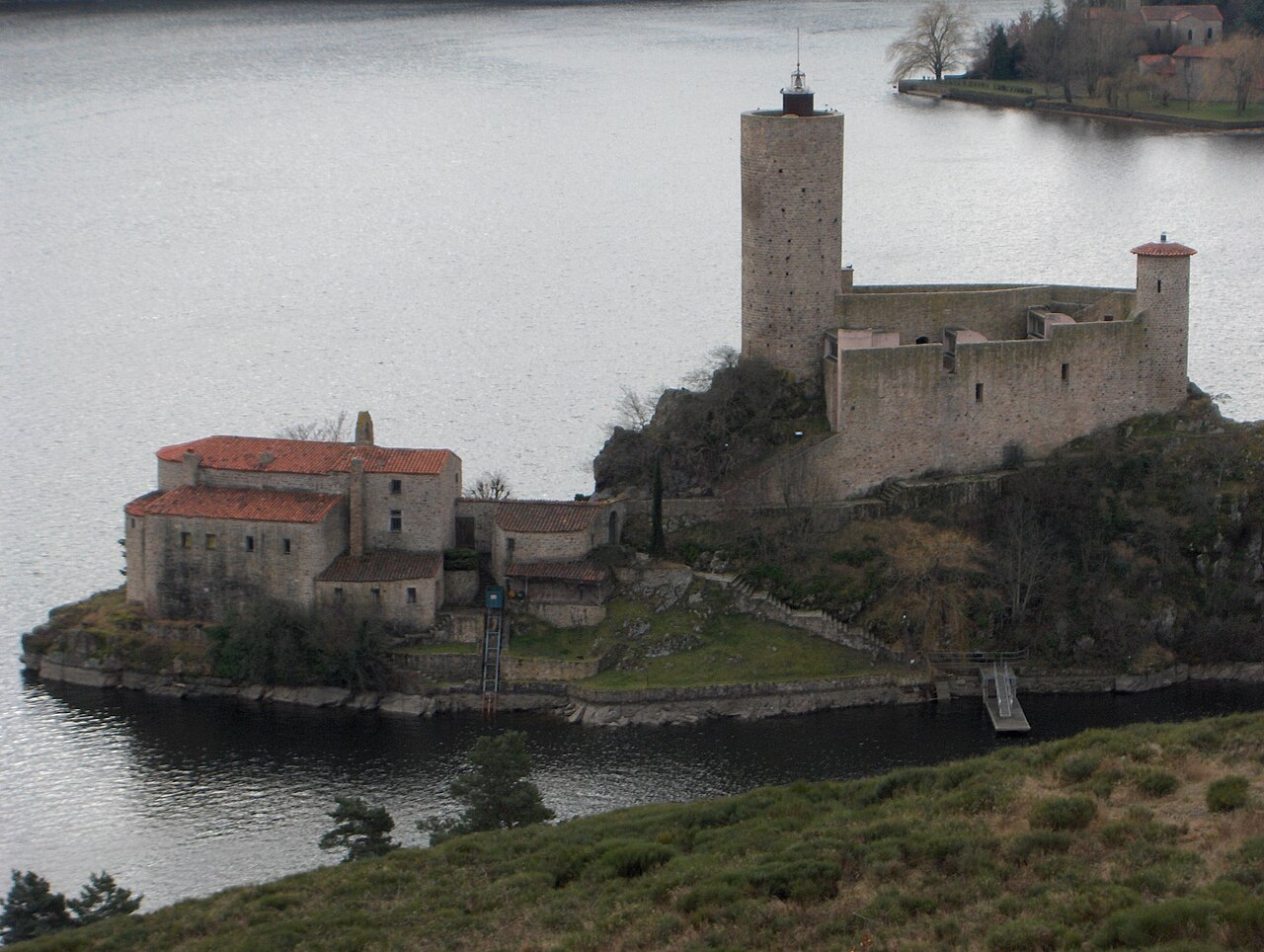
Castle of Grangent
The Castle of Grangent is a remarkable example of an early medieval fortress originally constructed around the 9th century. Perched on a natural promontory approximately 50 metres above the Loire River, the castle commanded a strategic vantage point overseeing the waterway. This elevated position was typical of early medieval defensive architecture, designed to provide both surveillance and protection against invaders during a turbulent period in European history.
Geographical and historical context
Originally, the castle stood on a rocky outcrop that dominated the surrounding landscape, offering extensive views of the Loire Valley. However, the construction of the Grangent dam in the 20th century transformed the surrounding environment, submerging the riverbanks and creating the lac de Grangent. This engineering project effectively turned the castle's site into a small island, altering its relationship with the landscape and water defenses. Despite this change, the castle's imposing silhouette remains a prominent feature of the lake.
The castle is closely overlooked by the larger and more imposing Chateau d'Essalois, which sits on a higher elevation nearby. This proximity suggests a historical network of fortifications controlling this section of the Loire River, reflecting the strategic importance of the region during the Middle Ages.
Architectural features and construction
The Castle of Grangent was constructed using local stone materials typical of the early medieval period. Its design likely included a keep or donjon as a central stronghold, surrounded by defensive walls and possibly a moat fed by the river. The elevated site provided natural defense, which was enhanced by man-made fortifications.
Throughout the Middle Ages, the castle underwent several phases of destruction and rebuilding, reflecting the region's turbulent history marked by feudal conflicts and territorial disputes. These reconstructions introduced architectural elements from subsequent periods, although the core remains rooted in its early medieval origins.
Damage and restorations
The castle suffered significant damage during various conflicts, including local feuds and possibly the Hundred Years' War. Restoration efforts have been made intermittently, particularly in the 19th and 20th centuries, to preserve what remains of the structure. These restorations have aimed to stabilize the ruins and maintain the castle's historical integrity.
Cultural significance and current status
Since 1945, the Castle of Grangent has been officially listed as a monument historique by the French Ministry of Culture, underscoring its importance as a heritage site. This designation helps protect the ruins and promotes public awareness of the castle's historical and architectural value.
Today, the castle ruins are accessible to visitors who are interested in exploring early medieval fortifications and the scenic beauty of the Loire region. The site offers insight into the military architecture of the period and the evolving landscape shaped by both nature and human intervention.
Visiting the castle
Visitors to the Castle of Grangent can enjoy panoramic views of the lac de Grangent and the surrounding Loire Valley. The castle's island location provides a unique experience, blending natural beauty with historical intrigue. While the ruins are partly preserved, caution is advised when exploring due to the uneven terrain and the site's age.
The proximity to the larger Chateau d'Essalois makes the area a compelling destination for those interested in medieval history and architecture, offering a broader understanding of the region's defensive network.
Architectural legacy and research
Ongoing archaeological research at the site continues to shed light on the castle's construction techniques and historical phases. The Castle of Grangent serves as an important case study in the evolution of early medieval military architecture in the Loire region. Its enduring presence highlights the strategic significance of river fortifications during the early Middle Ages and their adaptation over centuries.
Frequently asked questions (FAQ)
- How do I get to the Castle of Grangent?
- The Castle of Grangent is located in Saint-Just-Saint-Rambert, France. Visitors can reach it by car or local transport, with parking available nearby. The site is accessible via walking paths leading to the castle island.
- What is the historical significance of the Castle of Grangent?
- Built in the 9th century, the Castle of Grangent is a prime example of early medieval fortifications overlooking the Loire River. It played a strategic role in regional defense and witnessed various phases of destruction and restoration.
- Can I visit the Castle of Grangent year-round?
- Yes, the castle ruins are generally accessible year-round, though weather conditions may affect access. It is advisable to check local opening times and conditions before planning a visit.
- Is the Castle of Grangent suitable for families?
- The site is suitable for families interested in history and nature, but visitors should be aware that the ruins involve uneven terrain and some steep paths. Supervision of children is recommended for safety.
- Are there guided tours available at the Castle of Grangent?
- Guided tours may be available seasonally or by special arrangement through local tourist offices. These tours provide detailed insights into the castle's history and architecture.
Information
Sources & official resources
Verify the information above using these authoritative references.
Loading map...
Visitor reviews
No reviews yet. Been here? Write the first review and help other travelers!
Write the first reviewVisited this castle? Share your experience
Your review helps other travelers and adds first-hand knowledge to our encyclopedia.